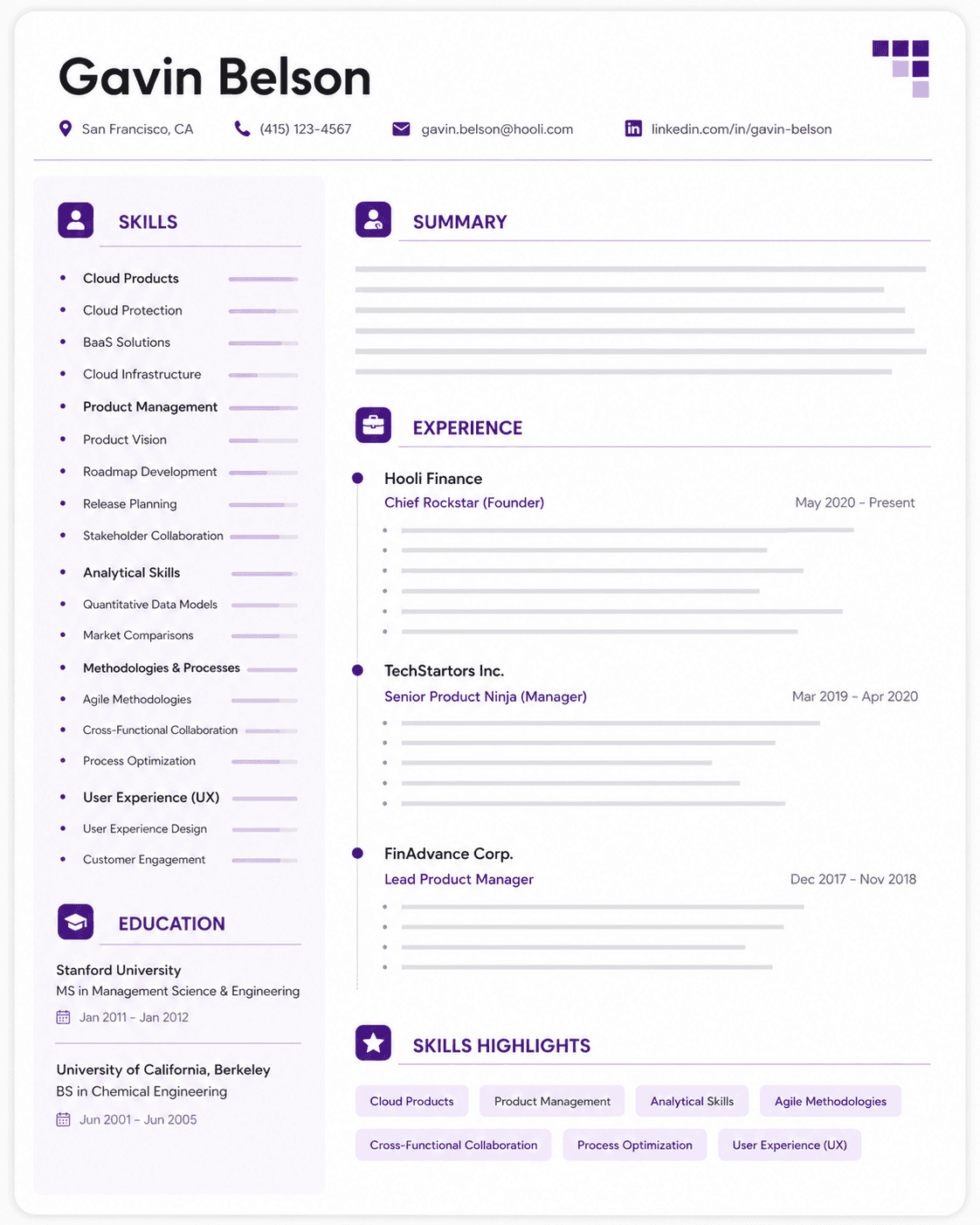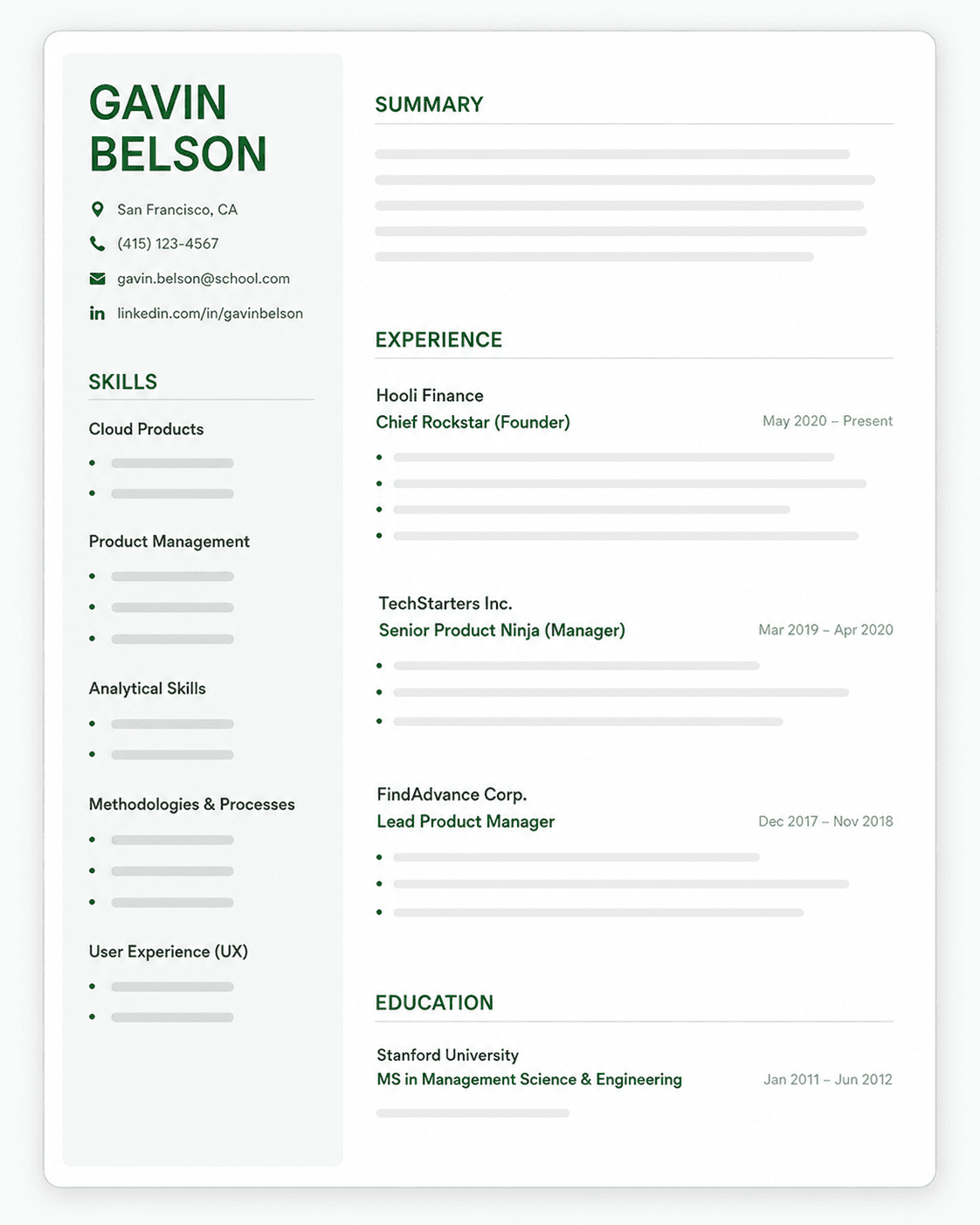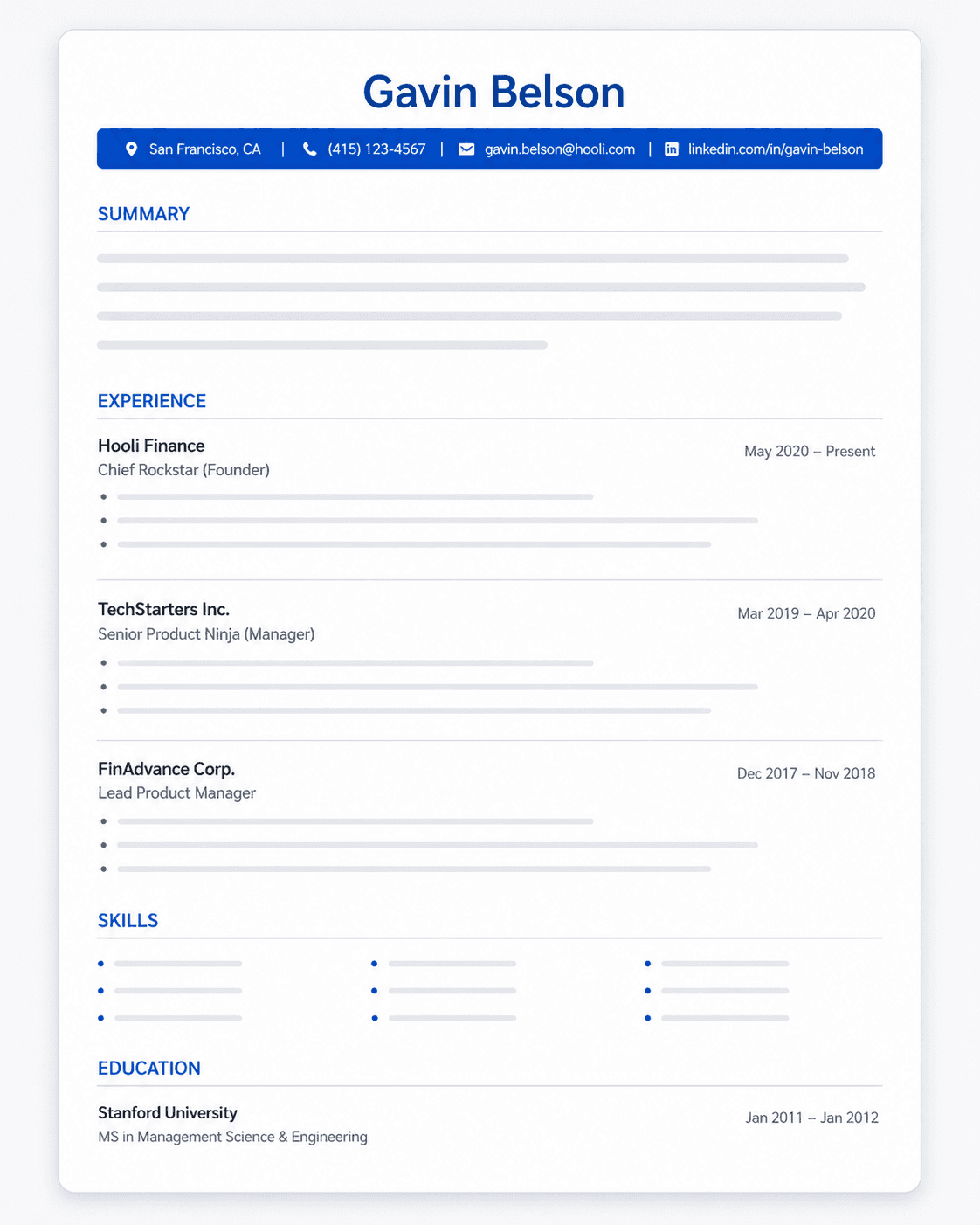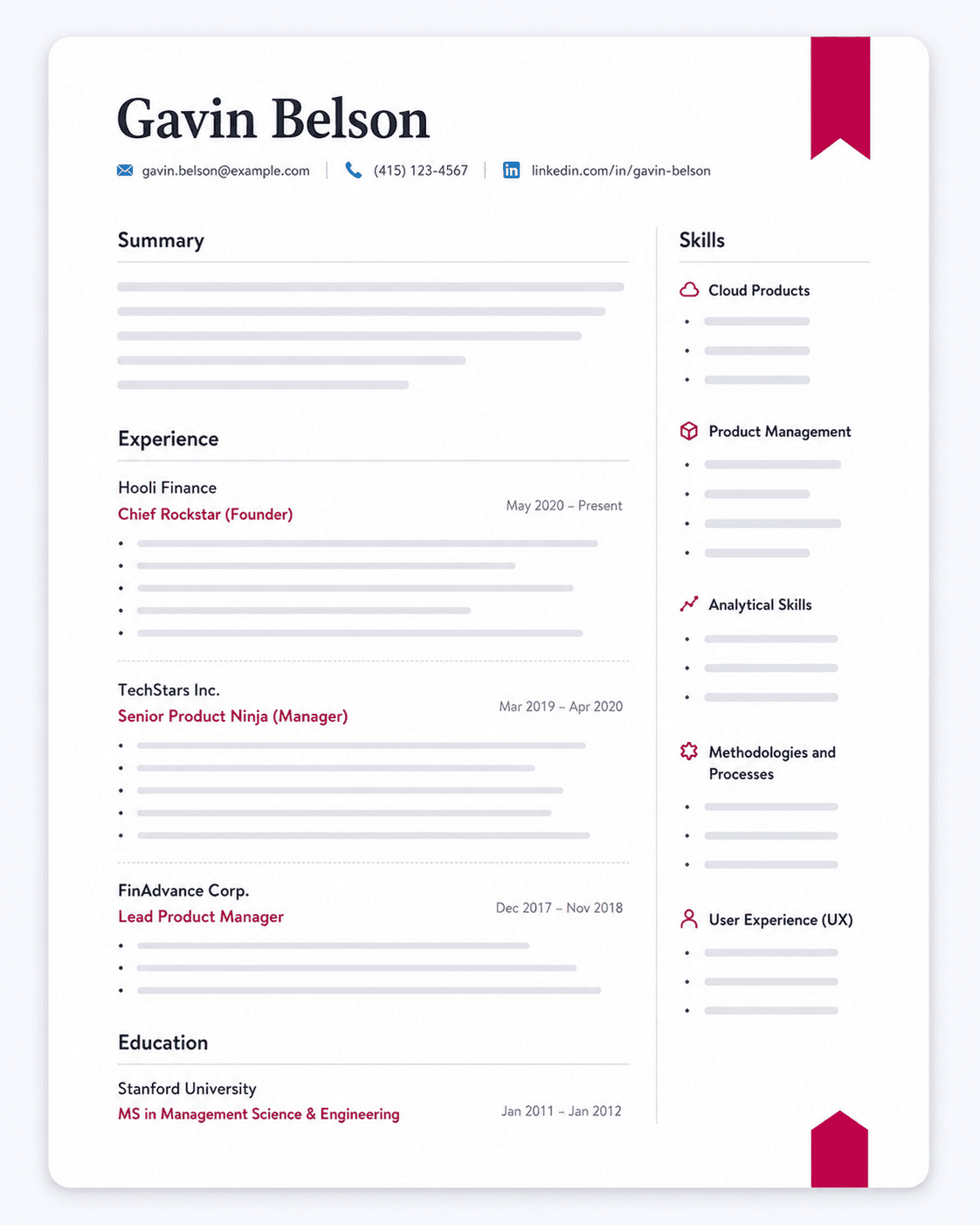
You did the arithmetic on going back to work and the numbers held up. Then you opened your old resume and found a document that ends three years ago and covers a career longer than some hiring managers have been alive. The advice you found next made it worse, because half of it told you to delete the dates and the other half told you to trim to fifteen years, and none of it explained why.
This guide gives you the six changes that matter, the exact language for naming the retirement years, and a straight answer on which anti age bias tactics have evidence behind them and which are folklore worth ignoring.
How to Write a Resume for Retirees Returning to Work
A resume for a retiree returning to work is your standard resume with six specific changes, each aimed at a hiring manager's first read: does this person fit the job today, or does this read like a career obituary from decades ago.
The six things that change on a returning retiree's resume
- Rebuild the contact line. Use a current email domain, list city and state, and drop the street address and landline.
- Add a target job title under your name. Match the language of the posting, not the title you held decades ago.
- Replace the objective paragraph with a short professional summary. Two or three lines, led by what you can do now, not by how long you have been doing it.
- Set a display window for your work history. Decide how far back to show in detail. The popular "10 to 15 years" figure is a contested convention rather than a rule, and a later section gives the case on both sides.
- Name the retirement years with one factual line. A blank gap invites questions a recruiter cannot ask.
- Choose reverse chronological format. Skip the functional template that generic career-break guides default to.
What the top third of the page should look like
Here is the same page, done weak and done strong.
Weak
Pat Reyes
pjreyes1961@aol.com | 4821 Birchwood Lane, Springfield, IL | (217) 555-0123
OFFICE MANAGER (RETIRED)
Objective
Dependable, hardworking retiree seeking to return to the workforce after taking time off. Over 25 years of experience managing office operations at a manufacturing company.
Experience
Office & Operations Manager, Midland Fabricators Inc., 1996-2023
- Responsible for overseeing daily office operations, staff supervision, and administrative support for the plant.
Strong
Pat Reyes
Springfield, IL | (217) 555-0148 | preyes.admin@gmail.com
OFFICE ADMINISTRATOR / OPERATIONS COORDINATOR
Professional Summary
Operations and office manager with a track record running administrative functions for a 120-employee manufacturing plant: scheduling, vendor accounts, payroll support, and compliance recordkeeping. Recently completed a QuickBooks Online refresher course and currently coordinates a 30-person volunteer rotation for a local nonprofit.
Experience
Operations Manager, Midland Fabricators Inc., Springfield, IL | 2014-2023
- Directed daily office operations for a 120-employee plant, supervising a four-person administrative staff and managing vendor contracts worth $1.2M annually.
Format: reverse chronological, not functional
Use reverse chronological format. Functional resumes push dates to the bottom or off the page entirely, a structure built for thin work histories that career-break templates borrowed for anyone with a gap. Omitting or burying your dates reads as concealment to the people who screen resumes, and the next two sections cover why.
Decide What Kind of Return You Want Before You Write a Word
Reverse chronological settles the format. The target title, summary and top job still depend on the return you actually want.
Full-time, part-time or contract: three different resumes
Full-time re-entry puts you against candidates who never left, so the resume cannot hedge on availability or start date. The named risk here is the "overqualified" read, which is why the target title has to match the posting rather than the seniority you left at.
Part-time or bridge work suits someone pacing energy, health or caregiving alongside income, or staying under the earnings limit below. Put the number in the summary: "seeking part-time office coordinator roles, 20 to 25 hours weekly" answers the question a screener would otherwise guess at.
Consulting or contract work needs one specialty a client can name and a tolerance for months with no invoice. This resume leads with an "Independent Consultant" entry and a capabilities list, not a job ladder.
What the 2026 Social Security earnings test actually costs you
If you are collecting Social Security and under full retirement age all year in 2026, you can earn up to $24,480 before SSA starts withholding benefits, at $1 withheld for every $2 you earn above that. In the months before you reach full retirement age during 2026, the limit rises to $65,160, and the withholding rate eases to $1 for every $3 over. Once you reach full retirement age, the limit disappears entirely, even mid-year. Only wages and self-employment income count toward these limits; pensions, annuities and investment income do not, according to the Social Security Administration.
Most people assume withheld money is gone. It is not. SSA recalculates your benefit at full retirement age and pays back what was withheld through a higher monthly check for life, so the only real cost of earning above the limit is a temporary squeeze on cash flow.
How your answer changes the top of the page
Each path changes three things at the top of the page.
| Path | Target title | Summary opens with | Promote to the top |
|---|---|---|---|
| Full-time | Office Manager | Full scope of authority, team size, budget managed | Your most senior operations role |
| Part-time / bridge | Office Coordinator or Administrative Coordinator | Availability and hours, then relevant skills | The role closest to daily task fit, not seniority |
| Consulting / contract | Independent Consultant, Operations | Specialty and outcomes delivered for clients | Project results over titles held |
How Far Back Should Your Work History Go?
Return type changes what sits at the top of the page. It says nothing about how far the work history below it should reach, and that question has its own murky rule of thumb.
Where the 10 to 15 year rule came from, and what it is not
No regulator, no study and no statute sets a limit on how many years of work history belong on a resume. The "10 to 15 years" figure you keep seeing is informal resume-coaching convention, repeated across enough blogs that it now sounds like policy. It is not.
Some versions attach a hard cutoff, telling readers to drop anything before a specific graduation year. A fixed year like that ages by one every year the article does not.
The case for trimming and the case against
Two camps argue this in public, and both have real reasoning behind them.
A hiring manager posting on an early-retirement.org career thread recommends showing only the last 10 years, on the grounds that older roles read as dated and pull attention from what the employer needs to see now.
On the same thread, a poster going by "target2019" argues the opposite: a visibly shortened resume draws exactly the scrutiny it is meant to avoid, since a reader can tell when years are missing. He keeps one full master resume and trims only what a specific application calls for.
Neither is a study. Both are practitioners describing what they have seen work.
How to compress a long tenure without deleting it
Use a 30-second test. Is the older work relevant to the job you want, does it hold your strongest proof point, and would trimming it visibly distort your story? If any answer is yes, keep it, just not at full length.
For a single long tenure, show the employer relationship in full and compress the roles inside it.
Before:
Office & Operations Manager, Midland Fabricators Inc., 1996 to 2023
After:
- Midland Fabricators Inc. (1996 to 2023)
- Operations Manager, 2014 to 2023
- Office Manager, 2004 to 2014
- Additional Experience: Administrative Assistant through Senior Coordinator roles, 1996 to 2004
All 27 years stay visible through the employer's date range, with detailed bullets under the two recent titles only.
Drop Your Graduation Year, Never Your Employment Dates
Compressing a long tenure settles how much history shows. It says nothing about whether the dates on what remains should stay visible, and these are two separate decisions that most advice online treats as one. Dropping your graduation year is a normal, low-risk edit that almost no one notices. Dropping your employment dates is not, and it does the opposite of what the "hide your age" crowd promises.
Why leaving dates off backfires
The advice circulates for an understandable reason: a visible 27-year career lets a recruiter do the math. But when someone floated exactly this tactic at a networking event, career columnist Alison Green of Ask a Manager called it "terrible advice," writing that leaving dates off "makes you look defensive about age and like you're trying to hide something, and it will cause a lot of employers to immediately send your application to the rejection pile" (Ask a Manager, 2019).
That is not one opinion. Four years earlier, in a different community, a self-identified hiring manager posting as "cathy63" rebutted the same tactic in almost the same words, warning that a resume with years only "makes you look like you have something to hide and leaves a terrible first impression on me and other managers I've worked with" (early-retirement.org, 2017). Two voices on the hiring side, four years apart, arriving there independently.
The graduation year is a different decision
Employment dates tell an employer how recent and how long your experience is, which is what they need to evaluate you. A graduation year tells them nothing they need. Green makes the same distinction: dropping it is common once you are a few years out of school, because "no one much cares exactly what year you graduated."
Months, years and short contracts
A few mechanics carry the rest of the weight:
| Do | Do not |
|---|---|
| Show month and year: "Operations Manager, March 2014 to June 2023" | Show years only: "Operations Manager, 2014-2023" |
| Label a short stint plainly: "Project Coordinator (4 month contract)" | Leave it off the resume entirely |
| Let a two- or three-month gap between roles sit unexplained | Add a line justifying every short gap |
A gap of a few months reads as normal to anyone who has hired before. It becomes a question only when the resume itself looks evasive.
How to Explain the Retirement Gap on the Page
Short gaps between roles rarely need an explanation. A multi-year retirement gap is a different question, and it starts with one rule: "retired" should never stand alone as a status line or job title. It gives a hiring manager nothing to evaluate and invites assumptions about your energy or tech skills. Name what filled the time instead, the same way you would name a job.
Weak and strong ways to name the gap
Vague framing reads as evasion, not modesty. On the same early-retirement.org thread, one poster called phrases like "exploring life" "hand waving," and another said vague language "looks like you are trying to cover time in prison or rehab." Specificity is the fix, not disclosure.
Summary: "Retired professional returning to the workforce after taking time for personal interests."
Gap entry: 2023-2026: Retired
Summary: "Operations manager with 27 years of manufacturing administration experience, most recently consulting part-time for a former employer and coordinating a 30-person volunteer rotation."
Gap entry: 2023-2026, Independent Administrative Consultant, self-employed. Supported two small manufacturers with payroll setup and vendor file cleanup on a project basis.
What to do with the retirement years themselves
Four options cover most retirees, and each needs a name, a scope, and ideally a number.
- Consulting: "Independent Consultant, self-employed (2023-2026). Advised a 12-person accounting firm on QuickBooks migration and file cleanup."
- Volunteer work: "Office Coordinator, Riverside Food Pantry (2023-present, 15 hrs/week). Managed scheduling for a 30-person volunteer rotation and reconciled monthly donation records."
- Caregiving: "Family Caregiver (2023-2026). Managed medical scheduling, insurance claims and household finances for a parent with a chronic condition."
- Coursework: "QuickBooks Online Certification, completed 2024," listed under a Certifications heading.
Each of these names a scope a reader can picture. Skip any entry with no name, no scope and no duration.
Resume, cover letter or interview: where this belongs
Put the factual version on the resume: dates, a role name, one line of scope, formatted like any other entry. Save the reasoning for the cover letter, in two sentences at most. Leave the personal story, the health scare, the boredom, the spouse's schedule, for the interview, where a conversation carries nuance a bullet point cannot.
Age Bias Is Real: What the Evidence Shows and What You Can Control
Naming the gap well fixes how the resume reads. It does nothing about a hiring manager who screens out age on sight, and that part of the problem has real evidence behind it.
What the ADEA does and does not protect
The Age Discrimination in Employment Act protects people 40 and older, and it covers job applicants, not just people already on a payroll. It applies to employers with 20 or more employees, plus state and local governments and the federal government. Job ads cannot state an age preference except where age is a genuine job requirement.
It does not stop an employer favoring one candidate over another when both are 40 or older, so there is no "reverse" claim inside that group, and it does not flatly forbid asking your age, though the EEOC notes such questions draw close scrutiny for possible bias. Know the boundary before assuming a rejection was illegal.
What the callback data shows
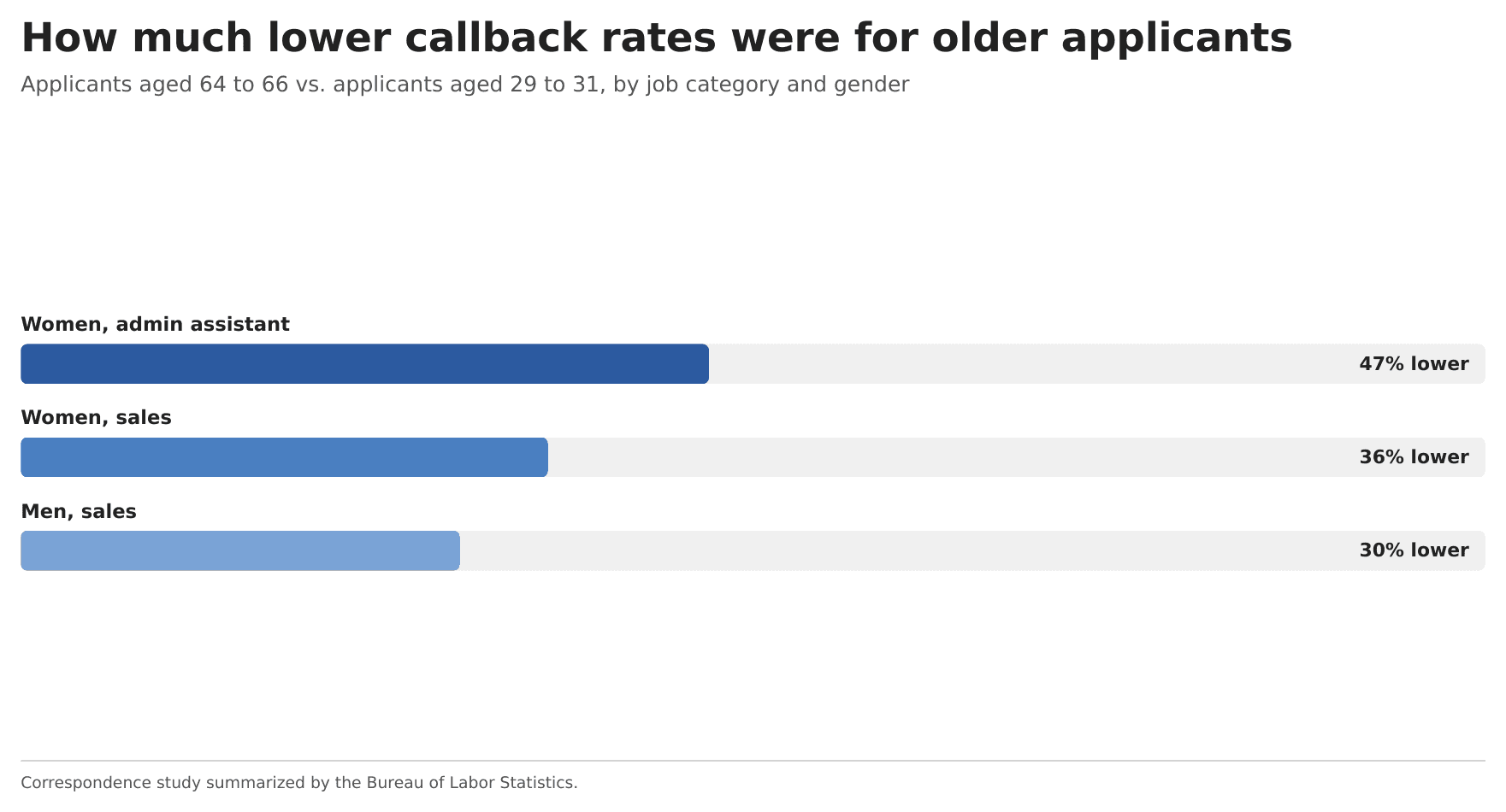
Nearly one in five people 65 and older were in the labor force in 2025, so this is not a fringe question. The best hiring-stage evidence comes from a correspondence study summarized by the Bureau of Labor Statistics: researchers sent matched, fictitious resumes differing only by age to real job ads, more than 40,000 applications across more than 13,000 positions in 12 cities in 11 states.
The gaps by job category were substantial. Women aged 64 to 66 applying for administrative assistant jobs, the category closest to office and admin work, got a 47 percent lower callback rate than women aged 29 to 31. Older women applying for sales jobs saw a 36 percent lower rate, and older men in sales jobs saw a 30 percent gap. Callback rates ran lower for older applicants across the board, more so at 64 to 66 than at 49 to 51. Wording does not move any of those numbers.
Tactics that hold up, and tactics that are just folklore
| Backed by evidence | Repeated everywhere, unproven |
|---|---|
| Know what the ADEA actually covers before assuming silence is illegal | Trim to exactly 10 to 15 years |
| Keep your employment dates on the page | Avoid the phrase "decades of experience" |
| Drop a distant graduation year | Swap an old AOL address for Gmail |
| Label a short contract stint instead of hiding it | Claims that a particular font reads younger |
| Treat your network and skills verification as a real channel |
The folklore column is cosmetic and mostly harmless. Its real cost is an afternoon spent on a font instead of on your dates and your network.
You control what goes on the page and who you ask to open a door. You cannot control whether it lands with someone who screens for age anyway.
Build a Second Signal Your Resume Cannot Carry
Controlling the page has limits. It does nothing once a screen reads dates as a proxy for age, so the fix lives outside the page.
Why a second signal beats a resume screen
Testifying before the Senate Special Committee on Aging, AARP chief advocacy and engagement officer Nancy LeaMond said: "Algorithms used to scan resumes and applications can accelerate bias using graduation dates or years of experience as proxies for age." (AARP)
A certification, a skills assessment or a work sample sits outside those fields, so the same inference has nothing to read. No controlled study shows skills verification reduces age bias, so treat this as a reasoned response to a documented mechanism rather than a guarantee.
There is a real outcome behind it. On an early-retirement.org thread about resume tactics for retirees, the original poster followed the group's advice, then landed a contract role after a staffing agency had him take an online Microsoft Access skills assessment, scoring above 80 percent on software he had barely touched in years. Another poster on the same thread, who has hired professional staff, said he has never picked a professional out of a resume pile.
Certifications, assessments and work samples worth the time
Weigh each credential's effort against what it signals:
- A named certification tied to your target role (Microsoft Office Specialist, QuickBooks) costs a few weeks of study and gives a screener something dated this year.
- A skills assessment offered by the staffing agency you are already working with costs almost nothing beyond showing up, and puts a fresh, objective number next to your name.
- A small work sample, a cleaned-up spreadsheet template or a process document, costs an afternoon and shows current capability instead of a decades-old claim of it.
- A referral into the company routes you past the screen reading dates in the first place.
Showing current tools without a technology graveyard
A long tools list reads as a career museum. A short one reads as current.
Weak:
"Proficient in Microsoft Office, WordPerfect, Windows, email, and general computer skills."
Strong:
"Microsoft 365 (Excel, Outlook), QuickBooks Online, Asana."
Drop anything you would not open this week.
Check the Resume Before You Send It
A current tools line signals someone is up to date, but that only matters once a human opens the file.
What a long work history does to your keyword match
Twenty-seven years of history is a mechanical problem before it is anything else. A job description names 15 to 20 terms, and spread across three decades those keywords sit thin against roles nobody asked about, so the match lands lower than it would for a tighter six-year history. Up to 80 percent of resumes are filtered out automatically before a person reads them, and a diluted keyword match is what that filtering catches. A list covering this many years also tends to run past two pages, where some parsers truncate what is left.
A three-minute check before you apply
Upplai's ATS Resume Checker is free and built for this step. Upload your resume and a job link, and in about ten seconds you get an ATS score, a separate recruiter score, and missing keywords shown with context. It also flags formatting issues that confuse parsers, including tables, images and headers. The free tier stays free: 200 scans a month, no credit card, no locked results.
The optimizer explains every suggested change in plain language and lets you accept or reject each one, and it never invents experience you did not have. If you are applying across full-time, part-time and contract postings at once, the Application Tracker keeps each tailored resume, cover letter and score attached to the right listing.
See how your resume reads to a recruiter
Upload your resume and get a breakdown of what's working and what's holding you back, in minutes