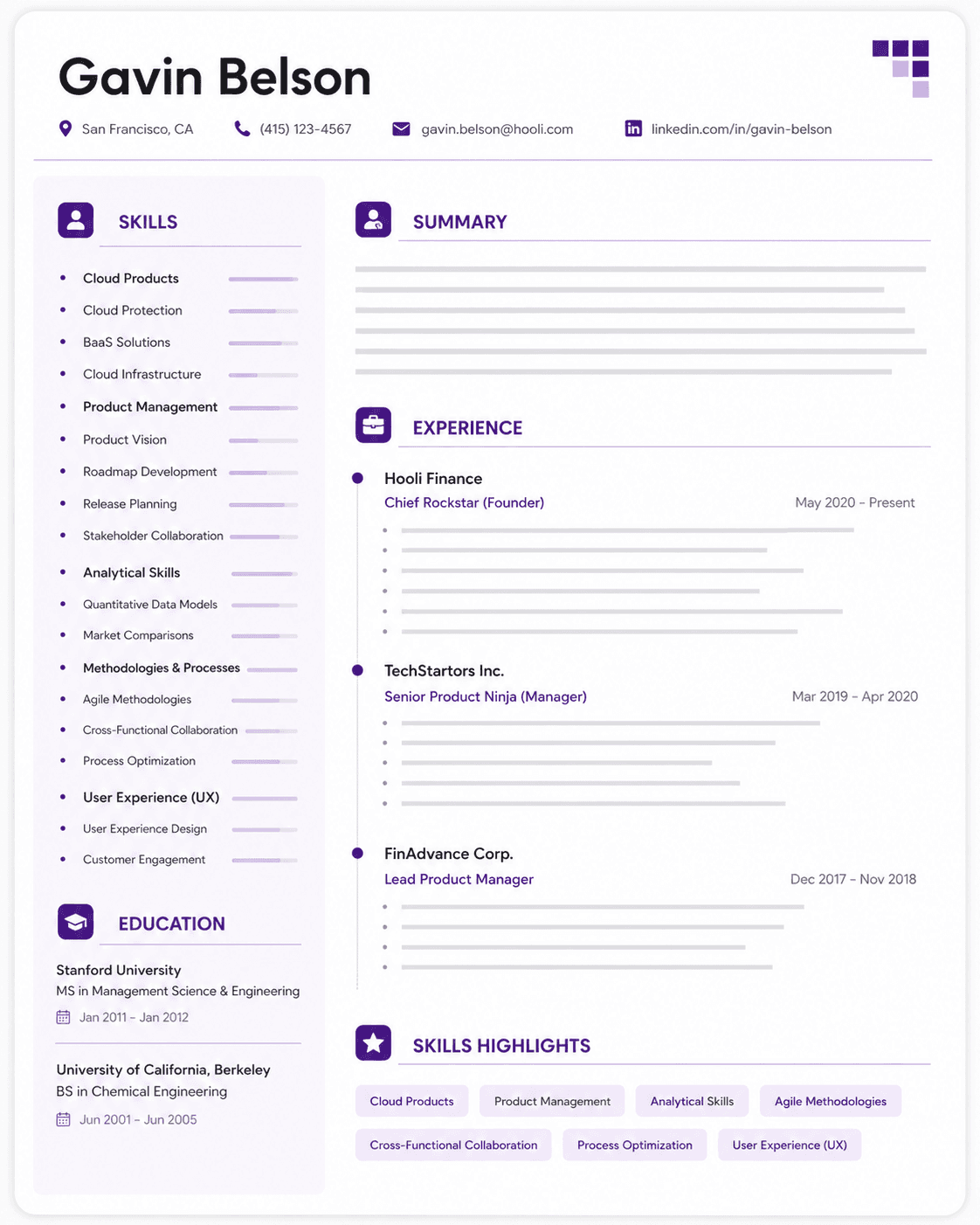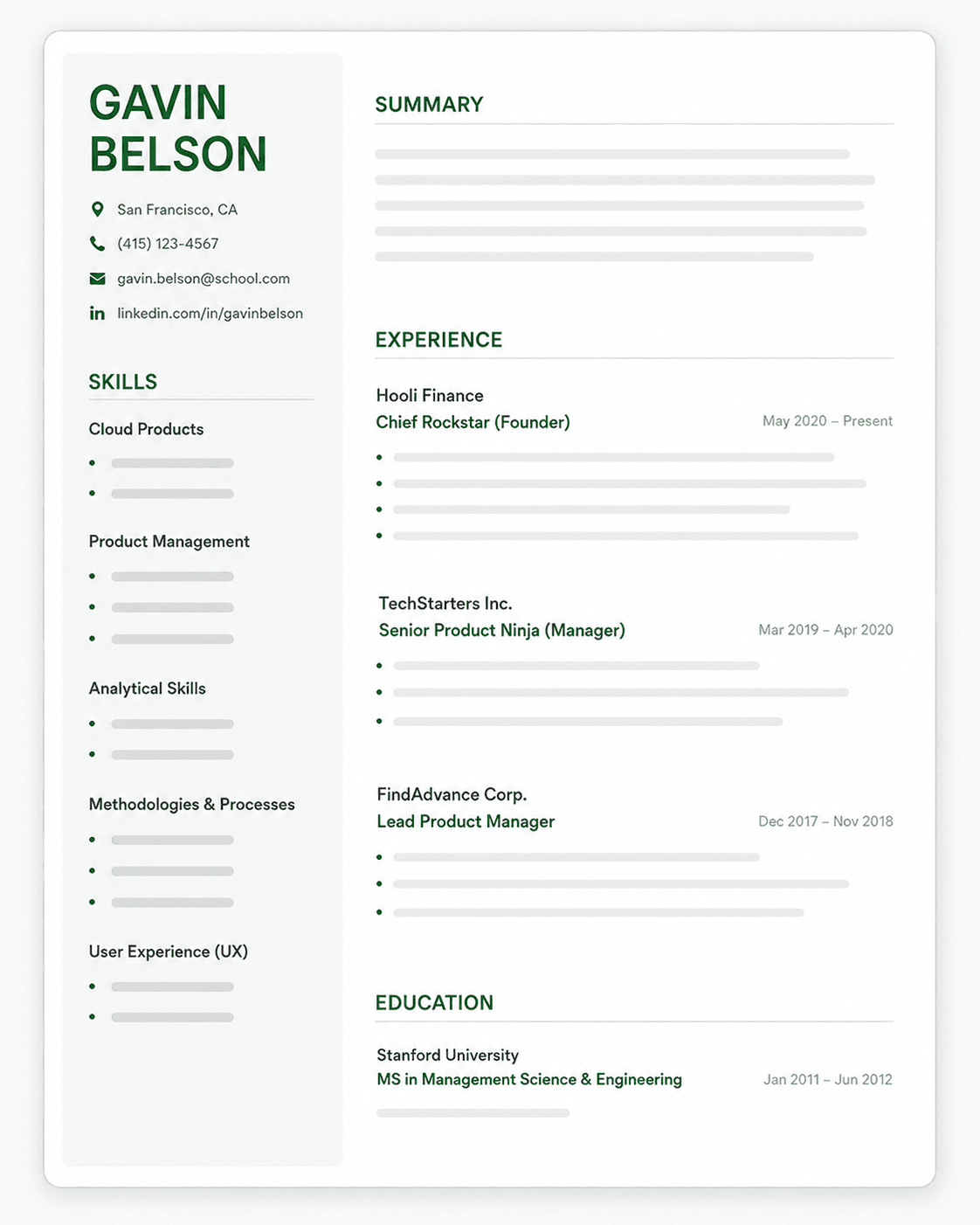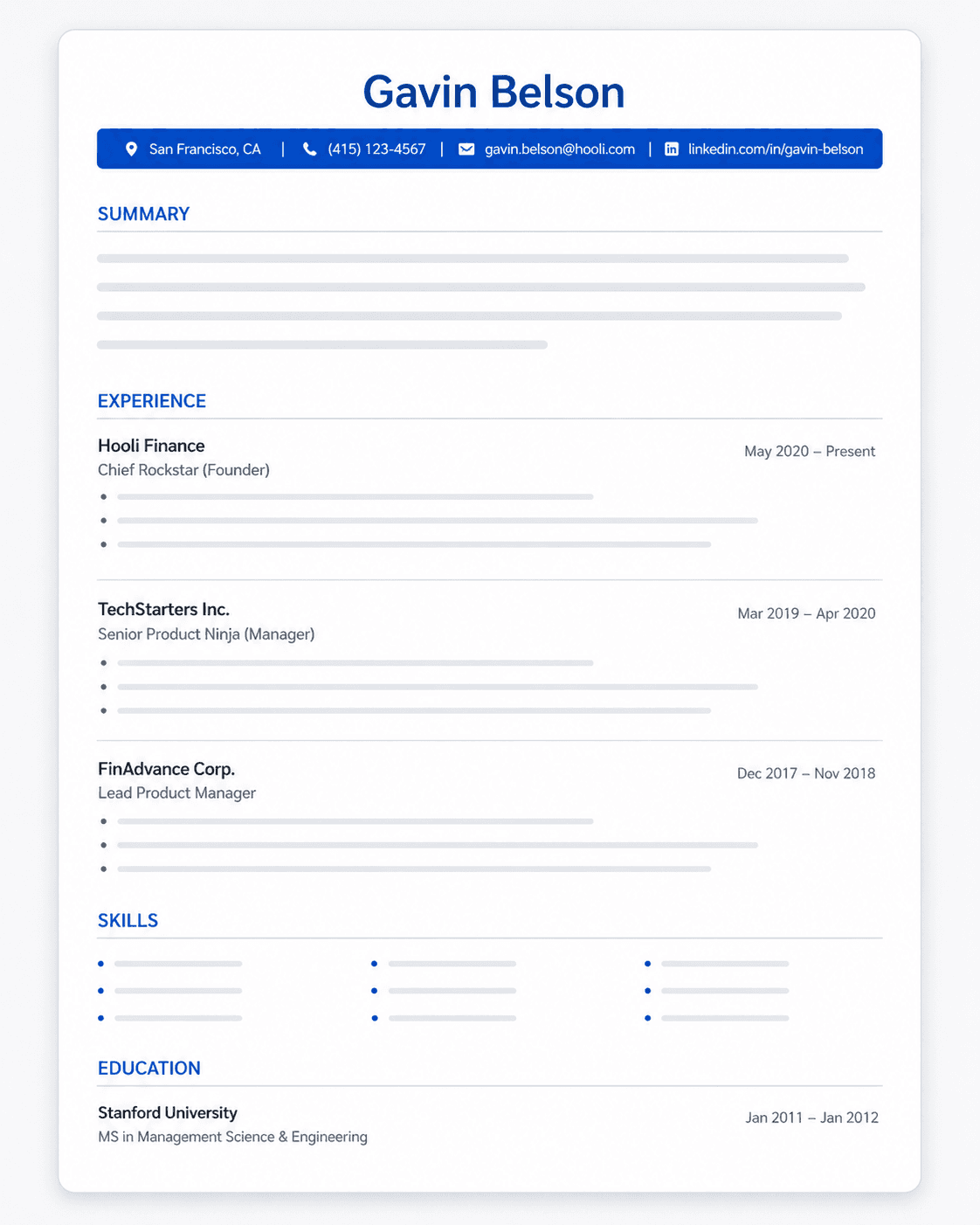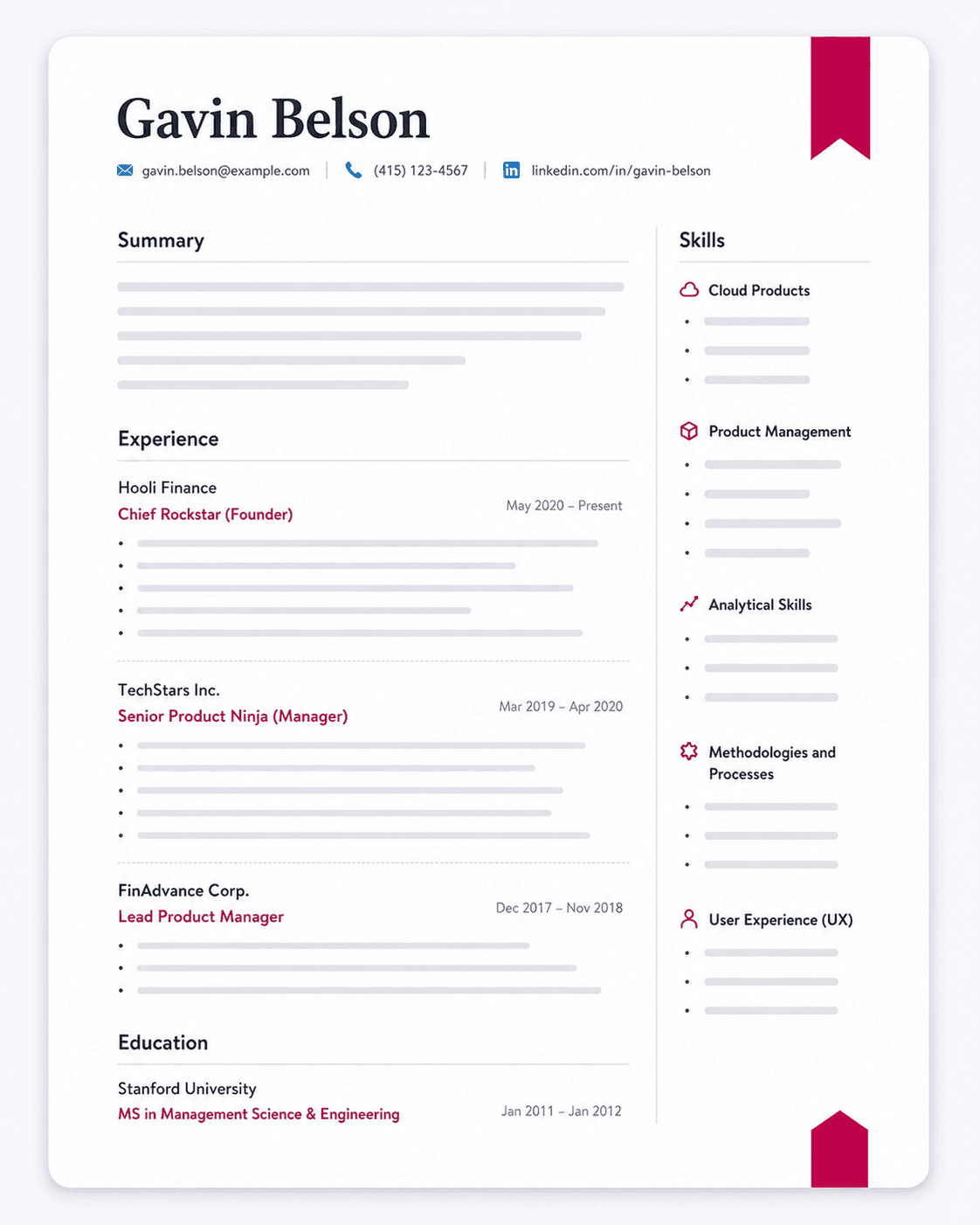
You've got 20 years of experience. You're perfect for the role. Yet your resume disappears into the void after every application.
The problem usually isn't your qualifications. It's that most employers manage applications through an applicant tracking system, and recruiters search that system by keyword. If your resume uses different terminology than the posting — "marketing automation" where they wrote "martech" — you don't surface in the search, and no one opens your file.
This guide gives you 500+ of the keywords that recur in real job descriptions across 13 industries, the four types recruiters actually search on, where to place them, and how many to use. It also clears up what an ATS does and doesn't do, because the popular version is wrong.
What You'll Learn in This Guide
- What an applicant tracking system actually does with your resume — it's not what you've been told
- The four types of keywords recruiters search on, and which to prioritise
- 500+ industry keywords across 13 fields
- Where to place keywords so they're found
- How to avoid the keyword stuffing a human reviewer will notice
What an ATS Actually Does
Applicant tracking systems don't usually reject your resume automatically. What they do is index it — parsing your experience into searchable fields so recruiters can filter and search a pool of hundreds of applicants.
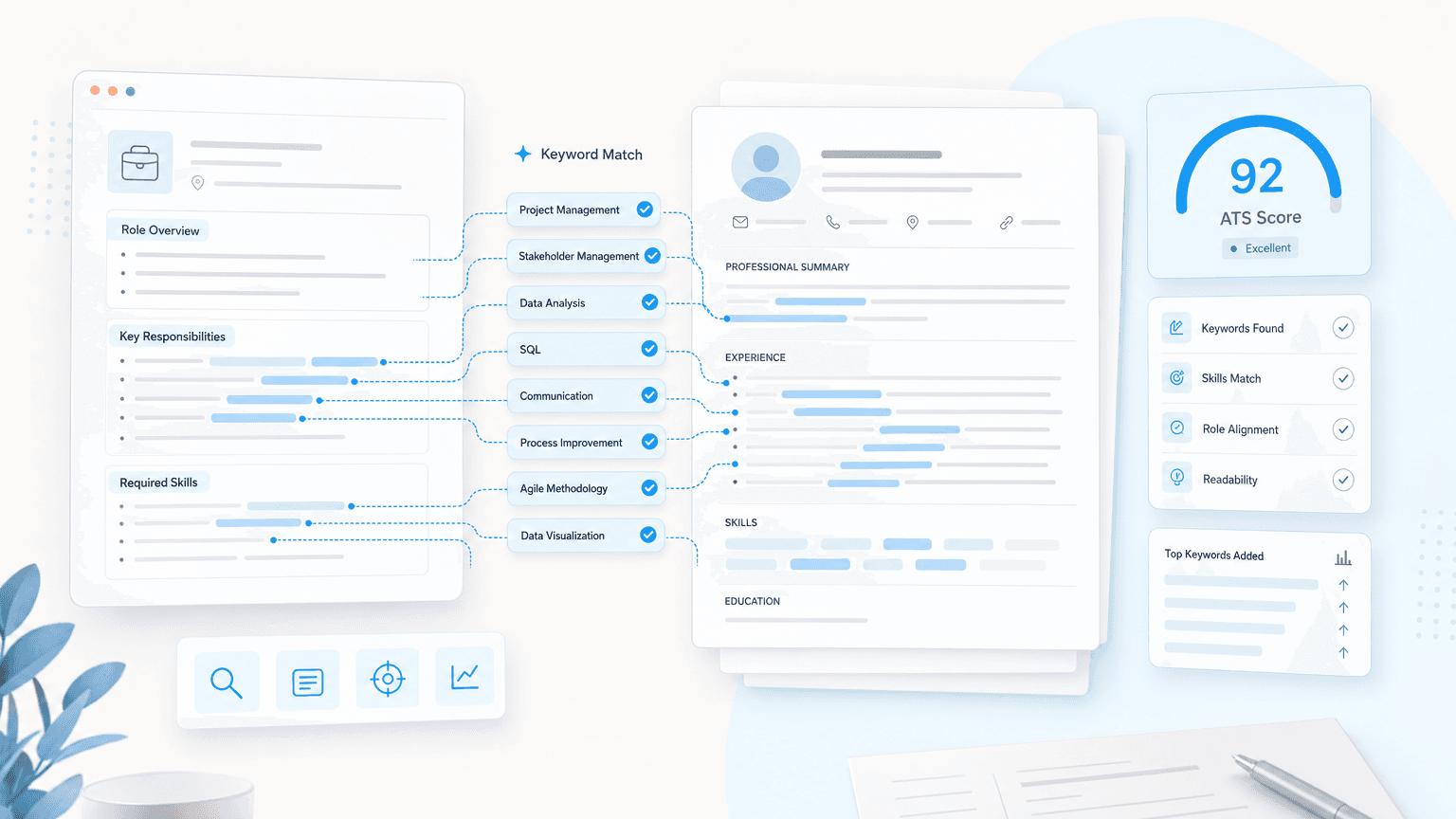
That distinction matters. You're not trying to beat a filter. You're trying to be findable when a recruiter searches their database for "project manager" and "stakeholder management," and to be legible when a human finally opens your file.
Automatic rejections do happen, but they're triggered by knockout questions recruiters configure themselves — work authorisation, minimum qualifications, location — not by an algorithm scoring your writing.
So keywords still matter, just for a more specific reason than "beating the filter": if your resume uses different terms than the recruiter searches on, you never appear in the results. In a market where job application response rates are already low, that's the difference between being in the shortlist pool and being invisible.
What Are ATS Keywords?
ATS keywords are the specific terms a recruiter searches for when filtering a pool of applicants — hard skills, software and tools, certifications, and job titles. Matching them to the job description makes your resume findable in the system and legible to the person who opens it.
Knowing the definition doesn't help much on its own. What helps is knowing which keywords apply to your role, whether your resume actually contains them, and where to put them. That's what the rest of this page covers.
The Four Types of ATS Keywords
Recruiters search on four categories of term. Most resumes over-index on one and neglect the rest.
Hard skills — the technical and functional capabilities the role requires. financial modelling, Python, contract negotiation, patient assessment. These are the highest-value keywords because they're the most commonly searched and the easiest to verify. → hard skills on your resume
Software and tools — named platforms and systems. Salesforce, SAP, Epic, Figma, Tableau. Frequently the most specific filter a recruiter applies, and the one most often missing from resumes. If a job description names a tool you've used, name it back exactly as they wrote it.
Certifications and credentials — PMP, CPA, RN licence, AWS Certified Solutions Architect, Series 7. Often used as a hard filter. Spell out the full name and the acronym at least once, since recruiters search both. → certifications on your resume
Job titles — the title on the posting, and its common variants. If you were a "Growth Marketing Lead" and the posting says "Demand Generation Manager," the posting's language needs to appear somewhere on your resume. This is the category people most often ignore, and it's frequently the first thing a recruiter searches.
Soft skills — worth a caution rather than a category. Terms like communication and problem-solving are searched far less often and prove far less, because anyone can type them. Include them where the job description emphasises them, but don't spend space you could give to a hard skill. → soft skills on your resume
The Two Types of Keywords (And Which Matters More)
Not all keywords carry equal weight.
Job-Specific Keywords (High Priority)
Exact terms from the specific job posting you're applying to. If the posting says "Salesforce CRM administration," that exact phrase is what the recruiter is most likely to search for.
Where to find them: Job description text, requirements section, responsibilities list
Industry-Wide Keywords (Medium Priority)
Standard terminology that appears across multiple job postings in your field. These show you speak the language of your profession.
Where to find them: Multiple job postings, LinkedIn profiles in your target role, industry reports
Priority rule: Job-specific keywords matter more because they directly match what this specific recruiter will search for. When a keyword appears in both categories (like "Agile" in tech roles), it's automatically high-priority.
How to Find ATS Keywords
Step 1: Analyze Job Descriptions
Pull 3-5 job descriptions for your target role from different companies. Copy the text and highlight every skill, software, certification, and technical term mentioned.
Keywords that repeat across multiple postings are industry-wide standards. Keywords unique to one posting are job-specific priorities.
Step 2: Identify What Recruiters Prioritise
Job descriptions have predictable sections where keywords concentrate:
- Requirements section → Keyword goldmine. Direct list of what a recruiter will filter on.
- Responsibilities section → Look for action verb + skill combinations: "manage Salesforce CRM" means "Salesforce CRM" is a keyword.
- Qualifications section → Certifications, experience levels, industry-specific requirements.
- Narrative text → Hidden keywords like "lead cross-functional teams" translate to "cross-functional leadership" or "cross-functional collaboration."
Software, tools, and platforms mentioned anywhere are high-priority. Certifications or degrees ("PMP certification preferred") are keywords.
Alternatively: Use an ATS Score Checker
If you don't want to analyze job descriptions manually, use an ATS score checker like Upplai or Jobscan. These tools automatically scan the job description and identify which keywords a recruiter would prioritize. You can also work through the same analysis in a chat window with ChatGPT prompts for keyword analysis.
They also compare those terms with your resume to highlight what's present, missing, or underused, and generate an ATS score — a percentage that reflects how well your resume matches the posting.
ATS Keywords by Industry
The keywords below are drawn from the language that appears most consistently in real job descriptions for each field, grouped by the four types recruiters actually search on.
How to use this section: find your industry, check which terms already appear on your resume, and identify what's missing. Then confirm against the specific posting you're applying to — always mirror its exact wording where it differs from ours.
One rule. Only add a keyword you can speak to in an interview. A term you can't back up costs you more than a term you don't have.
Jump to your industry: Technology · Data & Analytics · Finance & Accounting · Healthcare & Nursing · Sales · Marketing · Operations & Supply Chain · HR & Recruiting · Customer Service & Retail · Education · Legal & Consulting · Admin & Executive Support · Engineering & Skilled Trades
Technology and Software Engineering
Hard skills: software development · API design · RESTful APIs · microservices architecture · system design · distributed systems · CI/CD · unit testing · integration testing · test-driven development · code review · debugging · cloud architecture · containerisation · infrastructure as code · version control · agile development · Scrum · performance optimisation · database design
Software & tools: Python · Java · JavaScript · TypeScript · Go · React · Node.js · Angular · Vue.js · AWS · Azure · Google Cloud Platform · Docker · Kubernetes · Git · GitHub Actions · Jenkins · Terraform · PostgreSQL · MySQL · MongoDB · Redis · Jira · Datadog
Certifications: AWS Certified Solutions Architect · AWS Certified Developer · Microsoft Certified Azure Developer · Azure Fundamentals (AZ-900) · Google Cloud Professional Cloud Architect · Certified Kubernetes Administrator (CKA) · CompTIA Security+ · Certified Scrum Master (CSM)
Job titles: Software Engineer · Senior Software Engineer · Staff Engineer · Full Stack Developer · Backend Engineer · Frontend Engineer · Mobile Developer · DevOps Engineer · Site Reliability Engineer · Platform Engineer · Engineering Manager
→ Programming skills on your resume · Front end developer resume · AI engineer resume examples
Data and Analytics
Hard skills: data analysis · data modelling · ETL · ELT · data pipelines · data warehousing · statistical analysis · A/B testing · experiment design · hypothesis testing · regression analysis · predictive modelling · machine learning · feature engineering · data visualisation · dashboard development · SQL querying · data cleaning · KPI definition · cohort analysis
Software & tools: SQL · Python · R · pandas · NumPy · scikit-learn · Tableau · Power BI · Looker · Snowflake · dbt · Databricks · Apache Spark · Airflow · BigQuery · Redshift · Excel · Jupyter · Git · TensorFlow
Certifications: Google Data Analytics Professional Certificate · Microsoft Certified Data Analyst Associate · AWS Certified Data Analytics · Tableau Desktop Specialist · Databricks Certified Data Engineer · SAS Certified Specialist
Job titles: Data Analyst · Senior Data Analyst · Data Scientist · Analytics Engineer · Business Intelligence Analyst · Data Engineer · Machine Learning Engineer · Product Analyst · Research Analyst
→ Data analytics resume examples · Prompt engineer resume examples
Finance and Accounting
Hard skills: financial modelling · financial reporting · forecasting · budgeting · variance analysis · account reconciliation · month-end close · year-end close · accounts payable · accounts receivable · general ledger · GAAP · IFRS · audit support · internal controls · SOX compliance · cash flow management · cost accounting · financial analysis · tax preparation · payroll processing · fixed asset management · revenue recognition
Software & tools: Excel · advanced Excel · pivot tables · VLOOKUP · QuickBooks · SAP · Oracle NetSuite · Xero · Sage · Hyperion · Workday Financials · Bloomberg Terminal · Power BI · Tableau · Concur · Blackline
Certifications: CPA (Certified Public Accountant) · CFA (Chartered Financial Analyst) · CMA (Certified Management Accountant) · ACCA · CIA (Certified Internal Auditor) · Enrolled Agent (EA) · Series 7 · Series 63 · CFP (Certified Financial Planner)
Job titles: Staff Accountant · Senior Accountant · Accounting Manager · Financial Analyst · Senior Financial Analyst · FP&A Analyst · Controller · Assistant Controller · Audit Associate · Accounts Payable Specialist · Treasury Analyst
→ Wealth management resume keywords · Staff accountant resume · Accounting assistant resume
Healthcare and Nursing
Hard skills: patient assessment · patient care · care plan development · medication administration · IV therapy · wound care · vital signs monitoring · triage · patient education · discharge planning · clinical documentation · infection control · HIPAA compliance · EMR documentation · phlebotomy · venipuncture · specimen collection · case management · care coordination · telemetry monitoring · ventilator management · patient advocacy
Software & tools: Epic · Cerner · Meditech · Allscripts · athenahealth · eClinicalWorks · NextGen · Pyxis · Omnicell
Certifications: RN (Registered Nurse) · LPN · BSN · MSN · NCLEX-RN · BLS (Basic Life Support) · ACLS (Advanced Cardiovascular Life Support) · PALS (Pediatric Advanced Life Support) · CCRN · CNA (Certified Nursing Assistant) · CMA (Certified Medical Assistant) · CPR certification · TNCC
Job titles: Registered Nurse · Staff Nurse · Charge Nurse · Nurse Practitioner · ICU Nurse · Critical Care Nurse · Travel Nurse · Medical Assistant · Clinical Coordinator · Case Manager · Phlebotomist · Home Health Aide · Physician Assistant · Occupational Therapist
→ New grad nurse resume · Critical care nurse resume · Medical assistant resume · Phlebotomist resume sample
Sales
Hard skills: pipeline management · lead generation · prospecting · cold calling · cold outreach · account management · contract negotiation · closing · quota attainment · territory management · consultative selling · solution selling · discovery calls · objection handling · upselling · cross-selling · renewals · churn reduction · sales forecasting · CRM management · relationship building · B2B sales · SaaS sales
Software & tools: Salesforce · HubSpot · Outreach · Salesloft · Gong · Chorus · ZoomInfo · LinkedIn Sales Navigator · Apollo · Pipedrive · Clari · DocuSign
Certifications: Salesforce Certified Administrator · Challenger Sales · MEDDIC · MEDDPICC · Sandler Training · SPIN Selling · HubSpot Sales Software Certification
Job titles: Account Executive · Enterprise Account Executive · Sales Development Representative (SDR) · Business Development Representative (BDR) · Account Manager · Key Account Manager · Sales Manager · Regional Sales Director · Inside Sales Representative · Territory Manager
→ Sales resume keywords · Account executive resume · Car salesman resume
Marketing
Hard skills: content marketing · SEO · SEM · PPC · paid social · email marketing · marketing automation · campaign management · brand management · demand generation · lead nurturing · conversion rate optimisation · landing page optimisation · social media strategy · copywriting · content strategy · market research · competitive analysis · attribution modelling · budget management · GTM strategy · product marketing · influencer marketing
Software & tools: Google Analytics · GA4 · Google Ads · Google Tag Manager · Google Search Console · HubSpot · Marketo · Pardot · Mailchimp · Klaviyo · Semrush · Ahrefs · Screaming Frog · Hootsuite · Buffer · Canva · Figma · Salesforce Marketing Cloud · Meta Ads Manager · WordPress · Webflow
Certifications: Google Analytics Certification · Google Ads Certification · HubSpot Content Marketing Certification · HubSpot Inbound Certification · Meta Blueprint · Hootsuite Social Marketing Certification · Semrush SEO Toolkit
Job titles: Marketing Manager · Digital Marketing Manager · Content Marketing Manager · Growth Marketing Manager · Demand Generation Manager · Brand Manager · SEO Manager · Product Marketing Manager · Marketing Coordinator · Campaign Manager
Operations and Supply Chain
Hard skills: inventory management · supply chain management · logistics coordination · demand planning · procurement · sourcing · vendor management · supplier negotiation · warehouse operations · order fulfilment · shipping and receiving · process improvement · Lean manufacturing · Six Sigma · continuous improvement · capacity planning · freight coordination · route optimisation · quality control · cycle counting · KPI reporting · SOP development · forklift operation · pallet jack operation · safety compliance
Software & tools: SAP · Oracle SCM · NetSuite · WMS (Warehouse Management System) · Manhattan Associates · Blue Yonder · Fishbowl · Excel · Tableau · Power BI
Certifications: APICS CPIM · APICS CSCP · Six Sigma Green Belt · Six Sigma Black Belt · Lean Certification · OSHA 10 · OSHA 30 · Forklift Certification · PMP · CTP (Certified Transportation Professional)
Job titles: Operations Manager · Operations Coordinator · Supply Chain Analyst · Logistics Coordinator · Warehouse Supervisor · Warehouse Associate · Procurement Specialist · Buyer · Inventory Manager · Materials Manager · Machine Operator · Forklift Operator · Material Handler
→ Warehouse skills for a resume · Forklift operator resume · Machine operator resume · Material handler resume
HR and Recruiting
Hard skills: full-cycle recruiting · talent acquisition · candidate sourcing · Boolean search · technical recruiting · employee relations · onboarding · offboarding · performance management · benefits administration · HRIS management · compensation analysis · job architecture · employment law compliance · FMLA · employee engagement · succession planning · workforce planning · offer negotiation · exit interviews · DEI initiatives · training and development · policy development
Software & tools: Workday · Greenhouse · Lever · BambooHR · ADP · SAP SuccessFactors · Taleo · iCIMS · LinkedIn Recruiter · Gusto · Culture Amp · Rippling
Certifications: SHRM-CP · SHRM-SCP · PHR (Professional in Human Resources) · SPHR · aPHR · CIPD · CCP (Certified Compensation Professional)
Job titles: HR Generalist · HR Business Partner · HR Manager · Talent Acquisition Specialist · Technical Recruiter · Recruiting Coordinator · People Operations Manager · Compensation Analyst · Benefits Administrator · HR Coordinator
Customer Service and Retail
Hard skills: customer support · ticket resolution · escalation management · conflict resolution · complaint handling · order processing · returns processing · POS operation · cash handling · visual merchandising · planogram execution · inventory reconciliation · stock replenishment · upselling · loss prevention · shift scheduling · staff training · CSAT improvement · NPS · SLA adherence · first-contact resolution · product knowledge · account retention
Software & tools: Zendesk · Salesforce Service Cloud · Intercom · Freshdesk · Kustomer · Gorgias · Shopify · Square · Lightspeed · Slack · Talkdesk
Certifications: HDI Customer Service Representative · ITIL Foundation · Certified Customer Service Professional (CCSP) · Food Handler Certification
Job titles: Customer Service Representative · Customer Support Specialist · Customer Success Manager · Technical Support Specialist · Retail Sales Associate · Store Manager · Assistant Store Manager · Shift Supervisor · Team Lead · Call Center Representative
→ Customer service skills for your resume · Customer service resume examples · Store manager resume examples
Education
Hard skills: curriculum development · lesson planning · differentiated instruction · classroom management · student assessment · formative assessment · summative assessment · IEP development · IEP implementation · special education · 504 plans · data-driven instruction · progress monitoring · parent communication · behaviour management · positive behaviour support · small group instruction · literacy instruction · phonics instruction · STEM instruction · Common Core alignment · student counselling · crisis intervention
Software & tools: Google Classroom · Canvas · Blackboard · Schoology · PowerSchool · Seesaw · Kahoot · Nearpod · Zoom · Microsoft Teams · IXL
Certifications: State Teaching License · Teaching Certification · ESL Certification · TESOL · National Board Certification · Special Education Endorsement · Reading Specialist Certification · CPR/First Aid · Child Development Associate (CDA)
Job titles: Teacher · Elementary Teacher · Secondary Teacher · Special Education Teacher · Instructional Coach · School Counselor · Teaching Assistant · Paraprofessional · Curriculum Specialist · Dance Teacher · Substitute Teacher
→ Special education teacher resume · School counselor resume · Teaching assistantship resume · Dance teacher resume
Legal and Consulting
Hard skills: legal research · contract drafting · contract review · contract negotiation · due diligence · litigation support · case management · e-discovery · document review · regulatory compliance · deposition preparation · trial preparation · legal writing · client advisory · risk assessment · stakeholder management · business process analysis · change management · financial due diligence · market analysis · project scoping · workshop facilitation · executive reporting
Software & tools: Westlaw · LexisNexis · Relativity · Clio · iManage · NetDocuments · DocuSign · PACER · PowerPoint · Excel · Tableau · Miro
Certifications: JD (Juris Doctor) · Bar Admission · NALA Certified Paralegal (CP) · NFPA PACE · Certified Legal Manager (CLM) · PMP · Six Sigma Green Belt · CIPP (Certified Information Privacy Professional)
Job titles: Paralegal · Legal Assistant · Contracts Manager · Compliance Officer · Corporate Counsel · Management Consultant · Associate Consultant · Senior Consultant · Engagement Manager · Business Analyst · Strategy Analyst
→ Consulting resume keywords · Paralegal resume examples · Company secretary resume template
Admin and Executive Support
Hard skills: calendar management · complex calendar management · travel coordination · international travel booking · expense reporting · expense reconciliation · meeting coordination · minute taking · correspondence management · event planning · vendor coordination · office management · board support · board meeting preparation · gatekeeping · project coordination · document preparation · presentation preparation · confidential information handling · onboarding support · facilities coordination · supply ordering
Software & tools: Microsoft Outlook · Microsoft Office Suite · Google Workspace · Concur · Expensify · Navan · Slack · Asana · Monday.com · Notion · Trello · Zoom · DocuSign · SharePoint
Certifications: Certified Administrative Professional (CAP) · Microsoft Office Specialist (MOS) · Certified Executive Administrative Professional (CEAP) · Notary Public
Job titles: Executive Assistant · Senior Executive Assistant · Administrative Assistant · Executive Business Partner · Office Manager · Chief of Staff · Personal Assistant · Office Coordinator · Receptionist
→ Executive assistant resume keywords · Administrative assistant resume
Engineering and Skilled Trades
Hard skills: electrical systems · circuit design · schematic reading · blueprint reading · PLC programming · control systems · preventive maintenance · troubleshooting · equipment installation · equipment calibration · HVAC installation · HVAC maintenance · refrigeration · welding · pipefitting · conduit bending · load calculations · NEC compliance · OSHA compliance · lockout/tagout · quality inspection · CAD drafting · project estimation
Software & tools: AutoCAD · SolidWorks · Revit · MATLAB · Simulink · ETAP · Allen-Bradley · Siemens PLC · SCADA · Bluebeam · Microsoft Project
Certifications: PE (Professional Engineer) · EIT/FE (Fundamentals of Engineering) · Journeyman Electrician License · Master Electrician License · EPA 608 Certification · NATE Certification · OSHA 10 · OSHA 30 · AWS Certified Welder · NICET Certification
Job titles: Electrical Engineer · Mechanical Engineer · Electrician · Journeyman Electrician · HVAC Technician · Maintenance Technician · Field Service Technician · Manufacturing Engineer · Project Engineer · Controls Engineer
→ Electrical engineering resume keywords · Electrician resume examples · HVAC resume examples
Check Which Keywords Your Resume Is Missing
Reading a keyword list tells you what exists. It doesn't tell you what's missing from your resume — and that's the part that matters.
The fastest way to find out is to run your resume against the actual job description and see which of its terms appear in your document and which don't. You can do this manually: paste the job description into a document, highlight every skill, tool, certification and title it names, then search your resume for each one. It takes about fifteen minutes per application.
Or you can have it checked automatically.
→ Check your resume against a job description for free — see your ATS score and exactly which keywords from the posting are missing.
What to do with the result. Add the missing terms only where they're true and where they fit naturally — in your skills section if it's a tool you've used, in a bullet point if it's something you did. Don't paste a keyword list into your resume. Recruiters spot it, and it reads as desperation rather than qualification.
→ Check ATS keywords with ChatGPT if you'd rather work through it in a chat window.
Keyword Frequency Analysis: What Actually Matters
Analyze how often keywords appear across job postings:
- Appears in 80%+ of postings → Must-have (High Priority)
- Appears in 40-60% of postings → Nice-to-have (Medium Priority)
- Appears in less than 40% → Niche skill (Low Priority)
Additional priority rules:
- "Required" section keywords outweigh "Preferred" section
- Keywords listed first typically get weighted more heavily
- Focus on must-have keywords, include nice-to-have if you have them, skip niche unless applying to a specific company
Reality check: If you lack 50%+ of the required skills, keyword optimization won't help. You'll fail human review. Don't waste time on applications where you're not a strong fit.
Keyword Priorities by Seniority
Beyond your industry, the terms that carry weight shift as you get more senior:
Mid-level (roughly 10–15 years): Project Management, Data Analysis, Process Optimization, Team Coordination, Budget Management, Stakeholder Communication.
Senior (roughly 15–25 years): Strategic Planning, Executive Leadership, Organizational Development, P&L Management, Change Management, Board-Level Communication, Risk Management.
These sit alongside your industry keywords, not instead of them — a senior finance leader still needs "GAAP" and "financial modelling" on the page.
How to Use Keywords Without Sounding Like a Robot
Natural integration means keywords appear because you're describing actual work, not forcing them into sentences.
❌ "I am a strategic leader with strategic planning skills who strategically manages teams"
✅ "Led strategic planning initiatives that resulted in 15% revenue growth and improved operational efficiency"
Keyword Density Guidelines
- Target: most of the hard skills, tools and certifications named in the posting — usually 10–20 terms
- Placement: Job titles, bullet points, skills section, professional summary
- Context: "Managed Salesforce CRM implementation for 500+ users" beats "Salesforce CRM Salesforce"
The readability test: Read your resume aloud. If it sounds like a robot wrote it, you've over-optimized.
Where to Place Keywords (Priority Zones)
Just adding keywords in your resume isn't enough. You need to add them in the right places for maximum impact:
| Resume Section | Priority | How to Use |
|---|---|---|
| Job Titles | High | Use industry-standard titles. Clarify vague titles with descriptions. |
| Professional Summary | High | Include 3-5 most important keywords naturally in 2-3 sentences. |
| Skills Section | High | List 10-15 relevant keywords organized by category. See the resume skills section guide. |
| Job Responsibility Bullets | Medium-High | Weave keywords into accomplishment statements with metrics. |
| Certifications | Medium | List full names and acronyms: "Project Management Professional (PMP)" |
The 4-Step Integration Process
Step 1: Assess Your Fit First
Before optimizing keywords, check if you meet the baseline:
- Required skills: You should have 80%+
- Preferred skills: You should have 50%+
If you're missing critical requirements, keyword optimization won't help. You'll fail human review. This step prevents wasting time on roles you're not qualified for.
Step 2: Map Keywords to Real Experience
Create a simple inventory:
| Job Description Keyword | Your Experience | Priority |
|---|---|---|
| Salesforce CRM | Led implementation for 200+ users | Must-have |
| Agile methodology | Managed 15+ sprints across 3 products | Must-have |
| Python | None | Missing |
Focus on must-have and nice-to-have keywords. Don't force missing keywords into your resume.
Step 3: Integrate Keywords Naturally
Place keywords where they make sense in your actual work experience bullets:
"Implemented Salesforce CRM system for 500+ users, reducing manual data entry by 40% and improving sales team productivity by 25%."
This sentence includes:
- Keyword (Salesforce CRM)
- Scope (500+ users)
- Impact (40% reduction)
- Result (25% improvement)
Step 4: Verify Your Coverage
Open your resume and the job description side-by-side. Highlight keywords from the posting that appear in your resume. Count them. For a repeatable version of this, optimise your resume for ATS step by step.
Target coverage:
- 60-80% = Good
- 80%+ = Excellent
- Below 50% = Likely won't surface in a recruiter search
Stop optimizing when:
- You've reached 70%+ keyword match
- You've included all keywords matching your experience
- Adding more would require keyword stuffing
Tools like Jobscan or Upplai can automate this analysis and show which keywords are missing, saving you hours of manual work.
What Happens After You Pass ATS
Being findable is the first hurdle, not the finish line. Once your resume reaches a recruiter (the second round of screening), they evaluate:
- Accomplishments and impact (quantifiable results)
- Career progression (upward trajectory)
- Culture fit (values alignment)
- Communication skills (clarity and professionalism)
Keywords get you found, but to get hired, you must get noticed by the recruiter.
Your resume should tell a story: "I did X, using Y tools, and achieved Z results."
Example: "Led cross-functional teams (keyword) using Agile methodology (keyword) to deliver product launch 2 months ahead of schedule, resulting in $2M revenue in first quarter."
Mistakes That Still Get You Rejected
Keyword stuffing: Repeating keywords unnaturally reads as low-effort to the human who opens your file, even if the system doesn't care.
Claiming skills you don't have: If you list "Python" but can't code, you'll fail the technical interview. Keywords get you screened in. Your actual skills get you hired.
Ignoring job-specific keywords: Focusing only on industry-wide keywords misses what this specific recruiter will search for.
Poor placement: Putting keywords only in the skills section instead of throughout your resume reduces their impact.
Same resume for every application: Each job posting has different keyword priorities. Tailoring takes time, but generic resumes don't surface.
Outdated keywords: Terms like "Flash" or "Silverlight" in tech no longer matter. Update your keyword list regularly.
Keywords That Hurt You
Not every term you can add is worth adding. Some actively cost you space or credibility.
Empty descriptors. Hard-working, team player, detail-oriented, results-driven. Nobody searches for these, everybody claims them, and they consume lines that could hold evidence. → Resume buzzwords to avoid
Outdated technology. Listing tools that were current a decade ago dates you without adding capability. Keep them only if the posting names them.
Skills you can't demonstrate. The fastest way to lose an interview is to list something you added for keyword coverage and get asked about it. If you couldn't answer a follow-up question, take it off.
Over-broad terms. Microsoft Office tells a recruiter almost nothing. Advanced Excel — pivot tables, Power Query, financial modelling tells them something specific and searchable.
Someone else's job title. Mirroring the posting's title is sensible; claiming a seniority you haven't held isn't. "Senior" in front of a title you never had is checkable, and it gets checked.
Key Takeaways
ATS keywords are the bridge between your qualifications and the recruiters searching a database of applicants before anyone reads a full resume.
What matters:
- An ATS mostly indexes and searches — it doesn't auto-reject on writing quality. Being findable is the goal.
- Recruiters search on four types of term: hard skills, software and tools, certifications, and job titles. Prioritise job-specific over industry-wide.
- Keywords must match your actual experience. Stuffing reads badly to the human reviewer.
- Place keywords across job titles, summary, skills section, and achievement bullets — not one block.
- Aim to cover most of the posting's named skills, tools and certifications; 10–20 terms is typical.
Your experience matters. Your qualifications matter. But if the recruiter's search doesn't surface them, you never get the chance to prove it.
Mastering ATS keywords isn't gaming the system. It's ensuring your actual qualifications are visible to the people who can hire you. For the mechanics, see how an ATS works.