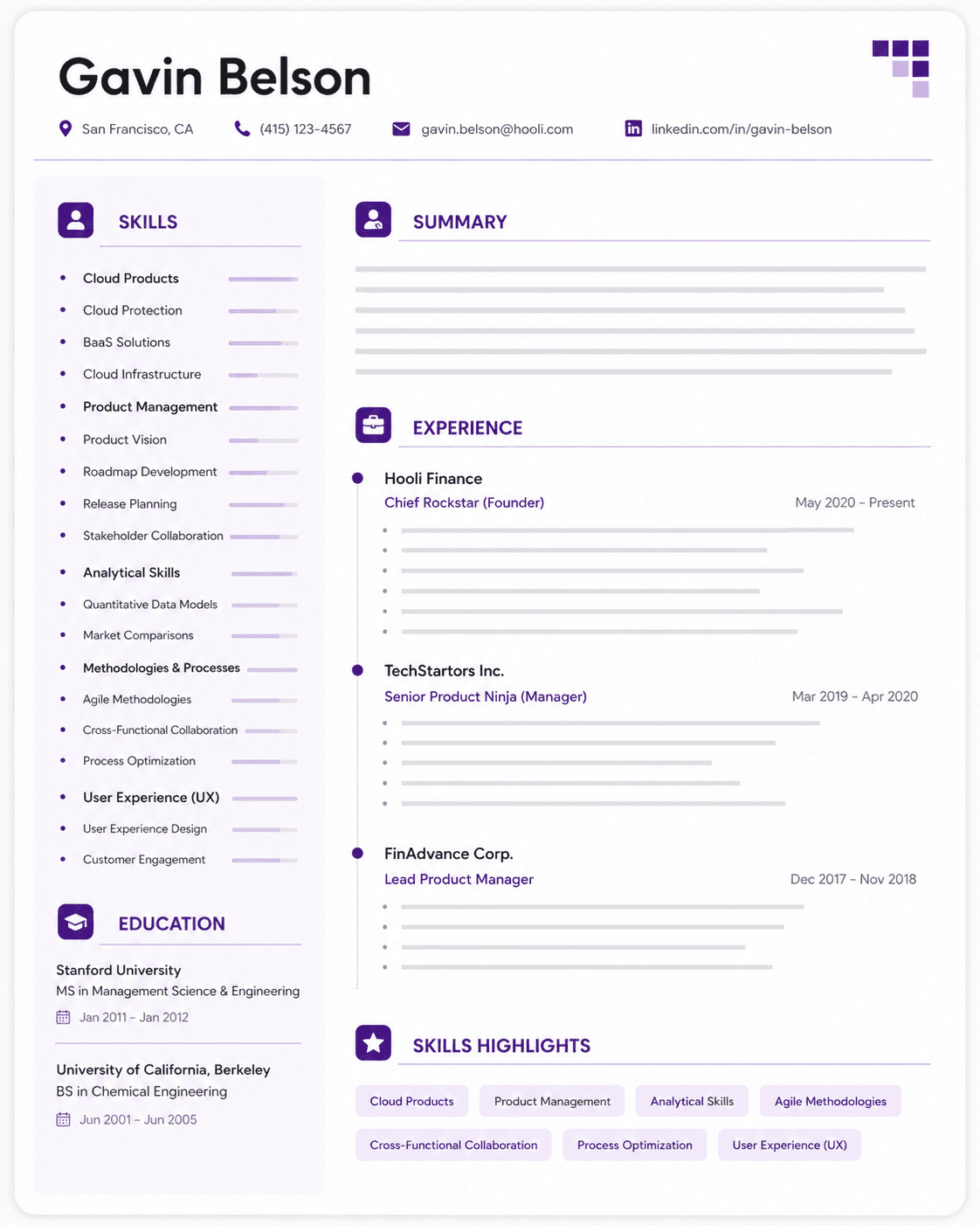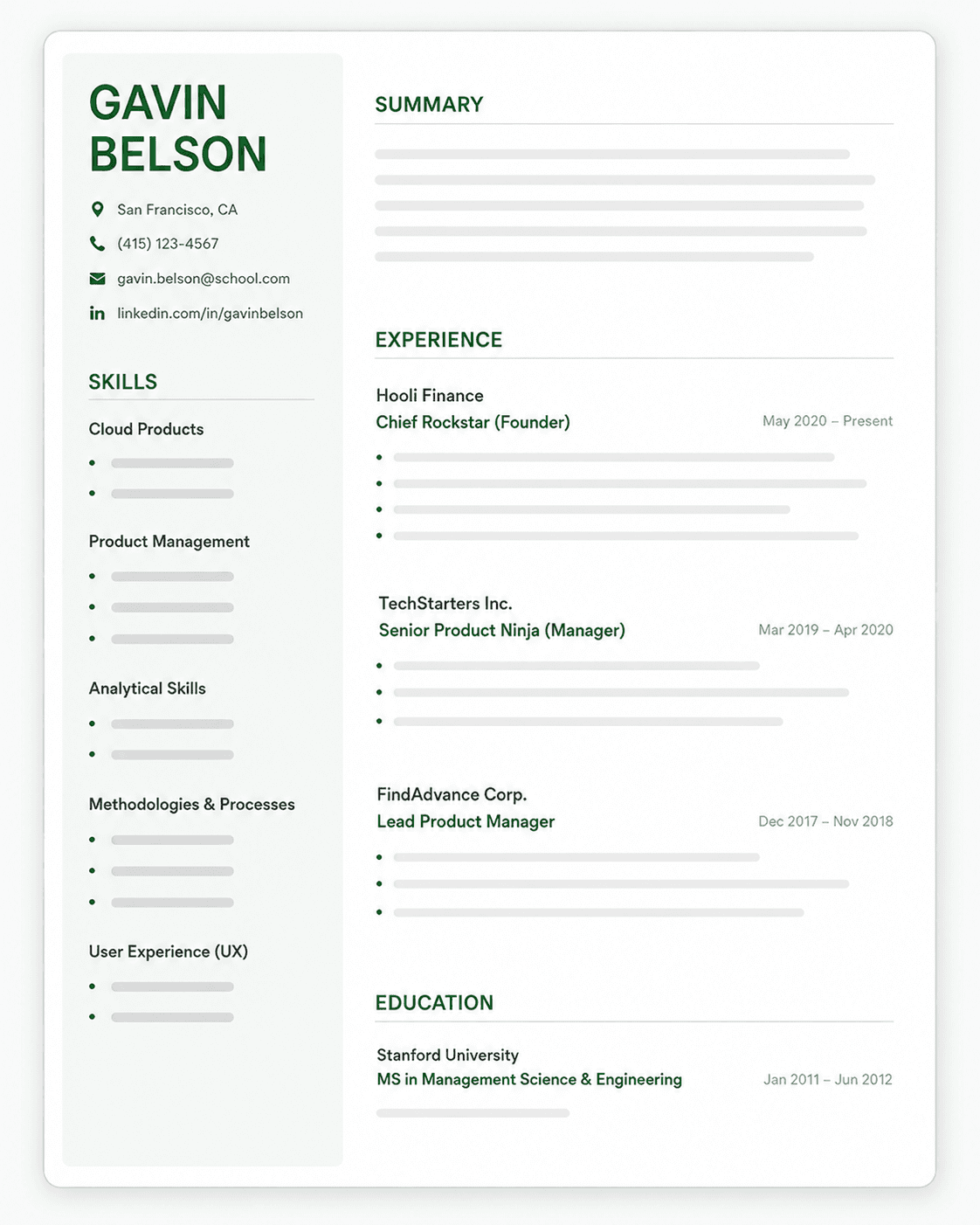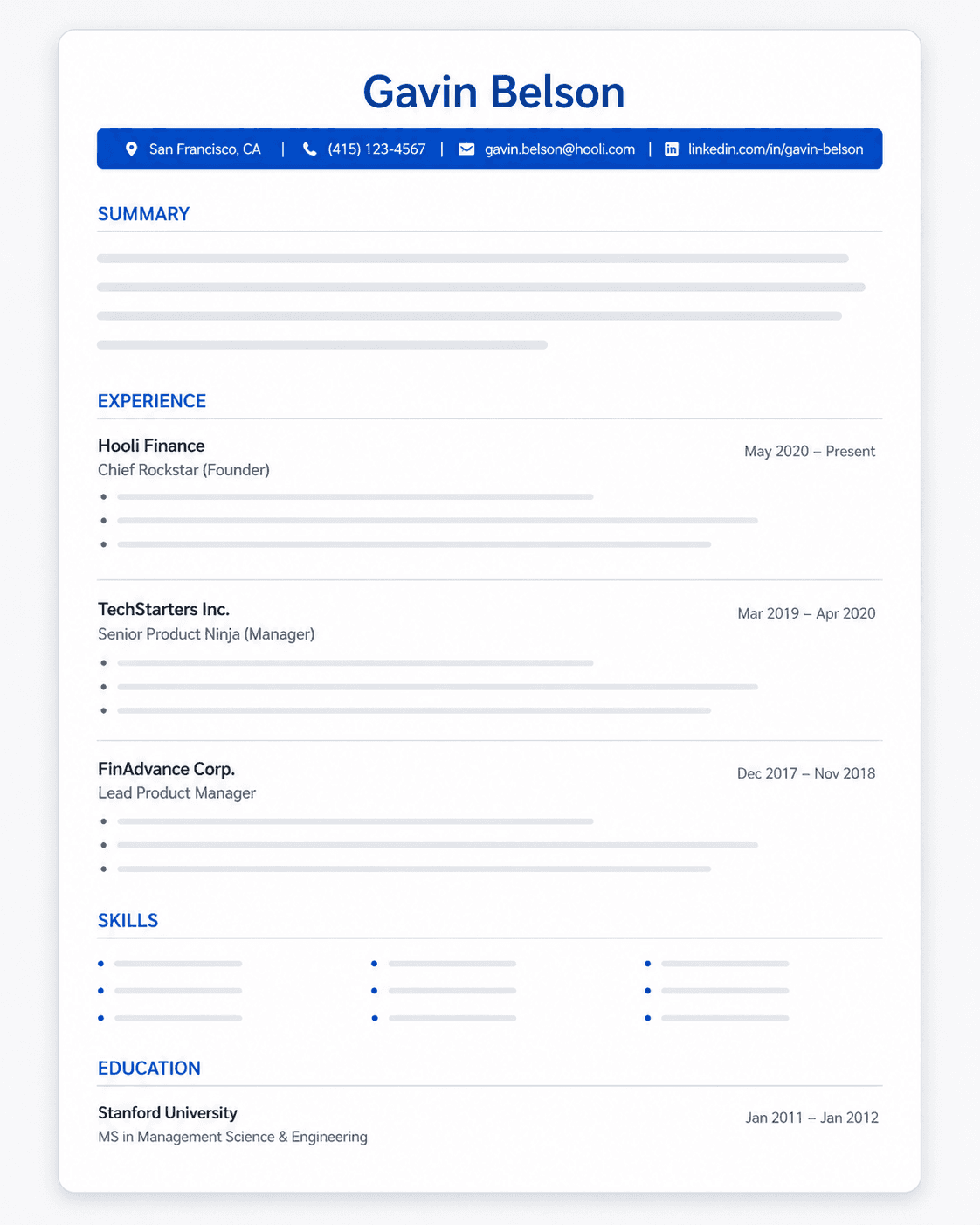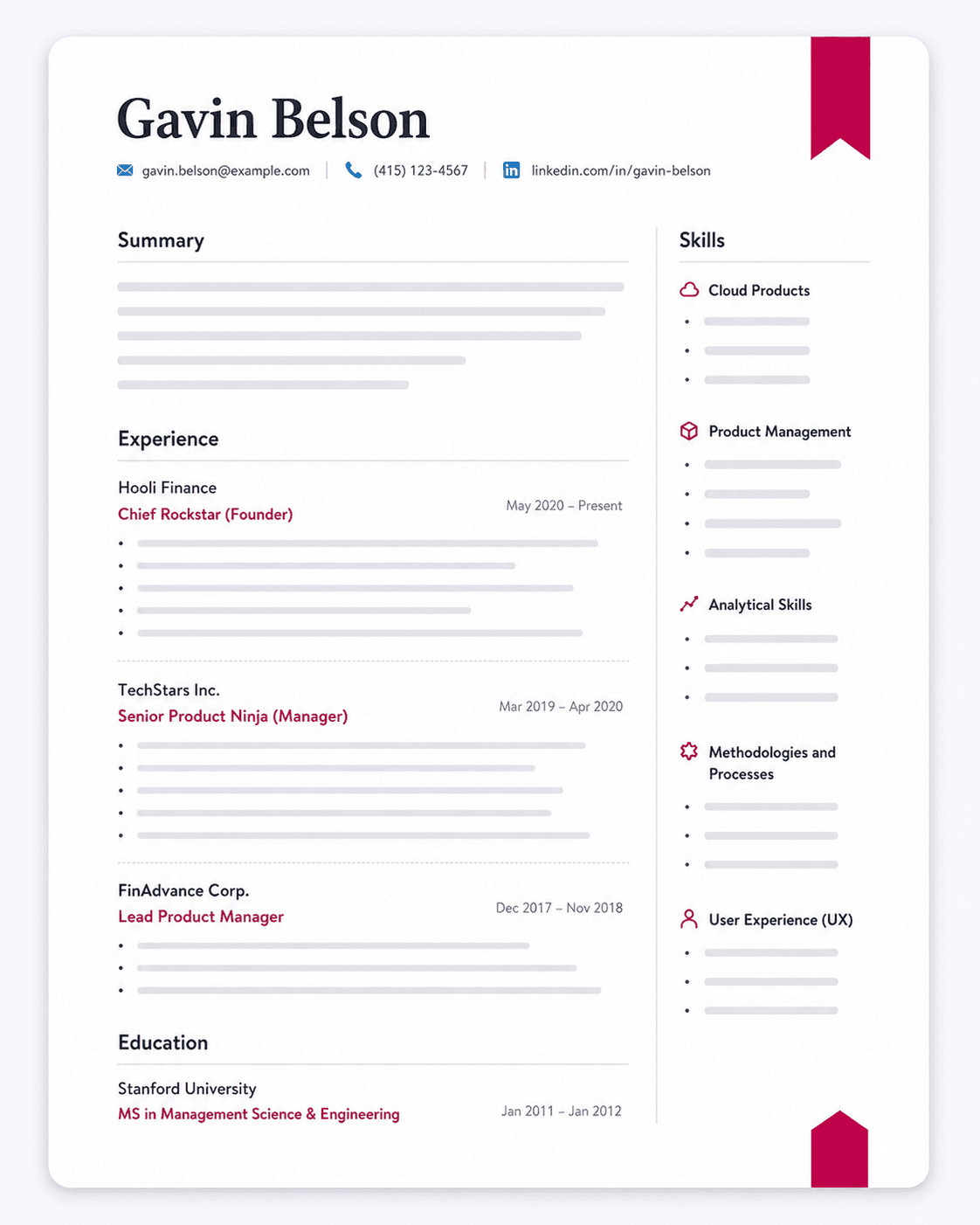
You wrote your resume with ChatGPT, hit submit, and now you are wondering whether the company's software will quietly flag it and drop you before a human ever looks. It is a fair worry when almost every mid-size and large employer screens applications automatically.
The short answer is reassuring. The longer answer is more useful, because once you know what these systems actually check, you know exactly what to fix.
This guide covers whether an ATS can detect AI writing, what it screens for instead, who really notices a ChatGPT resume, the two places AI detection genuinely applies, and how to use ChatGPT so your resume gets past both the software and the person reading it.
Can an ATS Detect a ChatGPT Resume? The Short Answer Is No
No major applicant tracking system detects whether AI wrote your resume. The systems that companies run, Workday, Greenhouse, iCIMS, SAP SuccessFactors, Lever, and Oracle Taleo, are built to match candidates to a job. They do not try to identify who wrote a bullet point. The screening algorithm is agnostic to whether you used ChatGPT, a resume builder, or a typewriter.
There are two reasons this is not a feature. First, the technology to detect AI text reliably does not exist. Detectors produce false positives on plain human writing and miss lightly edited AI text, and OpenAI retired its own classifier after it reached only about 26% accuracy. No serious hiring platform is going to auto-reject candidates on a coin flip.
Second, doing so would be a legal problem. Filtering applicants based on how a resume was written invites liability under emerging rules like the EU AI Act, New York City's Local Law 144 on automated hiring tools, and EEOC guidance on algorithmic bias. Vendors have every reason to avoid that exposure and no reason to add a detector that does not work.
So the fear that a machine will spot the ChatGPT phrasing and toss your application is misplaced. What can go wrong happens somewhere else entirely.
What an ATS Actually Screens For
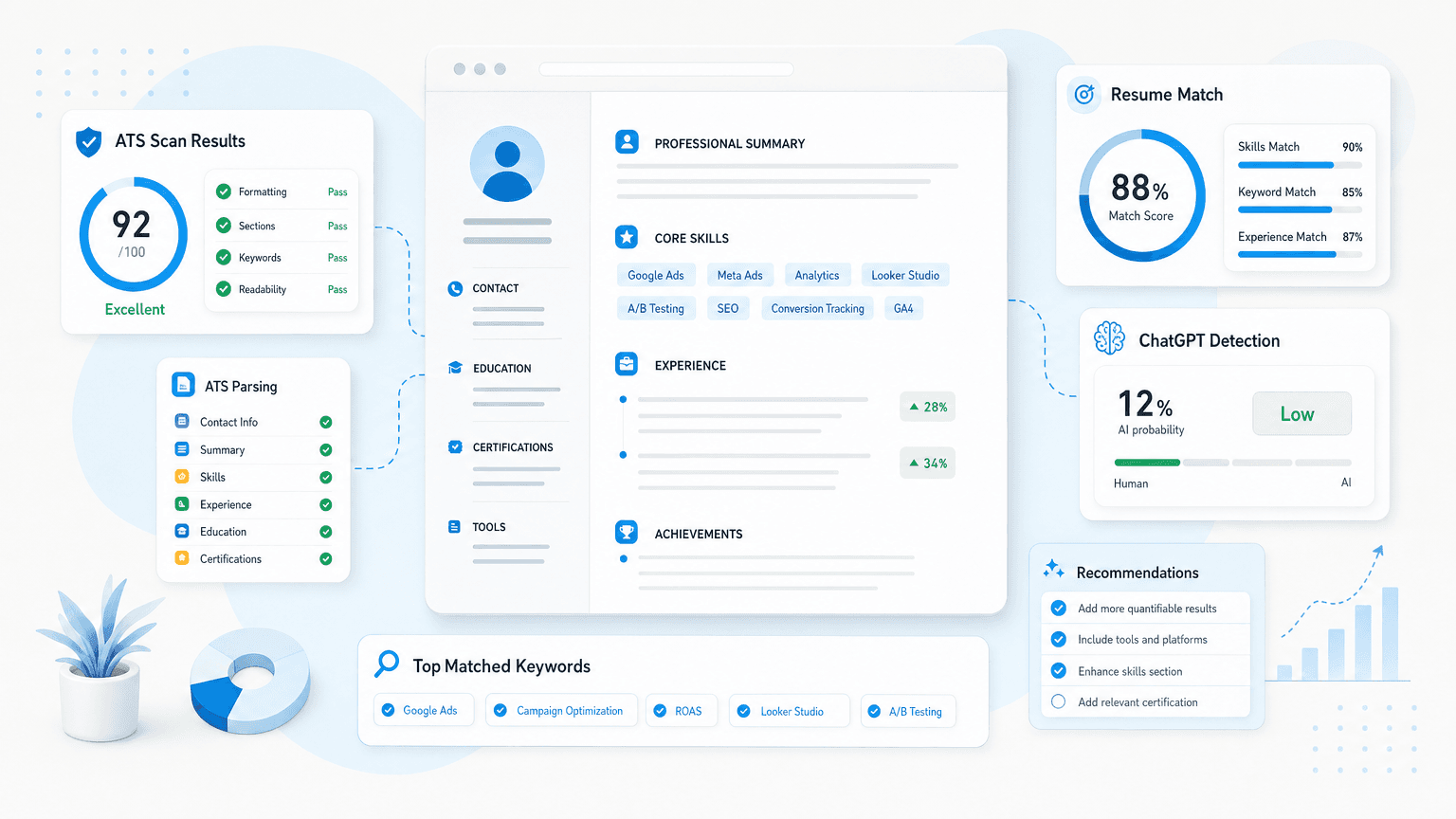
An ATS runs a plain, mechanical pipeline. It extracts your contact details, work history, education, skills, and dates into structured fields, then ranks you against the job requisition based on how well your keywords and experience match. That ranking, plus whether the file parses cleanly, decides if a recruiter ever sees you. If you want the mechanics, our guide to ATS resume optimization breaks down how the scoring works.
This is where applications really die. Up to 80% of resumes are filtered out before a human reads them, and it happens for reasons that have nothing to do with AI:
- Keyword mismatch. The resume does not use the specific skills, tools, and titles named in the job description, so it ranks low for relevance.
- Parsing failure. Tables, text boxes, images, columns, and headers or footers confuse the parser, so fields come through blank or scrambled.
- Thin relevance. The content is generic and could apply to any job, so nothing signals a strong fit for this one.
A ChatGPT resume is vulnerable to all three. Raw AI output tends to be generic, and people often paste it into a nicely designed template that a parser cannot read. The AI authorship itself is never the trigger. Fix the keywords and the formatting and you clear the gate that actually matters.
Who Can Actually Tell You Used ChatGPT: The Human Recruiter
The real detector is a person. Recruiters read hundreds of resumes a week, and after a year of AI-written applications they spot the pattern fast. They are not running software. They are noticing that your resume sounds exactly like the last forty they read.
A few tells give it away almost instantly:
- Recycled buzzwords. Words like leverage, spearhead, delve, pivotal, robust, dynamic, and seamless show up in AI drafts far more than in human writing. Recruiters now read them as a signal.
- Identical bullet structure. AI tends to write every bullet the same way, an action verb followed by an adjective, a noun, and a neat prepositional phrase, line after line.
- No specifics. AI is good at confident phrasing and bad at the real details: the actual tool you fought with, the odd constraint on your team, the number that made a project matter.
- Leftover artifacts. Stray brackets, placeholder notes like "add numbers here," and a font that does not match the rest of the page are dead giveaways that the text was pasted straight from a chat window.
Here is the difference a recruiter feels in the first few seconds.
"Results-driven professional who leveraged cross-functional synergies to spearhead innovative solutions and drive dynamic business outcomes."
"Led a 6-person support team through a CRM migration to Zendesk, cutting first-response time from 14 hours to under 3 and lifting CSAT from 82% to 94% in two quarters."
The first costs you nothing with the ATS and everything with the human. When a resume reads like a template, a recruiter skims past it, because there is no evidence of a specific person who did specific things. That is the actual risk of leaning on ChatGPT, and it is a writing problem you can solve.
Where AI Detection Actually Does Happen
To be accurate, there are two spots where AI use genuinely gets caught, and neither is the resume parser.
The first is separate detection software applied to writing. Some employers run cover letters, application essays, or take-home writing samples through tools like GPTZero or Copyleaks. These tools are unreliable and flag plenty of human writing by mistake, so most companies treat their output as a weak signal rather than a verdict. Still, if you paste an obviously generic AI cover letter, you are more exposed there than on the resume itself.
The second is the interview, and it is the one that really bites. A resume claim that AI inflated, or that you never fully understood, falls apart the moment a recruiter asks you to walk through it. If your resume says you "architected a data pipeline that cut costs 30%," you need to explain the pipeline, the costs, and how you measured the 30%. Human verification is the detector no one can trick, which is exactly why every line on your resume has to be true and yours.
How to Use ChatGPT on Your Resume Without Getting Filtered or Flagged
None of this means avoid ChatGPT. Most people who draft a resume with it still land interviews. It means use it as a first draft and do the part AI cannot: make it specific and make it sound like you. For the exact prompts, our guide to using ChatGPT for resume writing walks through the workflow.
Before you submit an AI-drafted resume:
- Replace every generic bullet with a real number: team size, dollar figure, percentage, timeline, or volume handled.
- Name the actual tools, systems, and methods you used. AI leaves these out because it does not know them.
- Mirror the job description's exact wording for skills and titles. This is the language the ATS matches on.
- Cut the tell-tale words: leverage, spearhead, delve, pivotal, dynamic, robust, seamless.
- Read it aloud. If a sentence does not sound like how you actually describe your work, rewrite it.
- Keep the layout simple. Single column, standard headings, no tables or text boxes, so the parser reads every field.
The one step people skip is verification. ChatGPT can tell you a resume looks ATS-friendly, but it is guessing. It does not run an ATS, it does not know which keywords carry the most weight for this specific job, and it gives you no way to confirm that an edit actually improved your odds. That gap is worth closing before you apply.
Why a ChatGPT "ATS Score" Isn't a Real ATS Score
Ask ChatGPT for an ATS score and it will give you a confident number. The problem is that the number is an estimate. Vanilla ChatGPT does not run an actual ATS algorithm, it cannot rank which missing keywords matter most, and it offers no way to check whether your edits helped. You are optimizing against a guess.
Upplai closes that gap. It is a transparent resume AI that scores your resume against a specific job the way an ATS would, then helps you tailor it without losing your own voice. Here is what that adds on top of a raw ChatGPT draft:
- A real ATS score instead of an estimate. A 0 to 100 score plus a Low, Medium, or High likelihood of passing, updated in real time as you edit, with no download and re-upload cycle.
- Keyword analysis ranked by impact. It surfaces the missing keywords that actually matter for that job, in priority order, instead of a flat list.
- Transparent suggestions you control. Every change comes with a plain-language reason, and you accept or reject each one, so nothing gets rewritten behind your back.
- No hallucinated experience. It works from what is already on your resume and never invents a job or a metric, which keeps your resume true and interview-proof.
- A recruiter score and bias flags. A second score for real job fit sits next to the ATS score, and the tool flags phrasing that could trigger recruiter bias.
Upplai also runs inside ChatGPT. If that is where you draft, you can add the Upplai ATS checker for ChatGPT, paste your resume and the job description, and get a real ATS score in the same conversation, using free ChatGPT plus a free Upplai account.
See your real ATS score in minutes
Upload your resume, paste the job description, and get a real ATS score with the keywords that actually matter for the role.