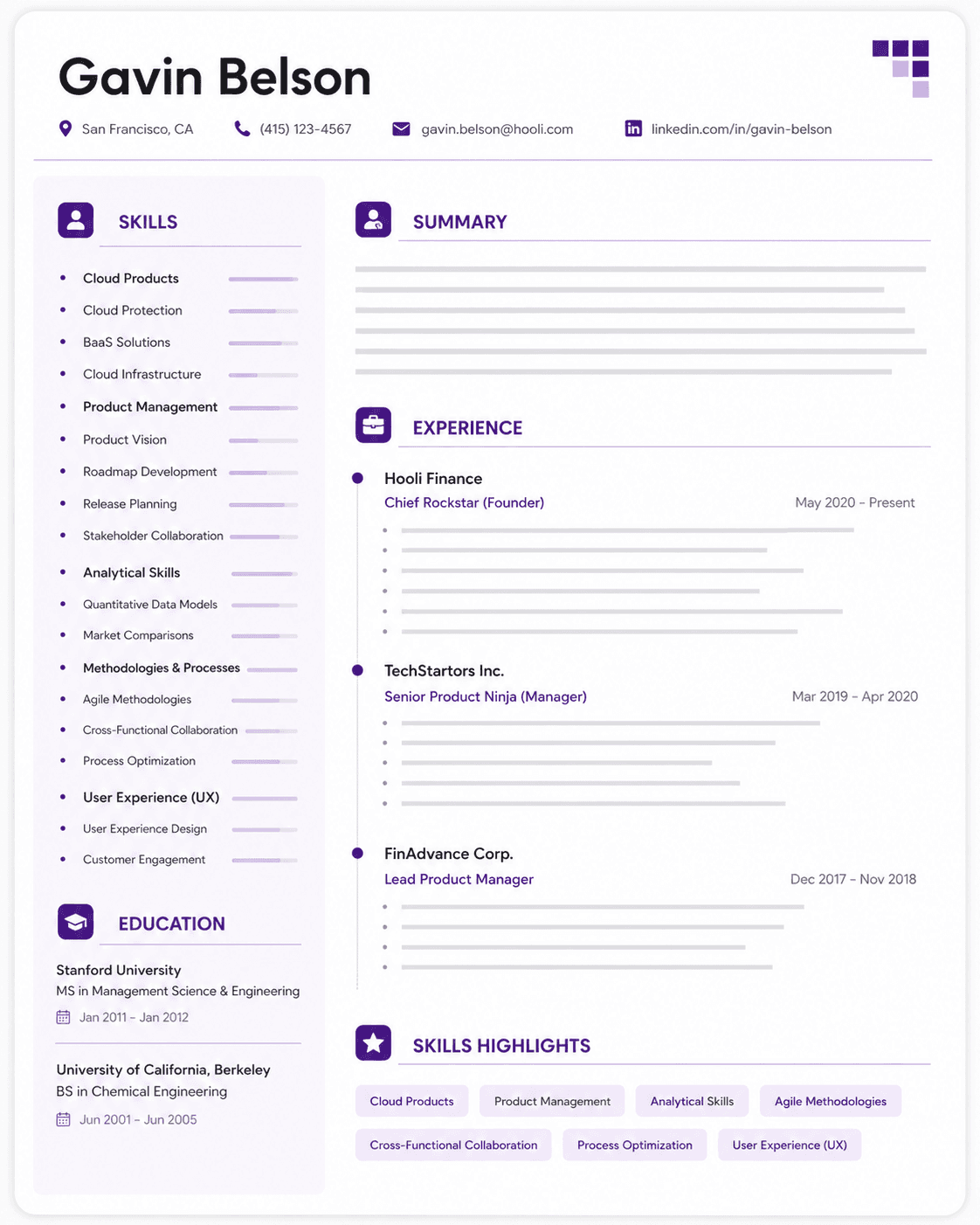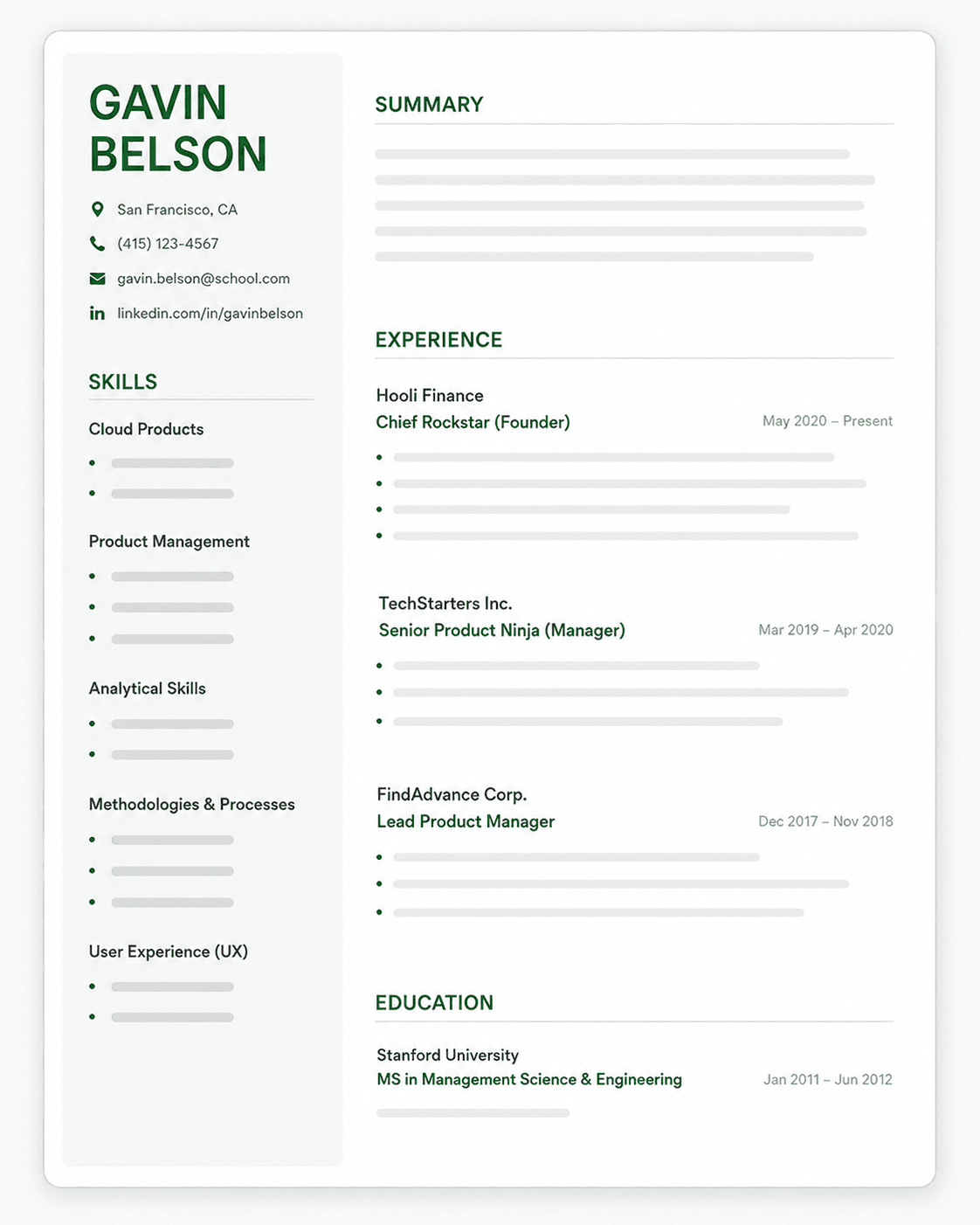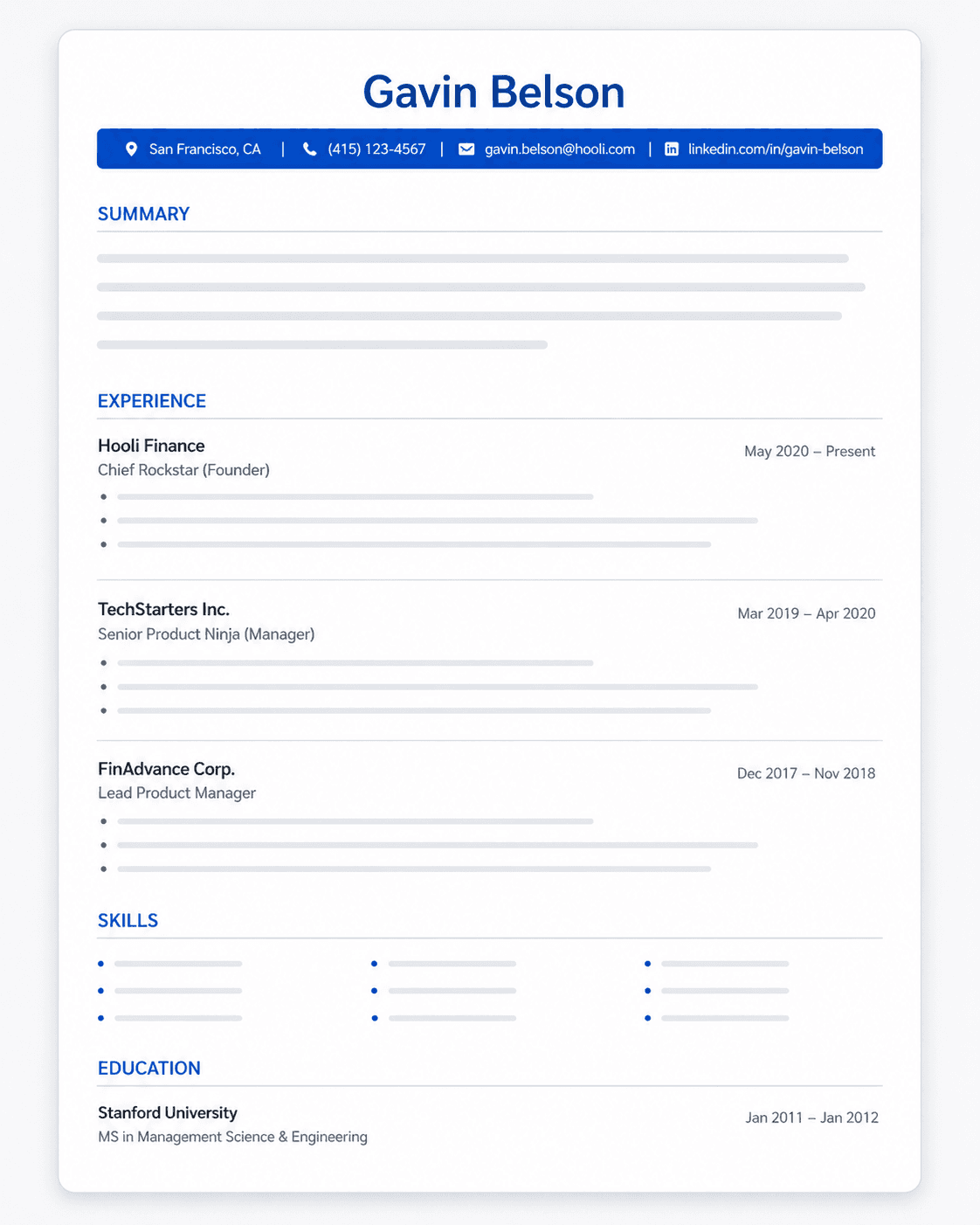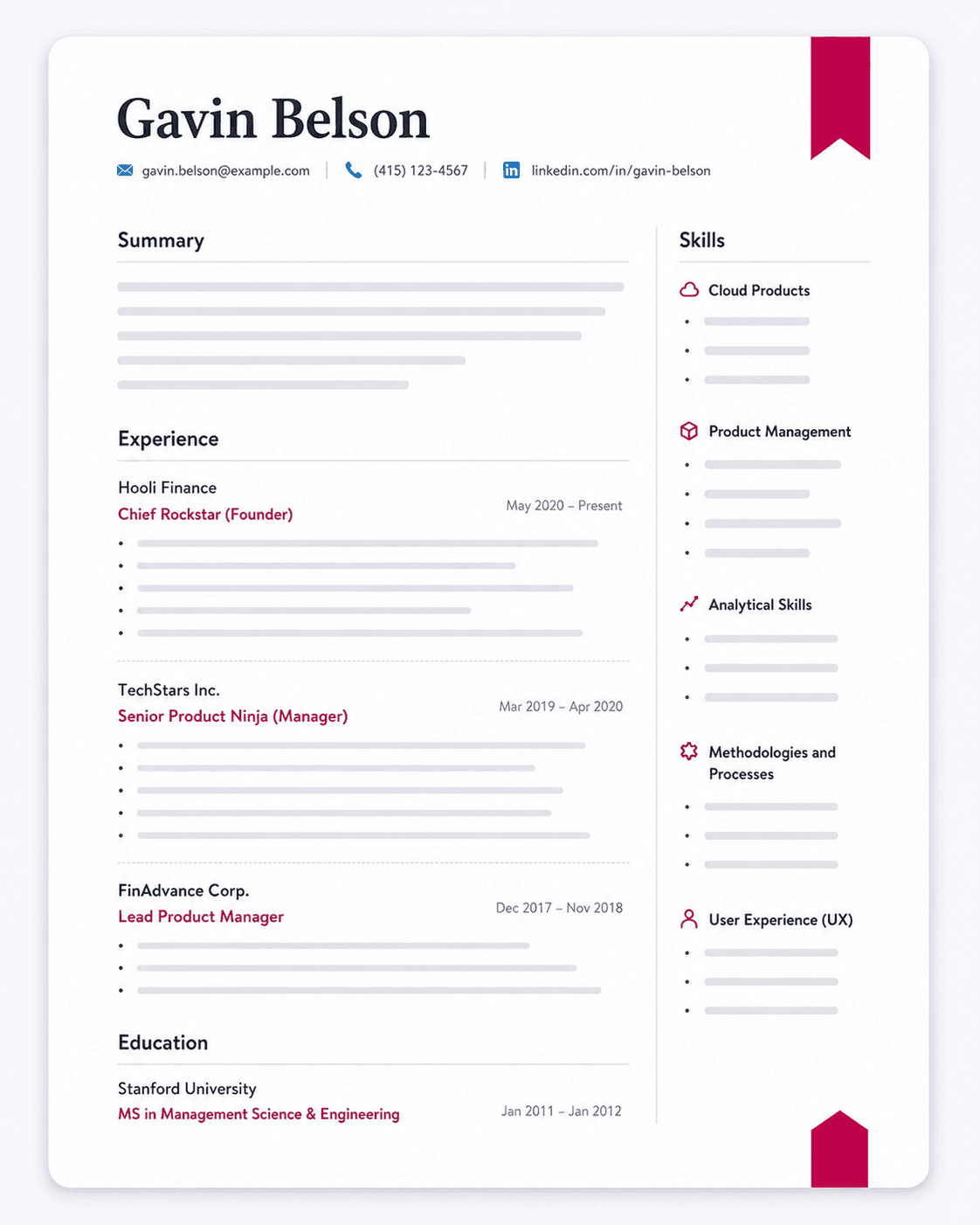

The job market has never been more competitive, with application volumes rising and response rates falling by 3X since 2021. Additionally, with ongoing layoffs, employers have fewer recruiters on payroll, who are now responsible for reviewing an increasing volume of applications. Estimates suggest that recruiters now spend no more than 7 seconds per resume, making the goal of standing out increasingly difficult for candidates.
With advances in AI technology, tools like ChatGPT now offer candidates the ability to quickly tailor their resume to each role in an attempt to capture the recruiter's attention in those precious few seconds. But here's the problem: owing to a lot of bad advice floating around the internet, most people are using ChatGPT wrong for resume writing, creating generic applications that recruiters can spot from miles away.
Before You Paste: What to Remove From Your Resume
Before you put your resume into ChatGPT or any AI tool, strip the information you don't need it to see. The prompts below work just as well on a redacted version.
Remove or replace:
- Full street address — replace with just city and state. No prompt needs your house number.
- Phone number and email — the AI cannot help you write these, and there's no reason for them to be in a chat log.
- Any ID numbers — national insurance, social security, passport, driver's licence, employee IDs. These occasionally appear on international CVs and should never go into a chat window.
- Current employer specifics — if you're job hunting confidentially, consider genericising your current company name to something like "a mid-size fintech" while drafting.
- Client names under NDA — a surprisingly common leak in consulting and agency resumes.
- Referee contact details — other people's personal data isn't yours to paste.
What's fine to include: job titles, dates, responsibilities, achievements, metrics, skills, education, and the job description you're targeting. That's everything the prompts actually need.
Two settings worth checking. In ChatGPT, look at whether your conversations are being used to improve the model — you can turn that off in data controls. For one-off resume work, a temporary chat that isn't saved to history is a reasonable default.
A note on judgement: this isn't a reason to avoid AI for resume work. It's the same care you'd take before emailing a document to someone you don't know well. For a fuller treatment of what's safe and what isn't, see is ChatGPT safe for your resume.
Should You Use ChatGPT for Your Resume?
Yes, using ChatGPT to create your resume can help in your job search — but only when used correctly. Recent data tells a compelling story about AI-assisted resume writing: 78% of job seekers who used ChatGPT for their resumes got interviews, and 69% reported higher response rates from companies.
However, there's a catch. 74% of hiring managers say they can spot AI-generated resumes, and 57% are significantly less likely to hire candidates whose applications appear entirely AI-driven.
This creates a paradox: AI can help you get interviews, but obvious AI usage can hurt your chances of getting hired. The key is understanding both the advantages and limitations of ChatGPT for resume writing.
| 👍 ChatGPT Advantages | 👎 ChatGPT Limitations |
|---|---|
| Time savings: Generate tailored content in minutes | Generic output, if not properly prompted |
| ATS optimization: Include relevant keywords systematically | Potential inaccuracies from AI hallucinations |
| Consistency: Professional tone across sections | Missing personal touch and unique voice |
| Overcomes writer's block with strong first drafts | No formatting: text-only output requires manual formatting |
| Cost-effective: Free vs. a $200-800 consultation with a resume writer | Potential penalization for purely AI-generated content |
The verdict: Think of ChatGPT as a skilled writing assistant, not a replacement for your own expertise and insights. It should help you express your real story better, not invent one for you.
Why Most ChatGPT Resume Prompts Produce Generic Output
The reason "rewrite my resume to sound more professional" produces something that reads like every other resume is that you've given the model nothing specific to work with. It has no job description to target, no sense of what you actually achieved, and no constraint on length or tone — so it defaults to the safest, most generic register it knows.
Every prompt in this guide does three things that fix that:
- Gives the model a role — a recruiter, a hiring manager, an ATS parser. Different roles produce genuinely different feedback.
- Supplies the job description — so the output targets a real posting rather than an imagined average.
- Sets a hard constraint — a word count, a sentence structure, a required element. Constraints are what stop AI writing drifting into filler.
Use them in order rather than picking one at random. Analysis before tailoring, tailoring before review.
What's in This Guide
- Start With These 5 — the twenty-minute version
- Getting Started — building and mining your material
- Analysing Job Fit
- Fixing Weak Bullet Points
- Tailoring to a Job Description
- Passing ATS
- Section by Section
- By Career Stage
- Awkward Situations
- Review and Authenticity
- Your LinkedIn Profile
- Beyond the Resume
- Prompts That Don't Work (And Why)
Start With These 5
Fifty prompts is a lot. If you only have twenty minutes, run these in order — they cover the highest-impact work and everything else is refinement.
- The 6-Second Recruiter Audit — find out what a recruiter actually sees
- The Job Description Decoder — extract what the posting is really asking for
- The Quantification Pass — turn duties into measurable achievements
- The Keyword Coverage Check — find what's missing before you submit
- The Authenticity Test — make sure it still sounds like you
The rest of this page goes deeper by situation, career stage, and section.
Group 1: Getting Started
Before you tailor anything, you need a complete record of your own experience to tailor from. These prompts build it and mine it for material you've forgotten. If bullet-point wording is the part you struggle with, the work experience bullet points guide pairs well with Group 3.
The Master Resume Builder
Build the one document you'll tailor from for every future application.
I'm building a master resume - a complete record of everything I've done that I'll
pull from for individual applications. It doesn't need to be short or pretty.

Ask me one question at a time about each role I've held, working backwards from my
most recent. For each role, dig for: what I was responsible for, what I changed or
improved, any numbers I can attach, tools and systems I used, and anyone I managed
or influenced.

Don't move to the next role until you've asked at least three follow-up questions
about the current one. Start with my most recent job.
What to do with the output: save it somewhere permanent. This is the source document — every tailored resume gets cut down from it, which is what makes tailoring a 15-minute job instead of an afternoon.
The Achievement Excavator
For when you know you did good work but can't remember specifics.
I worked as a [JOB TITLE] at a [INDUSTRY / COMPANY TYPE] for [DURATION].

Ask me 10 questions designed to surface achievements I've forgotten. Focus on
things people typically undersell: problems I solved that nobody asked me to,
processes I changed, people I trained or unblocked, money or time I saved,
things that broke and I fixed, and work that outlasted my time there.

Ask them one at a time and follow up when an answer is vague.
What to do with the output: most people find two or three achievements they'd never have put on a resume. Add them to your master resume.
The Duty-to-Achievement Converter
The single most common resume problem, fixed.
Here are bullet points from my resume that describe my responsibilities rather
than my results:

[PASTE BULLETS]

For each one, ask me the specific questions you'd need answered to turn it into
an achievement - what changed, by how much, compared to what, and over what period.

Once I've answered, rewrite each bullet. Do not invent numbers. If I can't supply
a number, rewrite it to show scope or outcome instead.
What to do with the output: check every rewritten bullet against reality before you use it. The point of "do not invent numbers" is that models will otherwise supply plausible ones.
The Brain Dump Organiser
For when you have material but no structure.
Below is an unstructured list of things I've done in my career. Organise it into
resume sections and tell me what's missing.

[PASTE EVERYTHING - roles, projects, skills, courses, tools, achievements, in
any order]

Group it into: work experience by role, skills split into hard and soft, education
and credentials, projects, and a "doesn't belong on a resume" pile. Then list the
gaps you noticed - anything that looks like it should have a number, a date, or
an outcome attached but doesn't.
What to do with the output: the "doesn't belong" pile is usually the most useful part.
Group 2: Analysing Job Fit
Run these before you spend time tailoring. They tell you whether a role is worth applying to and what the posting is really asking for.
The 6-Second Recruiter Audit
The fastest way to see your resume the way a screener does.
You are a senior recruiter with 200 applications to review before end of day.
You spend six seconds on each resume before deciding whether to read further.

Here is a resume and the job description it's targeting.

[PASTE RESUME]
[PASTE JOB DESCRIPTION]

Tell me, in that order:
1. What you noticed in the first six seconds
2. What made you want to keep reading, or stop
3. What you completely missed
4. Your gut call - advance, maybe, or reject - and the one thing that decided it

Be blunt. Don't soften it.
What to do with the output: whatever it "completely missed" is either badly placed or badly worded. Move it up or rewrite it.
The Job Description Decoder
Job postings hide their real requirements. This surfaces them.
Analyse this job description and tell me what it's actually asking for, as opposed
to what it says.

[PASTE JOB DESCRIPTION]

Break it into:
- Genuine must-haves (the things they'll reject on)
- Nice-to-haves dressed up as requirements
- Skills mentioned more than once, in any phrasing
- The exact job titles, tools, and certifications named
- What the role's real problem is - what are they hiring someone to fix?

Flag anything ambiguous rather than guessing.
What to do with the output: the "real problem" line is what your summary should speak to. The must-haves are what your top third needs to prove.
The Gap Analysis
Where you fall short, and whether it matters.
Compare my resume against this job description and give me an honest gap analysis.

[PASTE RESUME]
[PASTE JOB DESCRIPTION]

Produce three lists:
1. Requirements I clearly meet and evidence on the page
2. Requirements I probably meet but haven't evidenced
3. Requirements I genuinely don't meet

For list 2, tell me exactly where on my resume the evidence should go.
For list 3, tell me whether each gap is likely a dealbreaker or something people
get hired without.
What to do with the output: list 2 is your edit list. If list 3 has more than two dealbreakers, you're probably applying to the wrong role.
The Qualification Reality Check
Before you spend an hour tailoring, find out if it's worth it.
Here's my background and a job I'm considering applying to.

[PASTE RESUME OR SUMMARY OF EXPERIENCE]
[PASTE JOB DESCRIPTION]

Tell me honestly whether this is a reasonable application, a stretch worth making,
or a waste of my time - and why. Consider seniority, domain, and the hard
requirements.

If it's a stretch, tell me what would make it credible.
What to do with the output: use this to triage. Applying to fewer, better-matched roles beats volume every time.
The Competitor Candidate
See what you're up against.
Based on this job description, describe the strongest realistic candidate who will
apply for this role - their background, titles, years of experience, and what their
resume leads with.

[PASTE JOB DESCRIPTION]

Then compare that profile to mine and tell me where I'm stronger, where I'm weaker,
and what angle I should lead with given the difference.

[PASTE RESUME]
What to do with the output: the "angle to lead with" belongs in your summary.
Group 3: Fixing Weak Bullet Points
Weak bullets are the most common reason a resume reads as generic. Each of these targets one failure mode. For the underlying principles, see the work experience bullet points guide.
The Quantification Pass
Numbers are what separate a resume from a job description.
Go through these bullet points and identify every place where a number could
reasonably be attached - a percentage, a count, a currency figure, a timeframe,
a team size, a volume.

[PASTE BULLETS]

For each, ask me what the number was. Don't suggest a number yourself. If I don't
know it, ask me for a defensible range or a scope indicator instead.

Then rewrite the bullets with what I give you.
What to do with the output: "roughly 40 accounts" is better than nothing and better than a number you can't defend.
The Action Verb Rewrite
Kill the weak openers.
Rewrite these bullet points so each starts with a strong, specific action verb.

[PASTE BULLETS]

Rules:
- No "responsible for", "helped with", "worked on", "assisted in", "involved in"
- No verb repeated more than twice across the whole resume
- The verb must match what I actually did - don't upgrade "supported" to "led"
- Keep each bullet to one line where possible

Show the original and the rewrite side by side.
What to do with the output: check the verbs haven't inflated your role. That's the most common failure mode here.
The "So What?" Test
Every bullet should survive being asked why it matters.
For each bullet below, ask "so what?" and tell me whether the bullet answers it.

[PASTE BULLETS]

For any bullet that doesn't, tell me what's missing - the outcome, the scale, the
comparison, or the relevance to the role I'm targeting.

Rank them from strongest to weakest and tell me which two I should cut entirely.
What to do with the output: cutting the weakest two is usually a bigger improvement than rewriting them.
The Bullet Compressor
For resumes running over a page.
These bullets say too much in too many words. Compress each to a single line
without losing the achievement or the number.

[PASTE BULLETS]

Preserve: the action, the outcome, and any figure.
Cut: context I don't need, hedging, and anything the job title already implies.

Show the word count before and after for each.
What to do with the output: if a bullet loses its meaning when compressed, it was probably carrying two achievements. Split it instead.
The Scope Amplifier
When you have no numbers, show scale.
I can't attach hard numbers to these bullets. Rewrite them to convey scope and
complexity instead.

[PASTE BULLETS]

Use signals like: number of stakeholders, seniority of people I worked with,
breadth of systems involved, geographic or organisational reach, duration, or
whether the work was net new versus maintenance.

Ask me for the details you need. Don't invent scope.
What to do with the output: "across four departments and two regions" carries real information without a metric.
The Passive Voice Killer
Passive constructions bury who did the work.
Find every passive construction in this resume and rewrite it in the active voice,
with me as the subject.

[PASTE RESUME]

Flag any place where the passive voice was hiding the fact that I didn't actually
own the work - I want to know where I'm overclaiming as well as where I'm
underselling.
What to do with the output: the overclaiming flags matter more than the rewrites.
Group 4: Tailoring to a Job Description
Analysis done, now make the resume speak to the specific posting. These change wording and order, not facts.
The Keyword Extractor
Pull the exact terms the posting is searching on.
Extract every keyword from this job description that a recruiter might search on.

[PASTE JOB DESCRIPTION]

Group them as:
- Hard skills
- Software, tools, and platforms
- Certifications and credentials
- Job titles and title variants

Give me the exact phrasing used in the posting, not synonyms. Mark anything that
appears more than once.
What to do with the output: the repeated terms are the priorities. Get those onto your resume in the posting's exact wording at least once. Our guide to which ATS keywords to target covers how to prioritise them.
The Relevance Re-order
Same content, better order.
Reorder the bullet points within each role on my resume so the most relevant to
this job description come first.

[PASTE RESUME]
[PASTE JOB DESCRIPTION]

Don't rewrite anything - just reorder, and tell me why each role's new top bullet
earned that position.

Also tell me if any role should be shortened or expanded given this target.
What to do with the output: this is the highest-value edit per minute spent. Nothing needs writing.
The Language Mirror
Match their vocabulary without lying.
This job description and my resume describe similar things using different words.
Find every instance.

[PASTE RESUME]
[PASTE JOB DESCRIPTION]

For each, show: their term, my term, and whether swapping to theirs would still be
accurate. Flag any swap that would misrepresent what I did.

Only suggest changes where the meaning genuinely matches.
What to do with the output: apply the accurate swaps. Ignore the flagged ones — an inaccurate keyword costs you the interview, not the screen.
The Transferable Skill Bridge
For applications outside your obvious lane.
I'm applying for a [TARGET ROLE] but my background is in [CURRENT FIELD].

[PASTE RESUME]
[PASTE JOB DESCRIPTION]

For each requirement in the posting, find the closest genuine equivalent in my
experience and explain the connection in one sentence - the way I'd explain it to
a hiring manager who's sceptical.

Be honest about which requirements have no equivalent.
What to do with the output: those one-sentence bridges are your cover letter and your summary. Don't force the ones with no equivalent.
The Priority Matcher
Not all requirements are equal.
Rank the requirements in this job description by how much they'll actually matter
in screening, from most to least.

[PASTE JOB DESCRIPTION]

Consider: what's listed first, what's repeated, what's phrased as "must" versus
"ideally", and what's specific versus generic.

Then tell me how much of my resume's top third currently addresses the top three.

[PASTE RESUME]
What to do with the output: if your top third doesn't address their top three, restructure before you do anything else.
The One-Page Trimmer
Cut with a target in mind.
This resume is [CURRENT LENGTH] and needs to fit one page. Cut it down while
keeping everything relevant to the target role.

[PASTE RESUME]
[PASTE JOB DESCRIPTION]

Tell me what you'd cut and why, in priority order, and stop when I'd hit one page.
Don't shrink fonts or margins - cut content.

Flag anything you're unsure about rather than removing it.
What to do with the output: review the cuts against the job description yourself. Models over-trim early-career detail.
Group 5: Passing ATS
These target the applicant tracking system specifically: keyword coverage, parsing, and searchability. For a dedicated tool, see the ATS checker for ChatGPT; for how detection actually works, can ATS detect a ChatGPT resume.
The Keyword Coverage Check
The check to run before every submission.
Compare my resume against this job description and tell me which keywords from the
posting do not appear anywhere in my resume.

[PASTE RESUME]
[PASTE JOB DESCRIPTION]

Produce a table: keyword, whether it appears in my resume, and if not, where it
would naturally belong - summary, skills, or a specific role.

Only list terms I could truthfully claim. Flag any I probably can't.
What to do with the output: add the true ones where indicated. Never paste a keyword list into your resume — recruiters see it immediately. Or check it automatically.
The Format Auditor
Find what breaks parsing.
Review this resume for formatting that could break applicant tracking system
parsing.

[PASTE RESUME AS PLAIN TEXT - copy from your document and paste]

Check for: multi-column layout, tables, text boxes, information only present in
graphics, non-standard section headings, contact details in a header or footer,
and unusual fonts or characters.

Also tell me if anything appears out of order, since that indicates a parsing
problem.
What to do with the output: if you paste from your real file and the sections arrive scrambled, that's what the ATS sees too.
The Job Title Aligner
The keyword category people forget.
My job title is [YOUR TITLE]. The posting is for [THEIR TITLE].

Tell me whether these are understood as the same role, and if not, how to make my
resume findable when a recruiter searches their title.

Suggest wording that references their title accurately without me claiming a job I
didn't hold - for example in a summary line or a parenthetical.

[PASTE RELEVANT RESUME SECTION]
What to do with the output: never change your actual job title. Reference theirs elsewhere.
The Parser Simulation
See the plain-text version.
Below is my resume as an applicant tracking system would receive it, converted to
plain text.

[PASTE RESUME]

Reconstruct what data the system would extract into structured fields: name,
contact details, each job with employer, title and dates, education, and skills.

Tell me anything you couldn't confidently extract, and anything that landed in the
wrong field.
What to do with the output: anything it can't extract confidently is invisible to a recruiter's search.
The Acronym Expander
Recruiters search both forms.
Find every acronym, abbreviation, and credential in my resume.

[PASTE RESUME]

For each, tell me whether both the acronym and the full term appear at least once.
Where only one form appears, show me how to include both naturally without it
reading awkwardly.

Do the same for any acronym in the job description that's missing from my resume.

[PASTE JOB DESCRIPTION]
What to do with the output: "Project Management Professional (PMP)" on first use, PMP thereafter.
Group 6: Section by Section
When a specific section is the problem, target it directly rather than rewriting the whole document.
The Summary Writer
Three sentences that decide whether anyone reads on.
Write three different professional summaries for me, each two to three sentences.

[PASTE RESUME]
[PASTE JOB DESCRIPTION]

Structure each as: who I am professionally, my strongest relevant achievement with
its number, and what I'm targeting.

Make the three genuinely different in emphasis - one leading on domain expertise,
one on a specific achievement, one on the transition or trajectory.

No "results-driven", "passionate", "proven track record", or "seeking a challenging
role".
What to do with the output: pick one, then cut it by 20%. Summaries are almost always too long. See writing a resume summary for structure.
The Skills Section Builder
Specific beats comprehensive.
Build a skills section for this application.

[PASTE RESUME]
[PASTE JOB DESCRIPTION]

Rules:
- Only skills I have evidence for elsewhere in the resume
- Prioritise the posting's exact terms
- Group into no more than three categories
- Replace anything vague - "Microsoft Office" becomes the specific capability
- Maximum 15 items

Tell me which skills you left out and why.
What to do with the output: anything in your skills section that isn't demonstrated in a bullet somewhere is a question waiting to be asked.
The Education Optimiser
Placement and detail depend on career stage.
Here's my education section and my career stage: [YEARS OF EXPERIENCE].

[PASTE EDUCATION SECTION]

Tell me: whether it belongs above or below work experience, what detail to include
or cut (GPA, honours, coursework, graduation year, thesis), and how to format it.

Then rewrite it.
What to do with the output: if you're more than five years out, this section should be two lines.
The Projects Section
Often the strongest section on an early-career resume.
I want to add a projects section. Here's what I've worked on:

[DESCRIBE PROJECTS - personal, academic, freelance, or open source]

For each, write a resume entry with a title, a one-line description of what it
does, the technologies or methods used, and an outcome or scale indicator.

Ask me questions where you need specifics. Then tell me which two projects are
strongest for this target role and why.

[PASTE JOB DESCRIPTION]
What to do with the output: keep the strongest two or three. A long projects list reads as filler.
The Certifications Formatter
Frequently used as a hard filter.
Format my certifications for maximum searchability.

[LIST CERTIFICATIONS]

For each: full name, acronym, issuing body, and year. Tell me which to lead with
given this job description, which are worth keeping, and which are stale enough to
cut.

[PASTE JOB DESCRIPTION]
What to do with the output: if a certification is a listed requirement, it belongs near the top of the page, not the bottom.
The Header Check
The section most often broken by formatting.
Review my resume header.

[PASTE HEADER]

Check: whether it contains everything a recruiter needs, whether anything is there
that shouldn't be (full street address, date of birth, photo, marital status -
noting I'm applying in [COUNTRY]), and whether the email address reads
professionally.

Then rewrite it as plain text on separate lines.
What to do with the output: if your contact details are in a document header or footer, move them into the body. Some parsers skip both.
Group 7: By Career Stage
The same resume advice doesn't apply at every stage. Pick the prompt that matches where you are.
The First Resume
No professional experience yet.
I'm writing my first resume. I have no full-time work experience.

Here's what I do have: [EDUCATION, COURSEWORK, PROJECTS, VOLUNTEERING, PART-TIME
OR SEASONAL WORK, SOCIETIES, ANYTHING ELSE]

Build a resume structure that leads with my strongest material, and write bullets
that describe what I did the way a job would be described - action, scope, outcome.

Tell me what to leave off.
What to do with the output: put education above experience, and treat coursework and projects as real evidence — they are.
The Career Changer
Your history doesn't match your target. Bridge it.
I'm moving from [CURRENT FIELD] to [TARGET FIELD].

[PASTE RESUME]
[PASTE JOB DESCRIPTION]

Rewrite my experience section so each role is described in the language of my
target field, without misrepresenting what I did.

Then write a two-sentence summary that explains the transition as deliberate rather
than accidental.

Tell me which of my roles is hardest to translate and how to handle it.
What to do with the output: the summary matters more here than anywhere else. It's what stops a screener from filing you as irrelevant. See the full career change resume guide.
The Executive Resume
Different rules above a certain level.
I'm applying for a [SENIOR TITLE] role. Rewrite my resume for that level.

[PASTE RESUME]
[PASTE JOB DESCRIPTION]

At this level, shift the emphasis from what I did to what I was accountable for:
scope of ownership, budget, headcount, org-level outcomes, and strategic decisions.

Cut operational detail that's expected at this level. Tell me what you removed.
What to do with the output: if a bullet would be equally impressive on a mid-level resume, it's probably too tactical.
The Return to Work
After a career break.
I'm returning to work after [DURATION] away for [REASON, IF YOU WANT TO STATE IT].

[PASTE RESUME]

Help me structure this so the break is handled clearly and briefly rather than
hidden, and so my pre-break experience reads as current rather than dated.

Include anything I did during the break that's genuinely relevant: [DESCRIBE].

Suggest one line for addressing the gap directly.
What to do with the output: a stated gap is far less damaging than an unexplained one. Screeners notice either way.
The Post-Layoff Resume
Recent involuntary exit.
I was laid off from [ROLE] in [MONTH/YEAR] as part of [CONTEXT - restructure, team
cut, company closure].

[PASTE RESUME]

Help me present this clearly. Tell me whether to note it on the resume, how to
phrase the end date, and how to keep the narrative forward-looking without sounding
defensive.

Then check whether anything else on the resume reads as a red flag it shouldn't.
What to do with the output: layoffs are common enough that they carry little stigma. Over-explaining creates the problem.
The Internal Move
Applying within your own company.
I'm applying for [TARGET ROLE] at the company I already work for, currently as
[CURRENT ROLE].

[PASTE RESUME]
[PASTE INTERNAL JOB DESCRIPTION]

Rewrite my resume for an internal audience - people who know the company but not
necessarily my work.

Emphasise: cross-functional work, institutional knowledge, and results that people
in the hiring team may have seen. Cut anything that explains context they already
have.
What to do with the output: internal applications are often screened by the same ATS. Don't assume it's read by a human first.
The Freelancer Going Permanent
Turning contract work into a conventional history.
I've been freelancing or contracting for [DURATION] and I'm applying for a
permanent role.

Here's my client and project history: [DESCRIBE]

Structure this as a coherent resume rather than a list of engagements. Group by
theme or capability where that reads better than chronology, and show progression.

Address the obvious concern - whether I'll settle into a permanent role - without
raising it explicitly.
What to do with the output: grouping under a single "Independent Consultant" heading with selected engagements usually reads better than fifteen separate entries.
The Military Transition
Translating service experience for civilian screeners.
I'm transitioning from [BRANCH / ROLE / RANK] to civilian roles in [TARGET FIELD].

[PASTE RESUME OR SERVICE HISTORY]
[PASTE JOB DESCRIPTION]

Translate my experience into civilian terms: convert rank and role into equivalent
scope and seniority, replace military terminology and acronyms with civilian
equivalents, and reframe responsibilities in business language.

Flag anything that has no clean civilian equivalent and tell me how to handle it.
What to do with the output: keep the scale — headcount, budget, equipment value. Those translate directly and are usually understated.
Group 8: Awkward Situations
For the parts of a job history that need careful handling rather than a rewrite.
The Employment Gap
I have a gap in my employment history from [START] to [END].

[PASTE RESUME]

Tell me whether this gap is likely to be noticed, and give me three options for
handling it - leaving it, addressing it briefly on the resume, or covering it in
the cover letter.

For each, show me the exact wording.
What to do with the output: gaps under six months usually need no explanation. Longer ones read better addressed than hidden.
The Job Hopping Concern
My resume shows [NUMBER] roles in [NUMBER] years, which may read as job hopping.

[PASTE RESUME]

Tell me honestly whether this is a real concern for a [TARGET ROLE] application.

If it is, show me how to reduce the impression without hiding anything - grouping
contract roles, clarifying which moves were promotions or company closures, or
adjusting date formatting from months to years.
What to do with the output: if several moves were involuntary or contract-based, say so. Screeners assume the worst by default.
The Overqualified Application
I'm applying for a role that's a step down from my current level, deliberately.

[PASTE RESUME]
[PASTE JOB DESCRIPTION]

Rewrite my resume so it doesn't read as overqualified to the point of being
screened out, without hiding my seniority.

Also write one sentence I could use to explain the move, since it will be the first
question asked.
What to do with the output: "overqualified" usually means "will leave quickly" or "will cost too much". Address whichever applies.
The Stretch Application
This role is above my current level. I want to apply anyway.

[PASTE RESUME]
[PASTE JOB DESCRIPTION]

Identify every piece of evidence in my background that supports readiness for the
step up - scope I've handled beyond my title, work I've led without the title,
and results at the level they're hiring for.

Then tell me honestly whether the application is credible, and what's missing.
What to do with the output: if the honest answer is no, that's useful information. Save the hour.
The Relocation Case
I'm applying for a role in [LOCATION] and I currently live in [CURRENT LOCATION].

[PASTE RESUME]
[PASTE JOB DESCRIPTION]

Tell me how to handle location on my resume so I'm not filtered out - whether to
list my current city, state an intent to relocate, or use the target location.

Only suggest options that are honest. Flag anything that would misrepresent where
I am.
What to do with the output: stating "relocating to [city], [month]" is honest and removes the objection. Listing an address you don't have is not.
Group 9: Review and Authenticity
Run these last, after the resume is assembled. They catch the drift that AI editing introduces. For a guided walkthrough, see have ChatGPT review your resume.
The Authenticity Test
Does it still sound like a person?
Read this resume and tell me whether it sounds like a real person describing real
work, or like generic professional writing.

[PASTE RESUME]

Point to specific lines that read as generic, inflated, or AI-written. For each,
tell me what makes it read that way.

Don't rewrite anything - I want to know where the problems are.
What to do with the output: the flagged lines are the ones a recruiter will skim past. Rewrite them yourself, in your own words.
The Fact Checker
Catch anything that drifted from the truth.
Here's my original description of my work, and the polished resume version.

ORIGINAL: [PASTE YOUR RAW NOTES]
POLISHED: [PASTE RESUME]

Flag every place where the polished version claims something the original doesn't
support - inflated scope, a title upgrade, a number I didn't supply, ownership of
work I contributed to, or a skill that appeared from nowhere.

Be strict.
What to do with the output: run this every time you use AI on a resume. Drift is subtle and it's what gets caught in interviews.
The Tone Calibrator
Adjust the tone of this resume for a [INDUSTRY] role at a [COMPANY TYPE - startup,
enterprise, agency, public sector, non-profit].

[PASTE RESUME]

Tell me what you changed and why. Keep every fact identical - I'm asking about
register, not content.
What to do with the output: the same achievement is described differently for a bank and a seed-stage startup. Both can be true.
The Final Read-Through
Last check before submitting.
This is my final resume for a [TARGET ROLE] application. Review it as a hiring
manager would.

[PASTE RESUME]
[PASTE JOB DESCRIPTION]

Give me:
- Three questions you'd ask me in an interview based on this
- Anything that would make you hesitate
- One thing that's genuinely strong
- Any typo, inconsistent date format, tense error, or formatting slip

Then tell me whether you'd advance it.
What to do with the output: if you can't answer the three interview questions comfortably, something on the page is overclaiming.
Group 10: Your LinkedIn Profile
Recruiters search LinkedIn the way they search an ATS. These adapt your resume material for a profile that gets found and read.
The Headline Rewrite
Write five LinkedIn headline options for me. I'm a [ROLE] targeting [TARGET ROLES].

[PASTE CURRENT HEADLINE AND SUMMARY OF EXPERIENCE]

Rules: under 220 characters, include the job titles recruiters search for, and say
something specific rather than aspirational.

No "helping X do Y", no "|" chains of buzzwords, no "open to opportunities" as the
main content.
What to do with the output: your headline follows you into every search result and comment. It's the highest-leverage 220 characters on the platform.
The About Section
Write my LinkedIn About section. First person, three to four short paragraphs.

[PASTE RESUME]
[DESCRIBE WHAT YOU WANT TO BE FOUND FOR]

Structure: what I do and who for, the evidence, what I'm interested in next, and
how to reach me.

Write it in plain language - the way I'd explain my job to someone at a party, not
the way a resume would. Include the keywords recruiters search for, worked in
naturally.
What to do with the output: only the first two lines show before "see more". Front-load.
The Experience Translation
My LinkedIn experience section currently duplicates my resume. Rewrite it for
LinkedIn instead.

[PASTE CURRENT LINKEDIN EXPERIENCE]

LinkedIn is read by humans browsing, not systems screening - so it can be slightly
longer, first person, and more contextual. Keep the achievements and numbers.

Make each role readable on a phone.
What to do with the output: identical resume and LinkedIn text is a missed opportunity. The audiences read differently.
The Skills Selection
LinkedIn lets me list skills and pin three. Based on my target roles, tell me which
skills to add, which to remove, and which three to pin.

[PASTE CURRENT SKILLS LIST]
[DESCRIBE TARGET ROLES]

Prioritise by what recruiters actually filter on for these roles.
What to do with the output: the pinned three appear on your profile. Make them the ones you want to be found for.
Group 11: Beyond the Resume
The same prompt discipline applies to the rest of the application.
The Cover Letter
Write a cover letter for this application. Four short paragraphs, maximum 250 words.

[PASTE RESUME]
[PASTE JOB DESCRIPTION]

Structure: why this specific role and company, the single most relevant thing I've
done with its evidence, the thing my resume doesn't explain, and a direct close.

Do not restate my resume. Do not open with "I am writing to apply for". Do not use
"passionate", "excited", or "perfect fit".
What to do with the output: the third paragraph is the point of the whole letter. Everything else is scaffolding. More at ChatGPT cover letter prompts.
The Recruiter Outreach Message
Write a short message to a recruiter or hiring manager about this role. Under 120
words.

[PASTE JOB DESCRIPTION]
[PASTE RESUME SUMMARY]

It should: reference something specific about the role or company, state the single
most relevant thing about my background, and make one clear ask.

Don't be deferential and don't pad it. Assume they'll read the first line and
decide.
What to do with the output: send it to a person you've identified, not a generic inbox. A short specific message beats a long polished one.
The Follow-Up
I applied for [ROLE] at [COMPANY] on [DATE] and haven't heard back.

Write a follow-up message that's brief, adds something rather than just chasing,
and gives them an easy way to respond.

Under 100 words. Not apologetic, not pushy.
What to do with the output: follow up once, after about a week. A second follow-up rarely helps.
The Interview Prep Pass
Based on my resume and this job description, prepare me for the screening interview.

[PASTE RESUME]
[PASTE JOB DESCRIPTION]

Give me:
- The eight questions most likely to come up
- The two hardest questions given the gaps in my background
- For each, the structure of a strong answer using my actual experience

Don't write my answers for me - give me the shape and the material.
What to do with the output: practise the two hard ones out loud. More at ChatGPT interview prep.
Group 12: Prompts That Don't Work (And Why)
These are the prompts most guides recommend. Each one reliably produces the generic output recruiters recognise. If you want more of these, see the most common ChatGPT resume mistakes.
"Make my resume better"
What it produces: longer sentences, more adjectives, no new information. The model has no target and no constraints, so it defaults to sounding formal.
Fix: give it a job description and a specific instruction. "Rewrite these three bullets to lead with outcomes, against this posting."
"Write me a resume for a marketing manager job"
What it produces: a fictional resume for a person who doesn't exist, which you then have to correct line by line — usually taking longer than writing it yourself.
Fix: start from your real material. Use The Master Resume Builder.
"Make this sound more professional"
What it produces: "utilised", "leveraged", "spearheaded", and the corporate register that makes every resume read identically.
Fix: ask for specificity instead of formality. "Rewrite this to be more specific about what I did and what changed."
"Add keywords to my resume for this job"
What it produces: keywords inserted wherever they fit grammatically, including ones you can't back up. It's the fastest route to a resume that passes a search and fails an interview.
Fix: use The Keyword Coverage Check, which tells you what's missing and where it belongs, and leaves the decision to you.
"Rewrite my whole resume" (as one prompt)
What it produces: a plausible resume that has quietly drifted from the truth in three or four places you won't spot on first read.
Fix: work section by section, and run The Fact Checker at the end.
Is Using ChatGPT for Your Resume Cheating?
No, using ChatGPT for resume writing is not considered cheating. In an age where employers are encouraging their teams to quickly adopt AI tools, job seekers should embrace these technologies too.
Anthropic, one of the most respected companies in AI, is leading this initiative with clear guidelines for how candidates can use AI during their hiring process.
Their philosophy reflects what forward-thinking employers actually want: AI should be your assistant, not your impersonator. Use it to express your real story better.
| ✅ Acceptable AI Use | ❌ Problematic AI Use |
|---|---|
| Refining existing experiences and achievements | Inventing experiences you don't have |
| Getting help with professional phrasing | Copy-pasting without personal input or verification |
| Optimizing for relevant keywords and ATS compatibility | Replacing your authentic voice entirely |
| Improving structure and presentation | Submitting unreviewed content |
| Overcoming writer's block with drafts |
The key principle is transparency and authenticity. Treat AI as a collaboration tool that helps you present your real qualifications more effectively, not as a way to fabricate credentials you don't possess. What recruiters actually react to is generic output rather than AI use itself — see can employers tell if you used ChatGPT.
What AI tools work better than ChatGPT for resume writing?
While it's possible to tailor your resume using ChatGPT with the methods we've outlined, the process is time-consuming. When you're applying to 50+ jobs, crafting individual prompts, copying and pasting responses, and formatting everything manually for each application becomes a significant bottleneck in your job search.
This is where dedicated AI resume tools offer substantial advantages over generic ChatGPT prompts. If you're weighing the options, see ChatGPT resume builder vs ATS checker and the best ChatGPT plugins for job seekers.
Upplai: AI Resume Optimization Built for Job Seekers
Upplai was designed specifically to streamline what would otherwise require multiple ChatGPT prompts and manual formatting. Instead of managing complex prompt engineering, Upplai automates the entire optimization process.
How it works:
- Upload your resume and provide the link to the job posting
- Review AI-suggested changes with clear explanations
- Accept or reject modifications with one click
- Download your optimized, professionally formatted resume
Key advantages:
Seamless Experience: What takes 45-60 minutes with ChatGPT happens in under 5 minutes with Upplai- no prompt crafting or copy-pasting required.
Complete Transparency: Unlike ChatGPT's black-box responses, Upplai shows exactly what changed and explains why each modification was made, keeping you in full control.
Real-Time Scoring: Provides instant ATS scores, keyword analysis, and resume match ratings that help you understand and improve your application strength as you make changes.
ATS Optimized Output: Creates polished, ATS-friendly resumes ready for submission.