ChatGPT can draft a whole resume in about thirty seconds, which is exactly why so many people paste the result straight into an application. There is nothing wrong with using it. The trouble starts when people submit that first draft without fixing what the model gets wrong.
Recruiters have read thousands of AI-written resumes by now, and the weak ones share the same handful of flaws. Around half of hiring managers say they now dismiss resumes they suspect are low-effort AI, so these slips carry a real cost. This guide walks the seven mistakes that get ChatGPT resumes screened out, from generic buzzwords to invented metrics to formatting that breaks the ATS, with the fix for each. Used the right way, as a first draft you then make specific and true, ChatGPT is genuinely useful, and our guide to ChatGPT resume prompts covers that workflow.
Mistake 1: Submitting ChatGPT's Draft As-Is
The single most common mistake is treating ChatGPT's output as a finished resume. It writes a competent, confident draft, and it writes almost the same one for everyone who asks. Paste it in unedited and you hand a recruiter a resume that could belong to any of the hundred other applicants who used the same tool that week.
The giveaway is usually the summary. ChatGPT likes to open with a line such as "Dedicated and results-oriented professional with a proven track record of driving success," a sentence that describes no one in particular and every applicant at once. A recruiter skimming for three seconds finds nothing to hold onto and moves to the next file.
The fix is to treat the draft as raw clay. Read every line out loud, rewrite it the way you would actually describe the work, and replace the vague parts with details only you know: the tools you used, the size of the team, the specific problem you solved. A recruiter can feel the difference between a resume a person lived and one a model assembled. The draft is a starting point, and the resume is what you make of it.
Mistake 2: Letting It Invent Experience, Skills, or Numbers
ChatGPT is built to produce an answer, so when it lacks a fact it fills the gap. Ask it to strengthen your resume and it may add a certification you do not hold or a metric like "increased revenue by 340%" that you cannot source. Career experts put hallucination at the top of the ChatGPT resume risks for good reason: the invented line reads well until an interviewer asks you to explain it, and then the whole resume looks suspect.
"Drove a 340% revenue increase and led a company-wide digital transformation."
"Grew a regional account from $180K to $310K over 18 months by adding two product lines the client had not used before."
The fix is to keep every claim on the page to something you did and can talk through. Use AI to sharpen how a real accomplishment is worded, and never to manufacture the accomplishment itself. If ChatGPT adds a number, confirm it against your own records or cut it. A modest true metric beats an impressive invented one every time, because only one of the two survives the interview.
Mistake 3: Keeping the Tell-Tale AI Buzzwords
Certain words now signal "written by a chatbot" the moment a recruiter sees them. Spearheaded, leveraged, synergized, results-driven, detail-oriented, and cutting-edge show up in AI drafts far more than in human writing, and recruiters have learned to read them as filler. On an entry-level resume especially, a wall of executive power verbs looks off.
There is a second tell underneath the words, and it is structure. ChatGPT tends to open every bullet the same way, so a whole section marches down the page in one identical verb-adjective-noun rhythm. The rule of thumb is simple: if you would not say it out loud in an interview, it does not belong on your resume.
The fix is to swap the buzzwords for plain language and a concrete result, and to vary how your bullets begin.
"Results-driven professional who leveraged cutting-edge strategies to spearhead cross-functional synergy and drive impactful outcomes."
"Managed a 5-person onboarding team and rebuilt the training flow, cutting new-hire ramp time from 6 weeks to 3."
Recruiters often catch an AI resume from the phrasing alone, which is the subject of our companion piece on whether employers can tell you used ChatGPT.
Mistake 4: Feeding It Vague Prompts
Garbage in, garbage out. Ask ChatGPT for "a resume summary for a marketing job" and you will get a bland, average paragraph, because a vague prompt gives it nothing specific to work with. Most disappointing ChatGPT resumes trace straight back to a lazy prompt.
Compare two approaches. "Write me a resume summary for a project manager" returns a paragraph that could sit on top of ten thousand resumes. "Here is my experience, here is the job description, write a three-sentence summary using only what I gave you, in plain language with no buzzwords" returns something you can actually use.
The fix is to give it real material to work from instead of a general request.
A stronger prompt includes:
- Your real bullet points, job titles, and dates, pasted in full.
- The exact job description you are targeting.
- An instruction to use only the information you provided and to flag anything it cannot support.
- The tone you want, for example "plain and specific, no buzzwords."
Feed it your actual history and the posting, and the output stops being generic because it finally has something real to shape.
Mistake 5: Not Tailoring to the Specific Job
ChatGPT does not know which job you are applying to unless you tell it, so its default output is generic enough to send anywhere. That is the problem. A resume aimed at no particular posting misses the exact skills, tools, and titles that posting screens for, and a single generic resume sent to twenty jobs tends to lose all twenty.
Say a posting asks for stakeholder management and Jira. A generic bullet reads "Coordinated with teams to deliver projects." The tailored version reads "Managed stakeholders across three teams and ran delivery in Jira, shipping six releases on schedule." Same underlying experience, and the second one speaks the posting's language and clears the keyword match the first one fails.
The fix is to tailor every submission. Feed ChatGPT the job description, ask it to surface the requirements your resume already meets, and mirror the posting's wording for the skills you genuinely have. This is the whole reason tailoring works: the closer your language sits to the job description, the higher you rank and the more clearly a recruiter sees a real fit.
Mistake 6: Assuming It Is Already "ATS-Ready"
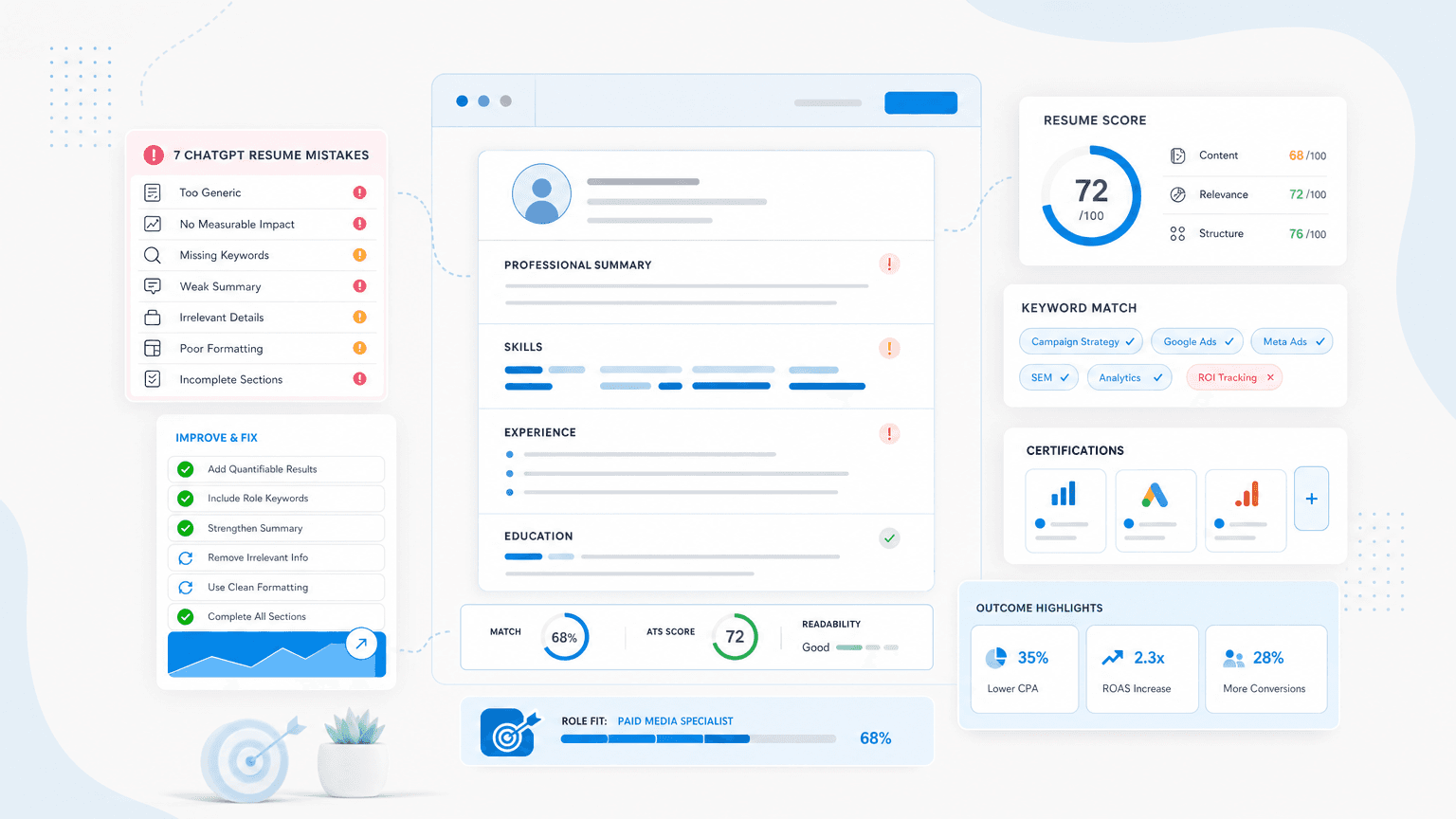
Ask ChatGPT whether your resume will pass an ATS and it will reassure you. That reassurance is a guess. It will happily call your resume "fully optimized for ATS" with a confident score attached, even though it has no applicant tracking system to run the resume through and no data on what a given employer's system weighs. It cannot rank which keywords matter most for a specific job, and it has no way to confirm that an edit actually helped. Treating that number as real is how people talk themselves into sending a generic resume.
Applicant tracking systems also do not flag your resume for being AI-written, a point we cover in whether an ATS can detect a ChatGPT resume, but they will quietly rank a generic, keyword-thin resume near the bottom of the pile.
The fix is to check the resume against a real ATS scorer that measures keyword and relevance match against the specific job, rather than trusting the model's opinion of its own work.
Mistake 7: Pasting Into a Format That Breaks the ATS
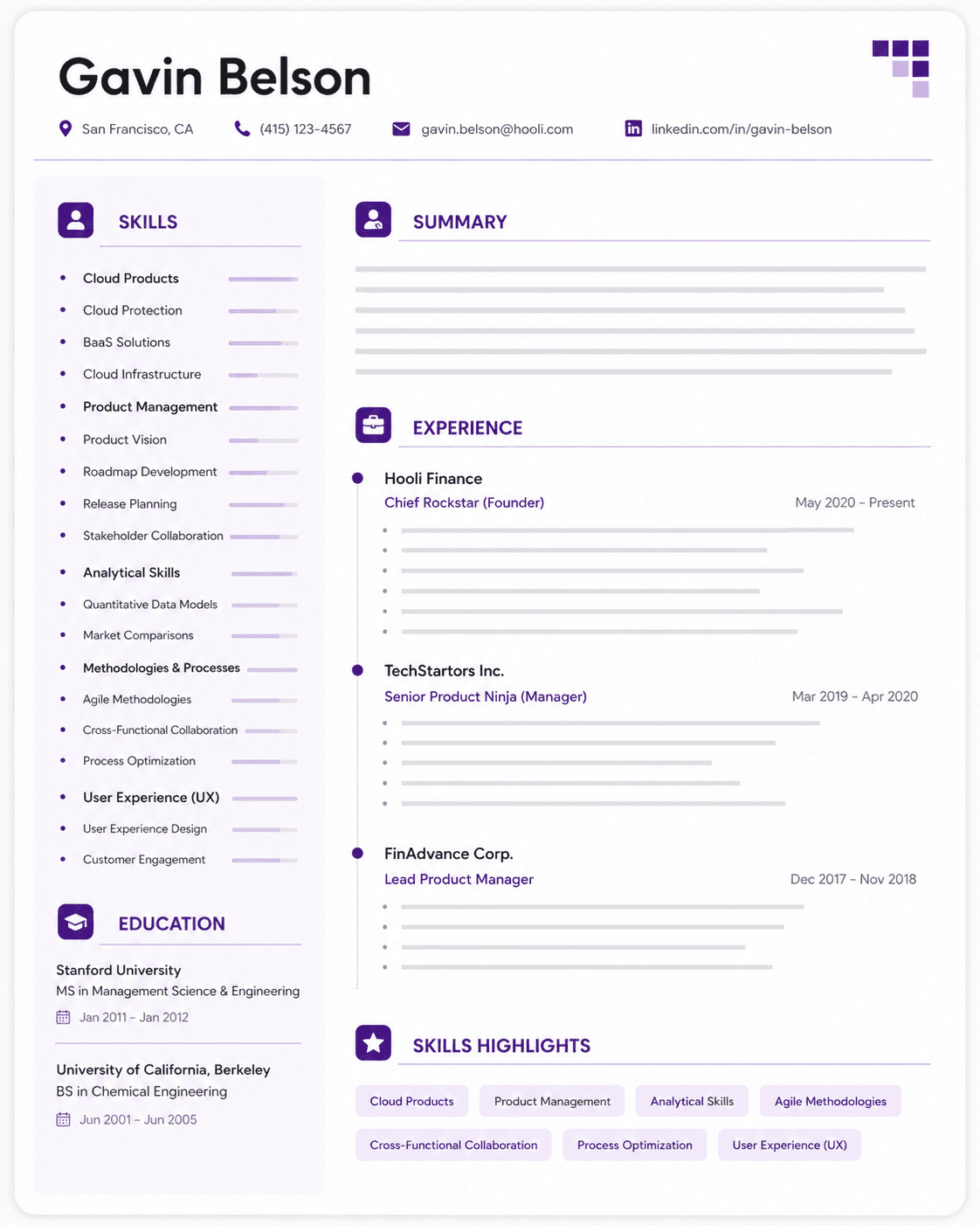
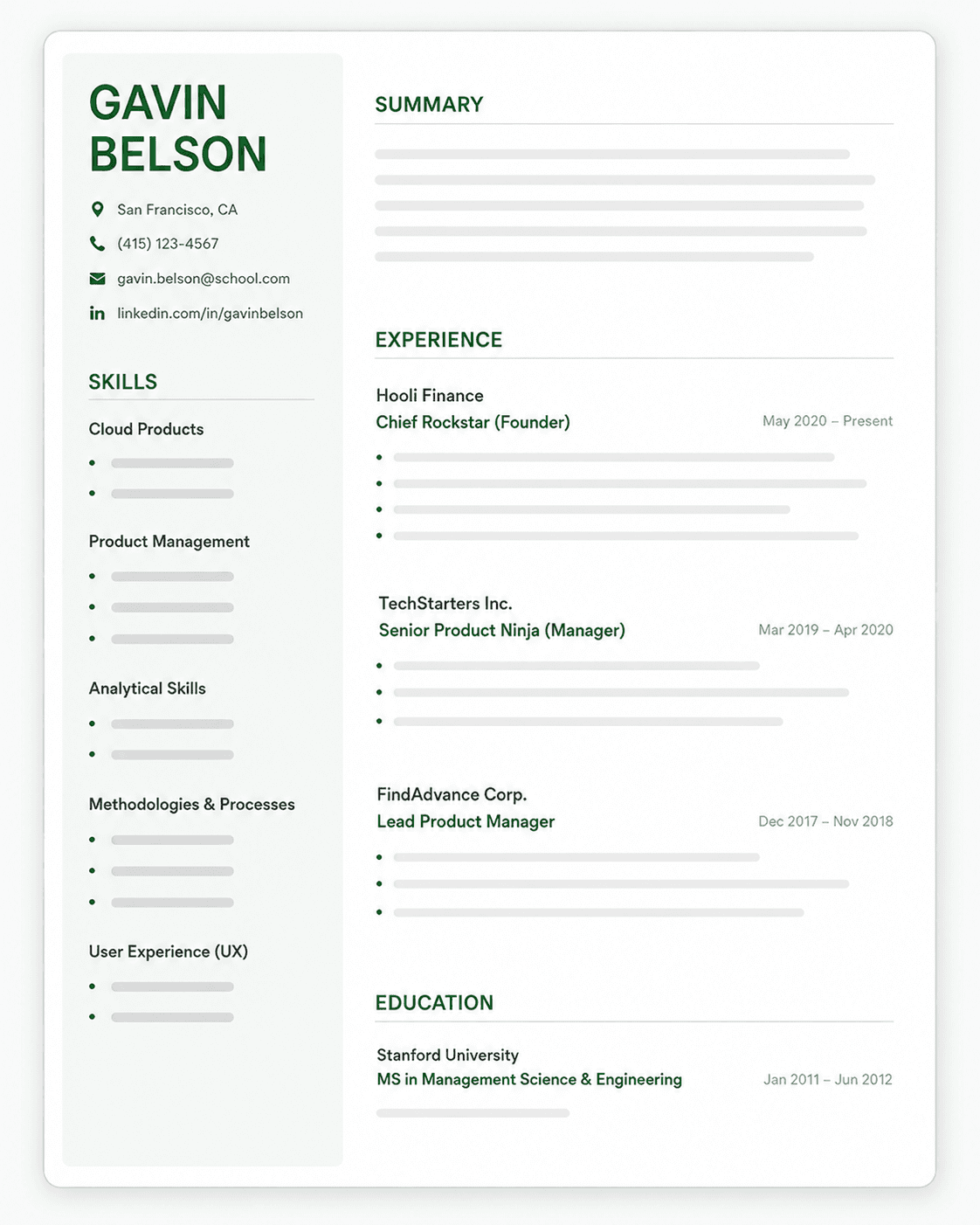
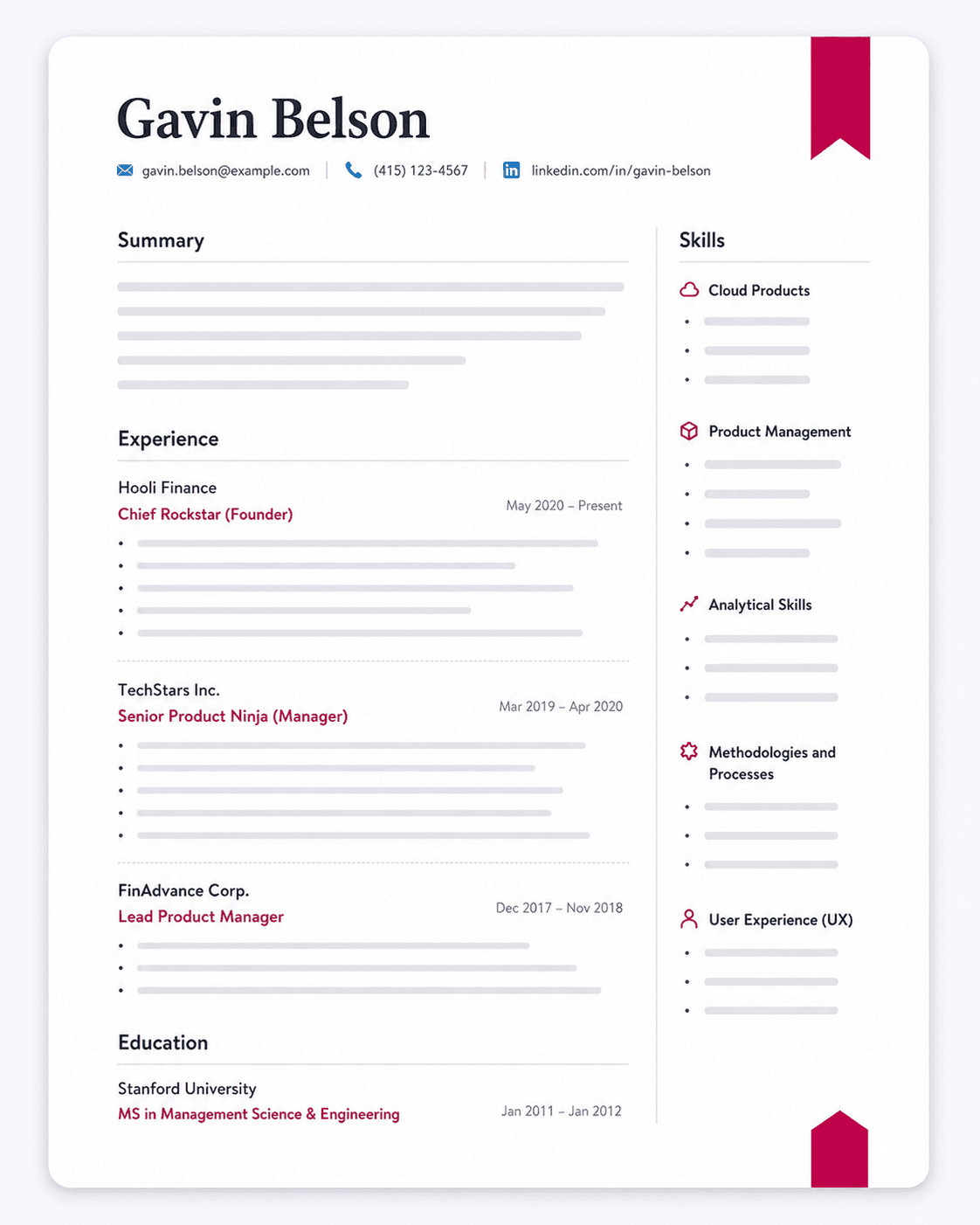
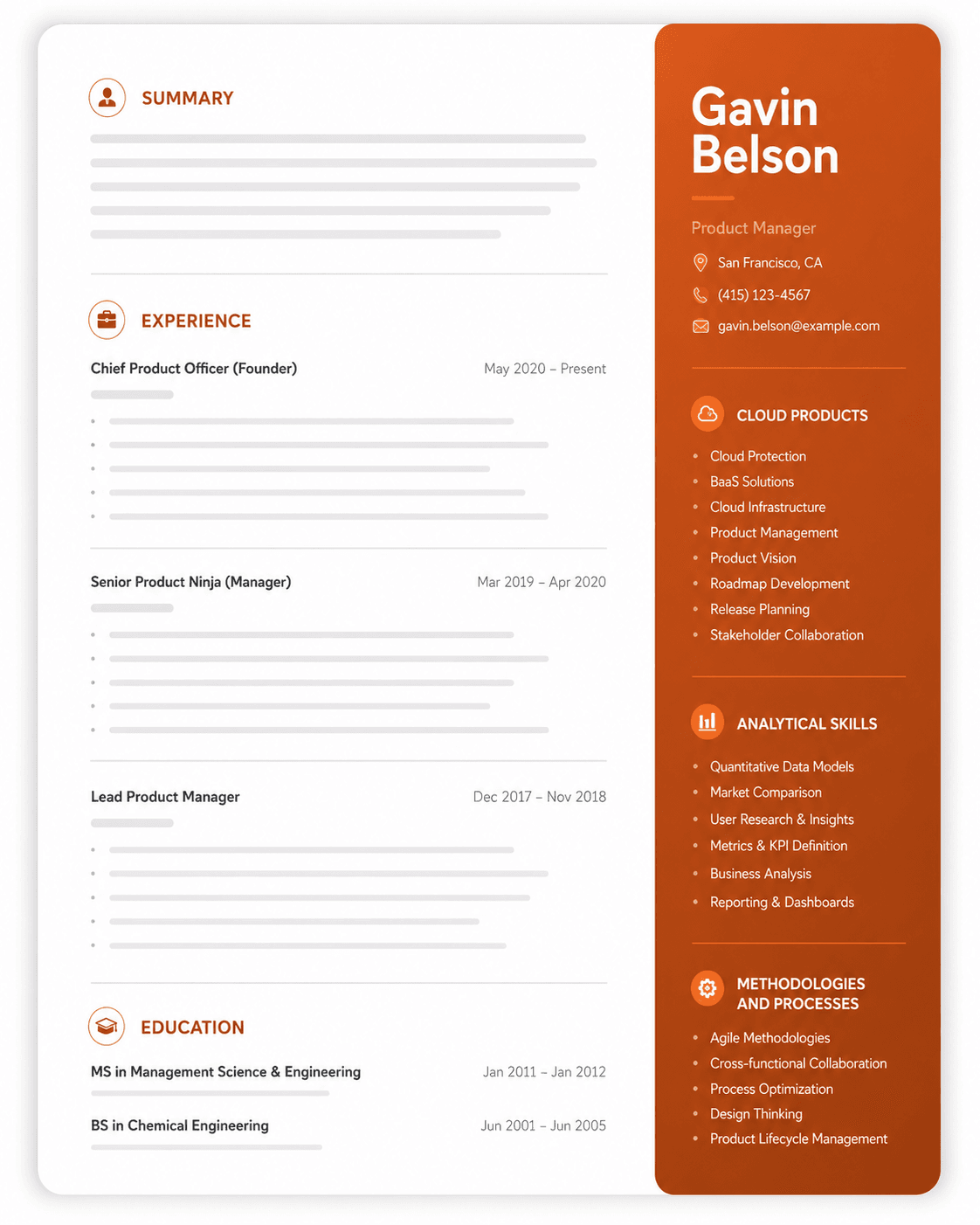
A clean-looking template can quietly sink a strong resume. Multi-column layouts, text boxes, tables, images, and content stuffed into headers or footers confuse ATS parsers, so the text you worked so hard on arrives scrambled or blank.
Picture a two-column template with your job titles in a narrow sidebar. A parser reading the page left to right can drop that column entirely, so your experience shows up as a pile of bullet points attached to no roles. This has nothing to do with ChatGPT writing the words, and yet people often pair an AI draft with a flashy template and lose both battles at once.
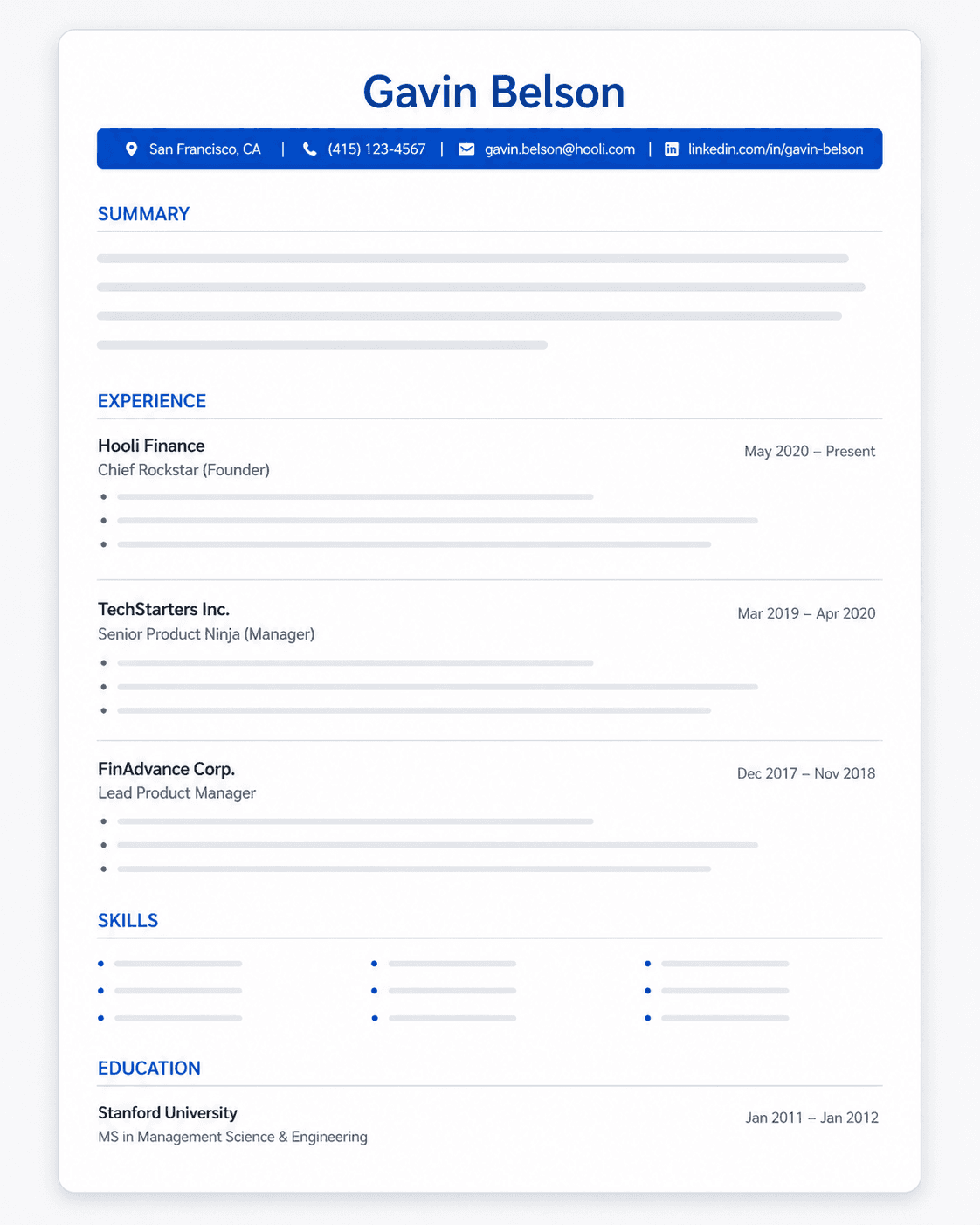
The fix is to keep the layout simple. A single column, standard section headings, and a plain text-based file give the parser a clean read. Our guide to ATS resume optimization covers the formatting rules in depth, and the short version is that anything decorative is a risk.
A Quick Check Before You Hit Submit
Run an AI-drafted resume through this before you apply. If any line makes you pause, fix it before you send anything.
The pre-submit checklist:
- Every bullet carries a real, specific detail: a number, a tool, a name, or a scope.
- You can explain each claim and metric out loud in an interview.
- The buzzwords are gone, and your bullets do not all open the same way.
- The resume is tailored to this posting and mirrors its keywords.
- You checked it against a real ATS score rather than ChatGPT's opinion.
- The layout is a single clean column with standard headings.
- It sounds like you rather than like a template.
If all seven hold, the fact that ChatGPT wrote the first draft stops mattering, because what you submit is specific, true, and yours.
How Upplai Helps You Avoid All Seven
Every mistake here comes down to the same habit: pasting in fast, unverified AI text and hoping it holds up. A transparent resume tool is built to break that habit. Here is how Upplai maps to the seven:
- It explains every change and lets you approve it. Instead of a black-box rewrite, you see a plain-language reason for each suggestion and accept or reject it, so nothing generic slips through unread.
- It never invents experience. Upplai works only from what is already on your resume, so it cannot hallucinate a job, a skill, or a metric.
- It flags weak spots. Vague phrasing gets surfaced, and Upplai even flags wording that can trigger recruiter bias, so you can replace it with something specific.
- It scores against a real ATS. You get a 0 to 100 ATS score, a separate recruiter score, and impact-ranked missing keywords, updated as you edit, in place of a chatbot's guess.
- It keeps the formatting parser-safe. Upplai outputs clean, ATS-friendly formatting, so a template choice never scrambles your resume.
Catch these mistakes before a recruiter does
Upload your resume, paste the job description, and see your real ATS score with the fixes that matter before you apply.
If ChatGPT is where you draft, you can run the same check inside it with the Upplai ATS checker for ChatGPT, using free ChatGPT and a free Upplai account. You get 20 ATS scans for free with no credit card required. For additional ATS scans, you can purchase a resume pack from Upplai for as low as a $5 one-time payment, no subscriptions.