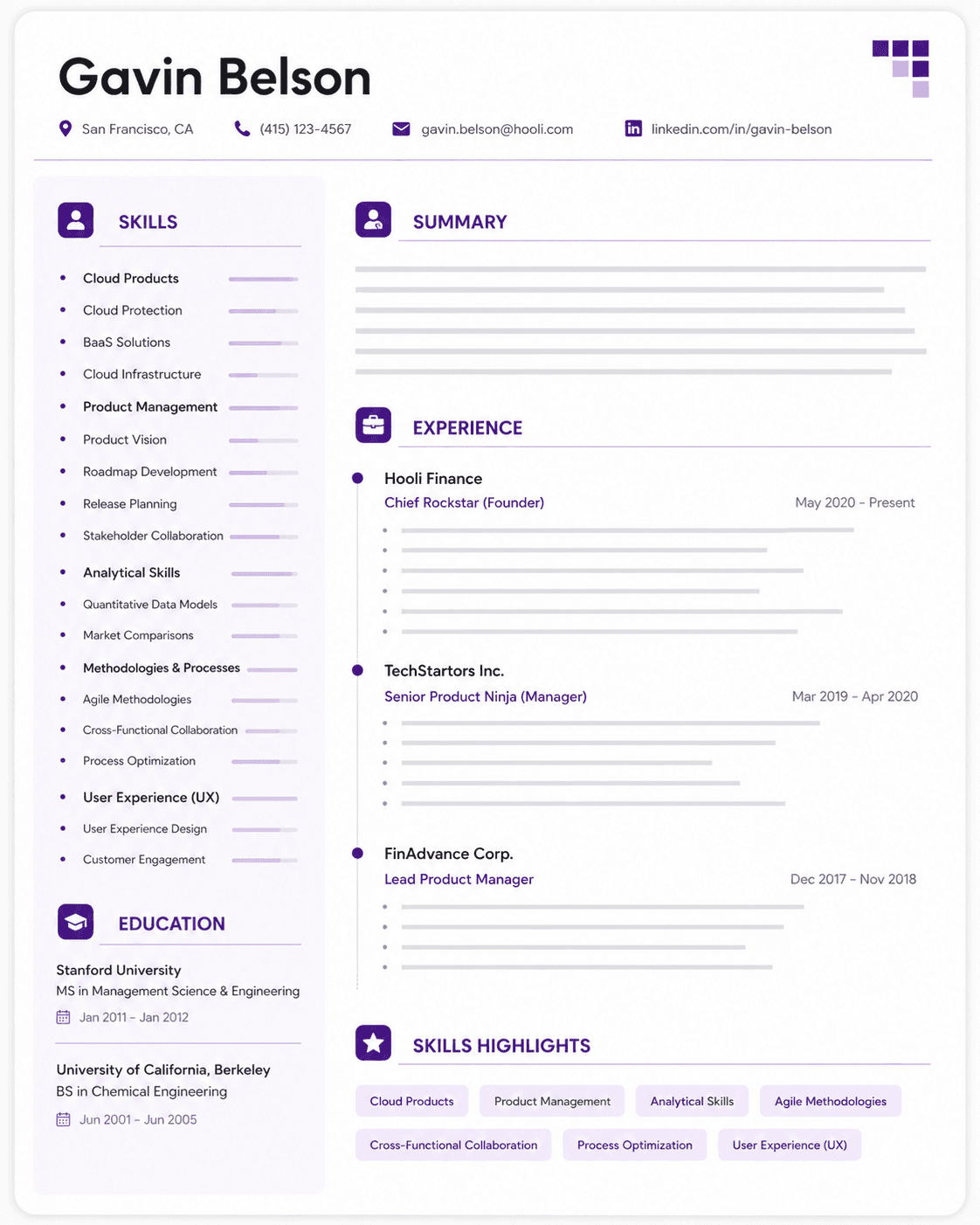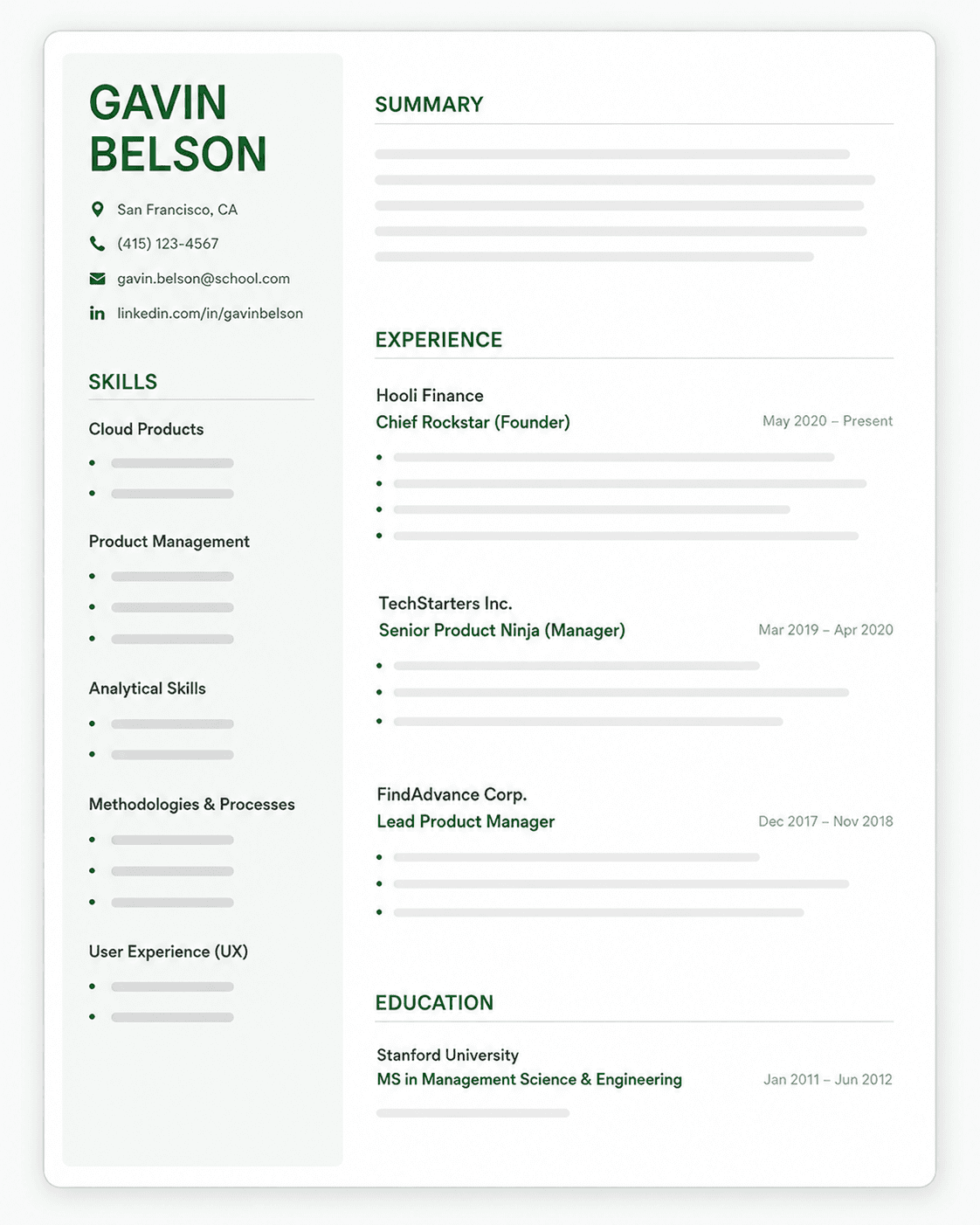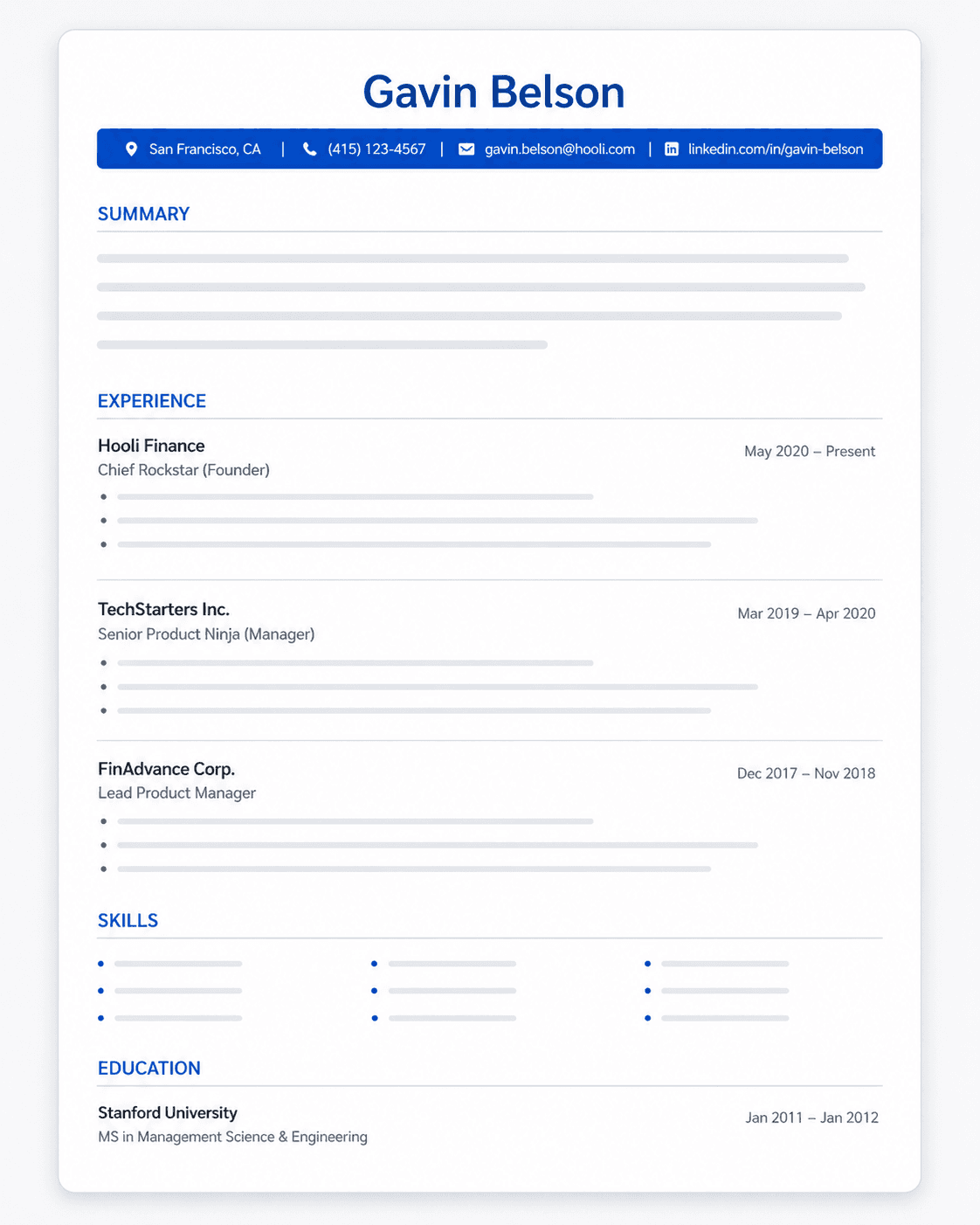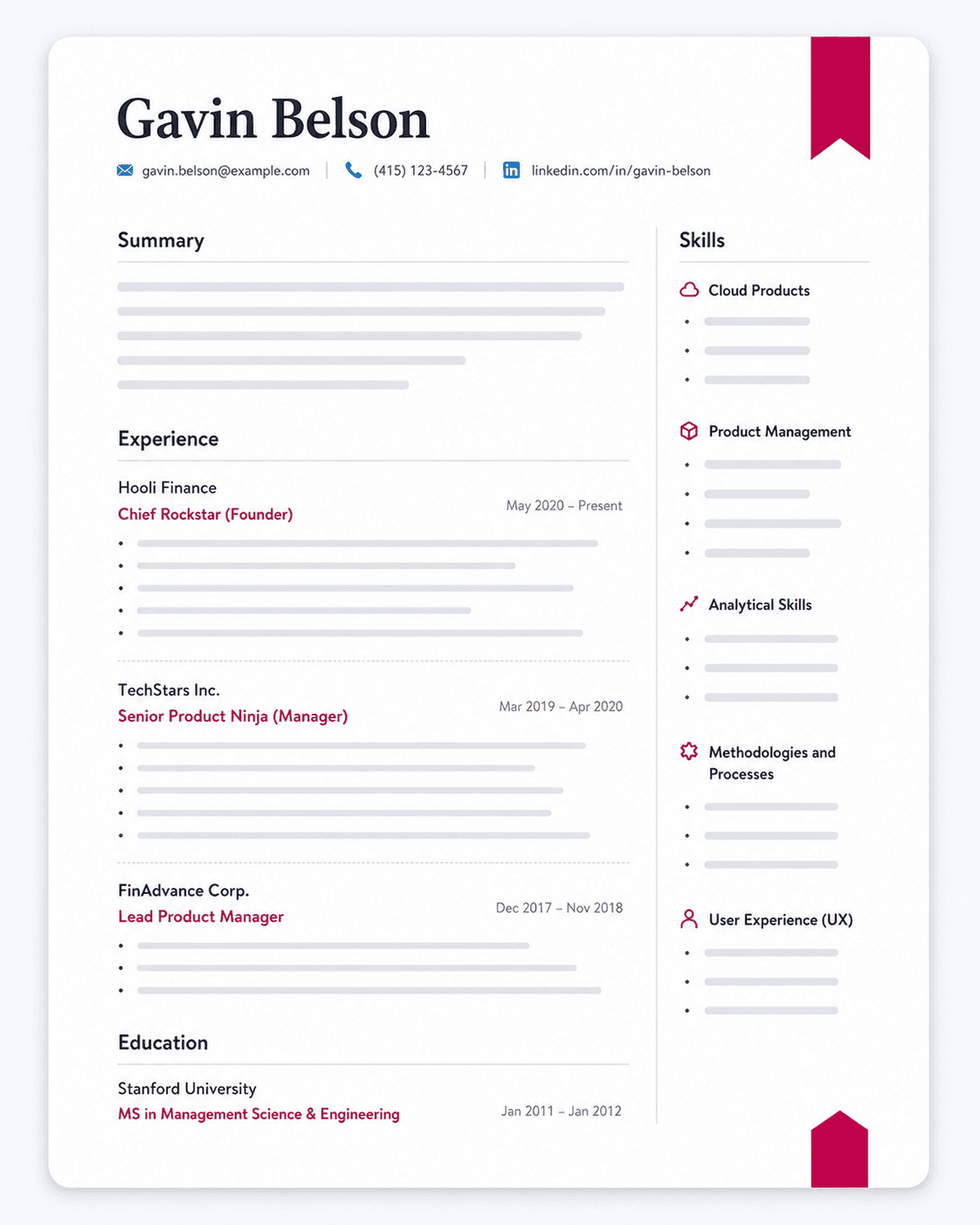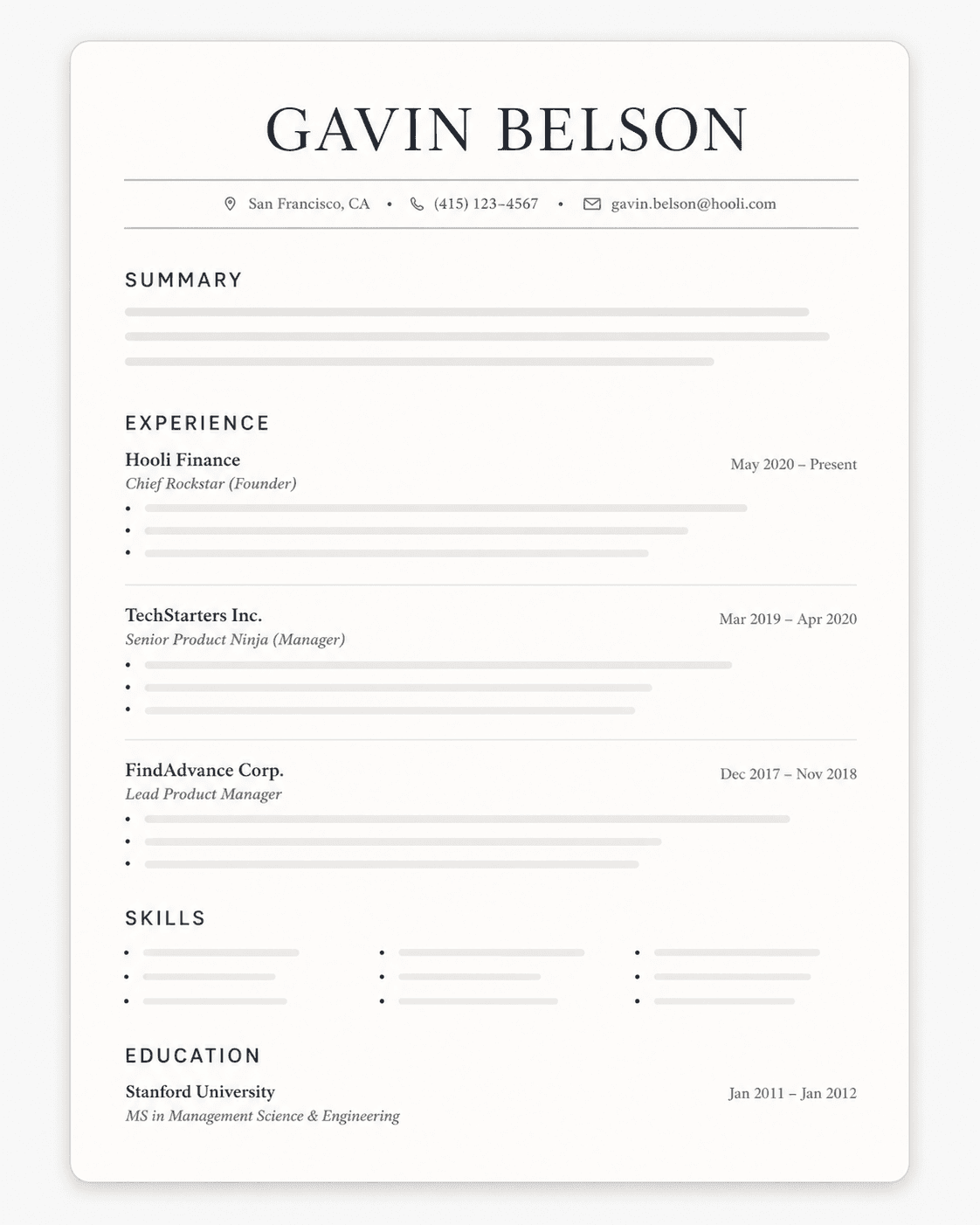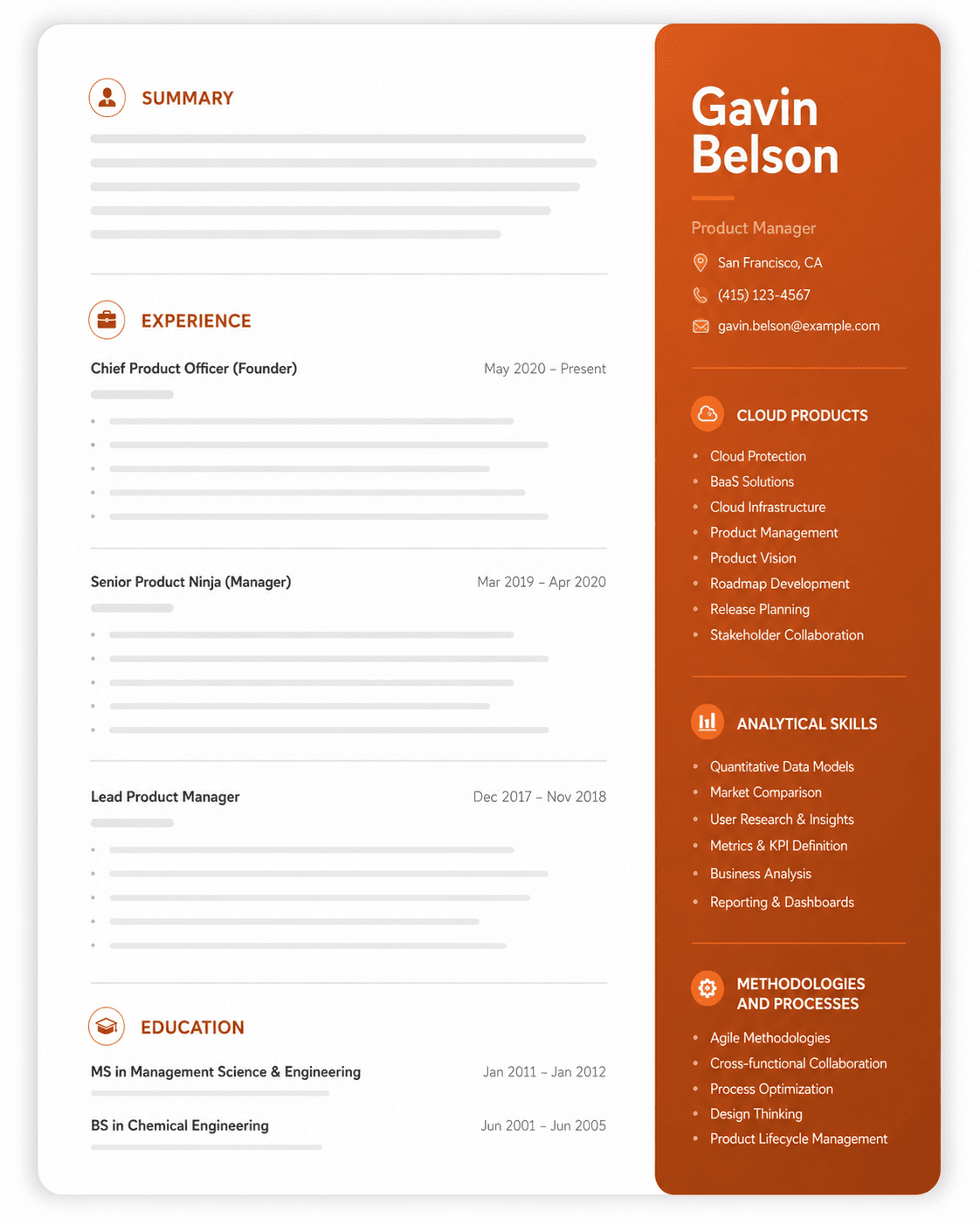
The education section of a resume seems straightforward- until you're staring at a blank page wondering whether to include your GPA, how far back to go, or if that online certificate even counts. Get it wrong, and you might accidentally signal you're overqualified, underqualified, or worse, trying to hide something.
In this guide you'll learn:
- Where to place your education section based on your career stage
- What to include (and exclude) in your academic qualifications
- How to format education entries for ATS compatibility and recruiter appeal
- When GPA, coursework, and honors actually matter
- Real examples for different experience levels
Let's cut through the confusion.
Where Does Education Go on Your Resume?
The placement of your education section isn't arbitrary. It signals your strongest selling point.
Bottom Placement
Place education near the bottom (after professional experience) if:
- You have 3+ years of relevant work experience
- Your career progression speaks louder than your credentials
- You're a mid-to-senior level professional
Top Placement
Place education near the top (after your summary) if:
- You graduated within the last 2-3 years
- You're applying to academia or research positions
- The role explicitly requires a specific degree
- You have an advanced degree (MBA, PhD) relevant to the position
- You're changing careers and your degree is more relevant than your work history
Here's the reality: recruiters spend an average of 5-7 seconds on initial resume reviews. If you're 10 years into your career, leading with your bachelor's degree wastes prime real estate. Your professional achievements should take center stage.
What to Include in Your Education Section
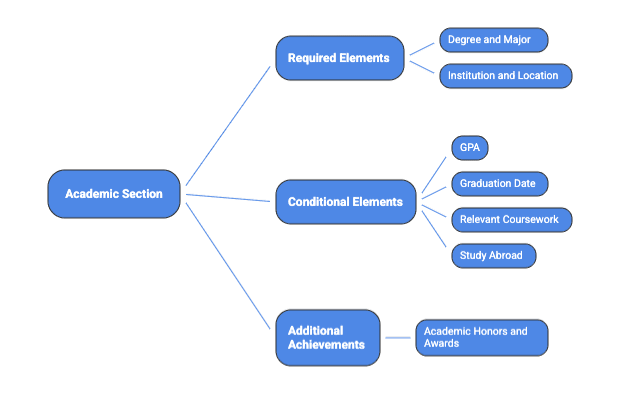
1. Degree and Major (Required)
List your degree exactly as it appears on your diploma (and also include an abbreviated version, if space permits):
Correct:
- Bachelor of Arts (BA) in English Literature
- Master of Science (MS) in Data Analytics
Avoid:
- B.A. English (too abbreviated)
- Bachelor's Degree (too vague)
Listing multiple majors and minors:
Include them if they're relevant to the position. Here's an example:
Bachelor of Science (BS) in Business Administration
Major: Finance | Minor: Computer Science
New York University | New York, NY | May 2020
Why use both full and abbreviated degree names?
If the job posting requires a certain educational qualification, Applicant Tracking Systems may reject your resume if you don't list it exactly on your resume. Including both the full and abbreviated versions ensures that an ATS can find the exact version of the degree listed in the job description.
2. Institution and Location (Required)
List your full university/college name along with the city and state (country if international):
How to format institution name:
- University of California, Berkeley | Berkeley, CA
- Indian Institute of Technology | Kharagpur, India
3. GPA (Conditional)
Include your GPA only if:
- It's 3.6 or higher on a 4.0 scale
- You graduated within the last 3 years
- The job posting specifically requests it
How to format GPA:
- "GPA: 3.8/4.0" (always include the scale)
- If your major GPA is significantly higher than your overall GPA, you can list both: "Major GPA: 3.9/4.0 | Overall GPA: 3.6/4.0"
Once you're 3+ years into your career, drop the GPA entirely. Your professional achievements matter more.
4. Graduation Date (Conditional)
Only list the year, if you have already graduated. If you are currently a student and have an expected graduation date in the future, include both the month and year, along with "expected" in brackets.
How to format graduation year:
- "2020" - always use the 4-digit format
- "May 2026 (Expected)"
When should you remove your graduation year?
You should remove your graduation year if:
- You’re over 40 (to avoid age discrimination)
- The degree is more than 15 years old
You should remove it earlier if you’re applying to tech startups (which often favor younger candidates).
5. Relevant Coursework (Conditional)
List relevant coursework only if:
- You're a recent graduate with limited work experience
- The courses directly relate to the job requirements
- You're changing careers and the coursework bridges the gap
- You did not complete complete your degree, and you don't intend to. Use coursework to show your relevance to the role
Format it concisely:
Bachelor of Science (BS) in Marketing
Boston University | Boston, MA | May 2023
Relevant Coursework: Digital Marketing Analytics, Consumer Behavior, Brand Management, Marketing Research Methods
Don't list: Generic courses everyone takes (Introduction to Business, English 101). Focus on specialized classes that demonstrate specific skills the employer needs.
6. Academic Honors and Awards
Include distinctions that signal exceptional performance:
- Dean's List
- Cum Laude, Magna Cum Laude, Summa Cum Laude
- Honor societies (Phi Beta Kappa, Tau Beta Pi)
- Academic scholarships
- Departmental awards
Bachelor of Arts (BA) in Economics
Duke University | Durham, NC | May 2022
Magna Cum Laude | Dean's List (6 semesters)
7. Study Abroad (Conditional)
Include study abroad experiences if they:
- Demonstrate language skills required for the job
- Show cultural competency for international roles
- Involved specialized coursework in your field
Bachelor of Arts (BA) in International Relations
Georgetown University | Washington, DC | May 2021
Study Abroad: Sciences Po, Paris, France (Fall 2019)
AI resume assistants like Upplai can help you automatically determine the right amount of educational qualifications to include in your resume based on your career level and target role.
How to Format The Education Section of your Resume
Here’s the standard way to format the education section:
- List degrees or qualifications in reverse chronological order. Start with your most recent and advanced qualification first.
- If you’re still in college, list your college degree with an expected graduating date. Include your high school as the highest level of completed education.
- If you have completed college education, skip your high school.
- If you have master’s and bachelor’s degrees, include both.
- If you have a PhD, include your PhD and your master’s degree, skip your bachelor’s degree.
- Have a clear heading. Title the section “Education” and use a larger font size than the rest of the contents for visual emphasis. Additionally use a separator or extra space to visually separate your education section from other sections.
- Use bold fonts to highlight degree names so that it stands out.
- Keep it concise. Focus on the essentials—degree, institution, and location. Only include extra details like honors or relevant coursework if they add value. (This leaves more room to highlight your professional background, which is what recruiters are most interested in).
The basic structure for listing education on a resume follows this pattern:
Degree Name | Major/Field of Study
Institution Name | Location | Graduation Date
However, you may want to format the education section a bit differently depending on your situation:
- If you’re still in college:
- List your college degree with an expected graduating date.
- Include your high school as the highest level of completed education.
- If you have completed college education: skip your high school.
- If you have master’s and bachelor’s degrees: include both.
- If you have a PhD: include your PhD and your master’s degree, skip your bachelor’s degree.
Resume Education Section Examples by Career Stage
Example 1: Recent Graduate (No Experience)
For new graduates with limited professional experience, the education section should be detailed and positioned prominently (immediately after your 'Objective' section).
Bachelor of Science (BS) in Computer Science
University of Illinois at Urbana-Champaign | Urbana, IL | May 2025
Relevant Coursework: Data Structures, Algorithms, Machine Learning, Database Systems, Software Engineering
Senior Capstone: Developed a machine learning model to predict student retention rates with 89% accuracy using Python and TensorFlow
Example 2: Current Student
For current students with limited or no professional experience, list your education section at the top (immediately after your 'Objective' section), and include as much detail as possible to show your relevance to the role
Bachelor of Science (BS) in Computer Science
University of Illinois at Urbana-Champaign | Urbana, IL
Expected Graduation: June 2027
Current GPA: 3.9/4.0
Relevant Coursework: Data Structures, Algorithms, Machine Learning, Database Systems, Software Engineering
Example 3: Unfinished Degree
For early career professionals (0-5 years) without a college degree, list relevant coursework that you completed during your studies before you left.
Coursework toward Bachelor of Science (BS) in Computer Science
University of Illinois at Urbana-Champaign | Urbana, IL
Completed 68 Credits: Data Structures, Algorithms, Machine Learning, Database Systems, Software Engineering
If you have substantial work experience, for example10+ years, an incomplete degree adds little value. Focus on what you've accomplished professionally and completely skip the education section.
Example 4: Mid-Career Professional
For mid-career professionals (3-10 years of experience), keep education concise and place it after work experience.
Master of Business Administration (MBA) Northwestern University, Kellogg School of Management | Evanston, IL | 2023
Concentration: Marketing Strategy
Bachelor of Science (BS) in Business Administration University of Southern California | Los Angeles, CA | 2019
Example 5: Senior Professional
For senior-level professionals (10+ years of experience), education becomes a brief credential check.
Master of Science in Engineering Management | Stanford University | 2012
Bachelor of Science in Electrical Engineering| MIT | 2008
Example 6: Career Changer
When pivoting careers, emphasize educational qualifications that bridge to your target role.
Data Analytics Professional Certificate
Google Career Certificates | Coursera | 2024
- Completed 8-course program covering data cleaning, visualization, SQL, R programming, and Tableau
Bachelor of Arts (BA) in Psychology
University of Michigan | Ann Arbor, MI | 2020
Special Cases: How to Handle Tricky Education Scenarios
Multiple Degrees
List in reverse chronological order (most recent first):
Master of Business Administration (MBA)
Northwestern University, Kellogg School of Management | Evanston, IL | 2023
Concentration: Marketing Strategy
Bachelor of Science (BS) in Business Administration
University of Southern California | Los Angeles, CA | 2019
Currently Pursuing a Degree
Be explicit about your expected graduation date:
Master of Science (MS) in Data Science
University of Illinois at Urbana-Champaign | Urbana, IL
Expected Graduation: June 2027
Current GPA: 3.9/4.0
Online Degrees and Bootcamps
List them exactly as you would traditional degrees. Accredited online programs from recognized institutions carry the same weight:
Master of Science (MS) in Computer Science
University of Texas at Austin (Online) | Austin, TX | 2024
Full-Stack Web Development Certificate
App Academy | San Francisco CA | 2022
- 1000-hour intensive coding bootcamp covering JavaScript, React, Python, and SQL
International Degrees
Include the U.S. equivalent if it's not obvious:
Bachelor of Engineering (B.Eng.) in Mechanical Engineering
Indian Institute of Technology Bombay | Mumbai, India | 2019
U.S. Equivalent: Bachelor of Science
Resume Writing Tips: Making Your Education Work Harder
Your education section shouldn't just list credentials—it should reinforce your narrative and demonstrate fit for the role.
Align with job requirements: If the posting emphasizes "strong analytical skills," highlight quantitative coursework or a thesis involving data analysis.
Show progression: Multiple degrees in the same field demonstrate commitment and deepening expertise.
Bridge gaps: Returning to school after a career break? Frame it as intentional skill development, not a gap.
Combine with certifications strategically: If you have both formal education and professional certifications, consider a combined "Education & Certifications" section to show continuous learning.
Tailor for each application: Yes, even your education section benefits from tailoring. If you took electives relevant to the specific role, mention them. If you completed a capstone project that mirrors the job responsibilities, include it.
Time Saving Tip
Choosing the right education to display, listing the right amount of detail, formatting, and tailoring your education to every job - can take significant time. Using an AI resume optimizer like Upplai that understands ATS and recruiter best practices can significantly speed up this process without compromising the quality of your application.