What Strong Store Manager Resume Examples Have in Common
"Store manager" covers a wide range on paper: an assistant running the floor solo on weekends, a general manager accountable for a single big-box location, a grocery or restaurant manager juggling perishables and labor law, a district manager overseeing five sites. The examples below are organized by that range, and hiring managers reading any of these resumes are scanning for the same short list: proof you've led a team, proof you've moved sales or controlled shrink, and proof you can keep a store running the same way on your day off as any other day.
Most applicants miss this because their resume still reads like the job posting they were hired from. "Responsible for daily store operations, staff, and inventory" tells a hiring manager nothing they didn't already assume from your title. It doesn't say how many people you supervised, what happened to sales or shrink under your watch, or whether the store ran smoothly when you were the one in charge.
This guide fixes that section by section, with examples at each step: a summary that states your scope in one line, a skills list built around what retail managers are actually screened for, bullets that turn your daily work into numbers a hiring manager can compare against other candidates, and full example resumes for assistant, store-level, and multi-unit roles. Every example below uses real, specific numbers, not filler adjectives, so you can see exactly what to swap in from your own store.
What Retail Hiring Managers Actually Look For
An assistant store manager resume and a store manager resume can list nearly identical duties: opening and closing, scheduling, handling escalations, covering the floor. The job title alone doesn't show whether you led that work or just carried it out, so hiring managers screen for proof beyond the title.
When a district manager reads a store manager resume, they're checking for three things a title can't prove. First, team leadership at scale: how many people you scheduled, trained, or evaluated, not just that you "assisted with staffing." Second, loss and shrink control: whether inventory came up short on your watch, and what you did about it. Third, sales or customer metrics tied directly to your decisions, like a comp-sales lift during a promotion you ran or a CSAT score you moved.
A resume that says "covered manager duties for 12 shifts monthly across a 15-person team, maintaining sales within 2% of full-manager weeks" answers all three at once.
This is the part first-time resume writers from assistant-level roles usually miss. You've likely already run the store solo more times than you realize. Translate those covered shifts into the same numbers a hiring manager would use to compare you against someone who already has "Store Manager" in their title.
How to Write a Store Manager Resume That Gets Interviews
Every store manager resume needs to answer the same three questions in the first few lines, then back them up with proof throughout. Here's how to build each section so a hiring manager stops skimming and starts reading.
Write a Targeted Summary or Objective
Your summary has three jobs. First, it establishes scope: how many people you supervised and how big the operation was (sales volume, store size, number of departments). Second, it delivers one proof point, a leadership or metrics win a reader can picture. Third, it signals direction: are you moving from assistant manager to store manager, or from single-store manager to multi-unit oversight?
Skip the adjectives and lead with what you actually ran.
A weak summary looks like this:
"Motivated and hardworking assistant manager with strong leadership skills and a passion for retail."
A stronger one looks like this:
"Assistant store manager with 4 years of experience supporting a $3.2M-volume specialty retail location and a team of 18. Stepped in as acting manager during a 6-week leadership vacancy, keeping shrink under target and holding weekend sales flat against the prior year. Ready to take on full store manager responsibilities."
If you're promoting from within, an objective can work better than a summary, especially when this is the first time you've applied to the "manager" title itself:
Objective example (assistant manager to store manager):
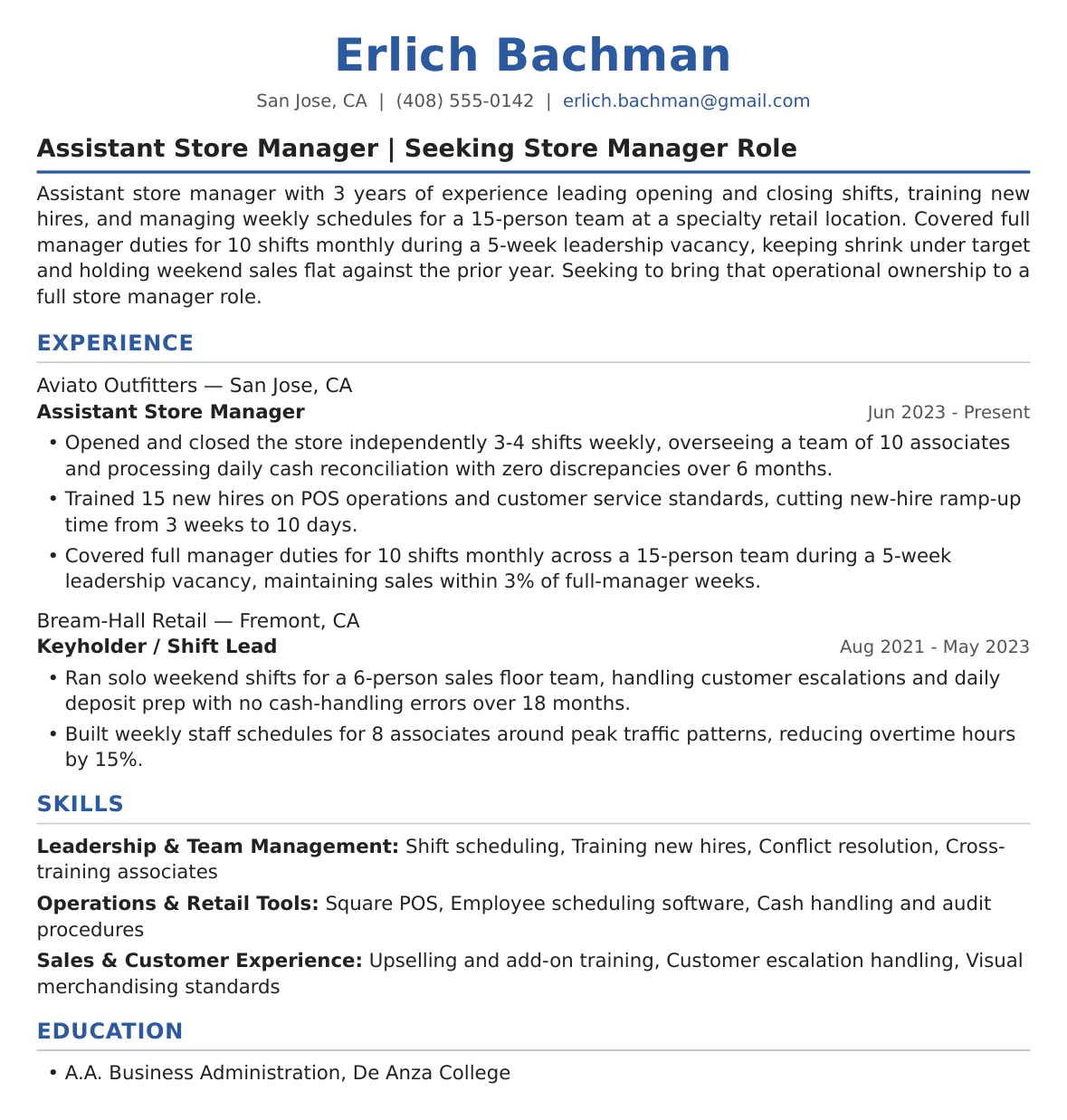
"Assistant store manager with 3 years of experience leading opening and closing shifts, training new hires, and managing weekly schedules for a 15-person team. Seeking to bring that operational ownership to a full store manager role, where I can apply the same hands-on approach to a full P&L and staffing plan."
Build a Skills Section That Speaks to Retail Hiring Managers
Group your skills instead of listing them alphabetically. A categorized layout signals you understand what the job actually involves.
Leadership & Team Management Hiring and onboarding, shift scheduling, performance coaching, conflict resolution, cross-training associates
Operations & Retail Tools POS systems, employee scheduling software, inventory management systems, loss prevention monitoring tools, markdown and pricing execution
Sales & Customer Experience Upselling and add-on training, customer escalation handling, visual merchandising standards, promotional rollout execution
Compliance & Safety OSHA workplace safety basics, cash handling and audit procedures, food safety protocols (grocery/restaurant settings), opening/closing security checklists
A few notes before you fill this in. Only list tools you've actually used hands-on, not ones your store happened to have. Pull the exact wording from the job description where it matches your real experience; if a posting says "labor scheduling software" and you used a specific tool, name it. And keep your tool claims level-appropriate: a store-level candidate listing enterprise P&L or supply-chain planning systems reserved for district managers reads as inflated, not impressive.
Write Achievement-Focused Experience Bullets
Every experience bullet should follow the same formula: action verb, plus the specific task or method, plus a quantifiable result or scope. Skip the formula and you're back to a job description.
A weak bullet looks like this:
"Responsible for managing store operations and staff."
A stronger one looks like this:
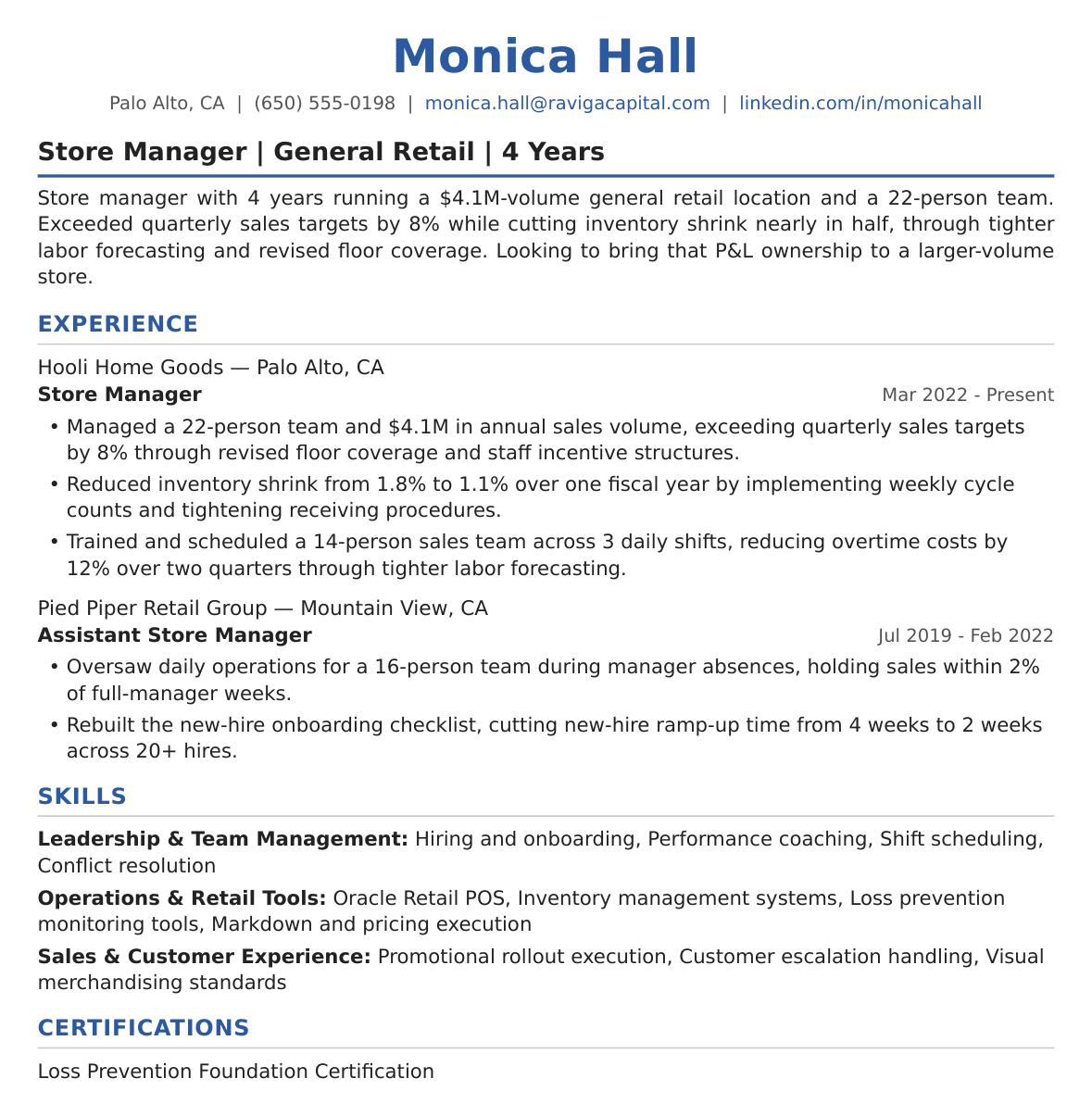
"Trained and scheduled a 14-person sales team across 3 daily shifts, reducing overtime costs by 12% over two quarters through tighter labor forecasting."
Use this sub-role library as a starting point and adjust the numbers to match your own store.
Assistant Store Manager
- Opened and closed the store independently 3-4 shifts weekly, overseeing a team of 10 associates and processing daily cash reconciliation with zero discrepancies over 6 months.
- Trained 15 new hires on POS operations and customer service standards, cutting new-hire ramp-up time from 3 weeks to 10 days.
Store Manager (general retail)
- Managed a 22-person team and $4.1M in annual sales volume, exceeding quarterly sales targets by 8% through revised floor coverage and staff incentive structures.
- Reduced inventory shrink from 1.8% to 1.1% over one fiscal year by implementing weekly cycle counts and tightening receiving procedures.
Store Manager (grocery or restaurant setting)
- Oversaw a 30-person staff across front-end, deli, and stockroom operations, maintaining a 96% health inspection score across 8 consecutive audits.
- Cut weekly food waste shrink by 18% by adjusting order quantities against sales velocity reports and retraining department leads on rotation standards.
District or Multi-Unit Manager
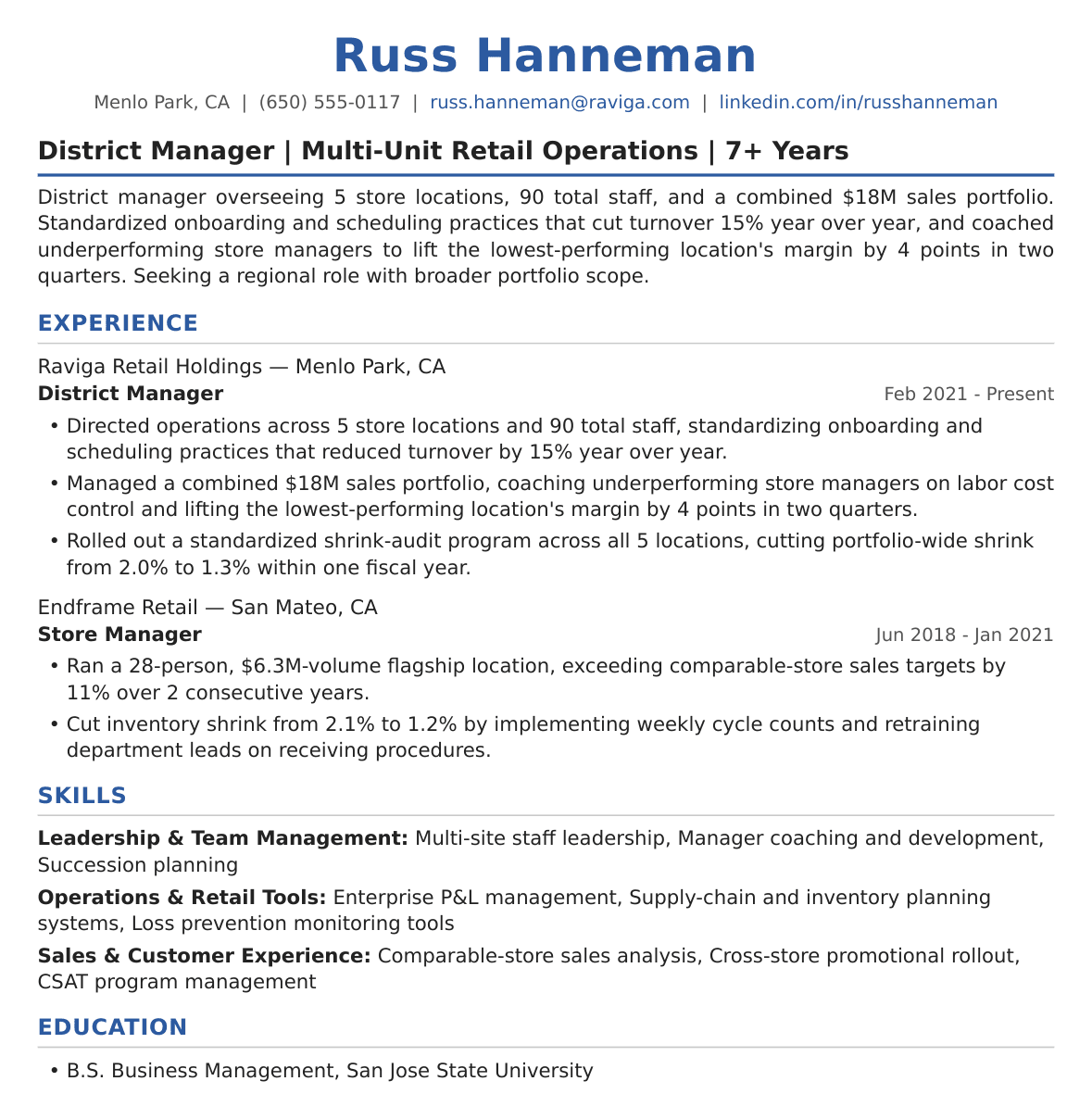
- Directed operations across 5 store locations and 90 total staff, standardizing onboarding and scheduling practices that reduced turnover by 15% year over year.
- Managed a combined $18M sales portfolio, coaching underperforming store managers on labor cost control and lifting the lowest-performing location's margin by 4 points in two quarters.
If your real numbers feel thin, quantify scope even without a clean metrics win: team size, store square footage, number of shifts you ran solo, or transaction volume all count. Dig for forgotten numbers in POS sales reports, scheduling software exports, past performance reviews, and shrink or loss-prevention audits. Most of what you need is already sitting in systems you used every week.
Organize Your Work History When You've Worked Across Different Retail Formats
Keep roles in reverse-chronological order. If you've moved between grocery, big-box, specialty, and restaurant settings, don't write a separate resume voice for each job. Frame the transferable core: staffing, scheduling, shrink control, and customer experience show up in every format, even when the products and hours differ.
Adjust only the details that genuinely differ by setting, like food safety compliance for grocery and restaurant roles versus visual merchandising standards for specialty retail. Keep the leadership scope and metrics consistent so a reader can track your growth across employers.
If a past employer used a title that doesn't match industry-standard terms, such as "Team Lead" for work that was actually store-manager-level, add a clarifier in parentheses next to the title, like "Team Lead (Store Manager equivalent)." This helps both a human reader and an ATS keyword match recognize the role for what it was.
Store Manager Resume Examples by Experience Level
The right template depends on where you sit in your retail career. An assistant manager building a case for the top job needs different proof points than a district manager overseeing five locations. Below are three starting points, matched to the resume you're likely writing right now.
Entry-Level / Assistant Store Manager Template
This template suits assistant managers, shift leads, and keyholders moving into their first full Store Manager title. It leans on transferable leadership proof: scheduling, opening/closing responsibility, training new hires, and covering for the manager during absences. The goal is to show you've already done pieces of the job, even without the title.
Get the entry-level template
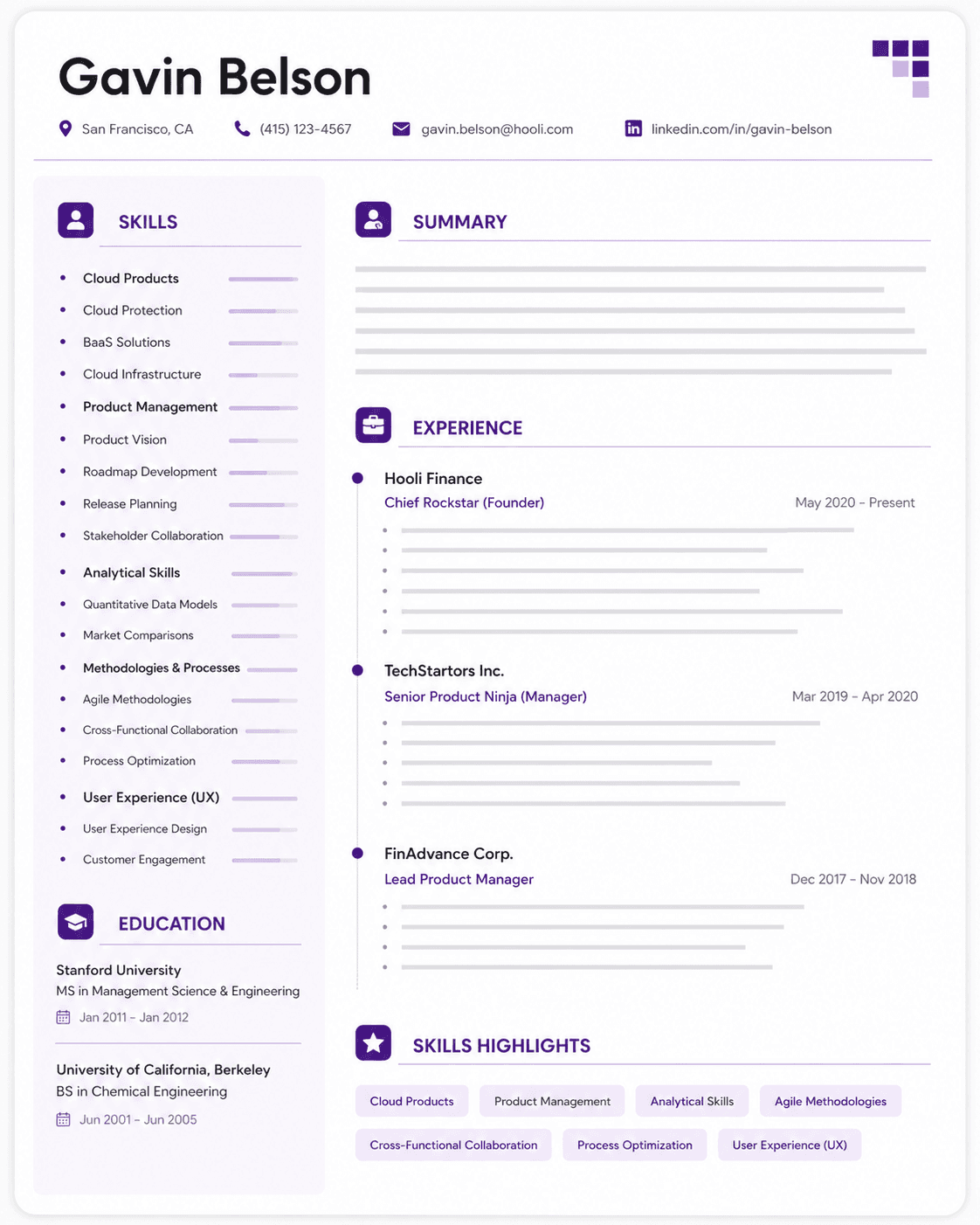
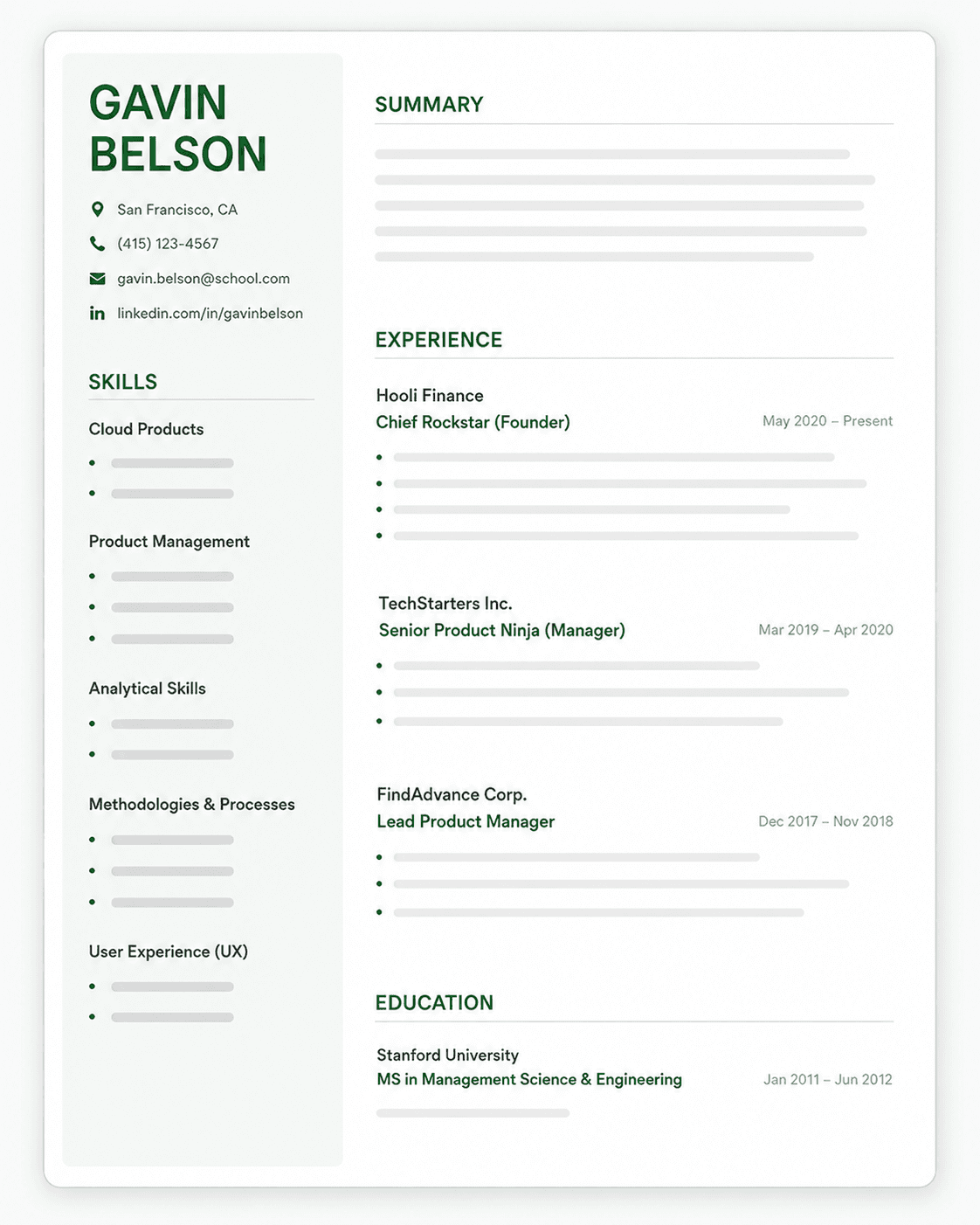
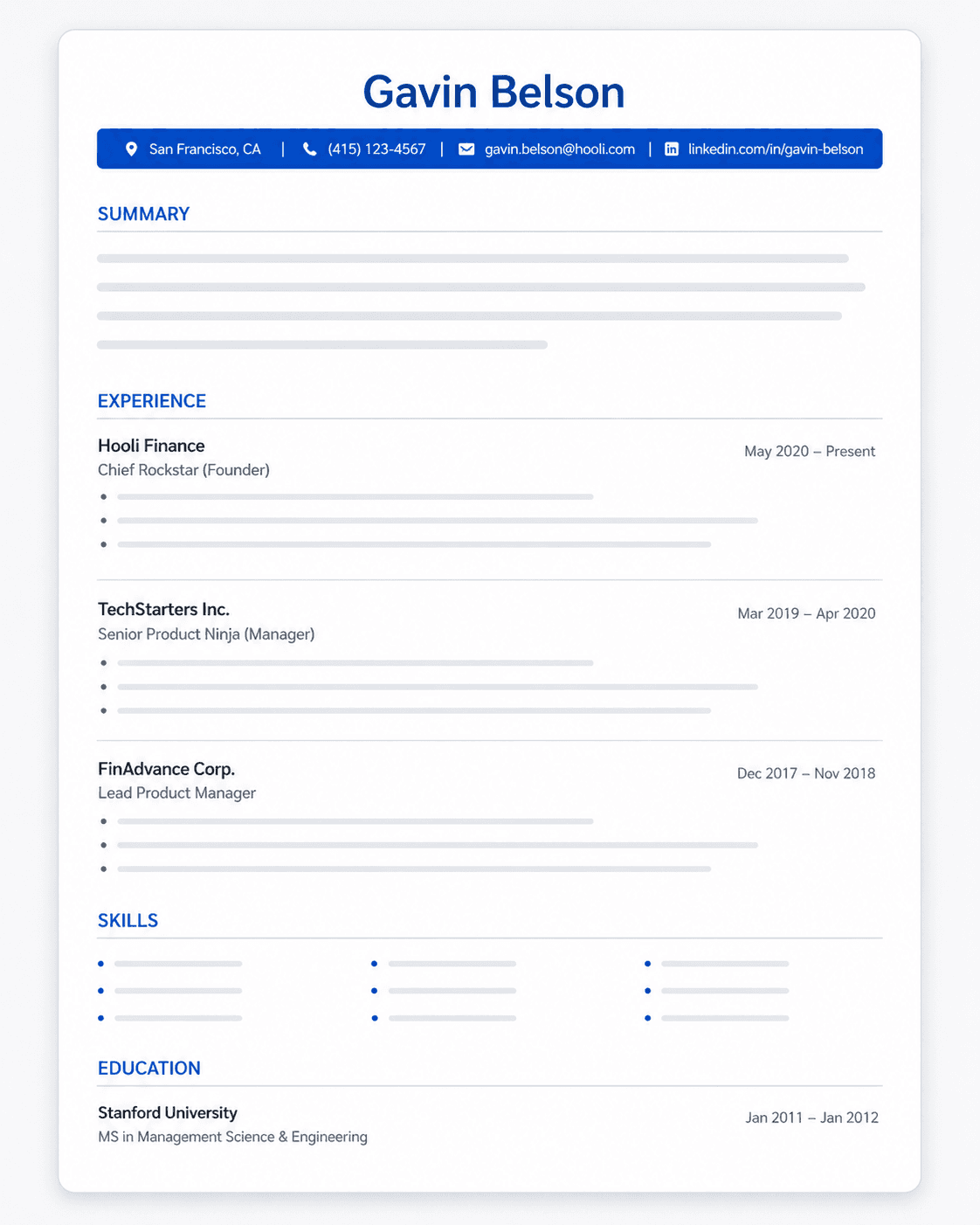
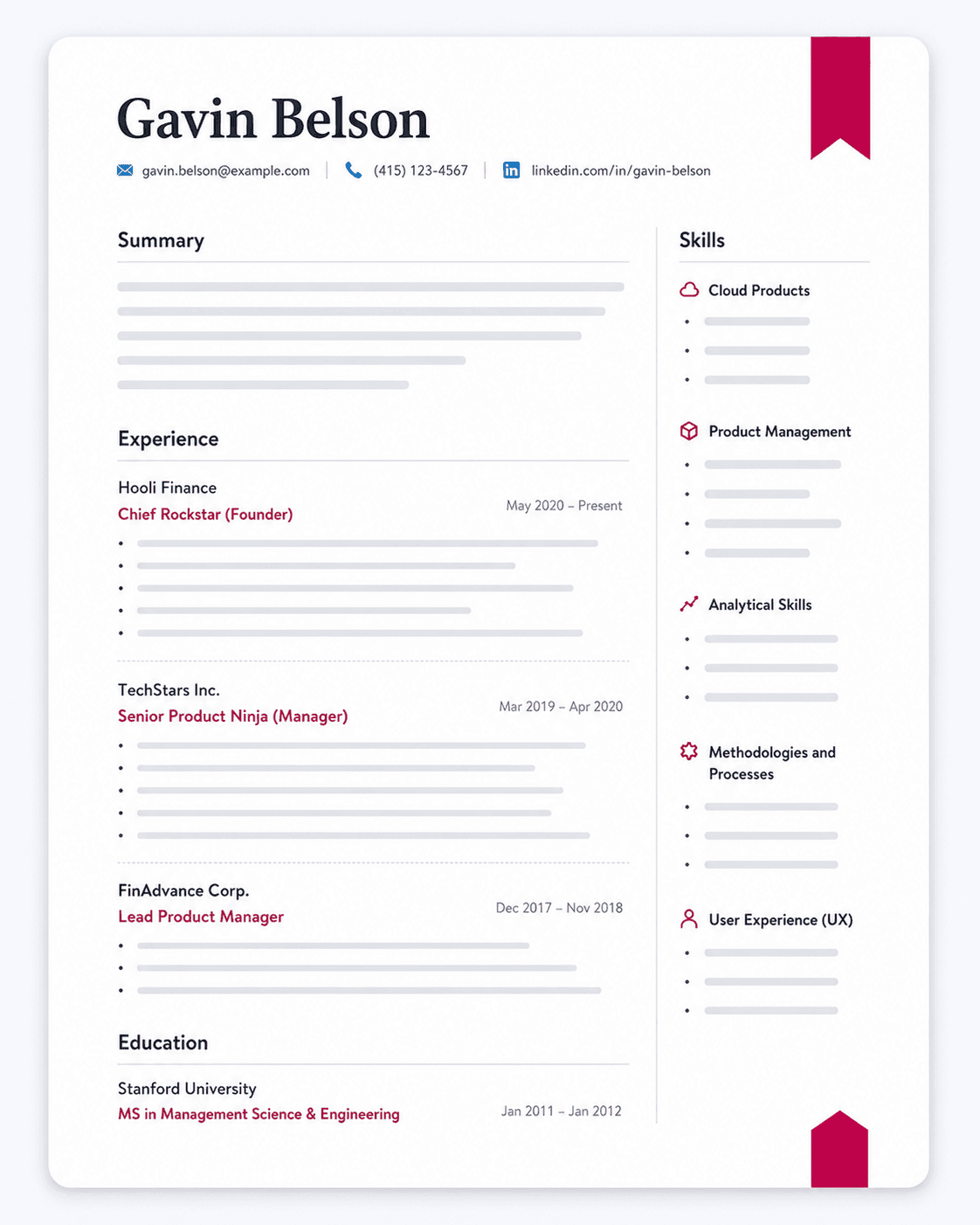
Start from a layout built for your first Store Manager application.
Mid-Level Store Manager Template
Built for candidates with 2-5 years running a single location, this template emphasizes quantified, P&L-adjacent scope: sales growth, shrink reduction, labor cost management, and team retention. It puts your numbers in the top third of the page, where a hiring manager reads first, and pairs each bullet with the result it drove.
Get the mid-level template
Frame your store's performance the way district hiring managers screen for.
Senior / District Manager Template
This template fits candidates managing multiple stores or applying for district and regional roles. It restructures the experience section around multi-unit scope: number of locations, combined revenue, staff headcount across sites, and cross-store metrics like comparable-store sales lift. Individual store tasks move down or out, since the reader is screening for portfolio-level impact.
Get the district manager template
Show multi-store scope the way regional leadership expects to see it.
Store Manager Resume Keywords
Retail recruiters scan for P&L ownership, KPI fluency, and people leadership terms. Attach store-level numbers to as many of these as you can, since bare keywords read as task lists.
| Category | Keywords |
|---|---|
| Financial & operations | P&L management, Sales target achievement, Labor cost and payroll management, Inventory management, Shrink reduction, Loss prevention, Cash handling, Opening and closing procedures |
| People leadership | Staff scheduling, Hiring and onboarding, Training and coaching, Performance management, Employee retention, Team development |
| Sales & customer experience | KPI management, Conversion rate, Average transaction value (ATV), Units per transaction (UPT), Customer satisfaction/NPS, Visual merchandising, Planogram execution, Promotions execution |
| Systems & channels | POS systems, Workforce management software, Omnichannel fulfillment (BOPIS), Vendor relations |
What to Write When Your Store Closed
Retail closes stores constantly, and the manager's resume absorbs the damage: the last entry ends abruptly, the location no longer exists to verify, and a screener's first guess is that performance closed it. Silence makes that guess stick. One neutral clause removes it: "Store Manager, [Retailer], 2021–2025 (location closed in company-wide restructuring)." Named cause, no apology, done.
Then mine the closure, because a wind-down is management evidence most candidates never get. You ran an ending: "liquidated $1.8M in inventory at 22% above corporate recovery target; maintained shrink under 1% through final quarter; placed 70% of staff in transfers before closing date." Those bullets prove financial control, team leadership under bad news, and execution without a future to motivate anyone, which is harder than running a healthy store.
If the chain went under entirely, verification gets awkward, so keep your own proof: final P&L summaries, district manager contact info, HR verification letters. Request the letter during the wind-down, while HR still exists to write it.
Common Store Manager Resume Mistakes to Avoid
Most store manager resumes fail for the same handful of reasons. Fix these before you send another application.
Listing Duties Instead of Results
"Responsible for managing store operations, staff, and inventory" tells a hiring manager nothing they couldn't guess from your job title. Every bullet should show what happened because you were there: a sales number, a retention rate, a percentage improved. If a bullet could describe any assistant manager at any store, rewrite it around your specific numbers.
Sending the Same Resume to Every Retail Format
A grocery chain, a big-box retailer, and a specialty boutique screen for different priorities: shrink control, high-volume scheduling, or customer experience scores. Submitting one generic resume to all three signals you haven't read the posting. Adjust which achievements you lead with based on what the specific employer's job description emphasizes.
Piling On Soft-Skill Adjectives
"Dependable," "hardworking," and "people person" are the words hiring managers skim past because everyone's resume has them and none of them are provable. Replace each adjective with a bullet that proves it. Instead of calling yourself a "strong leader," show the team you trained and the retention or sales result that followed.
Naming Software Without Specifics
"Familiar with POS systems" could mean you rang up a few transactions once. Name the actual systems you've used (Square, Lightspeed, Oracle Retail) and what you did with them, like running end-of-day reconciliations or managing markdowns. Vague tool mentions read as padding, and ATS scans often match on the exact product name, not the category.
Burying Your Leadership Scope
If you supervised 12 people or ran a store doing $2 million a year in sales, that leadership scope belongs near the top of your bullet, not buried in a dependent clause halfway through. Hiring managers scanning dozens of resumes look for team size and store volume first to gauge whether your experience matches the role's scope, so lead with the number, then explain what you did with that team.
Leaving Out Shrink and Inventory Numbers
Shrink reduction and inventory accuracy are two of the clearest proof points a retail hiring manager can evaluate, and most candidates skip them entirely. If you cut shrink from 2.1% to 1.4% or maintained 98% inventory accuracy during audits, that number belongs in a bullet. Omitting it when you have it wastes one of the strongest signals available to you.
Formatting in a Way ATS Software Cannot Read
ATS-unfriendly formatting, including tables, text boxes, columns, and headers/footers, often gets scrambled or dropped entirely when applicant tracking systems parse your resume, even if the file looks clean when you open it. Stick to a single-column layout with standard section headings and no graphics or icons carrying information. A visually striking resume that an ATS reads as blank fields never reaches a human.
How AI Resume Builders Can Simplify Your Store Manager Resume
Rewriting a resume for every posting, from a big-box format to a boutique retail chain, eats time an assistant manager juggling floor coverage doesn't have, and a generic version often gets filtered before a hiring manager ever sees it.
Upplai, built as a transparent alternative to black-box AI tools, targets exactly this problem:
- Real-time ATS scoring. See the ATS and recruiter score update as you edit, so you know whether swapping in a district's preferred terms actually helped, without a download-and-reupload cycle.
- Transparent suggestions. Every edit comes with a plain-language "why this change?" explanation. Accept or reject each one individually. The AI never invents experience or fabricates numbers.
- Automatic formatting. Choose from ATS-friendly templates and color themes, with full design control and unlimited downloads in PDF, DOCX, and TXT.
- Structure guidance. Suggestions reorder content for relevance, strengthen action verbs, quantify achievements like shrink reduction or labor cost control, manage resume length, and flag potential bias triggers.
- Preference memory. Formatting, metric, and reordering choices carry over across sessions, so tailoring your third or fourth application this week starts from where the last one left off.
Create a tailored store manager resume
Build a store manager resume that clears the ATS and reaches a hiring manager.