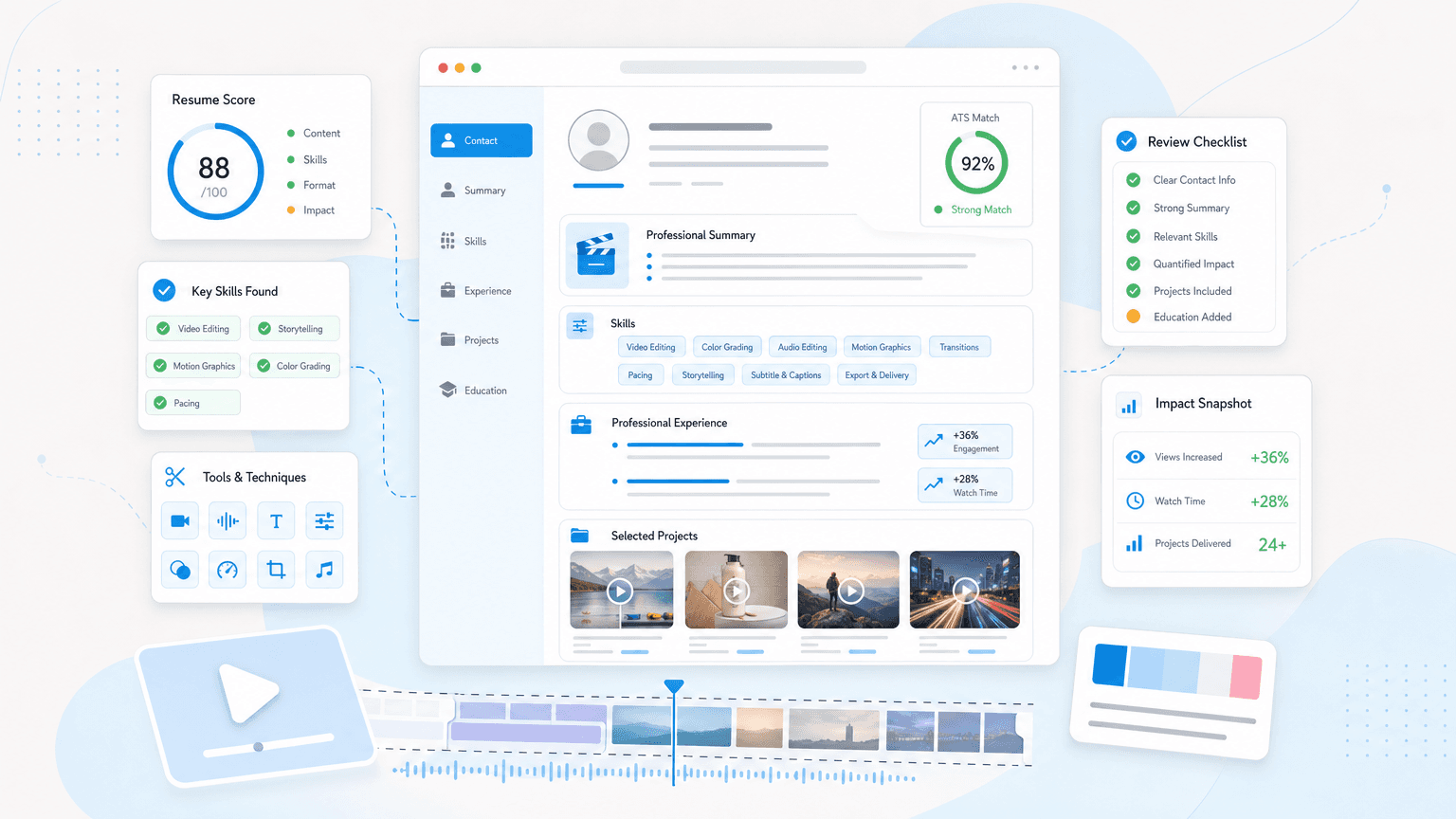
You've got a reel you're proud of and real projects behind it, whether that's paid client work, a YouTube series, or freelance gigs you found yourself. What you're less sure about is whether the resume sitting in front of that reel actually holds up, or whether it reads like every other applicant's page and gets closed before anyone presses play.
That uncertainty is fair. A video editor resume has to do something most resumes don't: earn a click on a reel it can't show. This guide walks through exactly how to build one that survives an ATS scan, gives a recruiter a reason to open your portfolio, and reads as credible whether you're chasing freelance clients, an in-house post-production seat, or an agency role.
Below, you'll find how to structure your summary and portfolio link, which skills to list and how, a bullet-writing formula with real sub-role examples, guidance on framing freelance versus in-house versus agency experience, full resume examples by career stage, and the mistakes that quietly cost editors interviews.
Why Your Video Editor Resume Needs More Than a Great Reel
Your reel is what gets you hired. It's also not what gets your resume opened. Before anyone watches a single cut, your resume text has to pass a screen, whether that's an applicant tracking system parsing your file or a recruiter skimming it for 30 seconds before deciding if the portfolio link is even worth a click.
That screen doesn't watch video. It reads words. If your resume says "skilled video editor with a passion for storytelling" and links a reel, the system (or the tired hiring manager) has no reason to open that link over the next ten applicants who said the same thing. If it says "edited 40+ short-form videos in Premiere Pro and DaVinci Resolve, cutting average turnaround from 5 days to 2," you've just given a real reason to click through.
This is the part self-taught and freelance editors miss most often. You've spent years getting good with a timeline, not writing about one, so the instinct is to let the work speak for itself and keep the resume short and vague. But a vague resume gets filtered out at exactly the stage where the reel never gets a chance to speak at all.
Named software, specific project types, and real numbers do double duty here. They satisfy keyword matching in an ATS. They also tell a human reader, in five seconds, that you're not guessing about your own value. The rest of this guide is about building that resume, one that earns the click instead of assuming it.
How to Write a Video Editor Resume That Gets Interviews
Lead With Your Portfolio Link and a Targeted Summary
A video editor resume is a pitch for your reel as much as it is a work history, so the reel needs to be the first thing a reader can act on. Put your reel or portfolio link directly under your name and contact information, at the very top of the resume. Don't tuck it into a "links" line near the bottom or bury it inside a cover letter. Recruiters and creative directors decide whether to keep reading based on what they see in the reel, and if it's hard to find, they may not look at all.
Your summary sits right below that link, in 2 to 3 sentences. It needs to do three jobs: state your years of experience, name 2 to 3 specializations (short-form social, narrative and documentary, motion graphics, corporate and brand work), and lead with one metric, since a number proves you deliver results in a way a list of software never can.
A weak summary looks like this:
"Creative video editor with a passion for storytelling and strong skills in Adobe Premiere Pro. Looking for a role where I can grow and contribute to a team."
A stronger one looks like this:
"Video editor with 3 years of experience across freelance social content and short-form brand videos. Specializes in fast-turnaround editing for Instagram and TikTok, with a secondary focus on color grading in DaVinci Resolve. Edited a product launch video that reached 2.1M views and grew a client's following by 24% in one month."
The weak version reads like every other resume in the pile. It has no numbers, no specialization, and no proof. The strong version tells a hiring manager exactly what kind of editor you are and what happened the last time someone hired you to do it.
If you're moving from hobby editing into paid work, you likely don't have three years of job titles to summarize, and that's fine. Frame the objective around your reel and your specific project history instead of tenure.
Objective (entry-level / self-taught editor): "Self-taught video editor with 4 years of hands-on experience cutting short-form content, personal projects, and freelance client videos in Premiere Pro and DaVinci Resolve. Built and maintain a portfolio of 15+ published edits, including a 500K-view fan video and three paid client projects. Seeking a first in-house or agency role to apply that editing range to consistent, higher-volume work."
This version still leads with the reel-worthy proof, a published edit count and a real view number, instead of apologizing for a thin work history.
Build a Skills Section That Names Real Tools
Skip "proficient in video editing software." Hiring managers and ATS parsers alike are scanning your skills section for the exact tools listed in the job description, so name them.
Editing Software: Premiere Pro, Final Cut Pro (FCPX), DaVinci Resolve, Avid Media Composer
Motion/VFX & Color: After Effects, Cinema 4D, color grading, Pro Tools/audio mixing
Technical Know-How: codecs and file formats, compression for web/broadcast delivery, multi-cam sync, captioning and subtitling
Soft/Collaboration Skills: client communication, deadline management, incorporating stakeholder feedback
A few rules for filling this in. Only list a tool if you could open it cold and demo a task live, since a follow-up question about a specific tool is common in editor interviews. Match the job posting's exact wording: a listing that says "FCPX" should be met with "FCPX" on your resume, since some ATS keyword matching is that literal. And favor depth over breadth. Four tools you can speak to in detail beat ten you've only opened once.
If you're actively learning a tool but aren't ready to field interview questions on it, leave it out of the skills block entirely rather than hedging with "familiar with" or "exposure to." A line in your cover letter or a mention in the interview itself, such as picking up Resolve's Fusion page or studying Nuke on the side, carries more weight as a growth signal than a half-claimed skill a recruiter can't verify.
Write Achievement-Focused Experience Bullets
Every experience bullet should follow the same formula: action verb, plus the specific edit or project type, plus a quantifiable result. Views, watch-time, retention, turnaround time, and budget are all fair game. Creative work still needs a number attached to it.
A weak bullet looks like this:
"Responsible for editing videos for clients and making sure they were delivered on time."
A stronger one looks like this:
"Edited and color-graded 12 short-form videos monthly for 4 recurring clients, maintaining a 90% client retention rate over 18 months."
Use the sub-role library below to build bullets that match the kind of work you actually did. Pick the two lines closest to your real projects and adjust the numbers to match your history exactly. Never borrow someone else's metrics.
Freelance/Social Video Editor
- Delivered 12 to 15 short-form videos monthly for 6 recurring clients, maintaining a 90% client retention rate over 18 months.
- Edited a brand launch video that reached 2.1M views and drove a 24% increase in the client's social media following.
In-House/Corporate Video Editor
- Cut internal training and marketing videos for a 200-person organization, reducing average production turnaround from 5 days to 2.
- Partnered with the marketing team to produce 30+ product videos per year, contributing to a 15% lift in landing-page conversion.
Agency/Broadcast Video Editor
- Edited 8 client campaigns simultaneously under broadcast deadlines, maintaining 100% on-time delivery across a 6-month quarter.
- Color-graded and finished 20+ commercial spots for national broadcast, collaborating with 3 producers per project.
YouTube/Content Creator Editor
- Edited a weekly YouTube series that grew average watch-time by 35% and subscriber count from 40K to 95K in one year.
- Implemented an AI-assisted rough-cut and auto-captioning workflow, cutting per-episode editing time by 20%.
If you don't have a clean "sales number" to point to, quantify scope instead: turnaround time, project volume, team size, or client count all count as legitimate metrics. Dig through platform analytics dashboards, old client emails and testimonials, and your project management tool's history to recover numbers you forgot you had.
Show You Know the Difference Between Freelance, In-House, and Agency Work
Many early-career editors haven't had to choose a lane yet, since student work, internships, and small freelance gigs tend to blend all three styles together. Once you start applying, though, the same editing skillset reads differently depending on who's hiring, and the resume needs to pick a framing.
If you're pitching freelance or contract work, lead with client retention and self-management, since a client wants to know you'll hit deadlines without oversight and keep coming back project after project.
If you're targeting an in-house corporate role, shift the emphasis to cross-department collaboration and brand consistency. In-house teams care whether you can take direction from marketing, sync with a brand style guide, and produce work that looks consistent across dozens of videos, not just one standout piece.
Agency and broadcast employers weigh volume and deadline reliability above almost everything else. They want proof you can juggle several client campaigns at once without missing a broadcast window, so bullets about simultaneous projects and on-time delivery rates matter more here than they would on a freelance resume.
When you pivot the same experience between these framings, cut the details that don't serve the target reader. A freelance-facing bullet about managing five direct client relationships can shrink to a single clause on an in-house resume, where the reader cares more about the brand style guide you followed than the client you billed. An agency-facing version of that same project might drop the client relationship entirely and lead instead with the deadline you hit alongside three other campaigns. Decide which of these three you're aiming at before you finalize your bullets, and lean the resume that direction. A generic resume that hedges across all three reads as unfocused to whoever's reading it.
Video Editor Resume Examples
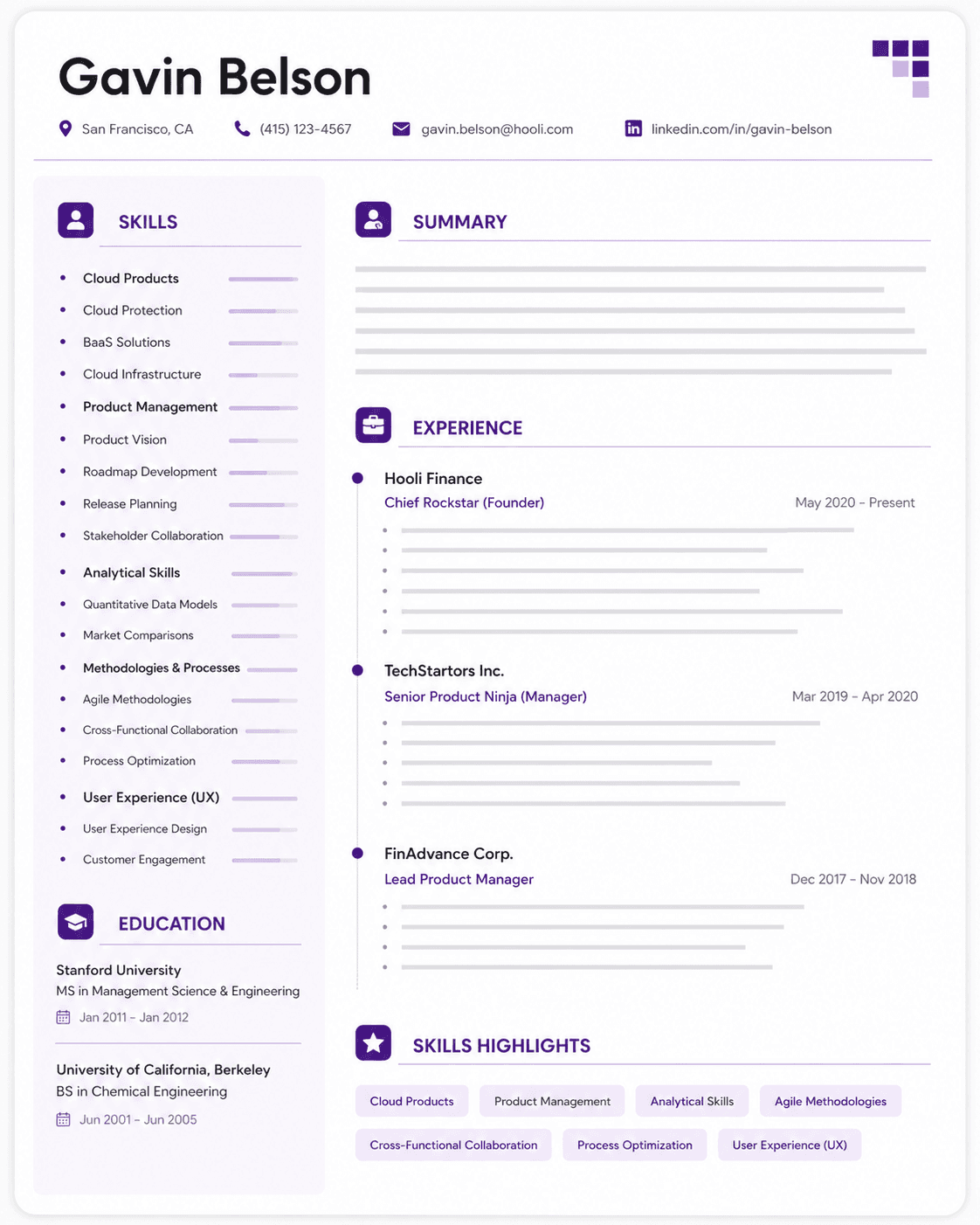
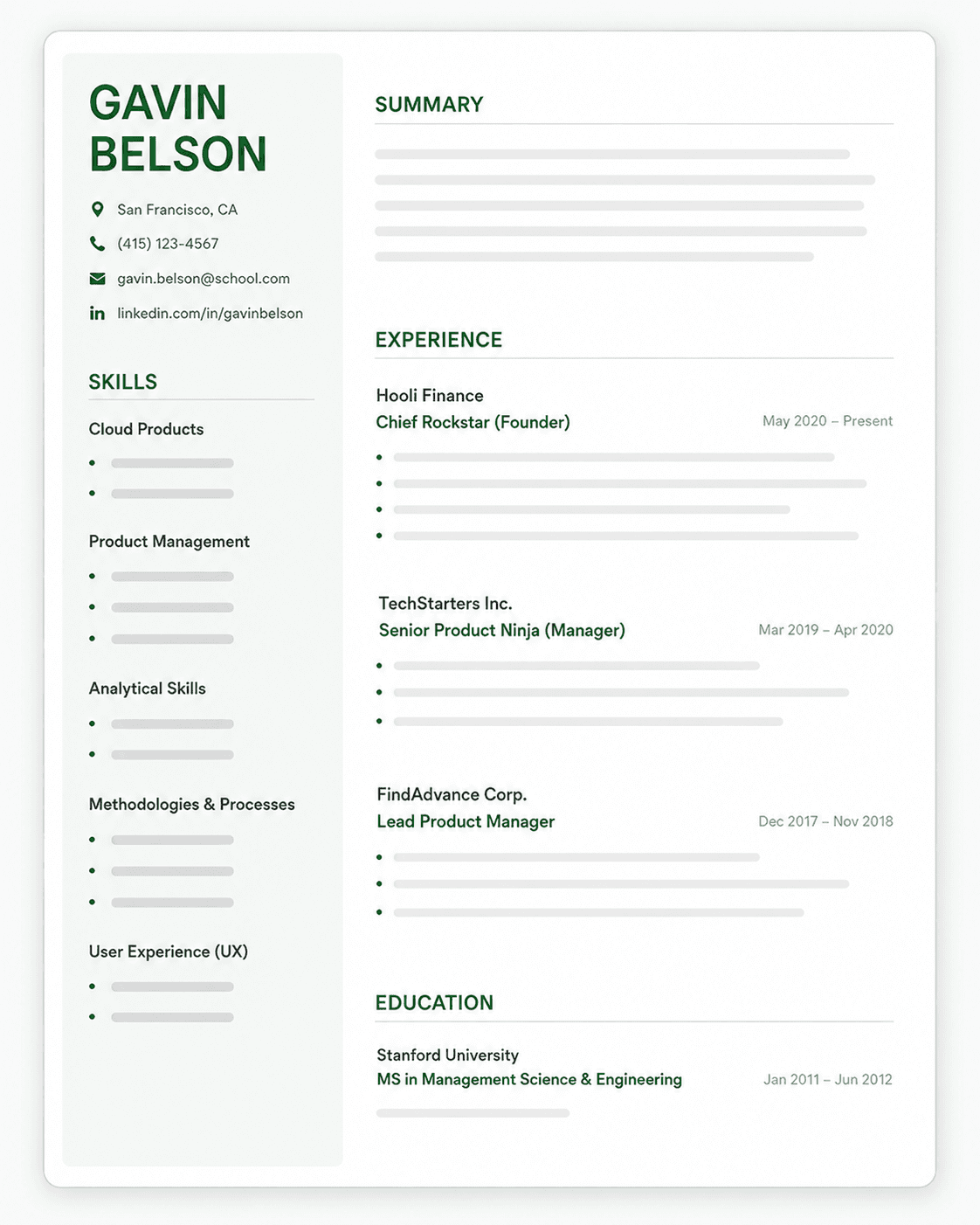
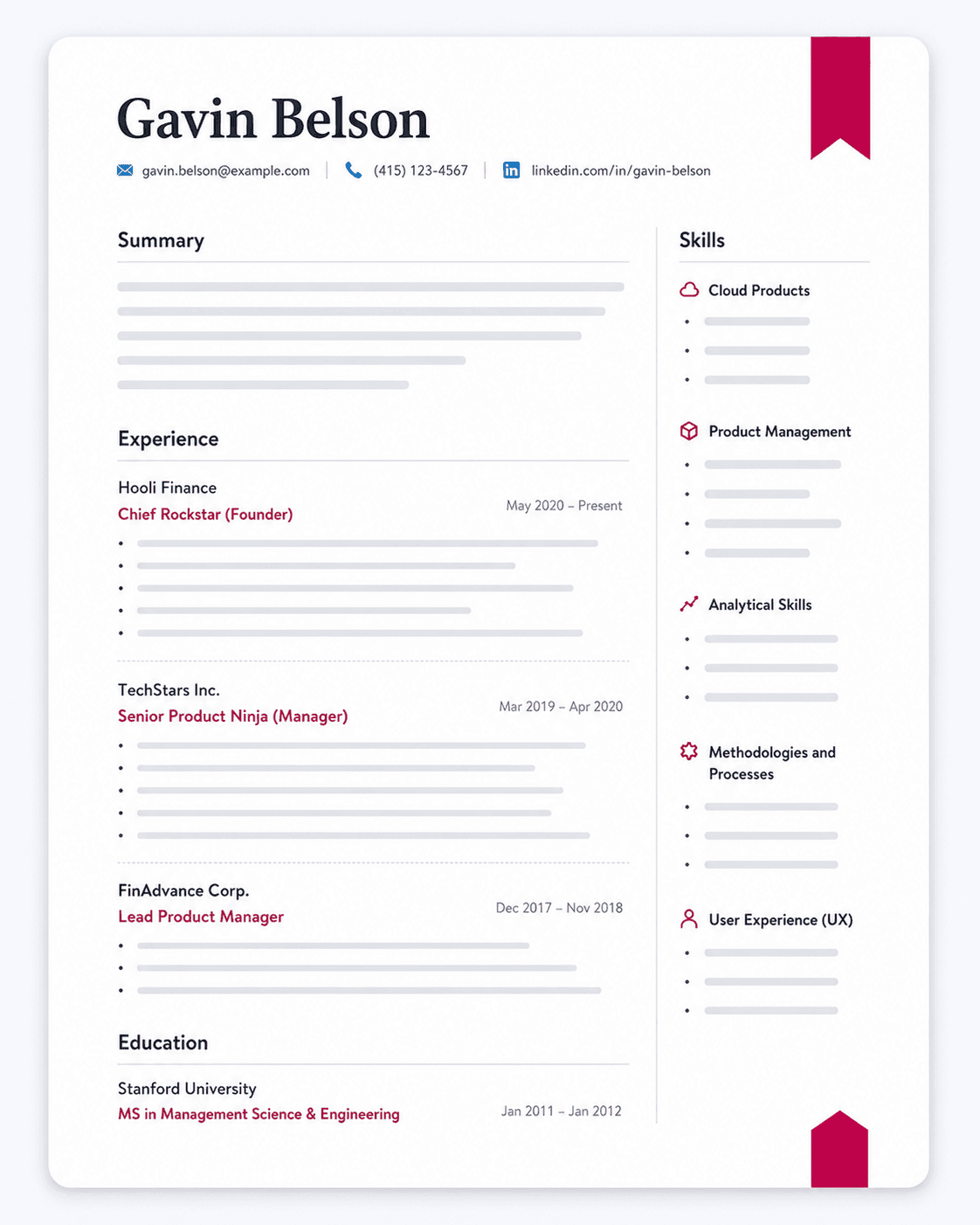
Reading advice about summaries and bullet formulas only goes so far. Seeing a full resume laid out by career stage makes it easier to picture your own. Below are three example levels: entry-level and self-taught, mid-level freelance or in-house, and senior or lead editor. Each targets a different hiring context, so the emphasis shifts even though the underlying structure stays the same.
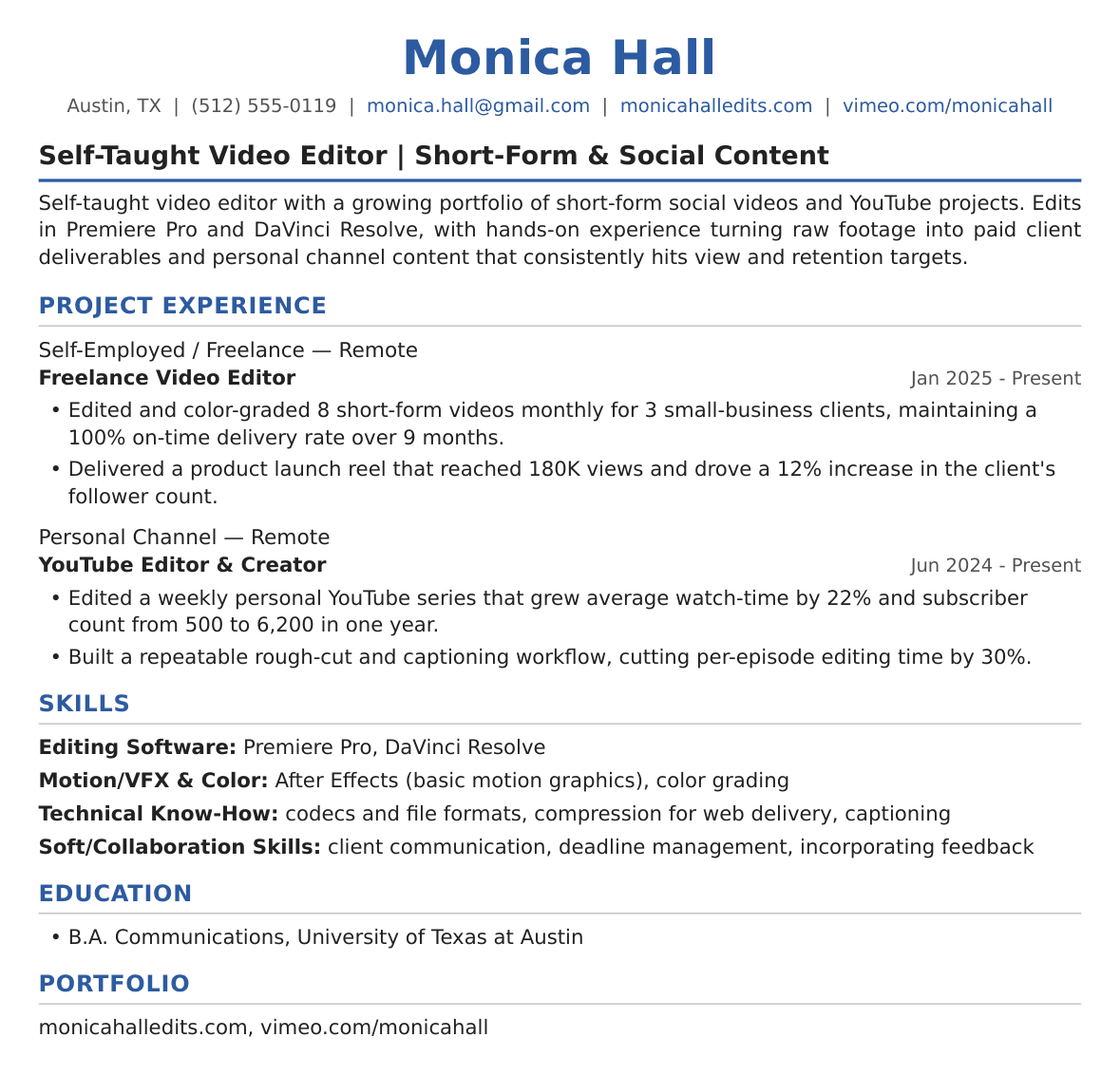
Entry-Level / Self-Taught Video Editor
This example leads with the portfolio link and a short summary naming the software you use, then moves straight into project work rather than a thin job history. Hobby edits, unpaid client work, and personal YouTube projects get their own bullets with real numbers (views, turnaround, project count) instead of being tucked away as an afterthought.
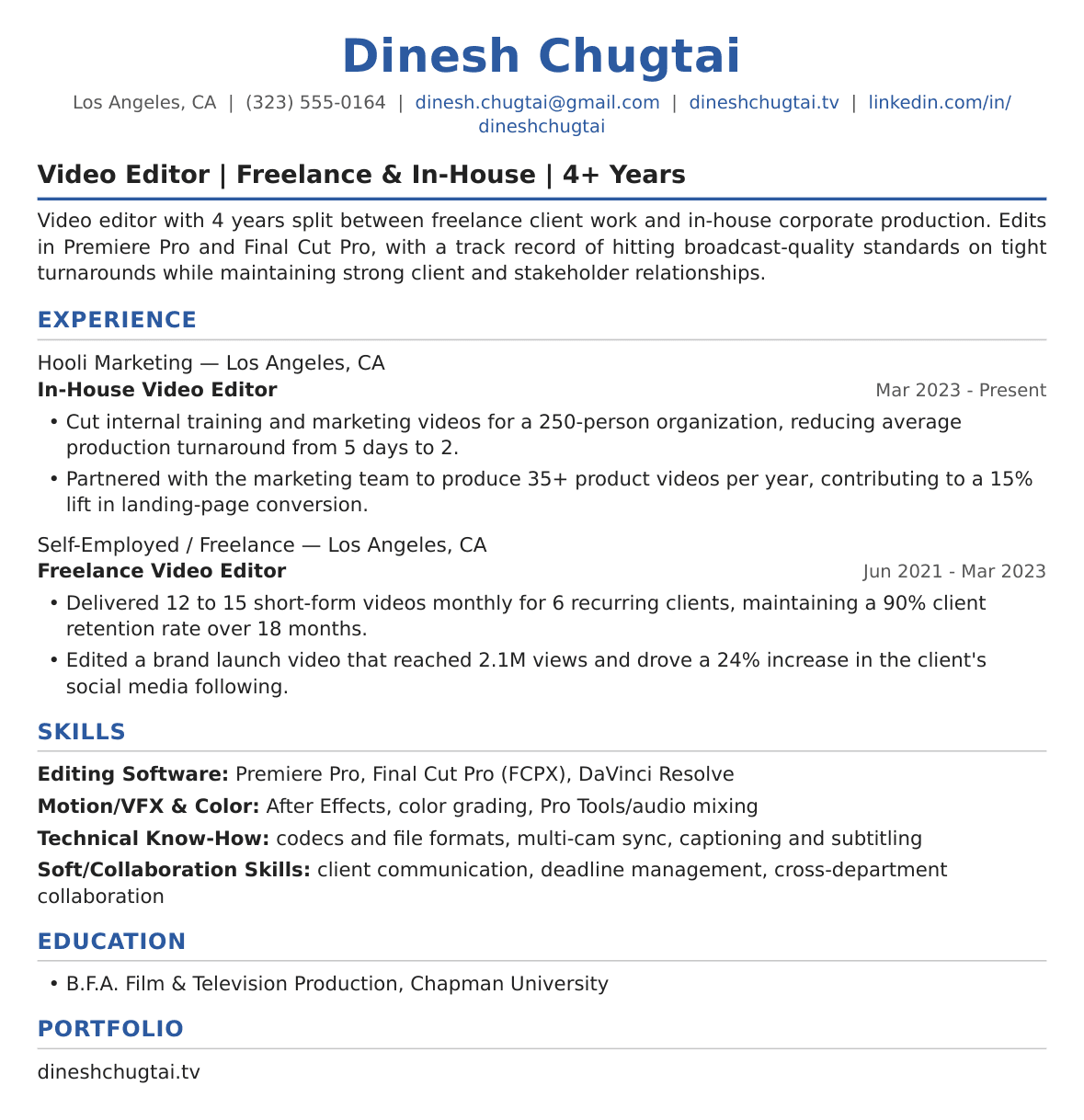
Mid-Level Video Editor (Freelance or In-House)
This example splits experience into sub-role bullets rather than one generic block, separating freelance client work from any in-house or agency stint. Each bullet quantifies a specific project outcome: client retention rate, video volume per month, or turnaround time cut. The skills section names exact tools and versions rather than a general "editing software" line.
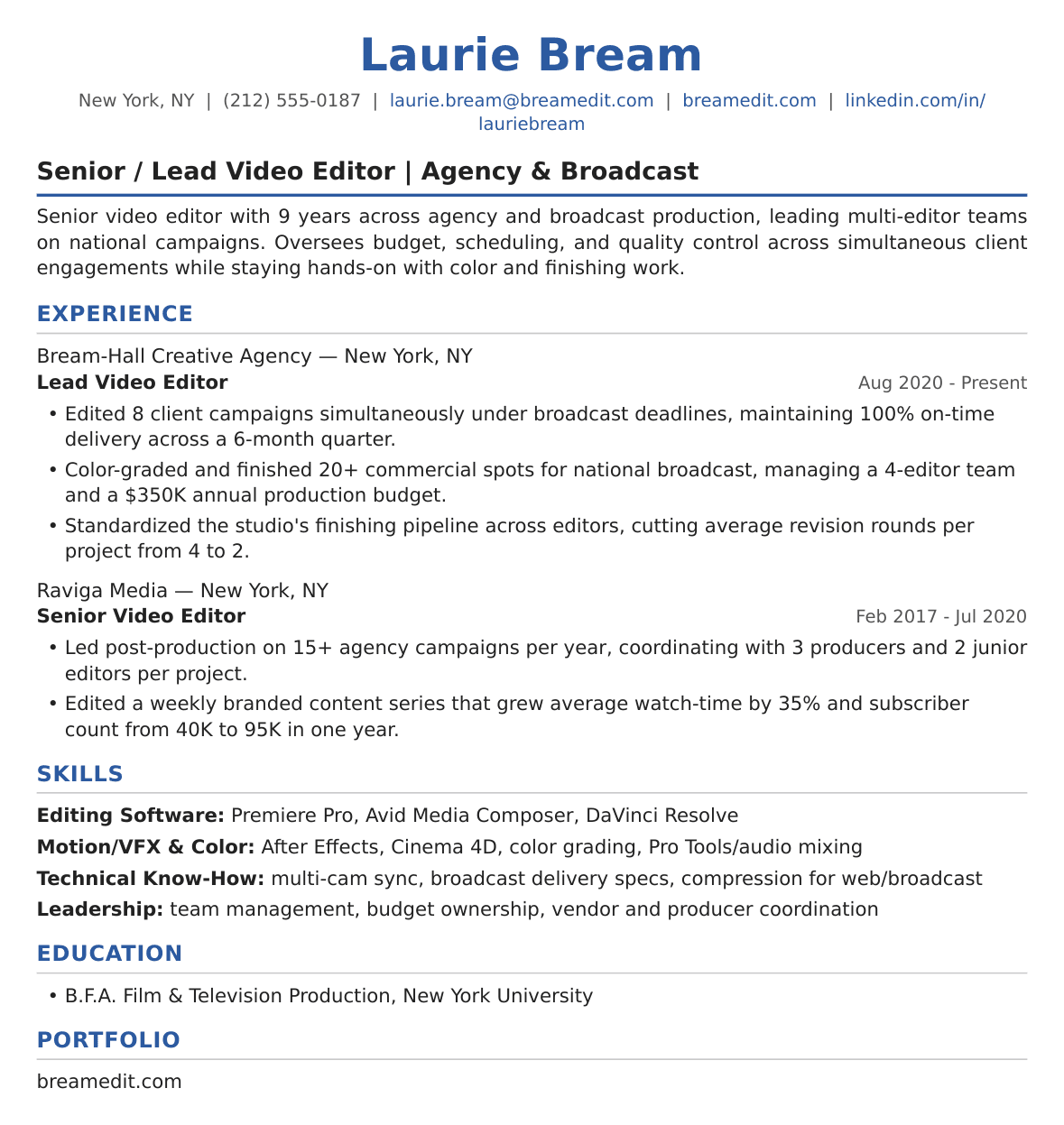
Senior / Lead Video Editor
This example shifts weight toward oversight: team size managed, budget responsibility, and a career-spanning credit list across broadcast, agency, or corporate work. Metrics scale up accordingly, covering multi-editor workflows and consistent delivery across long-running campaigns rather than single-project wins.
Video Editor Resume Keywords
Editing roles filter hard on software names and delivery formats. List the tools you can cut in tomorrow, and match the platform terms (broadcast, social, YouTube) to each posting.
| Category | Keywords |
|---|---|
| Editing software | Adobe Premiere Pro, After Effects, DaVinci Resolve, Final Cut Pro, Avid Media Composer |
| Craft | Color grading, Sound design and audio mixing, Motion graphics, Multicam editing, Narrative pacing, B-roll selection, Green screen keying, Captioning and subtitles |
| Technical workflow | Codecs and export settings (H.264, ProRes), 4K/UHD workflows, Proxy workflows, Media management, Frame.io collaboration |
| Delivery & formats | Short-form content (Reels, TikTok, YouTube Shorts), YouTube optimization, Brand guideline adherence, Deadline-driven turnaround, Client revisions |
Ghost Editing: Proving Work You're Not Allowed to Show
Some of the best-paid editing work is invisible by contract. Ghost editors behind major YouTube channels and white-label agency projects often sign NDAs that bar naming the client, sometimes bar acknowledging the client exists, which leaves a resume that says "freelance editor, five years" and a reel missing your strongest work.
Start with what your NDA actually says. Most bar identifying the client or sharing proprietary material, not describing your role and results in anonymous terms. "Lead editor for a 2M-subscriber gaming channel; edits averaged 800K views; retention rose 9 points across 60 videos" violates nothing in a standard agreement while proving exactly what a hiring manager needs. Check the confidential-information clause before assuming either more or less freedom than you have.
Then build the private layer: a password-protected or unlisted reel section for interviews, shared verbally, never published. Ask past clients for sanitized-clip permission, many say yes to thirty seconds with the branding removed, and collect testimonials, which no NDA prohibits. If a client bought your silence, that's fine; make sure they also left you a quote and a number you can show for it.
Common Video Editor Resume Mistakes to Avoid
Describing Tasks Instead of Impact
"Responsible for editing marketing videos" tells a hiring manager what your job was. It says nothing about what you did with it. Rewrite it as a result: "Edited 25+ marketing videos in 2024, one of which drove a 30% increase in landing page conversions." The second version shows you understand outcomes. It signals judgment beyond knowing which software menus to click.
Using One Generic Resume for Every Application
A resume built for a YouTube channel role rarely fits an agency application. Send an in-house corporate team the same bullets you used for a freelance social-media gig, and the reviewer has to guess how your experience translates. Rework your top summary and two or three bullets per application so they speak to that hiring context.
Listing Software Without Proof
Writing "Adobe Creative Suite" tells an employer almost nothing. Pair the tool with the work: "Color-graded 40+ short-form videos in DaVinci Resolve for a beauty brand's product launches." That level of detail signals real project experience.
Claiming Tools You Cannot Demo Live
If After Effects is on your resume but you cannot open a project file and walk an interviewer through a motion graphic, remove it. Many interviews now include a live screen-share task, like tracking a logo onto moving footage or fixing a jump cut on the spot. Getting caught overselling in that moment does real damage to your credibility.
Burying or Leaving Off the Portfolio Link
Some resumes tuck a reel link into a footer or skip it entirely. For an editor, the portfolio is often what actually gets you hired, and it belongs directly under your name and contact info, not buried after your work history where a recruiter might miss it.
Ignoring ATS Formatting
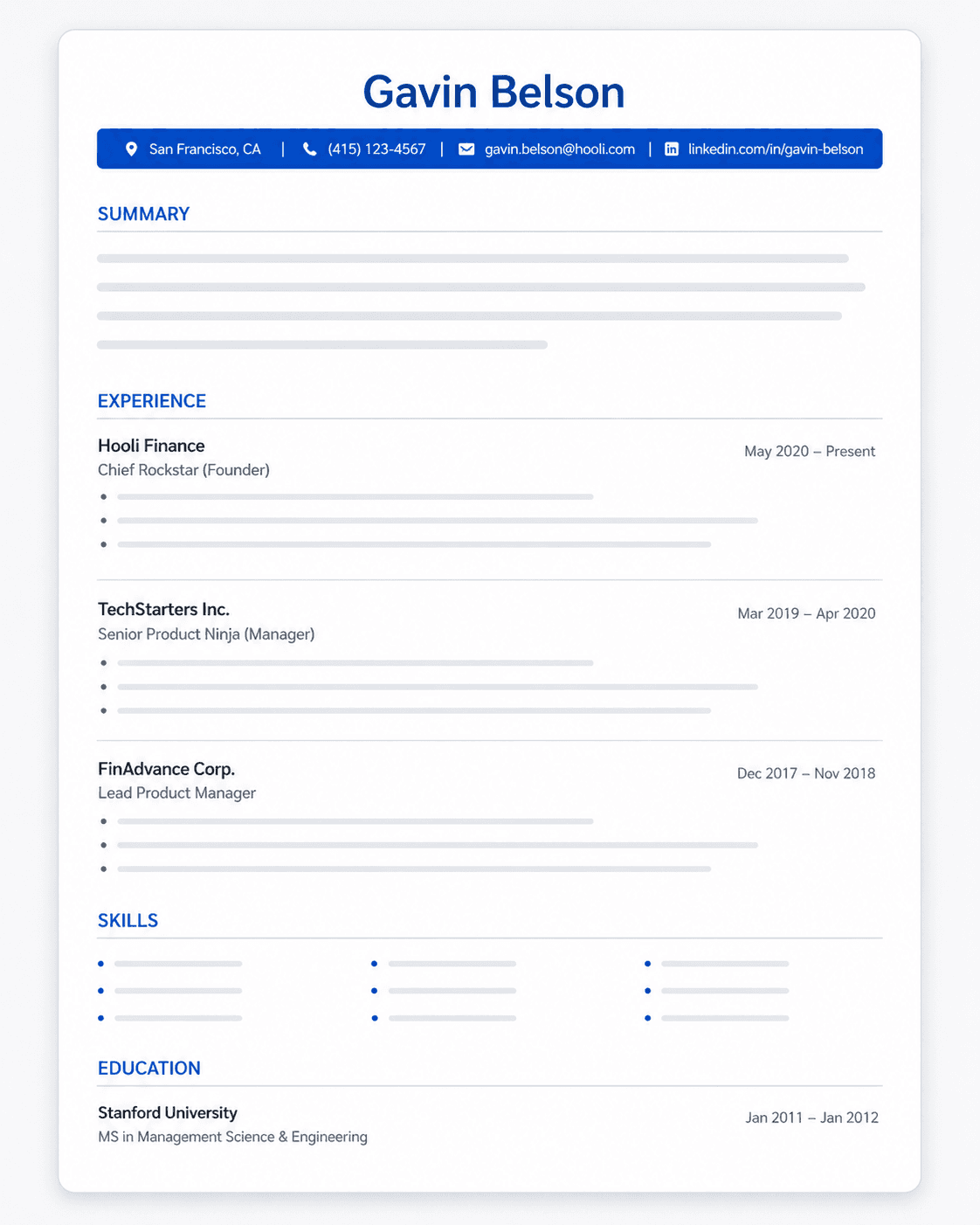
ATS-unfriendly formatting, including heavy graphics, columns, and embedded icons, might look sharp to a human, but a parser can scramble or drop that text entirely. Multi-column layouts often merge your skills section into your job history or drop it altogether. Stick to a clean single-column layout with standard headings, and let your reel link carry the visual impression.
Treating Self-Taught Work as Invisible
If you learned editing on your own and have spent years cutting personal or unpaid passion projects, that is real experience. List those projects on your resume with specific titles and outcomes, the same way you would list a paid job.
How AI Resume Builders Can Simplify Your Video Editor Resume
Rewriting your resume for every gig takes time most editors don't have between projects, whether the next application is a short freelance contract, an in-house post-production role, or an agency position. A single generic "does video editing" resume rarely survives an ATS scan for any of them, and manually rebuilding a tailored version each time eats into the hours you'd rather spend editing.
An AI resume builder built for transparency can close that gap. It gives you control over every change instead of quietly rewriting your resume for you, which matters for creative work where the exact wording of a specialization or credit line is worth getting right.
- Real-time ATS scoring. See your ATS and recruiter scores update as you edit, without the download-and-reupload cycle, so you know instantly whether a cut list of software and skills is landing.
- Transparent suggestions. Every edit comes with a plain-language "why this change?" explanation, and you accept or reject each one individually, so nothing gets rewritten or fabricated behind your back.
- Automatic formatting. Multiple ATS-friendly templates and full design control keep your reel credits and project list readable by both software and humans.
- Structure guidance. Recommendations follow recruiter best practices, reordering content for relevance, strengthening action verbs, quantifying results, and flagging potential bias triggers.
- Preference memory. Your formatting, metric, and reordering choices are remembered across sessions, so tailoring your next freelance pitch or agency application starts from where you left off.
The free plan includes 200 ATS scans a month and 3 tailored resumes with matching cover letters, unlimited downloads in PDF, DOCX, and TXT, and no credit card required to start. If you need more, additional resumes cost $0.50 to $1.00 each depending on pack size, and there's no subscription to cancel once your search wraps up.
See how your resume reads to a recruiter
Upload your resume and get a breakdown of what's working and what's holding you back, in minutes.
A video editor resume works the same way a good edit does: cut anything that doesn't earn its place, and let the strongest material lead. Your reel still does most of the persuading, but the resume in front of it decides whether anyone gets far enough to watch. Named tools, real numbers, and a framing that matches the job you actually want will get you there more often than a reel alone.