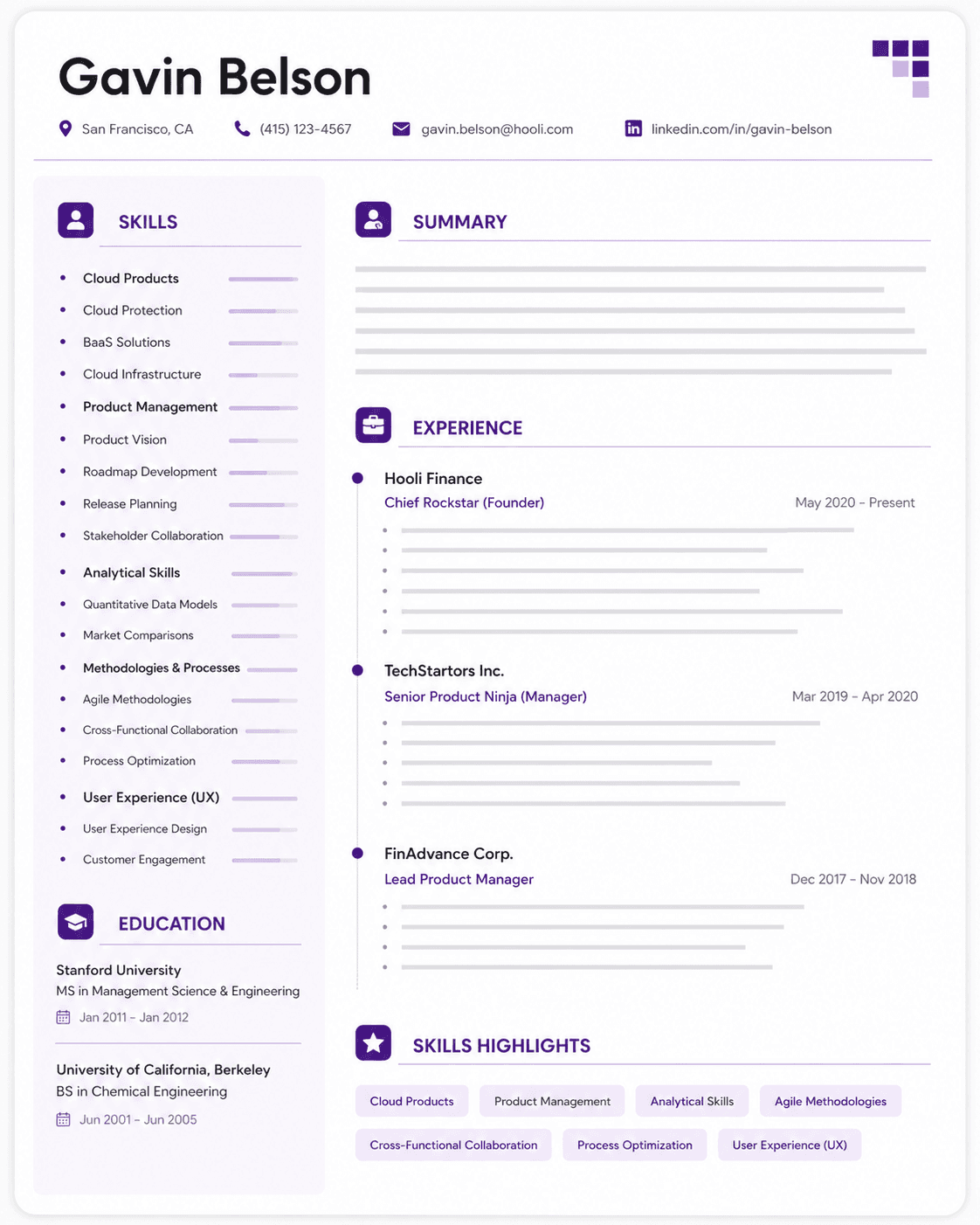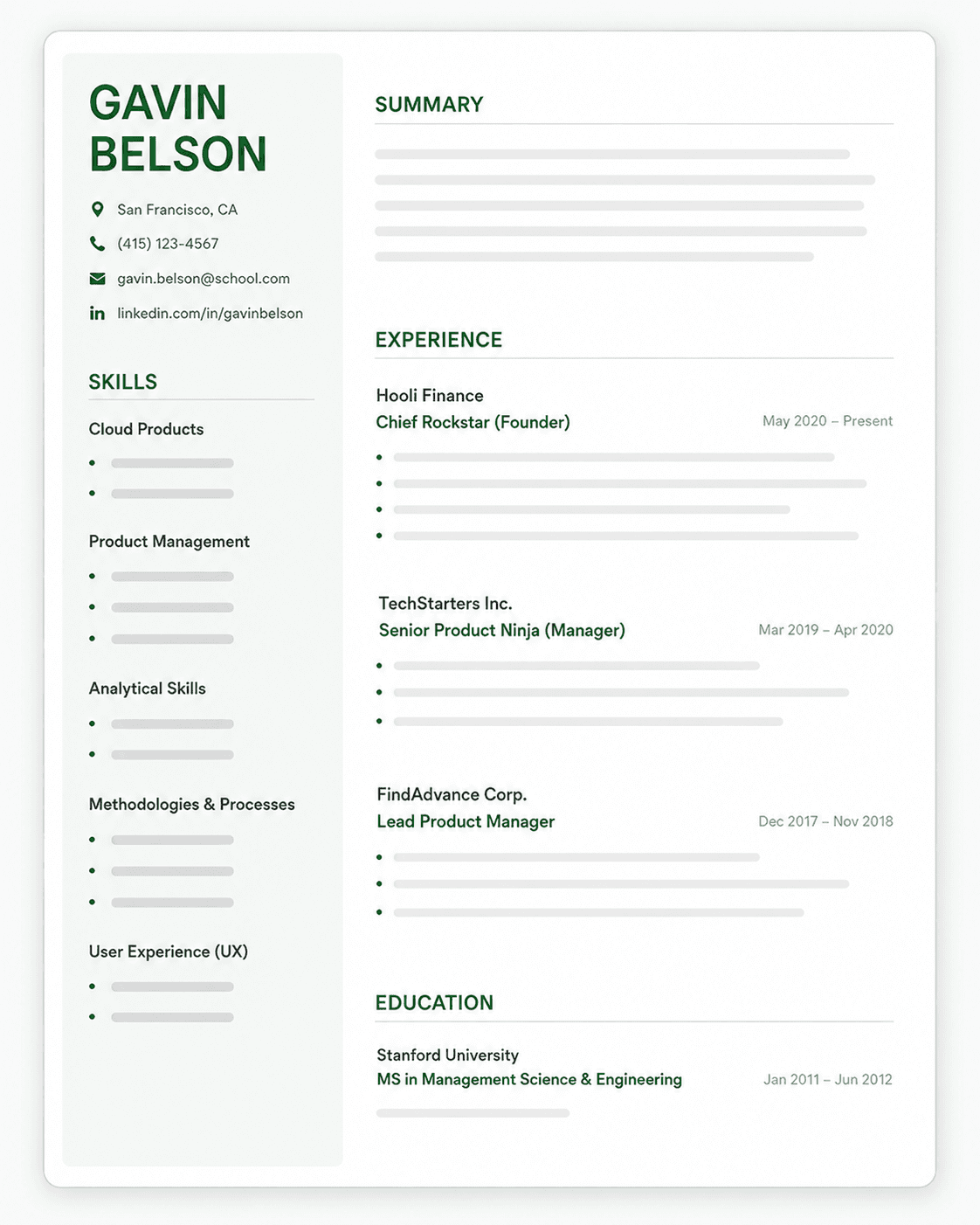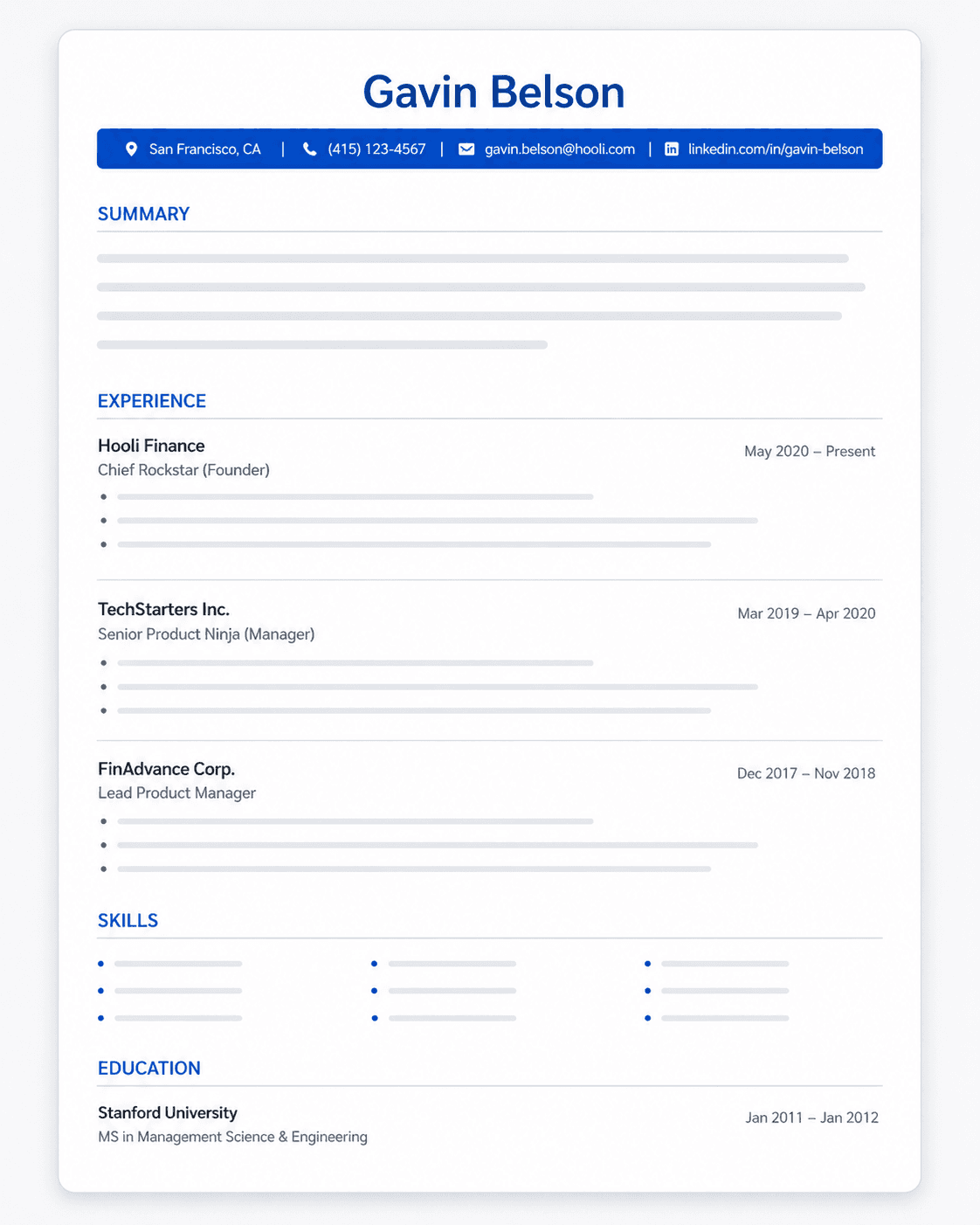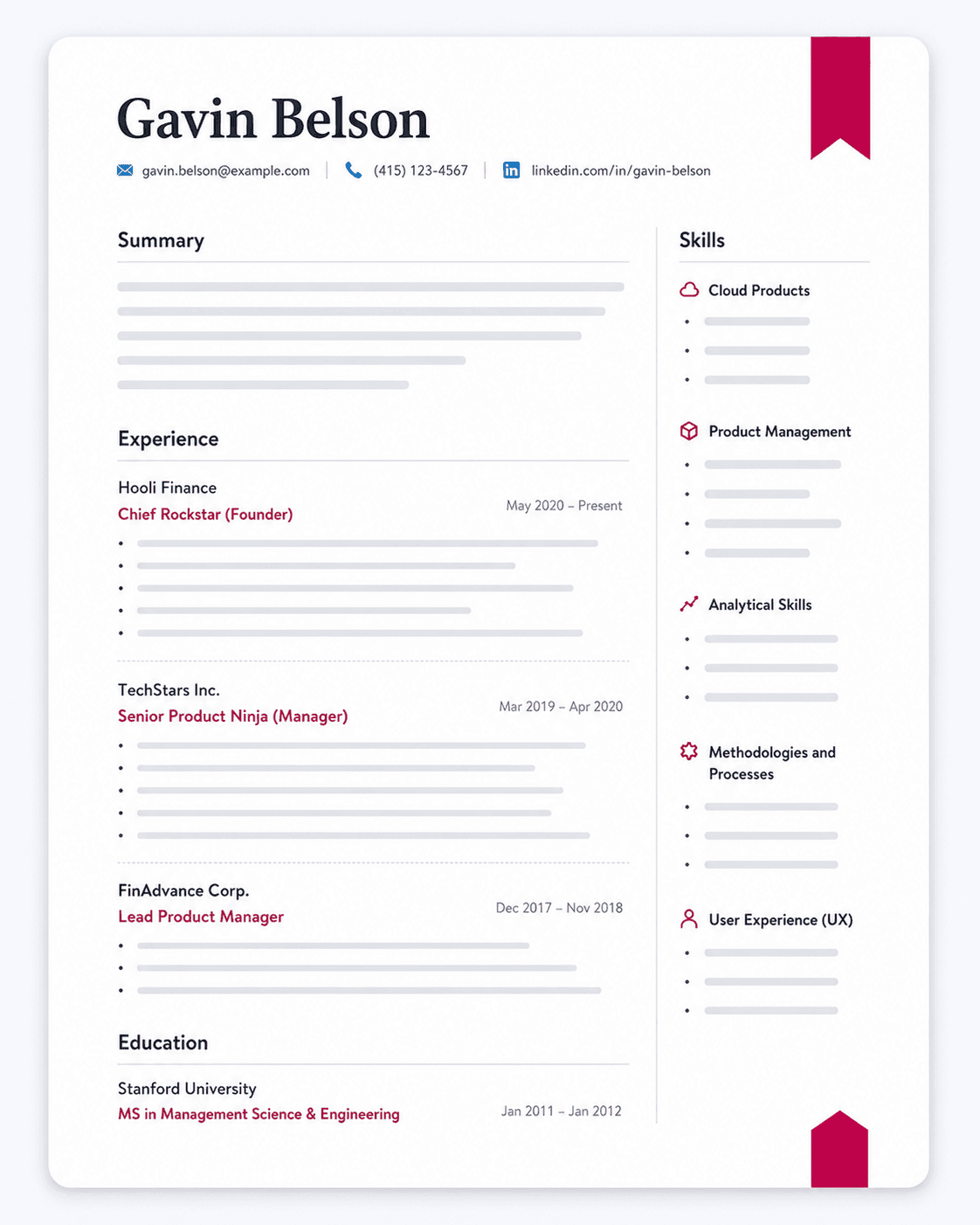
Selling cars is a numbers business, and so is getting hired to sell them. Every dealership hiring manager has read a hundred resumes that call the applicant "motivated" or "customer-focused," and none of those words tell them whether you can move inventory or keep buyers coming back.
This guide shows you how to build a car salesman resume around the numbers that actually get you an interview: units sold, CSI score, closing ratio, and gross profit per unit. That holds if you've been on a sales floor for years, and it holds if you're translating retail experience into your first dealership job.
You'll get a section-by-section breakdown of the summary, skills, and experience bullets, real example resumes by career stage, the mistakes that get resumes rejected, and answers to the questions car salespeople ask most before they apply.
What Makes a Car Salesman Resume Effective?
Dealership hiring managers don't read a car salesman resume top to bottom. They scan it, usually within seconds, looking for three or four specific numbers: units sold per month, CSI (customer satisfaction index) score, gross profit per unit, and closing ratio. If those numbers aren't there, the resume gets set aside, no matter how clean the formatting or how strong the verbs.
This is because "car salesman" experience alone tells a sales manager almost nothing. Every applicant has "sold cars" and "exceeded targets." What separates a callback from a rejection is proof, for example a units/month average that beats the dealership floor, a CSI score above benchmark, or a closing ratio that shows the applicant converts floor traffic instead of just working it.
Naming those metrics also speaks the manager's language directly, instead of a generic sales vocabulary borrowed from retail or B2B.
For career changers without dealership numbers yet, translate the closest equivalent (retail close rate, customer satisfaction ratings, quota attainment) into terms a sales manager will recognize on sight.
How to Write a Car Salesman Resume That Gets Interviews
Write a Targeted Summary (or Objective for No Experience/Career Changers)
A car salesman resume summary needs to establish three things fast: your production level (units per month, CSI score, or gross profit), proof customers liked working with you, and a hint that you fit the dealership or brand you're applying to. Skip the personality adjectives. "Hardworking" and "people person" tell a hiring manager nothing they can act on. A production number does.
A weak summary looks like this:
"Motivated and outgoing car salesman with excellent people skills, looking for a new opportunity to grow my career."
A stronger one looks like this:
"New car sales consultant with 4 years at a Honda dealership, averaging 14 units/month against a 10-unit goal. Maintained a 92% CSI score across 2025 by following up on every delivery within 48 hours. Seeking to bring that closing consistency to a multi-brand dealership."
If you're switching from another sales job, or you've never sold cars, use an objective instead of a summary. Translate your existing numbers into terms a sales manager recognizes: close rate, CRM use, financing conversations.
Career-changer objective example (retail to automotive):
"Retail sales lead with 3 years' experience and a 35% close rate on big-ticket electronics, ranked top 2 of 12 associates on upsell attachment. Logged all customer interactions in a CRM and coordinated financing approvals for in-store credit. Looking to apply that consultative closing process to new and used car sales at [Dealership Name]."
Retail close rate becomes closing ratio. In-store financing becomes F&I familiarity. CRM logging becomes DMS/CRM comfort. The vocabulary changes, the substance doesn't.
Build a Skills Section That Speaks to Dealership Hiring Managers
Generic skills lists ("communication," "teamwork," "sales") get skimmed and forgotten. Group skills by category instead, and name real tools and programs.
Sales & Product Knowledge Needs-based selling, trade-in appraisal, competitive vehicle comparisons, EV/hybrid product walkarounds, upselling protection packages
DMS & CRM Software VinSolutions, CDK Global, Reynolds and Reynolds, DealerSocket, Dealertrack/RouteOne
Customer & Relationship Skills Follow-up cadence for CSI scores, objection handling, repeat and referral business development, bilingual customer service (if applicable)
Financing & Deal Knowledge Menu selling, credit application basics, lender program familiarity, desk-to-close coordination with F&I
Name the exact DMS or CRM you've used. VinSolutions is not interchangeable with DealerSocket in a hiring manager's mind, and "proficient with CRM software" reads as if you're hiding something. Do the same with OEM certifications: write "Toyota STARS Certified" or "Ford Sales Master," not "manufacturer sales certified." Only list tools you can use unaided in an interview.
Write Achievement-Focused Experience Bullets
Every bullet should follow the same formula: action verb, plus the specific task or method, plus a number that shows scope or result. "Sold cars" describes a duty. "Closed 16 units/month against a 12-unit store average" describes a result.
A weak bullet looks like this:
"Responsible for selling vehicles and helping customers find what they need."
A stronger one looks like this:
"Closed 15 new and used vehicle sales per month on average, 25% above the dealership's 12-unit benchmark, while maintaining a 94% CSI score over 18 months."
Here's a bullet library by sub-role. Numbers below are illustrative examples to show the pattern; swap in your own once you track them down.
Entry-Level / No Experience (career changer from retail or other sales)
- Applied a consultative needs-assessment process to convert 30% of walk-in retail customers into same-day purchases over 2 years.
- Logged and followed up on 100+ customer records monthly in a retail CRM. That discipline transfers directly to dealership lead management and CSI follow-up.
New Car Sales Consultant (mid-career, one dealership)
- Averaged 13 new-vehicle units/month over 3 years, ranking in the top 3 of a 14-person sales floor.
- Maintained a 91% CSI score while closing 28% of floor-up leads, 6 points above the store's average closing ratio.
Used Car Specialist
- Delivered an average gross profit of $2,400 per unit across 200+ used-vehicle sales in 2025.
- Reduced average days-to-turn on assigned inventory from 45 to 32 by using KBB and Manheim data to price trade-ins accurately at intake.
Senior / Luxury or Multi-Brand Consultant
- Sustained a 96% CSI score over 4 consecutive years across two brands, the highest on a 20-person luxury sales team.
- Built a structured 6-month post-delivery follow-up plan that generated 40% of monthly sales from repeat and referral customers.
If you don't have these numbers memorized, they're usually recoverable. Check old pay stubs for commission and unit counts, ask your former dealership for a scorecard printout, or pull a CRM export of your closed deals before you leave a job.
Organize Your Work History the Right Way
List your work history in reverse-chronological order, most recent job first. Hiring managers want to see your current production level before they read about what you did five years ago.
Titles get messy in this industry. "Sales Consultant," "Sales Associate," and "Product Specialist" often describe the same job at different dealerships. If your title undersells what you did, add a one-line clarifier beneath it, for example noting full desk-to-close responsibility rather than just lot greeting.
If you've spent your whole career at one dealership, frame the entry around growth: promotions, territory expansion, or a shift from new-car to used-car or luxury responsibilities. If you've moved between dealerships, frame each stop around what changed (brand, volume, or role) so the moves read as intentional progression, not instability.
Selling Cars Is a Licensed Job in Some States, and the Rules Just Changed in Ohio
Nobody writing generic resume advice mentions that in a number of states, selling vehicles for a living is a licensed occupation in its own right, separate from the dealership's own dealer license. That license comes with its own application, its own fee, a background check, and a renewal clock that runs independently of your job. If you don't know your state's rule, you can end up with the wrong line on your resume, either claiming a credential you don't hold or omitting one a hiring manager expects to see.
The specifics vary enough that you cannot guess. California requires a vehicle salesperson license through the DMV: a $50 application fee plus a $1 family support fee, live-scan fingerprinting, a background check, and a license valid for three years. Nevada's version through the Nevada DMV costs $75 to start, expires every year on December 31 regardless of when you got it, and renews for $40. If you're let go, your dealer has 10 days to surrender your license. Pennsylvania requires a license too, through its State Board of Vehicle Manufacturers, Dealers and Salespersons, with no exam or experience needed, $70 initial and $141 to renew, and you're licensed to one dealer at a time. Ohio moved the opposite direction and eliminated the individual salesperson license entirely under House Bill 238, effective April 9, 2025.
What you do about this depends on where you're applying. If your state requires a license and you hold one, put it on a licenses and certifications line, not in your summary, phrased plainly: "Licensed Vehicle Salesperson, [State]." If your state requires one and you don't hold it yet, don't claim it. Most dealers sponsor the license and process the paperwork after they hire you, so say you're eligible and willing to obtain it rather than listing a credential you don't have. If you're applying in Ohio, drop the license line altogether unless yours is a pre-2025 license still inside its original expiration window. In every case, treat this list as a starting point, not a survey of all 50 states, and check your own state's DMV or occupational licensing board before you write anything down.
Car Salesman Resume Examples
The right example depends on where you are in your car sales career. An entry-level resume needs to prove transferable skills. A mid-career resume needs to prove volume. A senior resume needs to prove consistency and specialization.
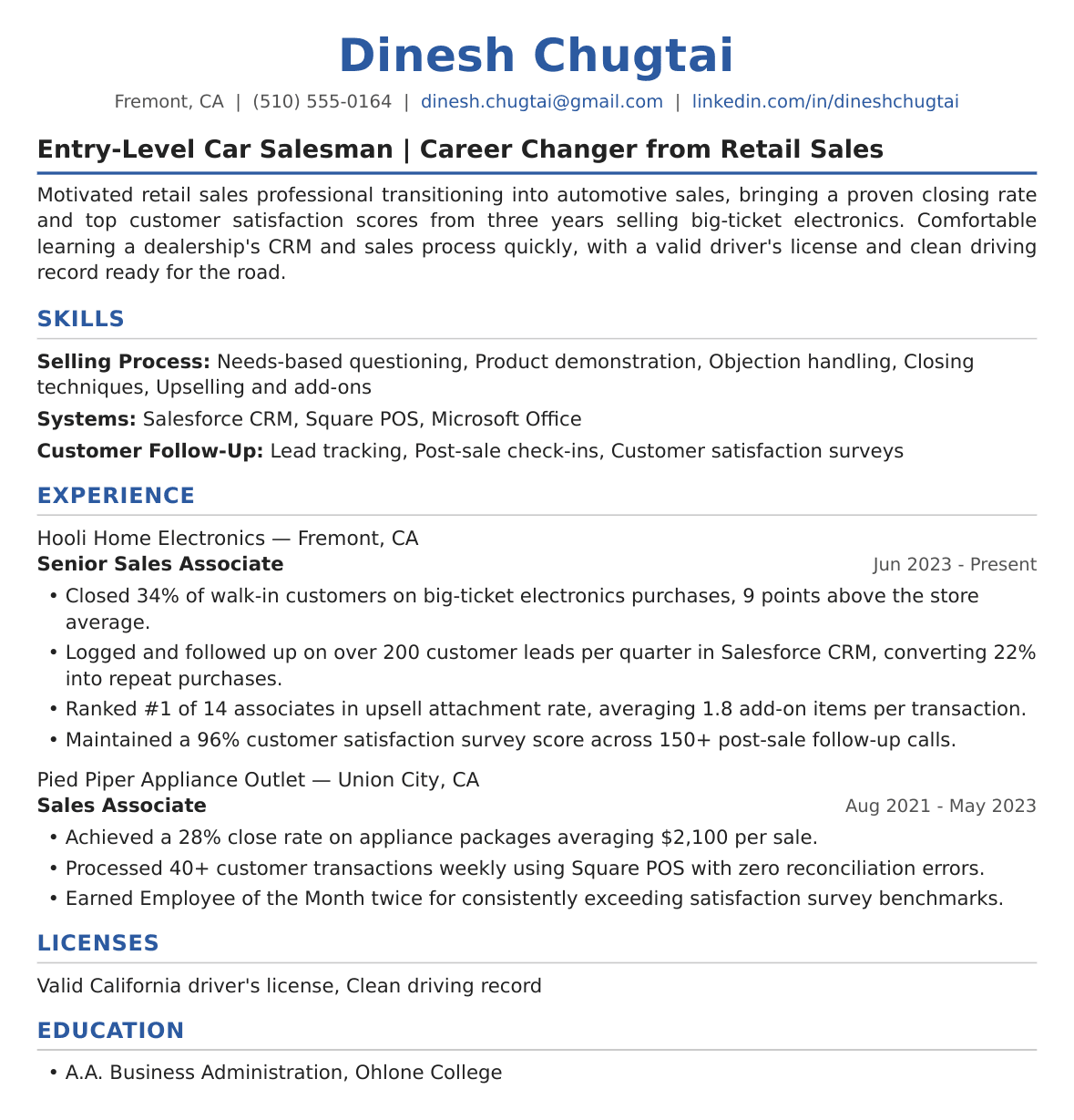
Entry-Level Car Salesman Resume
Open with an objective rather than a summary, since you have no units-sold history to lead with. The job of this resume is to convert outside experience into numbers a sales manager already recognizes: a retail or big-ticket close rate, a customer satisfaction or survey score, an upsell attachment ranking against the rest of your team. Name the CRM or POS system you logged customers in, because it proves you can pick up a dealership's tools without hand-holding. Put a skills block above experience, grouped by selling process, systems, and customer follow-up, and keep the driver's license and clean driving record line visible since every dealership posting asks for it. Keep it to one page with three or four bullets per role, each carrying a percentage or a count.
Mid-Level Car Salesman Resume
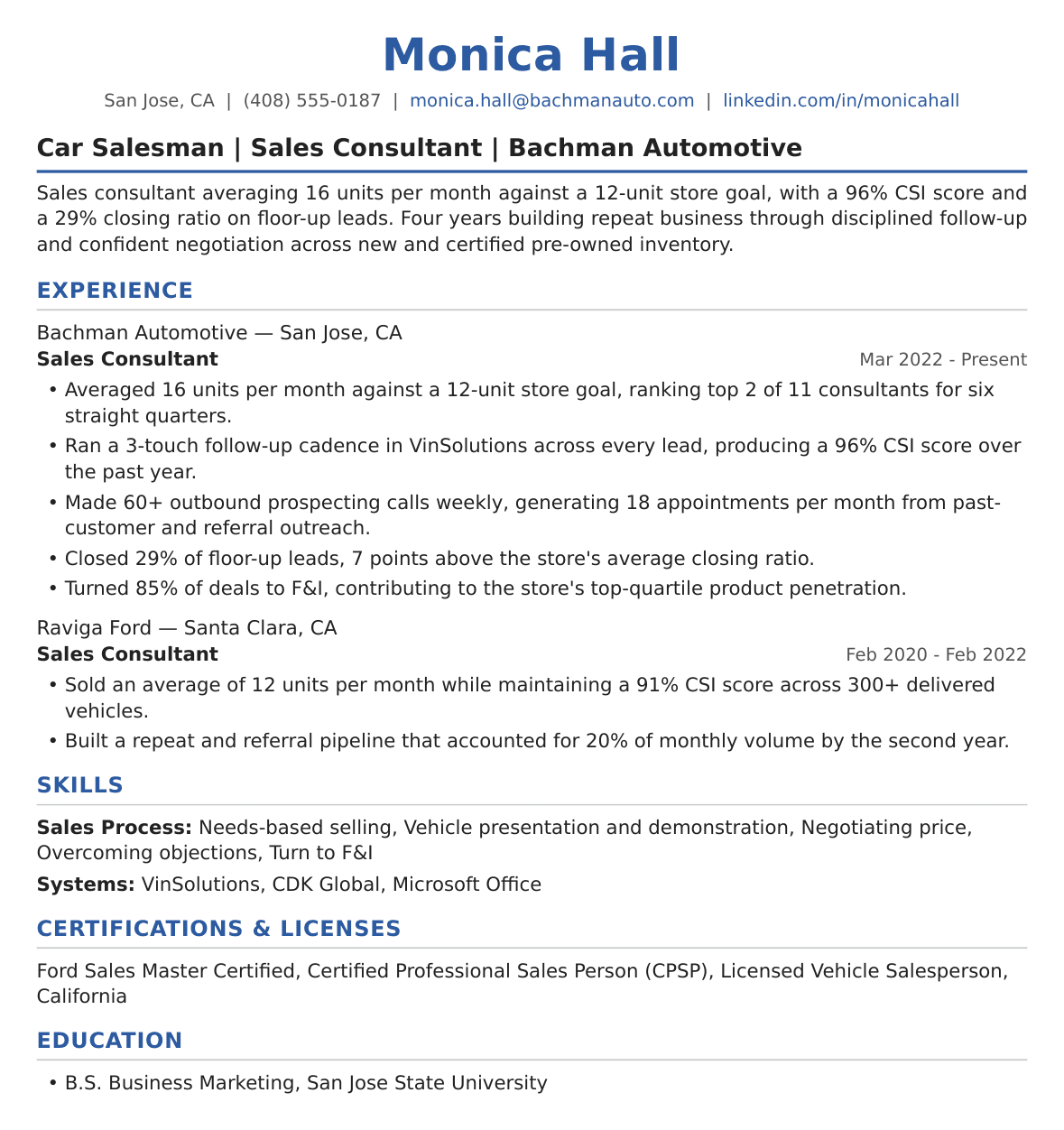
Lead with a professional summary that opens on three numbers in the first two lines: units per month against the store goal, CSI score, and closing ratio on floor-up leads. This resume belongs to someone who already holds the title, so the experience section carries the page. Give your current dealership four or five bullets, each pairing a method with a result, for example a follow-up cadence tied to the CSI score it produced or a prospecting volume tied to the appointments it generated. Name the specific DMS or CRM platform you worked in rather than a category. Certifications sit on a single line near education, and any state salesperson license goes there too. One page, reverse-chronological, best number in the summary and again in the first bullet of the current role.
Senior-Level Car Salesman Resume
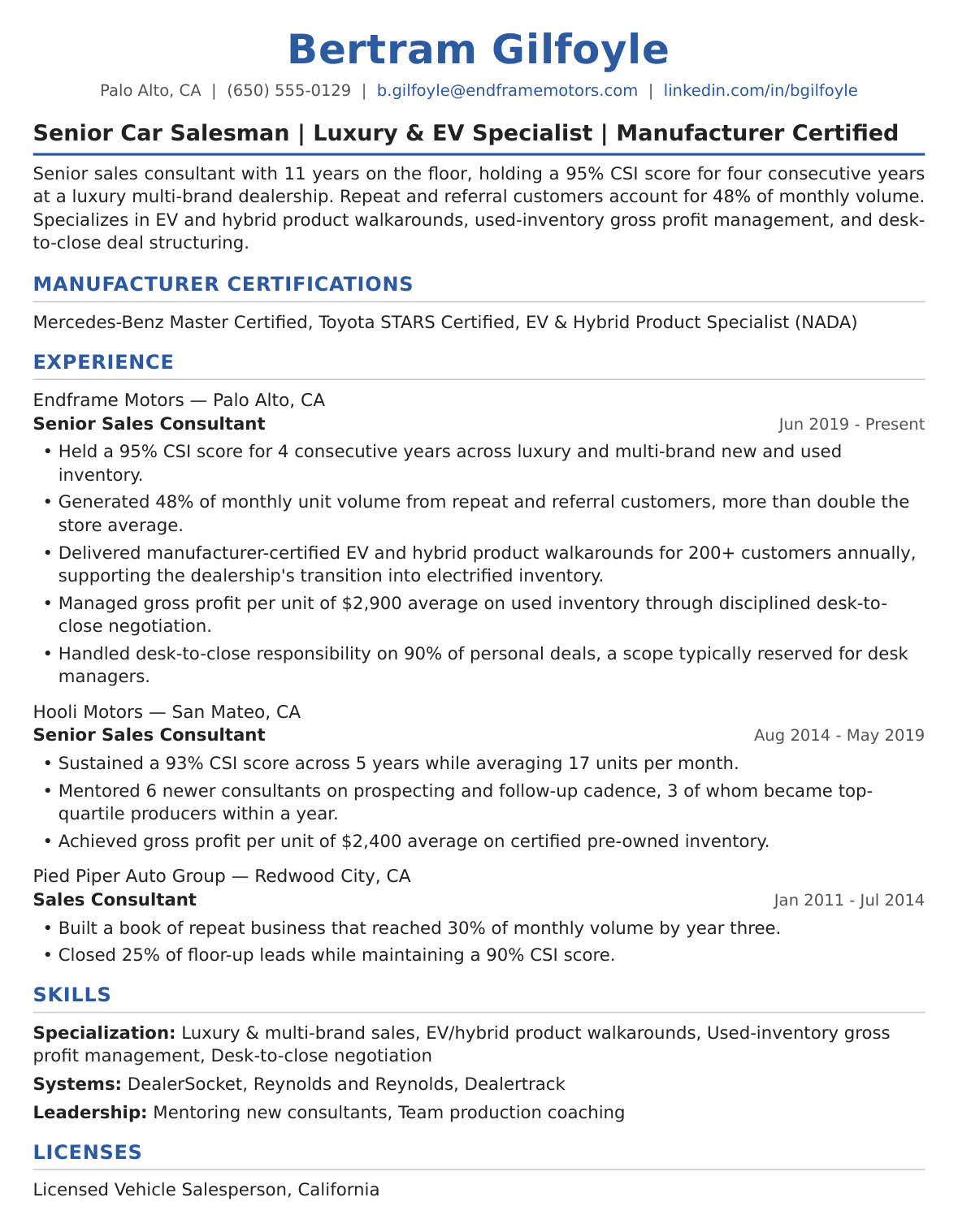
Prove consistency across years rather than a strong quarter. Lead with a sustained CSI score held over multiple consecutive years, then the share of your monthly volume that comes from repeat and referral customers, since that number is what separates a senior consultant from a high-volume one. Show specialization explicitly: luxury or multi-brand experience, EV and hybrid product walkarounds, gross profit per unit on used inventory, or desk-to-close responsibility that goes past a floor consultant's scope. Manufacturer certifications belong near the top here, not buried at the bottom, because they gate the premium inventory. Two pages are acceptable if the second page earns it, and any mentoring or coaching of newer consultants should read as scope, not as a step toward management unless you want that job.
All three levels rest on the same backbone: a production number a manager can verify, a customer satisfaction figure, and a named system you worked in. If you sit between two of them, for example two years on the floor with strong CSI but modest volume, use the mid-level structure and lead with the number that is actually your strongest rather than the one you wish it was.
Car Salesman Resume Keywords
Dealership applicant tracking systems scan for the same handful of terms across every sales-consultant posting, whether the store sells Ford, Toyota, or Mercedes-Benz. Getting the ATS resume keywords right matters here because postings lean on a shared vocabulary of quotas, systems, and compliance items that a generic sales resume never uses. The table below covers that vocabulary. Your bullets still carry the numbers.
| Category | Keywords |
|---|---|
| Sales performance & metrics | CSI (Customer Satisfaction Index) score, monthly unit quota, outbound prospecting calls, overcoming objections, negotiating price, repeat and referral business, turn to F&I |
| Customer & sales process | Vehicle presentation and demonstration, test drives, needs-based questioning, prospecting and follow-up, product knowledge |
| Systems, licensing & compliance | CRM system, digital sales tools, Microsoft Office, valid driver's license, clean driving record, background check, state vehicle salesperson license |
| Certifications & schedule | Manufacturer-specific certification, Mercedes-Benz Master Certified, required manufacturer and dealership training, commission-based compensation, flexible schedule (evenings, weekends, Saturdays) |
Some of these are situational. A state vehicle salesperson license only belongs on your resume if your state actually requires one, and requirements vary by state. The same goes for a specific OEM certification: only list it if you've completed that manufacturer's training, not as a stand-in for general sales experience.
Mirror the posting's exact string, since an ATS matches literal text, not meaning. If a posting says "CRM system" rather than naming a platform, put that generic phrase in your skills header first, then add your specific platform beside it so both the parsed keyword and the human reader get what they're looking for. A posting asking for "digital sales tools" won't credit you for "tech-savvy," and one asking for "manufacturer-specific certification" won't credit a vague "sales certified" line.
Common Car Salesman Resume Mistakes to Avoid
Listing Duties Instead of Results
"Responsible for selling vehicles and greeting customers" tells a hiring manager nothing they can't assume from the job title. Every applicant handled walk-ins and worked the phone. Replace duty language with the number attached to it: units sold per month, CSI score, closing ratio, or gross profit per unit. A sales manager scanning resumes wants proof of production, not a description of the job.
Sending the Same Resume to Every Dealership
A resume built for a Toyota franchise rarely fits a luxury or independent used-car lot without changes. Brand knowledge, F&I product familiarity, and customer type differ across stores, and a generic resume signals you haven't thought about the specific dealership. Adjust the summary and skills section to match the brand, inventory type, and role posted before you hit send.
Naming "CRM Experience" Without Naming the CRM
"Proficient in CRM software" reads as filler because it names nothing. Naming the actual platform (such as VinSolutions, CDK, DealerSocket, or Dealertrack) signals you can start using their tools on day one. The same goes for training: "sales certified" is vague, while Toyota STARS or Ford Sales Master tells a hiring manager exactly what you learned and where.
Treating Every Car Sales Role the Same
A floor consultant, an F&I manager, and a sales manager are judged on different numbers and carry different responsibilities. Applying for an F&I role with only floor-sales bullets, or applying to a sales manager opening with no mention of coaching or team numbers, suggests you don't understand dealership structure. Match your bullets and title language to the seniority and function of the job you're actually applying for.
Leaving Out Certifications You Already Have
Candidates with OEM training or sales certifications sometimes leave them off, assuming experience speaks for itself. Certifications like Toyota STARS, Ford Sales Master, NADA training, or a Certified Professional Sales Person credential are exactly what separates two resumes with similar production numbers. If you've completed the training, list it, even if it feels like a small detail.
Formatting in Ways That Confuse ATS Systems
Tables, text boxes, multi-column layouts, and headers or footers can scramble how an applicant tracking system reads your resume, sometimes dropping entire sections before a human ever sees them. Stick to a single column, standard section headings, and a simple font in a PDF or Word file. A visually creative resume that an ATS can't parse never reaches the hiring manager's desk.
Burying Your Best Number Below the Fold
If your strongest metric (a 92 CSI score, 18 units a month, or a top closing ratio at your store) sits in the fourth bullet of your most recent job, most reviewers never see it. Hiring managers scan the top third of a resume first. Put your best number in the header, summary, or the first bullet of your current role so it lands before anyone stops reading.
How AI Resume Builders Can Simplify Your Car Salesman Resume
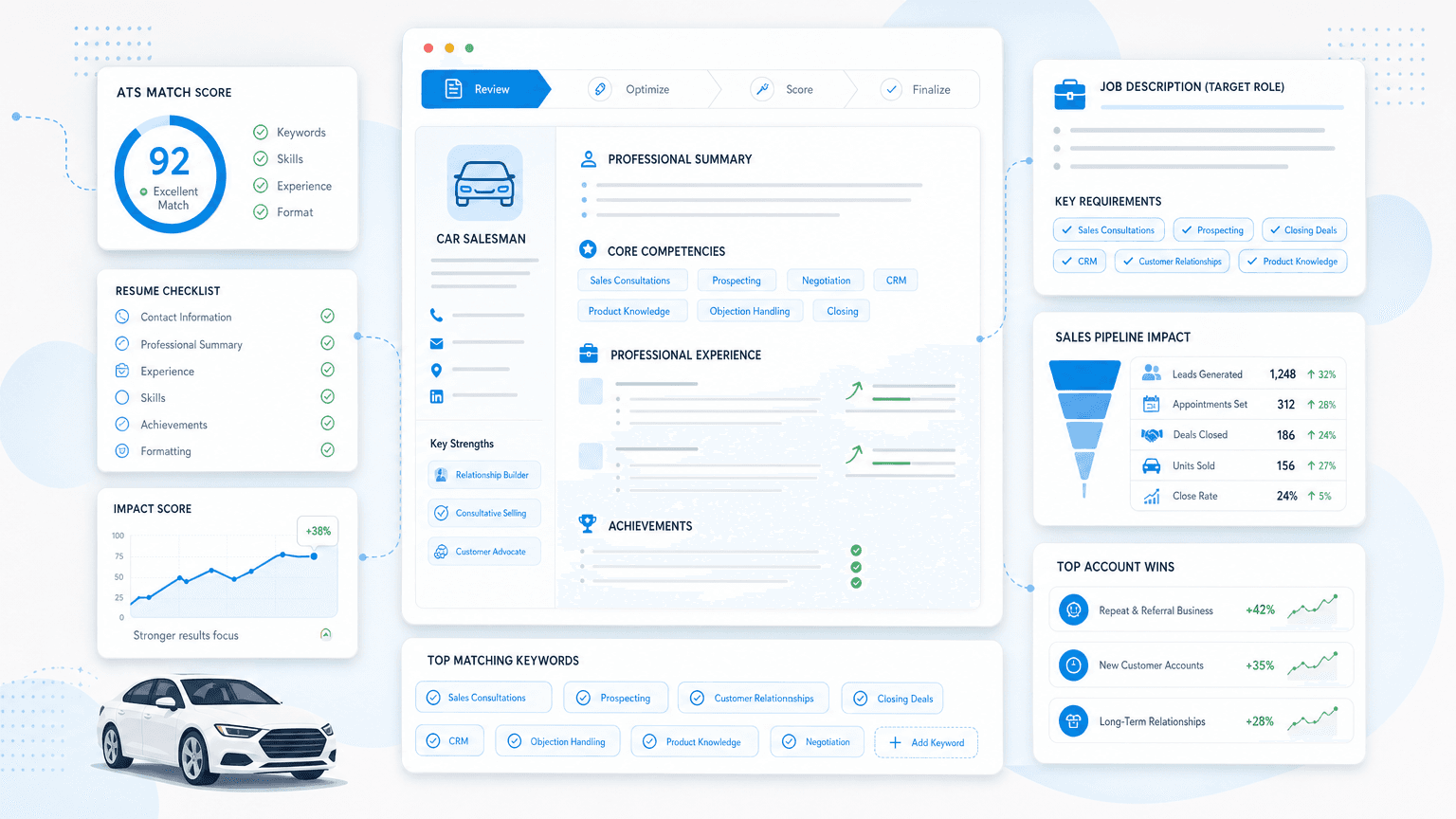
Tailoring a resume for every dealership and every sales role takes time most job seekers don't have, and a generic car-sales resume with no dealership-specific keywords is exactly what gets filtered out before a hiring manager ever sees it. Upplai, an AI resume optimization platform, is built to close that gap without asking you to start from scratch for each application.
- Real-time ATS scoring: see your ATS and recruiter score update as you edit, so you know whether your resume matches a specific dealership's job posting before you submit it, with no download-and-reupload cycle.
- Transparent suggestions: every edit comes with a plain-language "Why this change?" explanation, and you accept or reject each one, so nothing gets rewritten or invented behind your back.
- Automatic formatting: multiple ATS-friendly templates and design options keep your layout clean and parseable, so dealership applicant tracking systems can actually read your sales numbers and certifications.
- Structure guidance: suggestions follow recruiter best practices, reorder content for relevance, strengthen action verbs, quantify results like units sold or CSI scores, and flag potential bias triggers.
- Preference memory: your formatting, metric, and reordering choices carry over across sessions, so tailoring your next application takes less effort than the last.
The free plan includes 200 ATS scans per month and 3 tailored resumes with unlimited downloads, no credit card required. Additional tailored resumes cost $0.50 to $1.00 each, with no subscription.
Ready to put your car salesman resume in front of the right dealership?
Upload your resume and a job posting to see your resume score and a tailored rewrite in minutes.