Every correctional officer applicant needs a POST certification or its state equivalent. That gets you eligible, but so does every other name on the eligibles list. What separates candidates who get called back is how clearly the resume proves they can manage a housing unit, pass a thorough background investigation, and handle the specific demands of the facility they're applying to.
This guide breaks down how to build that resume for state prisons, county jails, federal Bureau of Prisons facilities, and juvenile detention centers, since each expects something different. You'll get a section-by-section walkthrough with real bullet examples for candidates coming from corrections, security, or the military, plus the certifications, skills, and formatting choices that get a resume past both an HR screen and a hiring sergeant's review.
How to Write a Correctional Officer Resume That Gets Interviews
Write a Targeted Summary or Objective
A strong summary establishes three things fast: the facility type or setting you've worked in (or are targeting), one corrections-relevant skill, and a real metric or credential that sets you apart from every other eligible candidate.
A weak summary looks like this:
"Dedicated and hardworking individual seeking a correctional officer position. Strong communication and conflict resolution skills."
A stronger one looks like this:
"Corrections professional with 4 years supervising a 96-bed medium-security housing unit at a county detention center. Trained in defensive tactics and crisis intervention, with zero use-of-force incidents in the past two years."
If you're entering the field from the military or another security-adjacent role, use an objective instead of a summary, and lead with the transferable structure rather than a job title you haven't held yet.
Entry-level / career-changer objective example:
"Former Army sergeant with 6 years leading an 8-person infantry squad, including security operations and use-of-force training. Seeking to apply chain-of-command discipline and de-escalation skills to a county correctional officer role. POST-eligible, physical fitness test passed May 2026."
Highlight Certifications, Academy Training, and Clearances
For this role, certifications belong near the top of the resume, not at the bottom. List each one with the issuing body and its current status, since a certification with no status attached reads as unverified.
Common certifications to include, where they apply:
- State POST certification or DOC-equivalent credential
- Corrections academy completion, with the academy name and completion date
- CPR/AED and First Aid (American Red Cross or American Heart Association)
- Defensive tactics or use-of-force training
- Crisis Intervention Team (CIT) training
- Security clearance level, for federal applications where relevant
A clean format looks like this: certification name, issuing body, and status ("active," "completed [year]," or "expires [year]"). Skip vague entries like "various trainings completed."
Build a Skills Section That Speaks to Hiring Managers
Group your skills into categories rather than listing them as one long, flat row. This is what a categorized skills section looks like for a corrections resume:
Security & Safety: Use-of-force protocols, contraband detection, perimeter security, emergency response procedures
Inmate Management & Communication: De-escalation, conflict resolution, behavioral observation, incident report writing
Documentation & Systems: JailTracker, Guard1, Offender360, Omnixx, count verification, chain-of-custody logs
Physical & Emergency Response: CPR/First Aid, restraint techniques, physical fitness test standards, evacuation procedures
Three rules for this section: only list skills and systems you can operate without supervision, mirror the exact wording from the job posting where it's accurate, and name the specific facility management software you've used instead of writing "computer literate."
Write Achievement-Focused Experience Bullets
Use this formula for every bullet: action verb, plus the specific task or method, plus a quantifiable result or scope.
"Responsible for supervising inmates and maintaining order in the facility."
"Supervised a 128-bed maximum-security housing unit across rotating 12-hour shifts, maintaining zero use-of-force incidents over 14 months while completing 100% of required security counts on schedule."
Here's what that looks like across different corrections settings:
State Prison Officer
- Managed daily operations for a 150-inmate general population unit, conducting security counts every 30 minutes with zero unaccounted inmates over an 18-month assignment.
- Responded to and de-escalated an average of 12 inmate conflicts per month without a use-of-force incident, applying verbal intervention techniques from CIT training.
County Jail Officer
- Processed 15 to 20 new intakes per shift, verifying identification, conducting searches, and logging property in JailTracker with zero audit discrepancies.
- Cut contraband incidents by 30% in a 200-bed housing unit after redesigning the cell search rotation.
Federal (BOP) Officer
- Supervised inmate movement and work assignments for a 250-bed unit at a federal correctional institution, maintaining full compliance with BOP program standards.
- Completed 40-plus security counts weekly across a multi-unit federal facility, with a 100% accuracy rate over a 12-month period.
Juvenile Detention Officer
- Supervised a 24-bed juvenile housing unit and implemented a behavior-based incentive program that reduced disciplinary write-ups by 25% over six months.
- Coordinated daily programming with case managers and educators for 20-plus youth residents, with zero missed program hours.
Transport Officer
- Completed more than 200 inmate transports across county and state facilities without a security incident or escape attempt.
- Maintained transport vehicle security logs and pre-trip inspection records with 100% compliance across 3 years of service.
If your role didn't come with clean metrics, reconstruct them from shift logs, count sheets, incident reports, and roster records before you assume the number doesn't exist.
Match Your Resume to the Facility Type: State, County, Federal, or Juvenile
A resume built for a federal application won't work for a county jail posting, and the reverse is also true.
Federal Bureau of Prisons applications go through USAJobs and expect a long-form resume: exact start and end dates, hours worked per week, and duties for each position, mapped to the OPM Correctional Officer Series 0007 qualification standard (GS-05, which typically requires a bachelor's degree or three years of qualifying experience).
State and county postings expect a shorter, one-to-two-page resume that leans on academy completion, background-check readiness, and physical fitness test results.
Juvenile detention postings weigh behavioral and rehabilitation-oriented language alongside security skills. Emphasize experience working with case managers, educators, or counselors, since custody and control alone won't cover what these facilities screen for.
What to Include With No Direct Corrections Experience
Agencies hire candidates without a corrections background often, provided they meet the academy, background, and physical requirements. The resume just has to translate the experience you do have.
Military service reframes well: chain of command becomes supervisory readiness, weapons and use-of-force training becomes direct qualification, and a security clearance is worth naming explicitly. Security guard or bodyguard experience reframes around access control, incident reporting, and de-escalation under real conditions.
Security-to-corrections objective example:
"Security professional with 3 years monitoring access control and responding to incidents at a 500-employee corporate campus. Passed the state physical fitness standard for corrections officer candidates. Seeking to bring incident-response experience and shift-based reliability to a county detention officer role."
Organize Your Work History the Right Way
Titles vary by jurisdiction: "Correctional Officer," "Detention Officer," and "Deputy" often describe similar work. Keep your actual past title accurate, and use the target agency's title only in your summary or objective, not as a substitute for your real job history.
List your history in reverse chronological order, mixing law enforcement, security, and military positions where relevant. Note any employment gaps briefly and honestly rather than leaving them unexplained. An investigator will find the gap either way, and an unexplained one raises more questions than a short, factual note.
What Makes a Correctional Officer Resume Effective?
Hiring sergeants and HR staff read correctional officer resumes for a short, specific list of things, and they read for it in a particular order. Certifications and clearance status come first: academy completion, POST certification (or your state's equivalent), and any specialized training tell a reviewer you're eligible for the job before they read a single line about your experience.
After that, they look for proof you can handle the actual work: supervising a housing unit, managing conflict without letting it escalate, and following procedure under pressure. A vague line about "inmate supervision" doesn't answer that. A specific number does.
Background investigations for corrections roles go deeper than a typical private-sector reference check. Agencies verify employment history, financial records, and sometimes talk to former coworkers and neighbors. Leaving a short-term or unrelated job off your resume doesn't hide it from that process. It just turns a normal gap into something that looks concealed once the investigator finds it.
Order the resume this way: header, summary, certifications and clearances, skills, experience, education. Certifications buried under five other headings tell a reviewer scanning quickly that you don't know what matters in this field.
The role also spans very different environments. A minimum-security state facility, a busy county intake unit, a federal penitentiary, and a juvenile detention center each screen resumes with a slightly different lens, even when the certifications required overlap. A resume that reads as generic across all four misses an easy chance to show you understand the specific setting you're applying to.
Your Certification Doesn't Travel, and It Can Expire While You're Not Using It
Most applicants assume a POST certification works like a driver's license: earned once, valid anywhere, good until you let it lapse through obvious neglect. Corrections certification doesn't work that way. The rules for when a certificate goes inactive, what reactivates it, and whether it transfers at all vary by state, and none of that is visible from the two words most applicants put on the page. When the agency pulls your record from the state registry, it sees a deactivation date, a reactivation requirement, or no record at all in that jurisdiction. The distance between what your line claims and what the registry returns is what ends the application.
The thresholds are specific and state-dependent. Florida's certification rule deactivates a certificate automatically after a 4-year break in service. A break of 4 to 8 years requires retraining and a passing score on the State Officer Certification Examination, and anything past 8 years means completing the full Basic Recruit Training Program again (Fla. Admin. Code 11B-27.00212). Georgia runs the opposite risk: certification doesn't expire from time alone, but an officer who misses the annual in-service training requirement automatically loses power of arrest at midnight on December 31, with suspension following if it isn't corrected by January 30 (Georgia POST Council). And certification doesn't cross the state-federal line at all. The Bureau of Prisons requires every new institution employee to complete its own three-week Introduction to Correctional Techniques course at Glynco within 60 days of hire, regardless of any prior state certification (Federal Bureau of Prisons).
Write status, not just the name. If you're still certified in-state, list it as "active" with the renewal date. If you have a gap or you're applying out of state, name the gap length and what you've done about it ("POST certified, Florida, inactive since 2023, reactivation training scheduled"), since silence reads worse than an honest note. If you're moving to federal, state your prior certification but don't imply it satisfies the BOP requirement. It doesn't.
Correctional Officer Resume Examples
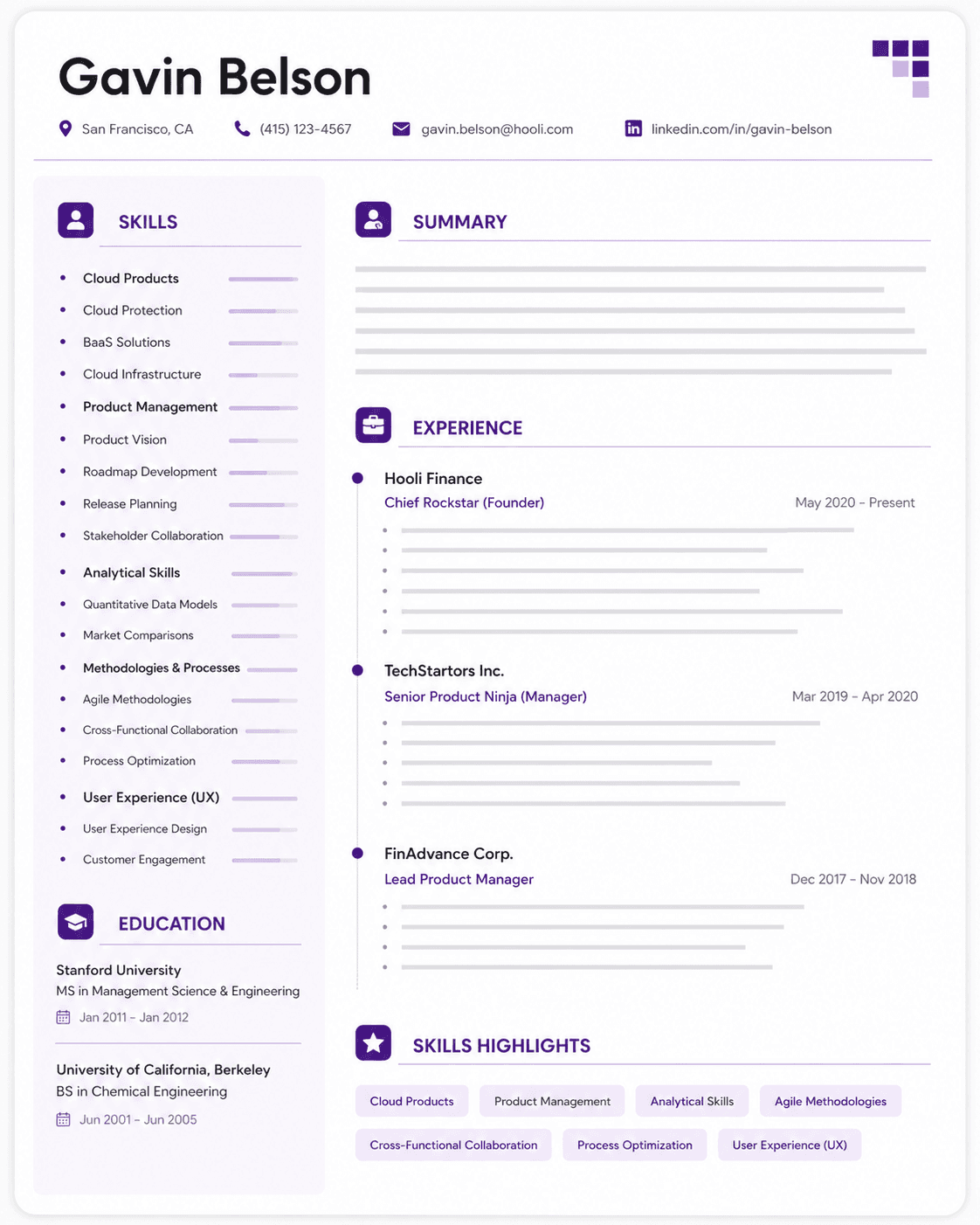
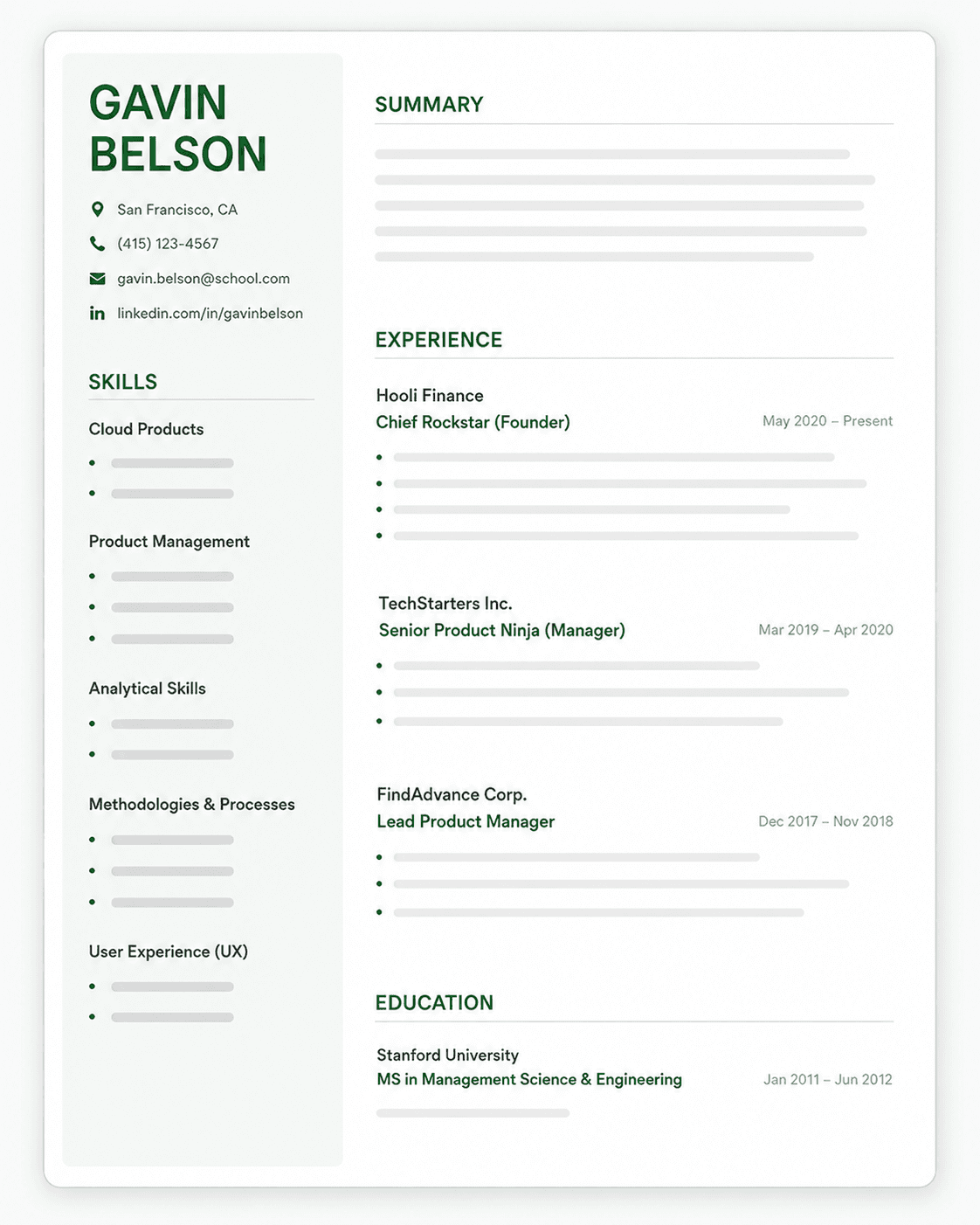
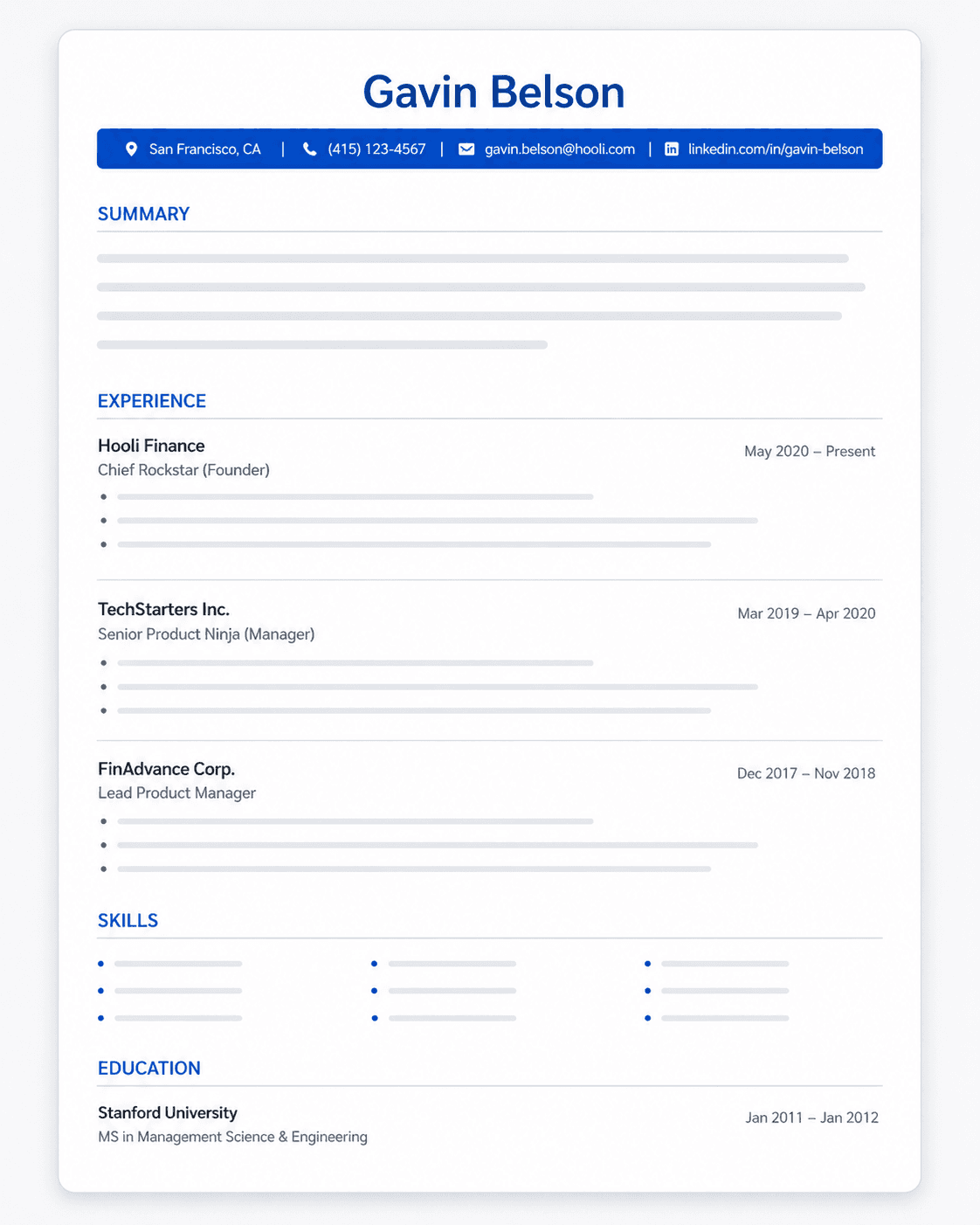
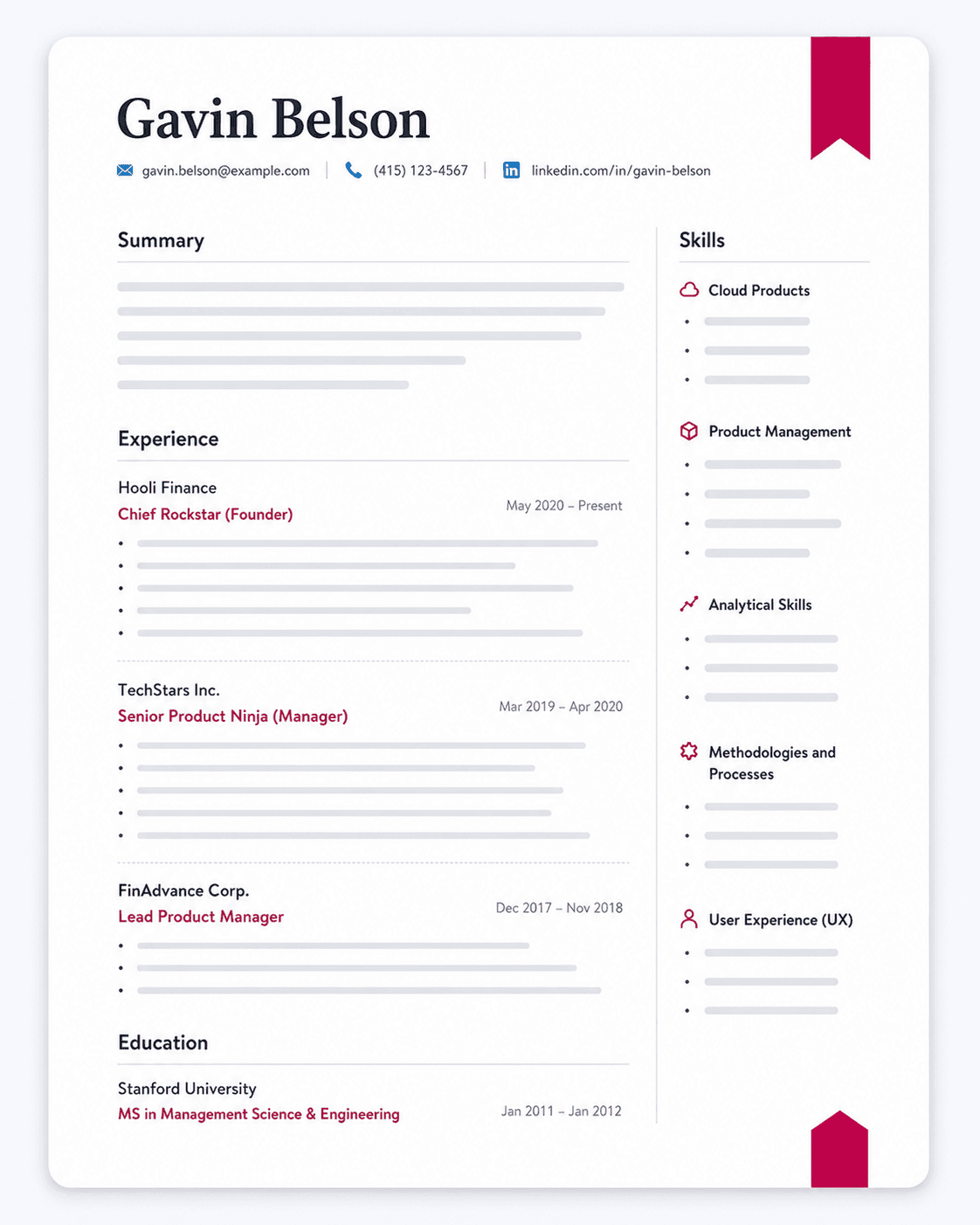
Seeing a complete resume side by side with the advice above makes it easier to apply. Below are three reference points by experience level.
Entry-Level Correctional Officer Resume
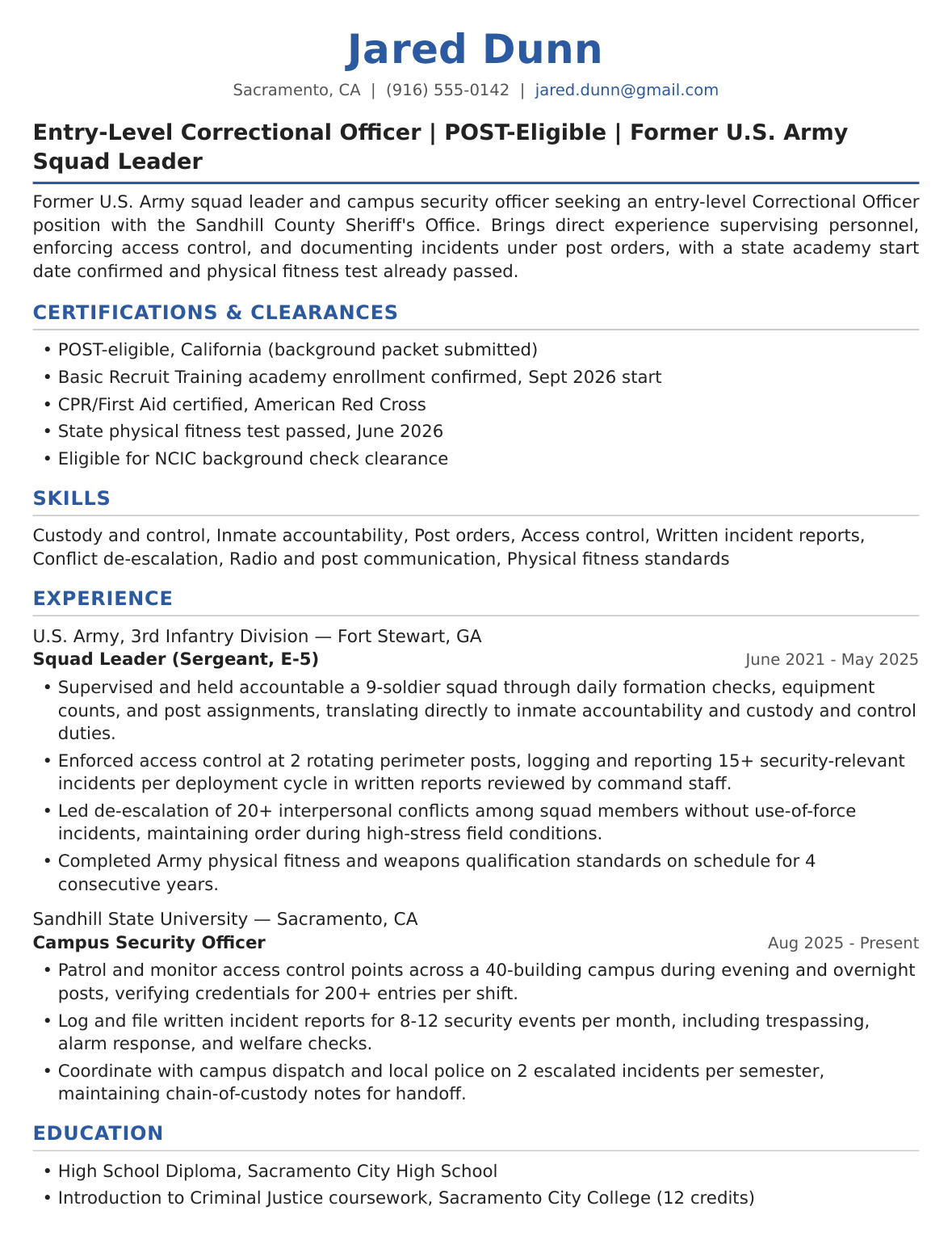
The entry-level version leads with an objective instead of a summary, because there is no corrections history to summarize yet. Certifications and academy status sit directly under the header: POST or state-equivalent eligibility, academy completion or enrollment date, CPR/First Aid with issuing body, and the physical fitness test date if you have passed one. The experience section carries military, security, or public-facing work reframed around corrections vocabulary, so a squad leadership role becomes supervisory scope with a headcount, and a campus security post becomes access control and incident reporting with the number of incidents logged. Education stays brief: high school diploma or GED, plus any criminal justice coursework. The whole thing fits one page, and every claim is something a background investigator can confirm.
Mid-Level Correctional Officer Resume
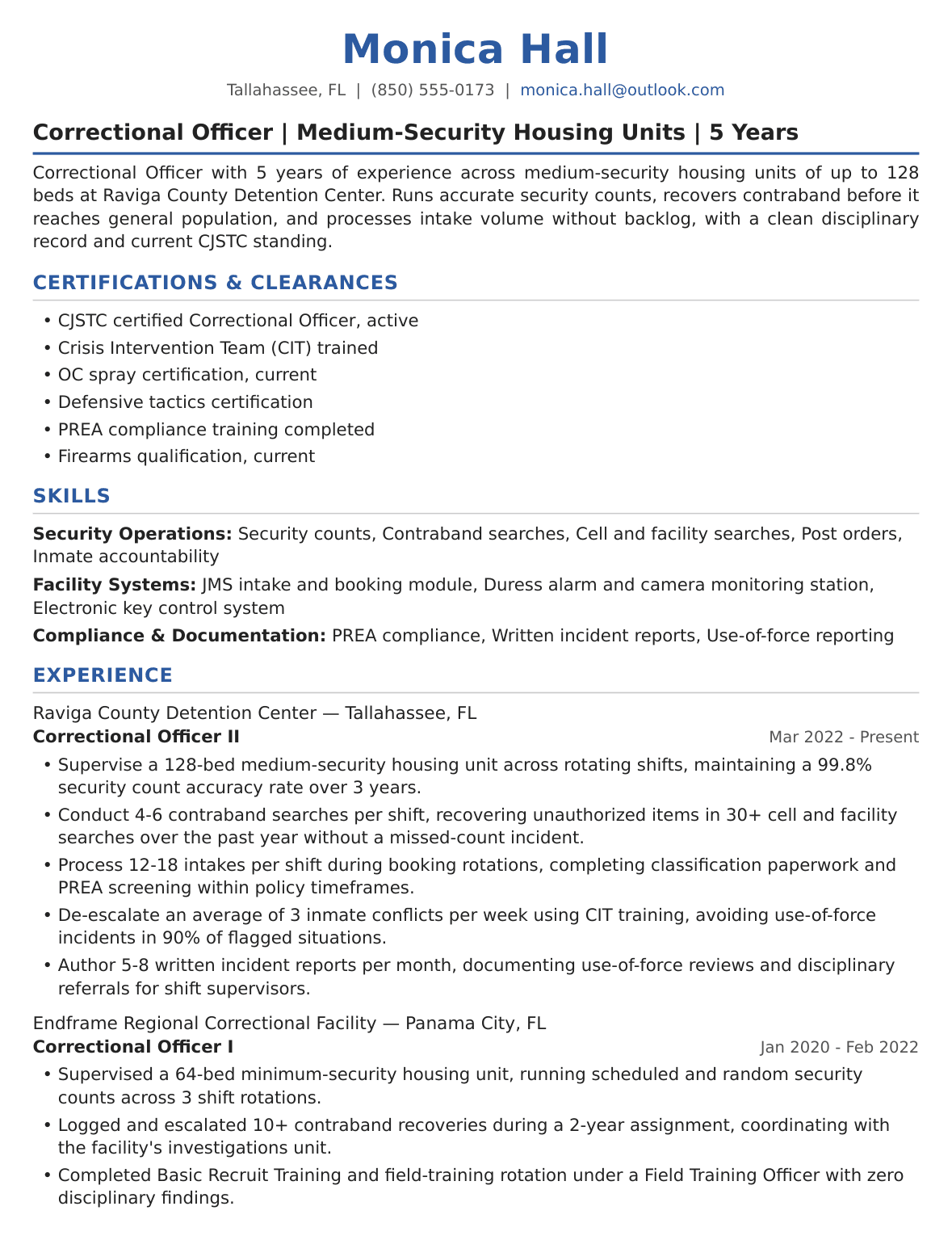
The mid-level version opens with a summary naming years of service, facility type, and housing unit size, because by 3 to 6 years in you have direct evidence and the objective is no longer needed. Certifications expand past the baseline into role-specific training: CIT, OC spray, defensive tactics, PREA compliance training, and firearms qualification where the post required it. The experience section does the heavy lifting with quantified bullets across one or two assignments: beds supervised, security counts completed and their accuracy rate, contraband recoveries, use-of-force incidents avoided, and intakes processed per shift. Skills stay categorized rather than listed flat, naming the specific facility systems you operate without supervision. One page still works, two is acceptable if the second page is all substance.
Senior-Level Correctional Officer Resume
The senior version is organized around scope and oversight rather than task execution. The summary names total years, the largest unit managed, and the number of officers supervised or trained. Certifications lead with instructor and supervisory credentials: Field Training Officer, defensive tactics instructor, CIT instructor, incident command training. Bullets shift from what you did on post to what you were accountable for across a shift or a unit, so the numbers become staff supervised, officers trained through FTO rotations, policy or procedure changes you implemented and the measurable result, and audit or accreditation outcomes for units you ran. Two pages is normal here, and promotion history should be visible as separate dated entries rather than compressed into one title.
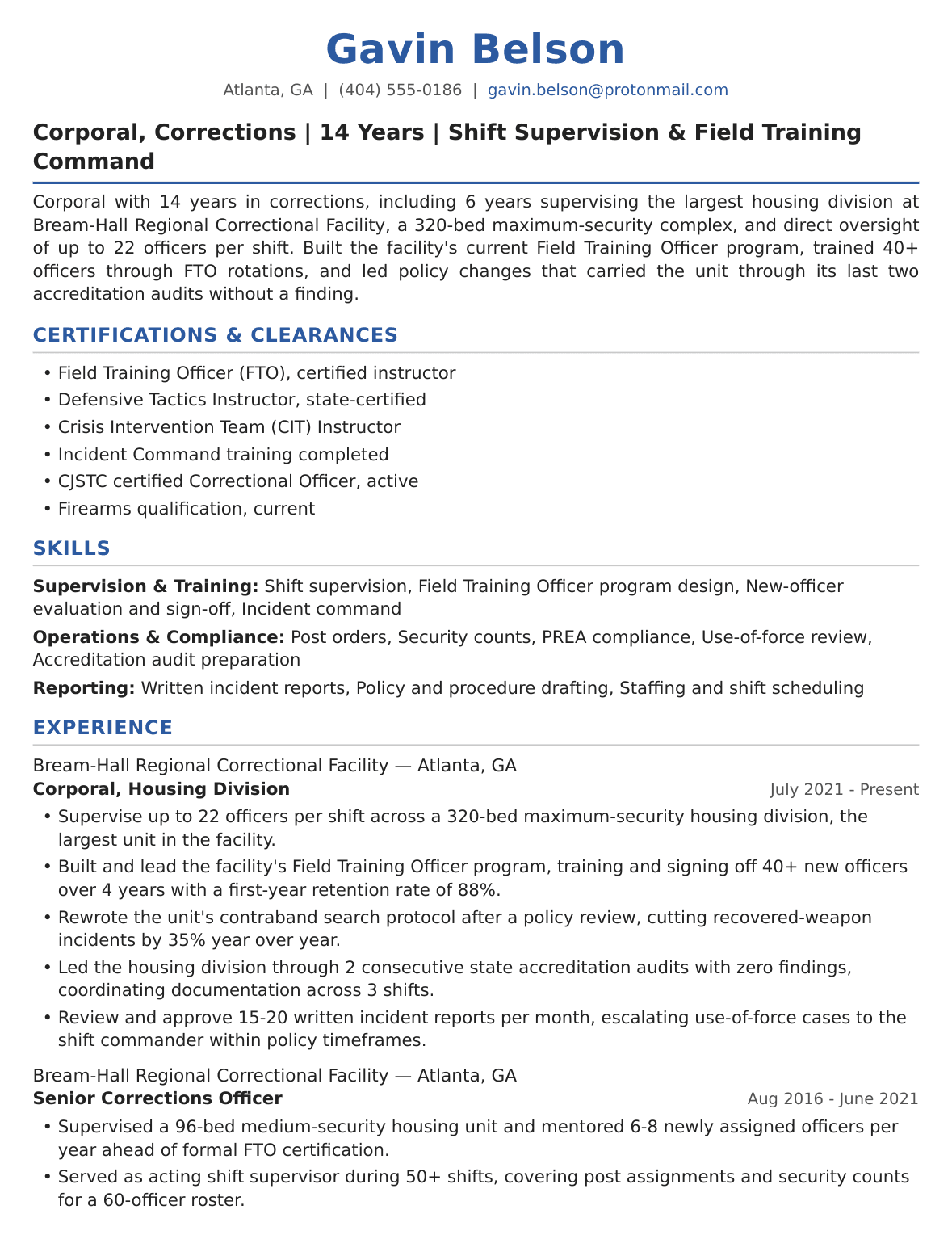
Across all three levels, the certifications and skills sections stay near the top of the page. What changes is the depth of the experience section and how much of the resume is devoted to proving direct responsibility versus transferable readiness. If you sit between two levels, for example three years in with an FTO assignment already, build from the lower level and add the supervisory evidence, since an unsupported claim of scope is easier for a hiring sergeant to disprove than an understated one is to overlook.
Correctional Officer Resume Keywords
Corrections postings mix a shared national vocabulary with state-specific certification names and a federal dialect, so exact terms matter more here than in most fields. Getting the ATS resume keywords right decides whether a parser routes your resume to a hiring sergeant or filters it out first. The table below covers the vocabulary; your bullets still carry the counts and scope.
| Category | Keywords |
|---|---|
| Security & custody operations | Post orders, Security counts, Contraband searches, Cell and facility searches, Escape and apprehension response, Perimeter security, Inmate accountability, Custody and control |
| Certifications & standards compliance | POST certification, CJSTC certification, CLEET certification, PREA compliance, OC spray certification, Firearms qualification, Use-of-force training, CPR/First Aid |
| Federal (BOP) hiring terms | 0007 Correctional Officer series, Direct Hire Authority, Introduction to Correctional Techniques, NCIC background check, Recruitment incentive |
| Documentation & career progression | Written incident reports, Field Training Officer, Corrections Cadet, Senior Corrections Officer, Corporal, Basic Recruit Training |
List these only if they're true for you. Don't claim firearms qualification or Field Training Officer status unless you hold them, and keep the federal row for BOP applications only, since those terms read as copied from the wrong listing on a county posting. PREA compliance is worth naming because it maps to a real federal hiring standard requiring direct disclosure of prior misconduct, not just posting jargon.
Mirror the posting's exact string instead of a synonym, since an ATS matches literals, not meaning. A county listing for "detention officer" won't credit experience written as "correctional officer," a Florida posting that says "CJSTC" won't match "POST," and a facility that logs "security counts" won't credit a bullet that says "inmate counts." Read the posting once, then copy its wording.
Common Correctional Officer Resume Mistakes to Avoid
Describing Tasks Instead of Impact
Listing duties ("responsible for security rounds") tells a reviewer what your job was, not how well you did it. Replace duty lists with outcomes: counts completed accurately, incidents prevented, contraband found.
Using One Resume for Every Facility Type
A resume that doesn't distinguish state, county, federal, or juvenile expectations reads as generic to anyone who's hired for more than one of those settings. Adjust format and emphasis per application.
Burying Certifications and Clearances at the Bottom
Certifications are the first thing a hiring sergeant checks for eligibility. Placing them after work history and education makes a reviewer dig for information that should be immediate.
Leaving Out Short-Term or Unrelated Jobs
Corrections background investigations are unusually thorough. An omitted job doesn't disappear, it just turns up later and reads as an attempt to hide something rather than a simple gap.
Listing Credentials Without Issuing Body or Status
"CPR certified" without a date or issuing body can't be verified quickly. Always pair a credential with who issued it and whether it's active, completed, or expiring.
Ignoring Automated Screening Tools
Some agencies run resumes through screening software before a human reviews them, similar to how mainstream ATS platforms work. Use the exact terminology from the job posting so an automated or manual first pass doesn't filter you out over wording alone.
Formatting That Hides Key Information
Dense paragraphs, inconsistent headers, and tiny margins slow down a reviewer who's scanning dozens of applications. Use clear section headers, consistent bullet formatting, and enough white space that certifications and metrics are easy to spot at a glance.
Using Generic Soft-Skill Filler
Phrases like "strong communication skills" or "works well under pressure" appear on nearly every competing resume in this field, which means they carry almost no weight on their own. Attach a real example or number to any soft skill you claim, or cut it and let a specific bullet make the point instead.
How AI Resume Builders Can Simplify Your Correctional Officer Resume
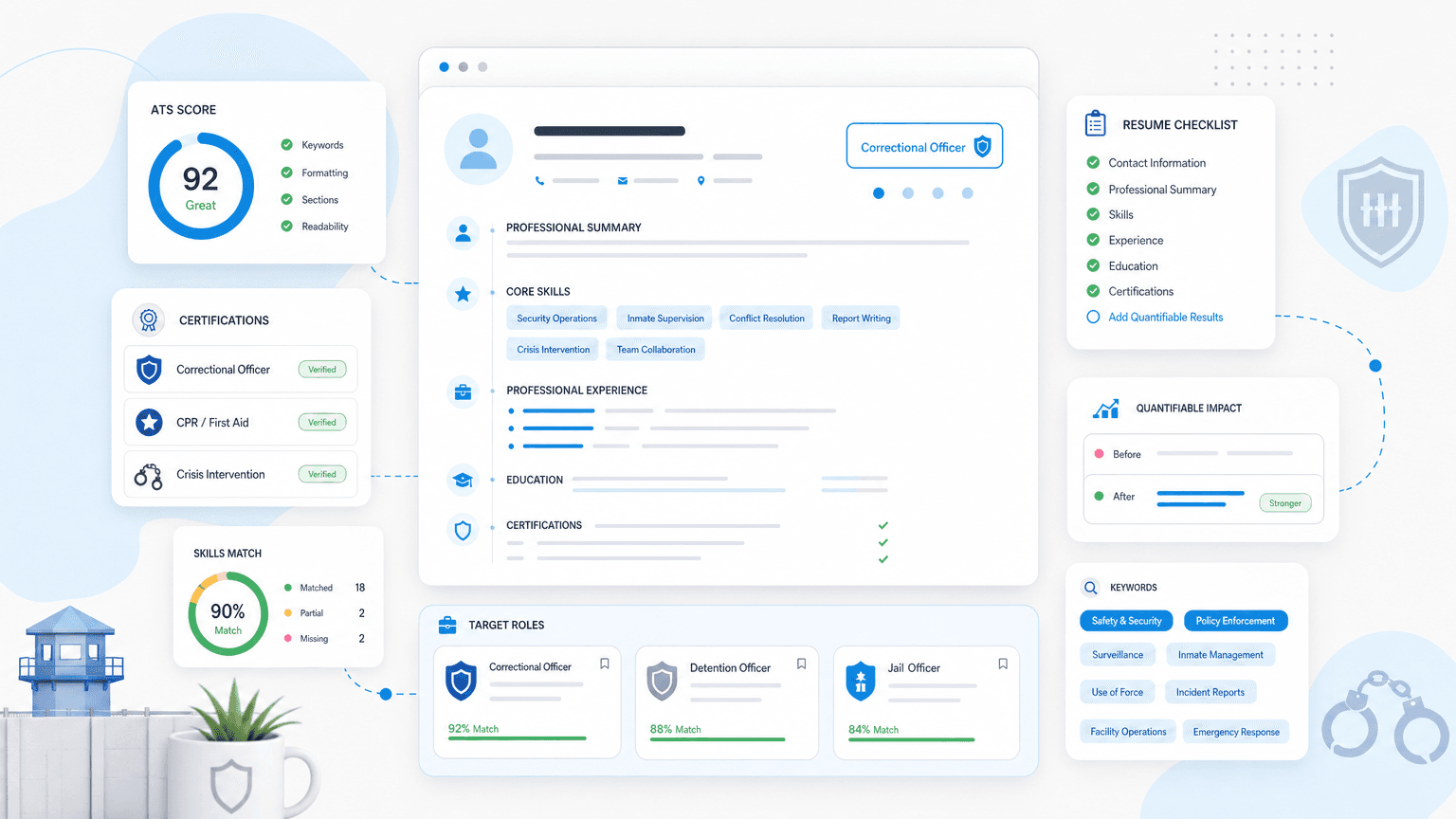
Tailoring a resume for every facility type, and rewriting bullets to match each job posting's exact wording, takes real time, and a generic resume sent to every opening gets filtered out for it.
- Real-time ATS scoring shows how your resume matches a specific corrections posting before you submit it, instead of guessing.
- Transparent suggestions explain every proposed change in plain language, and you accept or reject each one individually. Nothing gets rewritten behind your back.
- Automatic formatting keeps your resume clean and ATS-readable across state, county, and federal application systems.
- Structure guidance reorders content for relevance and strengthens weak bullets, following recruiter best practices for the role.
- Preference memory keeps your formatting and metric choices consistent the next time you tailor a resume for a different facility or posting.
Upplai's free plan includes 200 ATS scans per month and 3 tailored resumes with matching cover letters, no credit card required. Additional tailored resumes cost $0.50 to $1.00 each, with no subscription to cancel.