Paralegal firms in solo practice hire for entirely different priorities than a BigLaw litigation department, yet both expect the resume in front of them to prove the same thing: precision under deadline pressure. A litigation paralegal juggling depositions and a real estate paralegal tracking closings both get judged on the same underlying question: can you be trusted to run a piece of the case without an attorney checking your work? For a certificate grad applying to a first paralegal role, that proof might be a semester internship where you drafted discovery requests unsupervised. Certification from NALA or NFPA helps, but it's optional in every state, so a credential alone won't separate you from other applicants.
Hiring attorneys read resumes looking for a short list of specifics: named software, quantified caseloads, and evidence you've operated independently under a filing deadline. Generic resume advice built for other industries misses all three, which is why so many paralegal resumes read as competent but forgettable.
This guide breaks down every section of a paralegal resume, from summary lines to skills groupings to work history, with sub-role bullets for litigation, corporate, real estate, family law, and immigration paralegals. You'll also find three template tiers based on experience level and a rundown of the formatting mistakes that quietly cost interviews.
What Makes a Paralegal Resume Effective?
Attorneys read your resume looking for what's wrong with it. A typo in a job title or an inconsistent date range signals someone who might miss a deadline or file the wrong exhibit. Clean formatting, consistent tense, and correctly spelled software names matter more here than in most fields.
Beyond accuracy, hiring attorneys look for software fluency and evidence you can work without hand-holding. A paralegal who can manage a docket, run searches in Westlaw, and track a deadline calendar independently is worth more than one who lists "hardworking" and "team player." Certificate program graduates without much paid experience can lean on coursework and internship projects to demonstrate that same fluency.
No state requires a license to work as a paralegal under attorney supervision, so credentials like NALA's Certified Paralegal (CP) or NFPA's Registered Paralegal (RP) are optional. A named credential tells an attorney the candidate passed a standardized test of core competencies, not just picked up habits on the job.
Practice area matters too. A resume that lists generic "legal duties" without specifying litigation, corporate, real estate, family law, or immigration work reads as unfocused. A litigation paralegal pivoting into real estate should swap deposition and discovery language for closing-document terms the new practice area actually uses.
How to Write a Paralegal Resume That Gets Interviews
Write a Targeted Summary or Objective
Hiring attorneys skim the top third of your resume before deciding whether to keep reading. Your summary has to do three things fast: state your experience level, name a practice area if you have one, and back it up with a specific detail. That could be a software platform, a caseload number, or a certification.
If you're entry-level, lead with your education and any hands-on legal work in an objective instead of years on the job. Vague summaries ("hardworking team player seeking a paralegal position") tell an attorney nothing about whether you can handle a filing deadline or a discovery request.
A weak summary looks like this:
"Dedicated paralegal with strong organizational skills seeking a position at a growing law firm."
A stronger one looks like this:
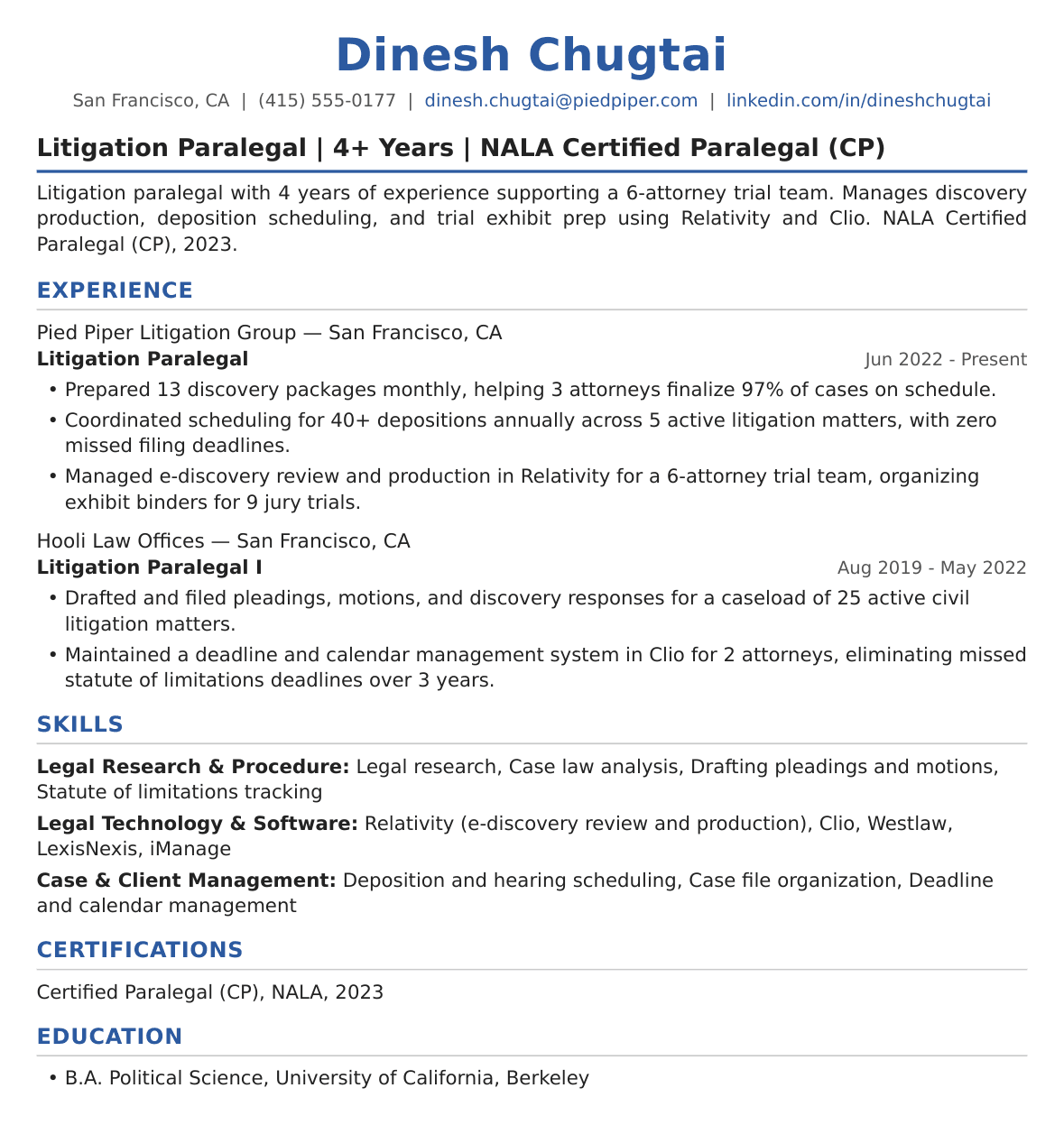
"Litigation paralegal with 4 years of experience supporting a 6-attorney trial team. Manages discovery production, deposition scheduling, and trial exhibit prep using Relativity and Clio. NALA Certified Paralegal (CP), 2023."
Entry-level / career-changer objective example
"Recent graduate with a Bachelor's degree in English and a paralegal certificate from [Program Name]. Strong legal research and writing skills developed through coursework in statutory interpretation, plus a semester-long internship drafting discovery requests and organizing case files at a 3-attorney litigation firm. Seeking to bring precise writing and document management skills to a paralegal role."
An English degree signals research and writing ability. A political science or business degree signals comfort with regulatory analysis or contracts. Say that directly instead of hoping the reader infers it.
Build a Skills Section That Speaks to Hiring Attorneys
A skills section that just lists "Microsoft Office, communication, teamwork" wastes prime resume space. Hiring attorneys and legal recruiters scan for named tools and named tasks, because those are what they can verify in an interview. Group your skills so an attorney can find what matters to their practice in seconds.
Legal Research & Procedure Legal research, case law analysis, drafting pleadings and motions, contract drafting support, court filing procedure, statute of limitations tracking
Legal Technology & Software LexisNexis, Westlaw, Clio, MyCase, PracticePanther, DocuSign and court e-filing systems. For litigation or BigLaw-track roles: Relativity (e-discovery review and production), iManage or NetDocuments (enterprise document management)
Case & Client Management Case file organization, client intake and communication, deposition and hearing scheduling, deadline and calendar management
Professional & Soft Skills Attention to detail, confidentiality and ethics compliance, cross-team coordination with attorneys
Only list software you can use without help. If you've seen Relativity in a training video but never run a production in it, say so honestly in an interview instead of listing it as a skill and getting caught flat-footed.
Match the job posting's exact wording when it's accurate: if it says "e-filing" and you've filed in state court systems, use that term. And name real tools. "Legal software" tells a hiring attorney nothing; "PracticePanther" tells them you can start using their system on day one.
Show Certifications and Credentials the Right Way
Paralegal certification is voluntary in virtually every US state. No state requires a license to work as a paralegal under attorney supervision, so don't imply otherwise, and don't panic if you don't have one yet. That said, a certification signals initiative and a baseline of tested competence, which is why it's worth featuring prominently if you hold one.
The credentials worth naming precisely: NALA's Certified Paralegal (CP) and Advanced Certified Paralegal (ACP), NFPA's PACE exam leading to the Registered Paralegal (RP) designation, and NALS's Professional Paralegal (PP). Some states also have their own credentials, such as California's Advanced Specialist designations in estate planning, trust, and probate law.
If you hold a certification, put it near the top of your resume, either in your summary line or in a short dedicated credentials line just below your name and contact info. List the issuing body and the year earned (for example, "Certified Paralegal (CP), NALA, 2022"). If the credential requires continuing education to stay active, note that it's current.
Write Achievement-Focused Experience Bullets
This is where most paralegal resumes fall flat. Listing duties tells an attorney what you were assigned. Listing outcomes tells them what you can be trusted to deliver. Use this formula for every experience bullet: legal action verb, plus the specific task or document, plus a quantifiable scope or result.
A weak bullet looks like this:
"Responsible for helping attorneys with discovery and case files."
A stronger one looks like this:
"Prepared 13 discovery packages monthly, helping 3 attorneys finalize 97% of cases on schedule."
The sub-role bullets below show this formula applied across five practice areas. Adapt the language and numbers to your own experience, but keep the structure: verb, task, number.
Litigation Paralegal. Litigation resumes reward case and discovery volume metrics because they show you can keep a trial team moving under deadline pressure.
- Prepared 13 discovery packages monthly, helping 3 attorneys finalize 97% of cases on schedule.
- Coordinated scheduling for 40+ depositions annually across 5 active litigation matters, with zero missed filing deadlines.
Corporate Paralegal. Corporate resumes reward the number of attorneys or entities you support and the volume of contracts you process, since that reflects how much of the firm's transactional workload you carry.
- Supported 4 corporate attorneys across 25+ client entities, managing entity formation filings and annual compliance reports.
- Drafted and reviewed 30+ commercial contracts per quarter, reducing attorney redline turnaround time by 2 days on average.
Real Estate Paralegal. Real estate resumes reward closing and transaction volume, since that number reflects your ability to manage parallel deadlines across title, escrow, and lender documentation.
- Managed closing documentation for 18 residential and commercial transactions per month, maintaining a 100% on-time recording rate.
- Coordinated title searches and lien resolutions for 60+ closings annually, cutting average pre-closing delays by 3 days.
Family Law Paralegal. Family law resumes reward case resolution and mediation coordination, since much of the work centers on moving cases toward settlement rather than trial.
- Prepared financial disclosures and parenting plan documentation for 45+ active family law cases, supporting a 70% pre-trial settlement rate.
- Scheduled and coordinated 30+ mediation sessions annually, working directly with clients and opposing counsel to confirm terms before filing.
Immigration Paralegal. Immigration resumes reward petition and filing volume alongside approval rate, since accuracy on forms directly affects whether a case succeeds.
- Filed 200+ family and employment-based petitions annually with a 95% approval rate on initial submissions.
- Tracked filing deadlines for 80+ active immigration cases using a case management system, eliminating missed response windows for RFEs.
If your work doesn't come with obvious metrics, quantify scope instead: count cases, documents, or attorneys supported, or estimate hours saved by a process you built. Your case management software's reporting function, calendar history, and old performance reviews often hold numbers you forgot you had.
Turn Internships, Clerkships, and Coursework Into Experience
If you don't have paid paralegal experience yet, don't leave your experience section thin. A legal clinic, moot court, mock trial, or law-office internship involved real legal tasks, and you should describe them the same way you'd describe a job.
If you drafted a motion for a clinic client, say "drafted a motion to dismiss for a legal aid clinic client" rather than burying it under "coursework." If you organized case files or tracked deadlines during an internship, that's case management experience, full stop. The same reframing applies to a non-paralegal degree: connect an English or political science background to the research, writing, or analytical skills it actually built, rather than assuming the hiring attorney will make that leap unprompted.
Organize Your Work History the Right Way
List your work history in reverse-chronological order, most recent role first. This is the format hiring attorneys and applicant tracking systems both expect, and departing from it makes your resume harder to parse quickly.
If you held a "Legal Assistant" or "Paralegal Intern" title but your actual duties overlapped with paralegal work, keep the title accurate but let your bullets do the reframing. A legal assistant who drafted pleadings and managed discovery should describe those tasks plainly; the bullet content, not the job title, is what proves the skill level.
If you're pivoting from one practice area to another, for example moving from litigation to corporate, put your most transferable bullets first under each role. Emphasize skills that cross over, like contract review or deadline management, and don't hide the shift. A short summary line naming your target practice area helps the reader understand the transition before they hit your work history.
Paralegal Resume Examples
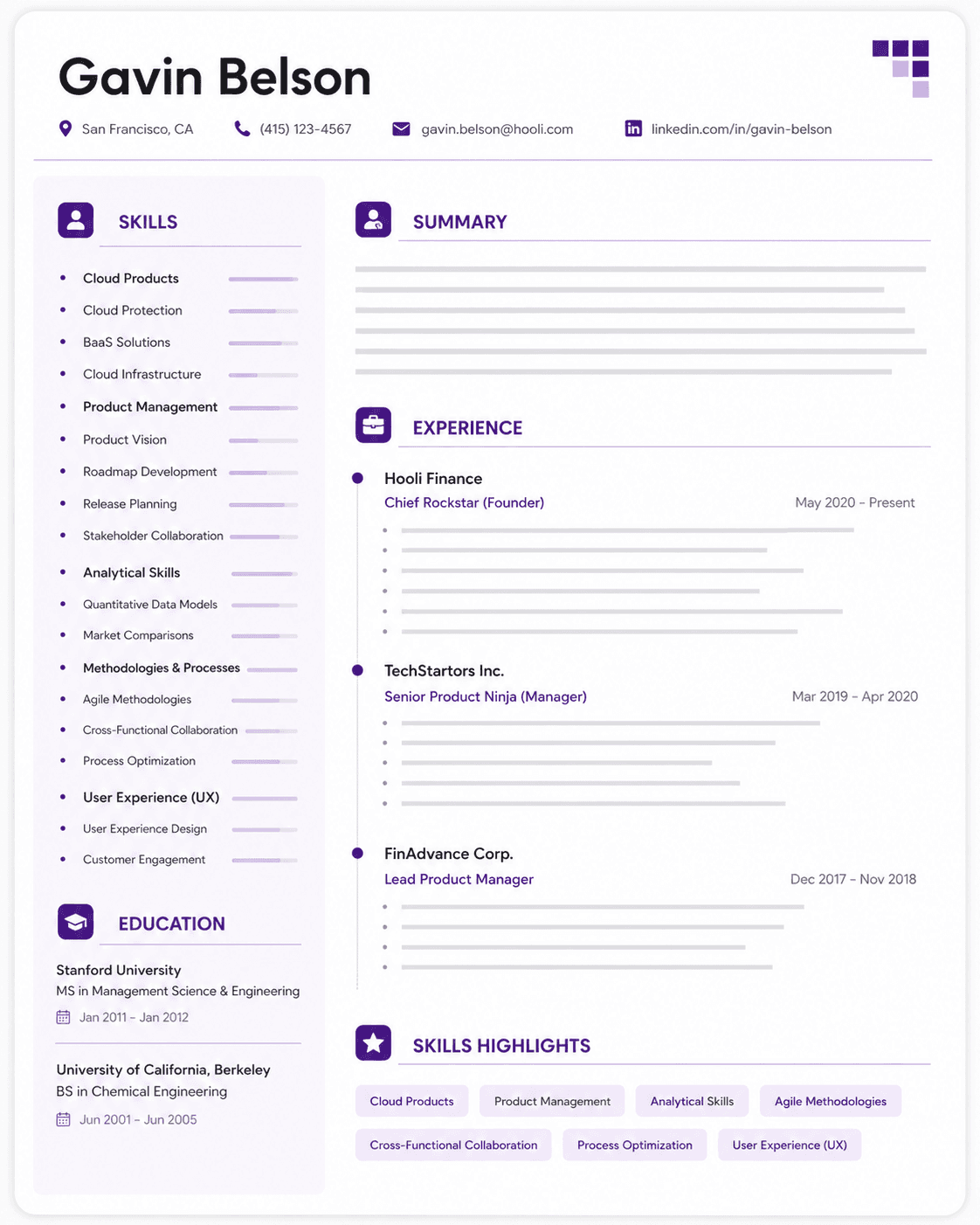
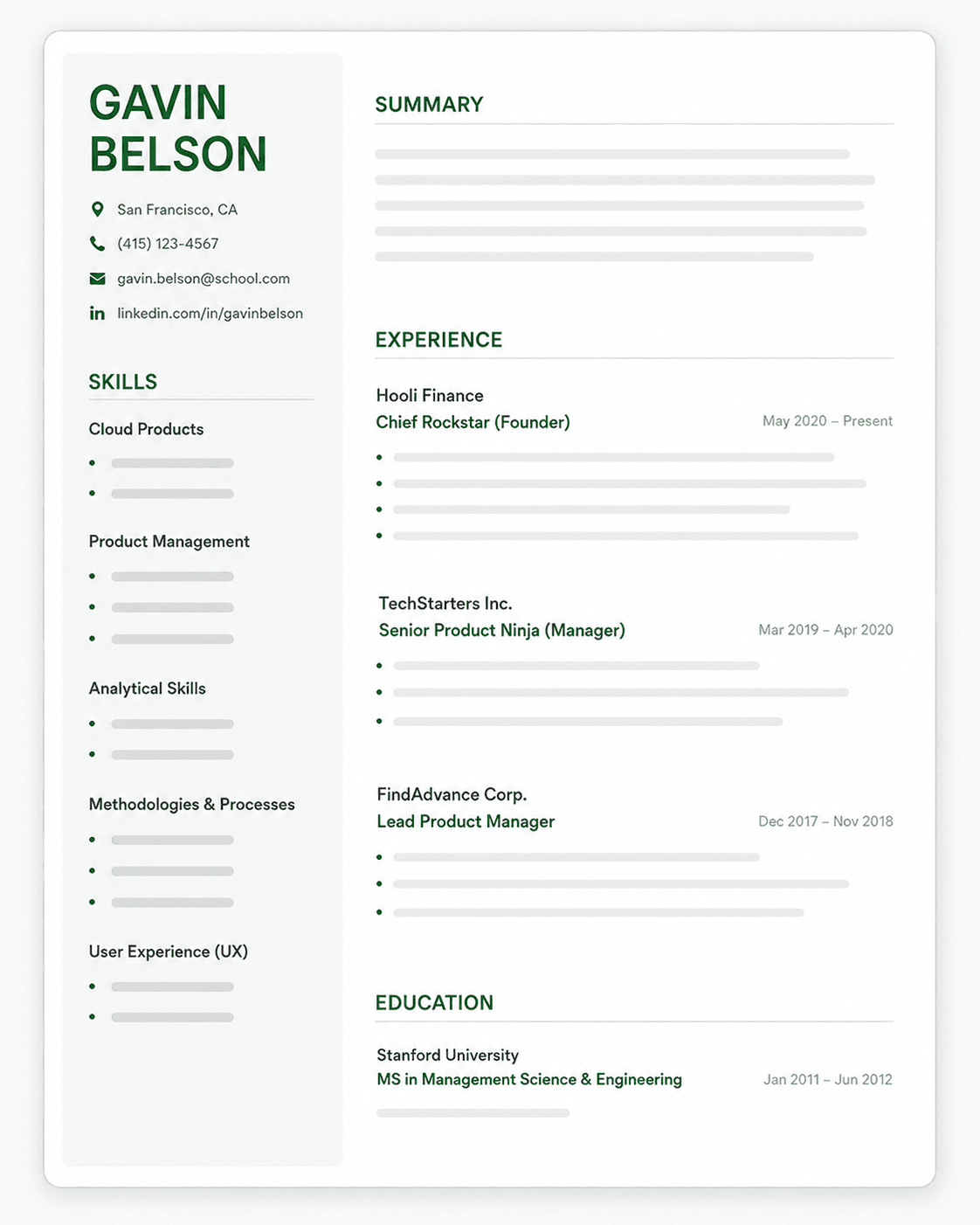
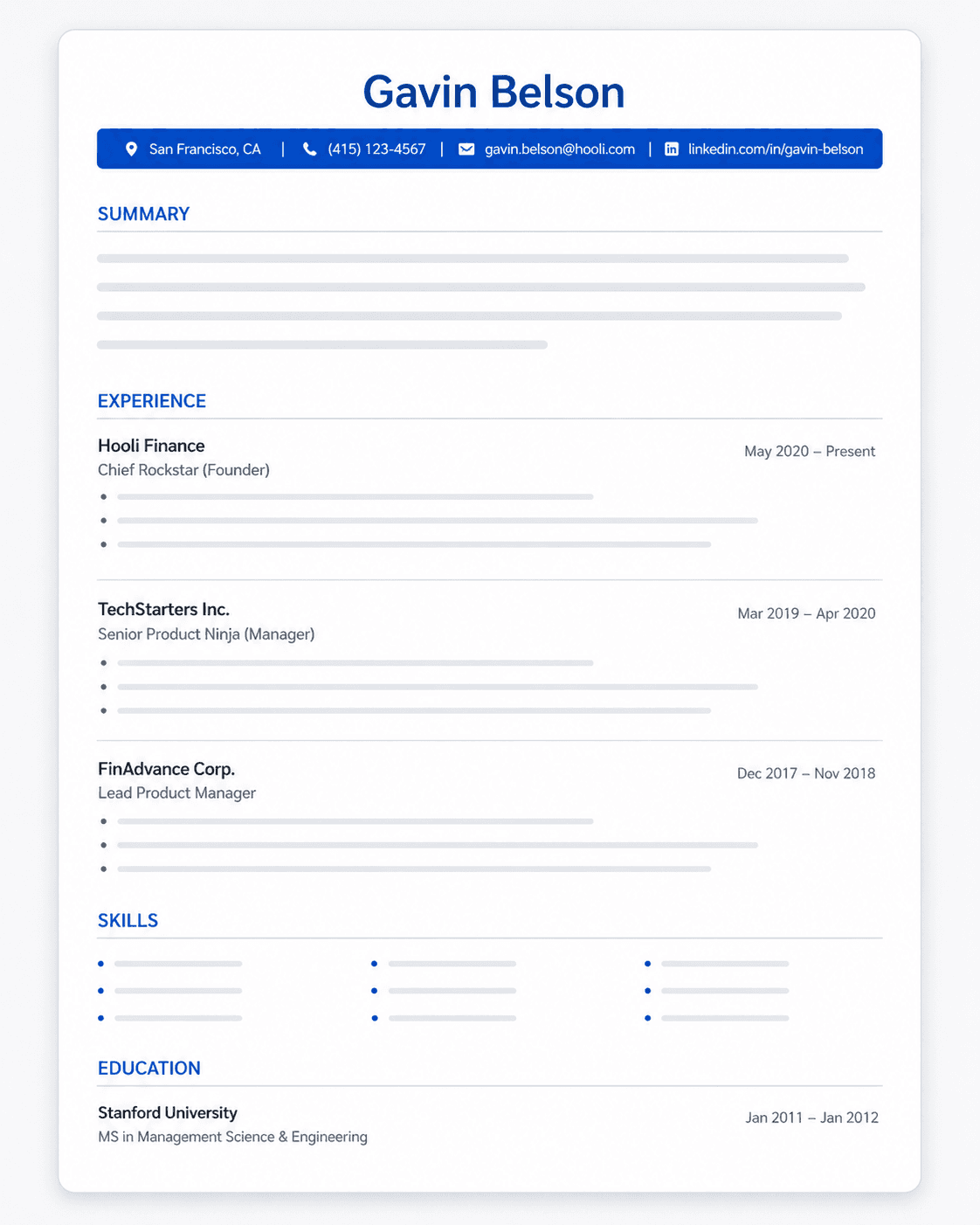
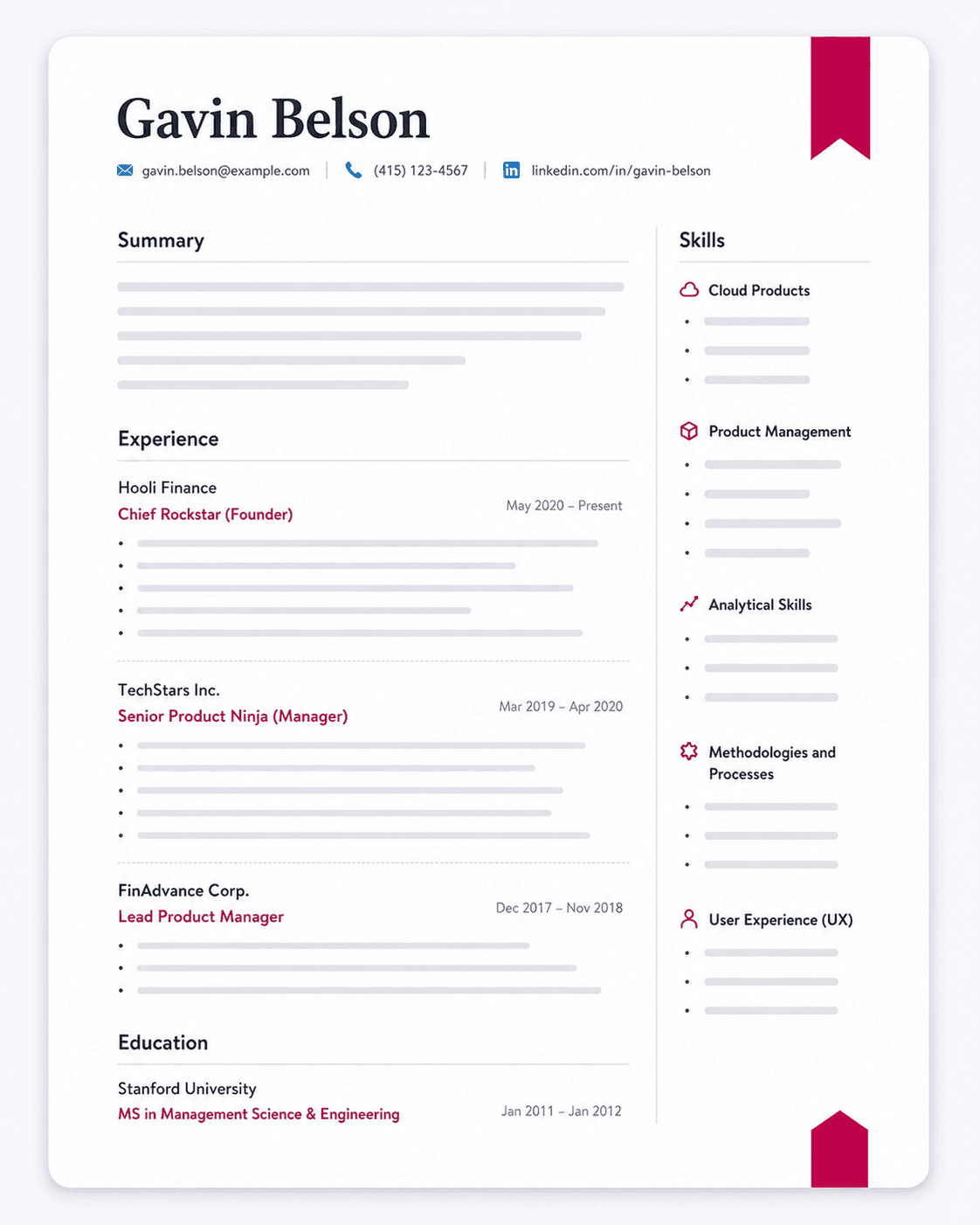
Choose the tier that matches your experience level, since a senior paralegal resume and an entry-level one should highlight different strengths.
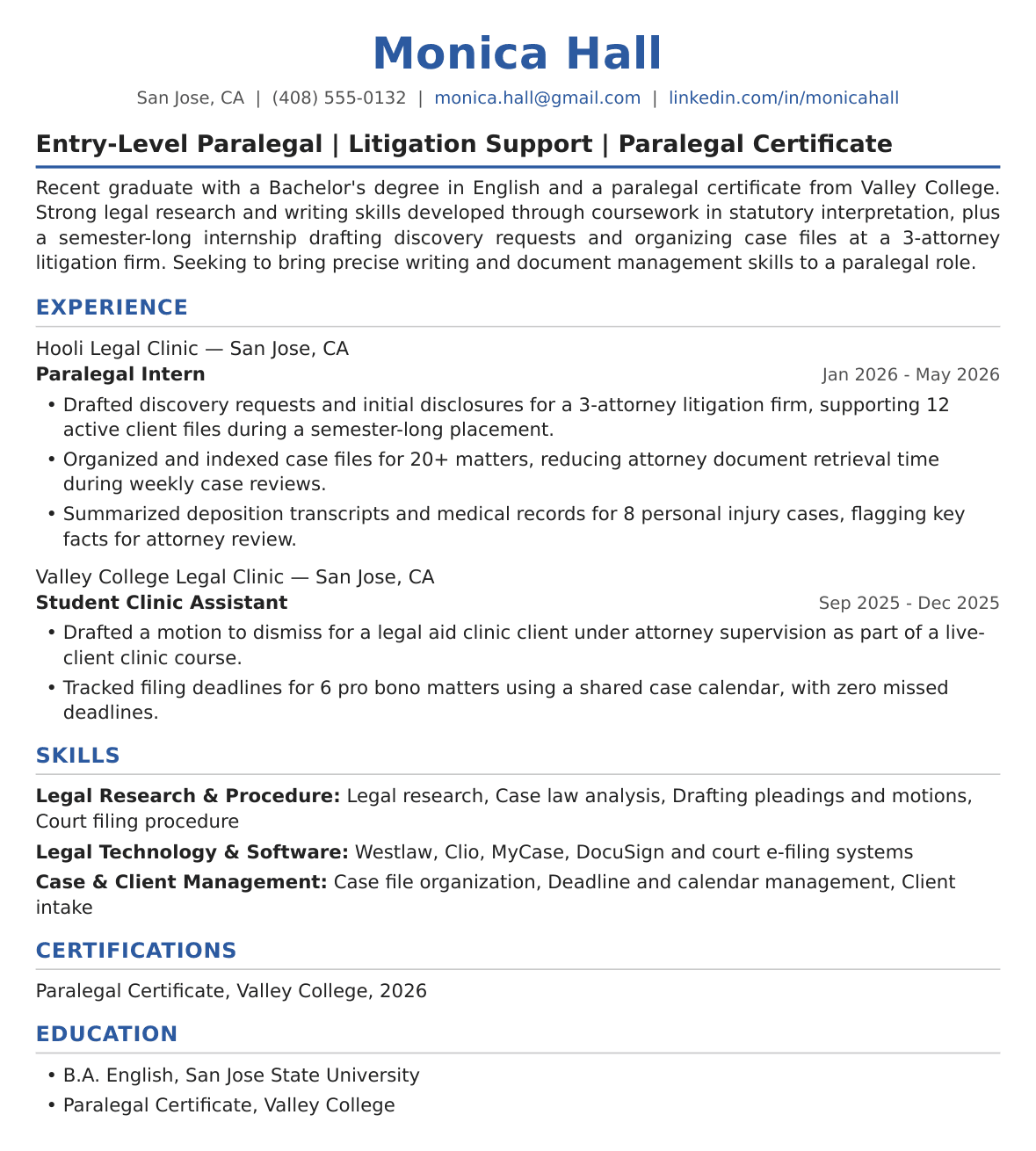
Entry-Level Paralegal Resume Example
This template suits recent graduates or candidates transitioning from another field. It emphasizes education, paralegal certifications, internships, relevant coursework, and transferable skills like research and organization. The format stays to one page.
Mid-Level/Litigation Paralegal Resume Example
This template fits paralegals with three to seven years of experience in a specific practice area such as litigation. It highlights achievement-driven bullets tied to case outcomes, deposition support, and trial preparation, along with named software like Relativity and Clio. The format stays to one page.
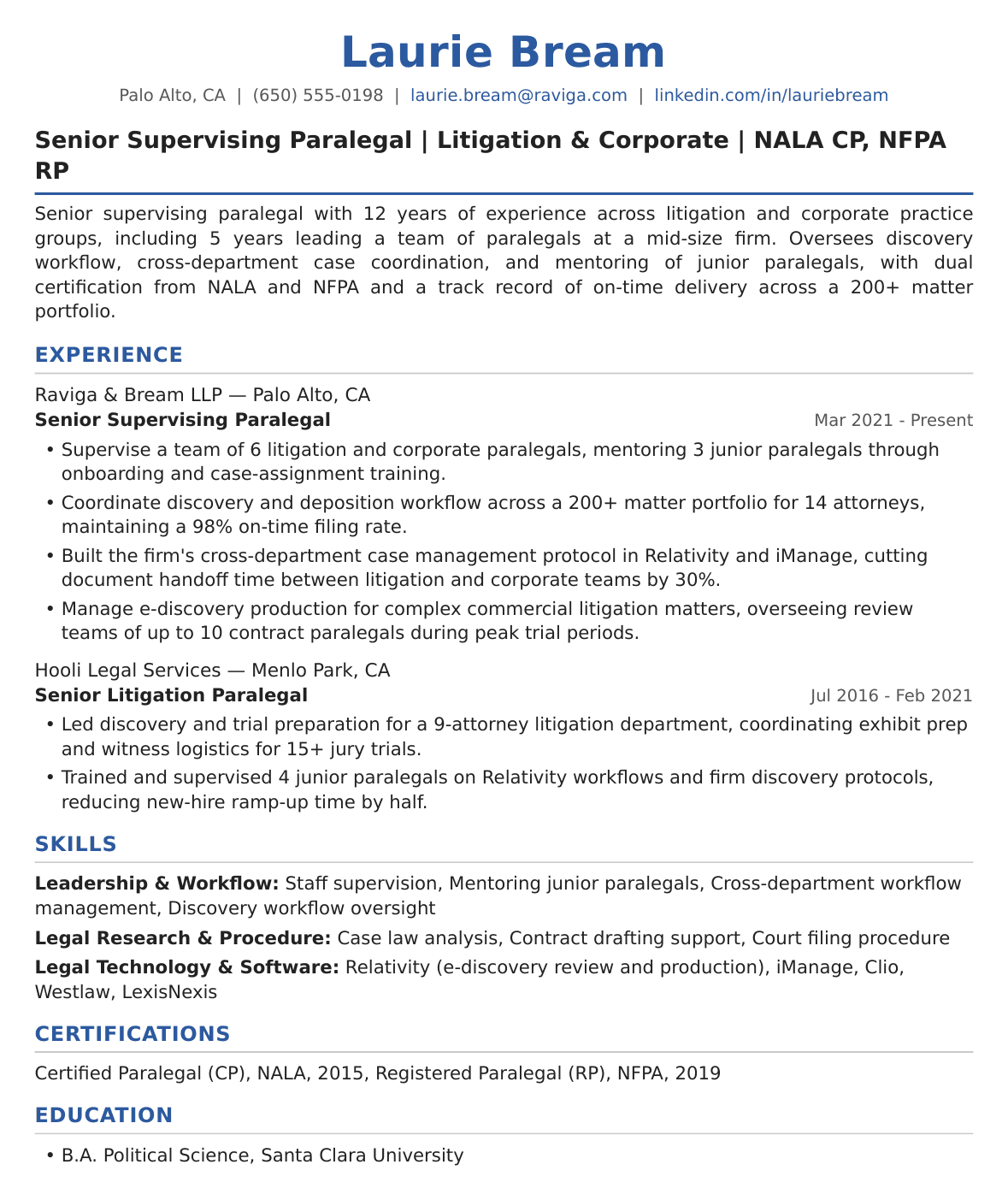
Senior/Supervising Paralegal Resume Example
This template suits paralegals who lead teams or coordinate across departments. It emphasizes staff supervision, mentoring junior paralegals, cross-department workflow management, and multiple certifications built over a multi-year tenure. The format may extend to two pages.
Paralegal Resume Keywords
Using job specific keywords in your resume ensures that your resume doesn't go unseen. Law firms filter for research platforms, litigation support terms, and practice management software by name. Tailor the mix to the practice area in each posting, litigation-heavy or transactional.
| Category | Keywords |
|---|---|
| Research & drafting | Legal research, Westlaw, LexisNexis, Legal drafting, Pleadings, Legal memoranda, Bluebook citation |
| Litigation support | Discovery, E-discovery, Relativity, Document review, Deposition summaries, Trial preparation, Subpoena preparation |
| Case & practice management | Case management software (Clio, MyCase), E-filing (PACER/ECF), Docketing and calendaring, Client intake, Billing support |
| Credentials & ethics | Paralegal certificate (NALA CP), Notary public, Attorney-client privilege, Confidentiality |
The Number Law Firms Actually Hire For: Your Billables
A law firm evaluates a paralegal hire the way it evaluates any revenue line. Firms set billable targets of roughly 1,200–1,800 hours a year (higher in big law), bill paralegal time at $100–195 an hour, and break even on a good hire within months. Yet almost no paralegal resume states the one number that pricing runs on.
If you bill time, put it on the resume: "Billed 1,650 hours in 2025 at 92% utilization across a 40-case litigation docket." That single line tells a hiring partner you understand the business you're in and hands them the revenue math: 1,650 hours at their rate is the hire justifying itself. Realization matters too, if you know it; hours that survive partner write-downs and client payment are worth more than hours merely logged.
If you're coming from government, in-house, or another non-billing environment, translate to throughput instead: matters supported per quarter, filings produced, discovery volume processed. The principle is the same: quantify yourself in the unit your employer counts.
Common Paralegal Resume Mistakes to Avoid
These are the errors that show up most often on paralegal resumes, and each one is fixable in minutes.
Describing Tasks Instead of Impact
"Assisted attorneys with discovery" tells a hiring manager what you were near, not what you did. Rewrite it around outcome: "Prepared 40+ discovery documents monthly, helping two attorneys close case backlogs 20% faster." The second version proves competence; the first just lists a duty.
Using One Generic Resume for Every Practice Area
A litigation firm and a real estate closing office are not hiring for the same skills, so a single all-purpose resume reads as unfocused to both. Adjust your summary, skills section, and bullet emphasis to match each job posting's practice area before you submit.
Listing Software Vaguely
"Proficient in legal software" and "familiar with case management tools" tell an attorney nothing verifiable. Name the platforms: Clio, MyCase, Relativity, LexisNexis, Westlaw, iManage. Specific tool names get matched by both ATS keyword scans and the hiring attorney's mental checklist.
Ignoring ATS-Unfriendly Formatting
A two-column layout is one form of ATS-unfriendly formatting that might tuck "family law" or "e-discovery" into a side panel many parsers skip entirely, so a genuine specialty never reaches the keyword match. Tables, text boxes, headers/footers, and decorative fonts cause the same silent drops. Use a single-column layout, standard section headings, and a simple font like Arial or Times New Roman so your practice areas and certification abbreviations parse cleanly.
Treating Certification as Mandatory, or Hiding One You Have
Credentials like NALA's CP, NFPA's RP, and NALS's PP remain voluntary distinctions rather than licensing requirements, so listing one as "required" signals a misunderstanding to attorneys who already hold this knowledge. The reverse mistake is just as common: paralegals who hold a certification bury "CP" in a mid-resume bullet instead of placing it near the top where it signals commitment.
Burying Your Specialty in a Wall of Generic Duties
If you have three years in immigration law, don't open with "provided general legal support," a line that could describe any legal assistant. Lead with the specialty in your summary and skills section, then let your bullets back it up with practice-specific detail.
Using Vague, Unverifiable Stats
"Handled many cases" and "worked on several matters" invite skepticism rather than confidence. Pull the real number from case management software reports, calendar history, or old performance reviews: "Managed a caseload of 35 active litigation files."
How AI Resume Builders Can Simplify Your Paralegal Resume
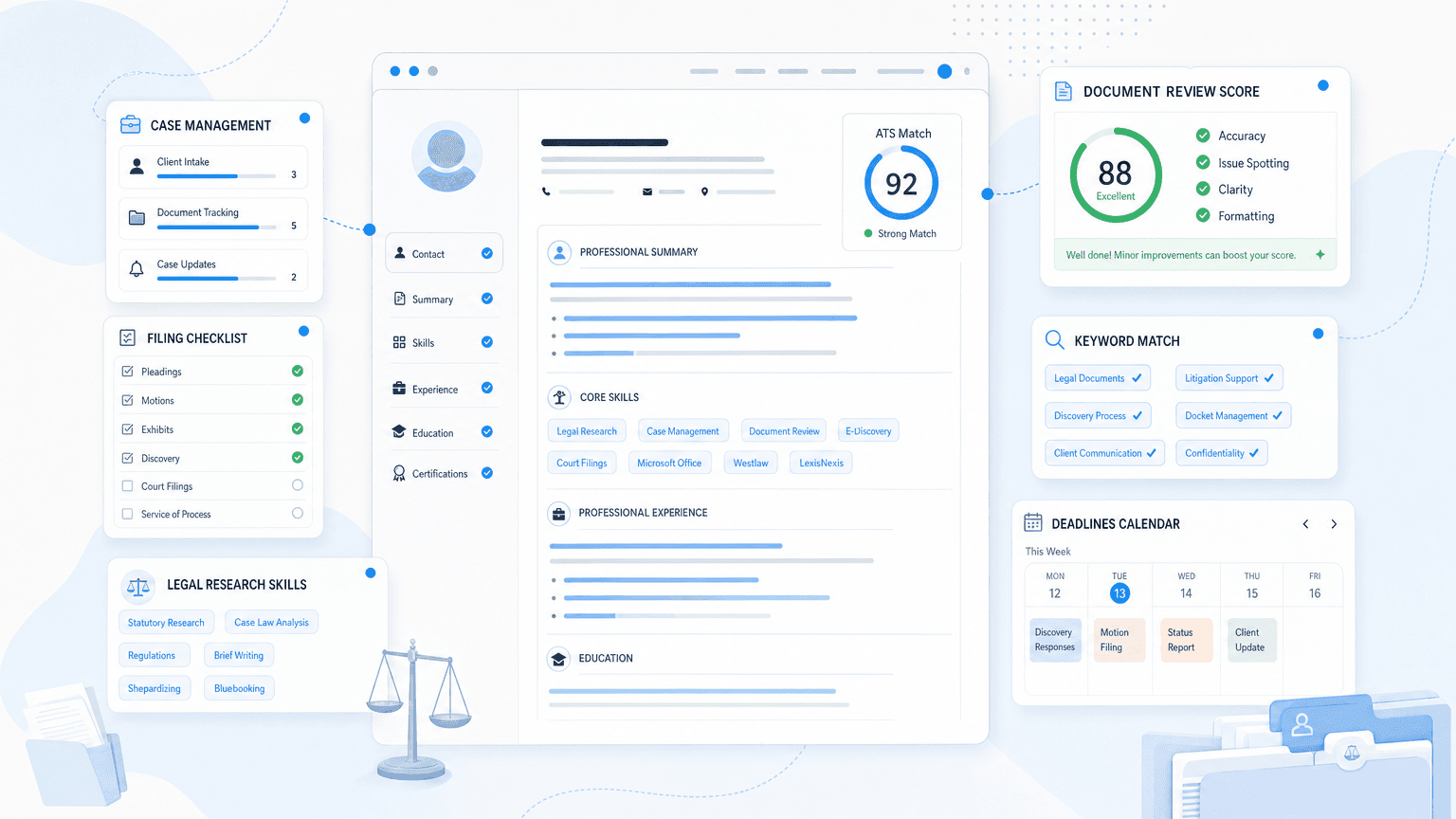
Rewriting a resume for every practice area or firm you apply to takes real time, and a single generic paralegal resume rarely survives ATS screening built around specific keywords like litigation support, e-discovery, or contract review.
- Real-time ATS scoring: See your ATS and recruiter match scores update as you edit, so you know a resume is ready before you submit it, not after a rejection. This gives you a clear, numeric read on how a paralegal resume will perform against a specific job posting, rather than a guess.
- Transparent suggestions: Every AI edit comes with a plain-language explanation. Accept or reject each one individually, and nothing gets rewritten or invented behind your back. The AI never fabricates cases, clients, or skills you didn't list. It works only with what you actually did, so every line stays verifiable.
- Automatic formatting: ATS-friendly templates handle layout, so tables and headers that confuse parsing systems don't cost you an interview over formatting alone.
- Structure guidance: Get recruiter-informed suggestions on content order and length, along with bias-trigger flagging, so a resume leads with what actually gets read first and avoids language that could work against you.
- Preference memory: Bookmark up to 5 master resumes for different practice areas, such as litigation, corporate, real estate, or family law, so you're not rebuilding a resume from scratch for each application.
The free plan includes 200 ATS scans a month and 3 tailored resumes with matching cover letters, with unlimited downloads and no credit card required. Additional resumes cost $0.50 to $1.00 each, with no subscription attached.
Turn this resume advice into a finished draft
Upload your existing resume or start fresh, then get ATS-scored, practice-area-specific edits in minutes.
A paralegal resume earns an interview when every line proves something specific: a practice area, a tool, a number. That's the difference between a resume an attorney skims past and one they call about.