Physician assistant hiring happens across a wide range of clinical settings. Emergency medicine, primary care, orthopedics, dermatology, urgent care, hospital medicine, and surgical subspecialties all hire PAs regularly. The job titles and scope of practice vary significantly by setting and state, and most general resume advice was written without any of this in mind.
This guide walks you through every section of a PA resume with examples built around how healthcare hiring actually works.
How to Write a Physician Assistant Resume That Gets Interviews
Write a Targeted Summary or Objective
Your resume summary is the first thing a hiring manager or physician partner reads. In PA hiring, it needs to establish four things immediately: your specialty focus, your clinical setting, your patient volume, and a result that shows you can function independently in a clinical role.
If you have previous experience as a PA, write a professional summary. Keep it to three or four sentences. Lead with your years of experience and the specialty or setting you have worked in. Follow with your primary procedures and any subspecialty training or certifications. Close with a concrete outcome, such as patient volume managed, a quality improvement result, or a clinical metric you contributed to.
A weak summary looks like this:
"Compassionate and detail-oriented physician assistant with strong clinical skills and a commitment to patient-centered care."
A stronger one looks like this:
"NCCPA-certified physician assistant with 6 years of experience in emergency medicine at a Level I trauma center, managing an average of 18 to 22 patients per shift across triage, acute care, and procedure-driven presentations. Independently performed laceration repairs, abscess I&Ds, and lumbar punctures with attending supervision, contributing to a department average door-to-provider time of under 20 minutes."
The second version names a certification, a setting, a patient volume, a procedure list, and a measurable clinical outcome. A hiring manager knows exactly what kind of PA you are before reading a single bullet.
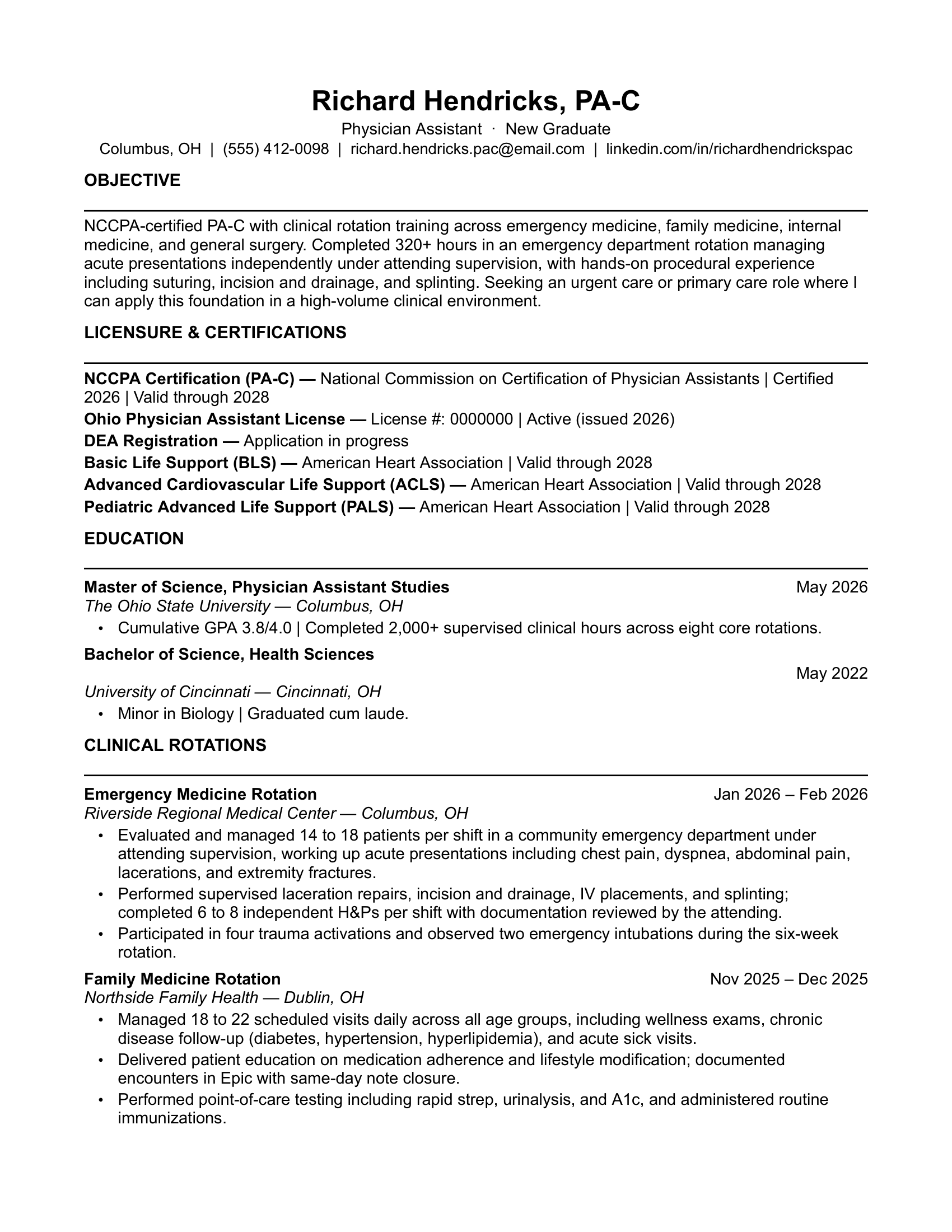
If you are a new graduate or completing your first year post-certification, use an objective statement instead. Connect your rotation experience to the specialty you are targeting.
"NCCPA-certified PA-C with clinical rotation training across emergency medicine, internal medicine, and orthopedic surgery. Completed 300+ hours in an emergency department rotation managing acute presentations independently under attending supervision, with hands-on experience in procedural care including suturing, splinting, and point-of-care ultrasound. Seeking an EM or urgent care role where I can apply this foundation in a high-volume clinical environment."
A few principles apply regardless of experience level:
- Name your specialty and setting specifically rather than describing yourself as "versatile" or "adaptable"
- Tailor your summary for each application. A surgical first-assist role and a primary care position require completely different emphasis
- Avoid language like "dedicated to patient advocacy" or "passionate about medicine." These phrases carry no clinical information and every applicant uses them
Build a Skills Section That Speaks to Hiring Managers
PA resumes draw from a wider range of competencies than most clinical roles: procedural skills, diagnostic reasoning, patient education, chronic disease management, and administrative functions like charting efficiency and care coordination. All of these belong on the resume, but they need to be organized into clear categories.
Clinical Competencies: Acute care management, chronic disease management, physical examination, differential diagnosis, patient counseling and education, preventive care, pre-op and post-op management, wound care, suture and staple repair, joint injections
Procedures: Laceration repair, incision and drainage, splinting and casting, arthrocentesis, lumbar puncture, chest tube assistance, intubation assistance, nasogastric tube placement, IV placement, point-of-care ultrasound (POCUS), Pap smear and colposcopy, skin biopsy, cryotherapy
EHR and Clinical Technology: Epic, Cerner, Athenahealth, Meditech, DrChrono, eClinicalWorks, point-of-care diagnostics, telehealth platforms
Administrative and Leadership Skills: Care coordination, clinical documentation, prior authorization, referral management, team supervision, quality improvement initiatives, patient flow optimization
A few things to keep in mind when building this section:
- Only list procedures you have performed with sufficient volume and supervision to defend in a credentialing or peer interview. PA hiring at hospitals and health systems involves credentialing reviews where procedure lists are verified and may require case logs
- Mirror the language in the job description. One practice calls it "urgent care," another calls it "acute care." One posting lists "POCUS" and another lists "bedside ultrasound." Use their terminology where it accurately reflects your experience
- Separate primary procedures from assisted procedures. Performing an intubation and assisting with an intubation are different levels of skill, and conflating them can create credentialing problems
Write Achievement-Focused Experience Bullets
PA experience bullets have a tendency to read as clinical duty logs. "Evaluated and treated patients in the emergency department" and "performed H&Ps and formulated treatment plans" tell a hiring manager what the job involved, not what you produced in the role.
Use this formula for each bullet: [Action verb] + [specific clinical task or method] + [quantifiable result or scope]
Weak: "Responsible for managing patients in a busy orthopedic surgery practice."
Strong: "Managed a panel of 22 to 26 patients daily in a high-volume orthopedic surgery practice, independently handling post-op visits, suture removals, injection procedures, and new patient consults while maintaining documentation turnaround within 24 hours per practice standards."
The second version gives a hiring manager three things to evaluate: your patient volume, your procedural scope, and your documentation habits, which matter to any practice considering you.
Here are more examples across different PA specialties:
Emergency Medicine PA
- Evaluated and managed 18 to 22 patients per shift in a Level I trauma center emergency department, independently working up and treating acute presentations including lacerations, fractures, soft tissue infections, respiratory distress, and chest pain
- Performed over 200 laceration repairs, 85 abscess I&Ds, and 40 joint injections over 18 months, with a complication rate below the department benchmark
Primary Care PA
- Managed a panel of 1,800 active patients in a family medicine practice, handling 20 to 24 scheduled visits daily including wellness exams, chronic disease management, and acute sick visits across all age groups
- Reduced HbA1c averages across the diabetic patient panel by 0.8 points over 12 months through a structured follow-up protocol and patient education initiative
Orthopedic Surgery PA
- Provided first-assist coverage for 6 to 10 orthopedic procedures weekly including total joint replacements, ACL reconstructions, and rotator cuff repairs, and managed independent post-op clinic follow-up for 300+ annual surgical cases
- Reduced average post-operative appointment wait time from 11 days to 6 days by restructuring the post-op scheduling protocol in collaboration with the practice administrator
Urgent Care PA
- Evaluated and treated 35 to 45 patients daily in a free-standing urgent care clinic, handling acute illness, minor trauma, occupational health visits, and procedures including splinting, laceration repair, and foreign body removal
- Maintained a 4.7/5 patient satisfaction score over 24 months, ranking in the top 15% of providers across a 22-clinic regional network
Dermatology PA
- Independently managed 30 to 35 patients daily in a dermatology practice covering acne, psoriasis, eczema, and pigmented lesion evaluation, and performed 15 to 20 biopsies and cryotherapy procedures weekly
- Grew the cosmetic services panel from 8 to 34 active patients over 10 months by introducing a structured consultation workflow and follow-up protocol
When clean metrics are not available, quantify scope instead. How many patients did you see weekly? How many procedures did you perform annually? What was the size of the department or practice? Scope metrics are weaker than outcome metrics but significantly stronger than purely descriptive bullets.
One practical step before writing your resume: pull up your EHR or procedure logs from previous roles. Patient volume data, procedure counts, and quality metrics often exist in reporting tools you may have stopped checking. A short audit can surface numbers that strengthen several bullets at once.
Document Your Clinical Rotations if You Are a New Graduate
New PA graduates often underestimate how substantively they can document rotation experience. Clinical rotations involve real patient care under supervision, real procedure exposure, and real clinical decision-making. That is the same structure as any supervised attending role in the early career of a practicing PA.
Treat each significant rotation as its own experience entry, particularly the ones most relevant to your target specialty. Include the site name, the setting (inpatient, outpatient, surgical), the supervising physician or department, the dates, and two to three outcome-focused bullets covering patient volume, conditions managed, and procedures performed.
Emergency Medicine Rotation | Regional Medical Center | June 2023 – July 2023
- Evaluated and managed 12 to 16 patients per shift in a community emergency department under attending supervision, handling acute presentations including chest pain, dyspnea, lacerations, and fractures
- Performed supervised laceration repairs, IV placements, and splinting procedures; completed 6 independent H&Ps per shift with documentation reviewed by attending
- Participated in three trauma activations and observed two emergency intubations during the rotation period
A few principles apply when documenting rotations:
- Be specific about the level of supervision and your actual scope within each rotation. PA credentialing committees know the difference between observed procedures and performed procedures
- Lead with the highest-volume and most procedurally relevant rotations for your target specialty
- Do not inflate rotation responsibilities beyond what actually happened. Credentialing and references will clarify any discrepancies during onboarding
Showcase Certifications, Licensure, and CME
Credentialing requirements make this section more consequential in PA hiring than in most other fields. A lapsed certification, an unlisted DEA registration, or an incomplete licensure entry can generate credentialing problems before a hiring committee makes a decision.
List the following in a dedicated section near the top of your resume, directly after your summary or contact information:
Certifications
- NCCPA Certification (PA-C) | National Commission on Certification of Physician Assistants | Valid through 2027
- State Medical License | [State] Physician Assistant License | License #: XXXXXXX | Active
- DEA Registration | DEA Number: XXXXXXXXX | Valid through 2026
- Basic Life Support (BLS) | American Heart Association | Valid through 2026
- Advanced Cardiovascular Life Support (ACLS) | American Heart Association | Valid through 2026
- Pediatric Advanced Life Support (PALS) | American Heart Association | Valid through 2026
- CME: 100 hours completed in current 2-year NCCPA recertification cycle, including 20 hours in emergency medicine and critical care through SEMPA Annual Conference 2024
A few things to get right here:
- Keep expiration dates current. A lapsed ACLS or BLS certification on a PA resume creates a red flag before you walk in the door. Audit your credentials before each application and renew anything that has expired or is approaching expiration
- Include your DEA number only if your resume is going directly to a practice or employer and not through a general job board. Some candidates list "DEA Registration active" without the full number for privacy on broadly distributed resumes
- Separate formal certifications from supplementary training. A weekend suturing workshop and an NCCPA-approved CME course are not in the same category
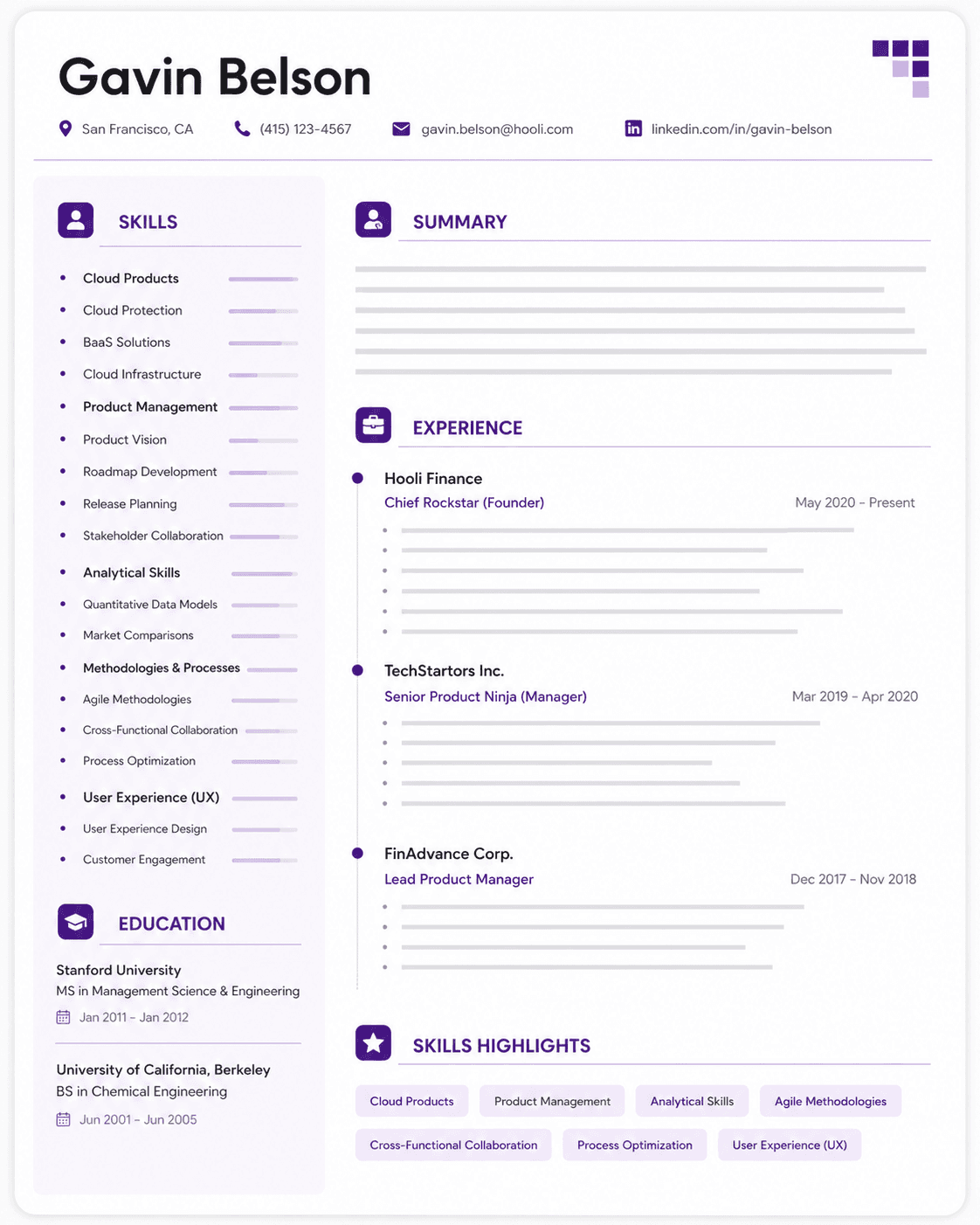
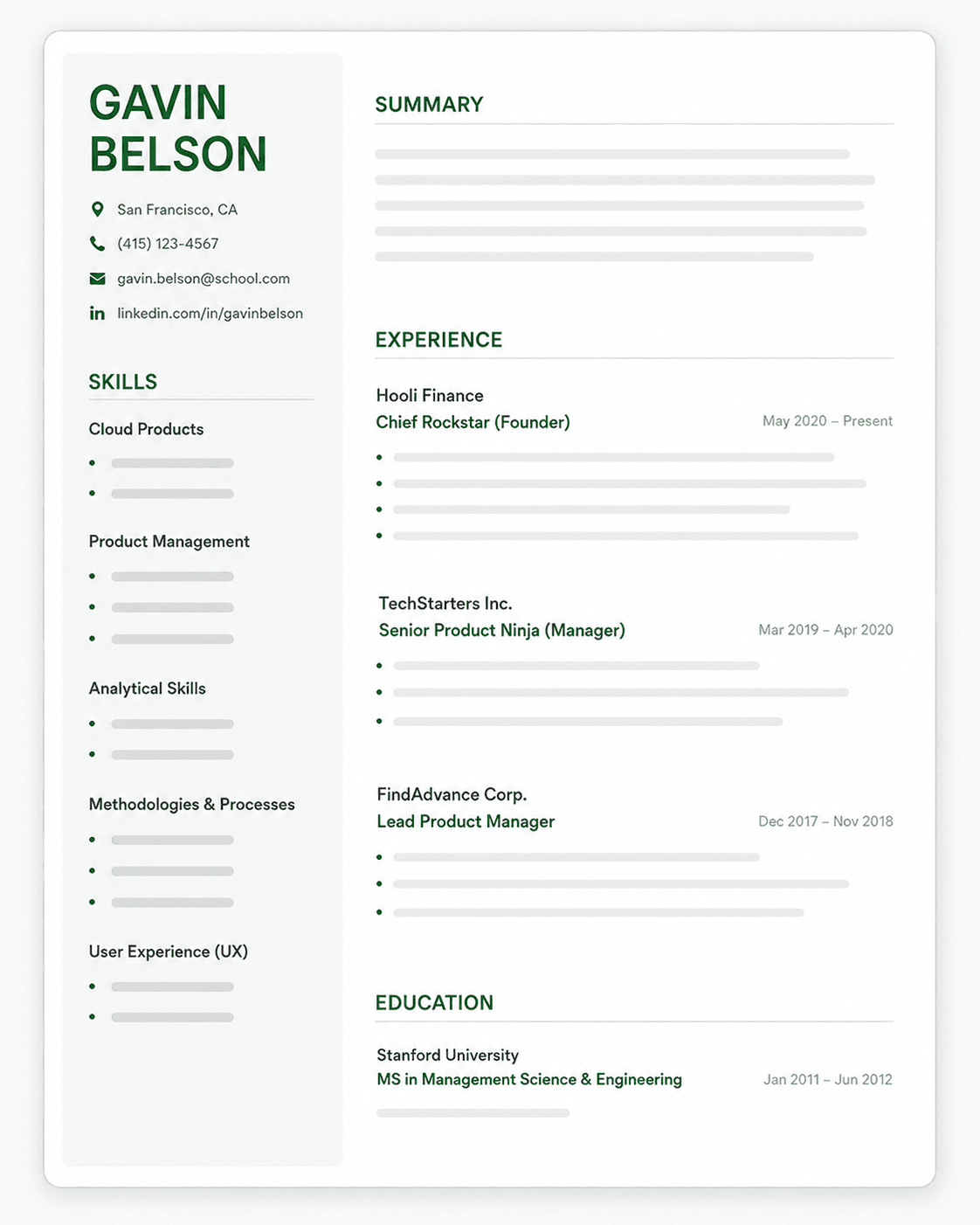
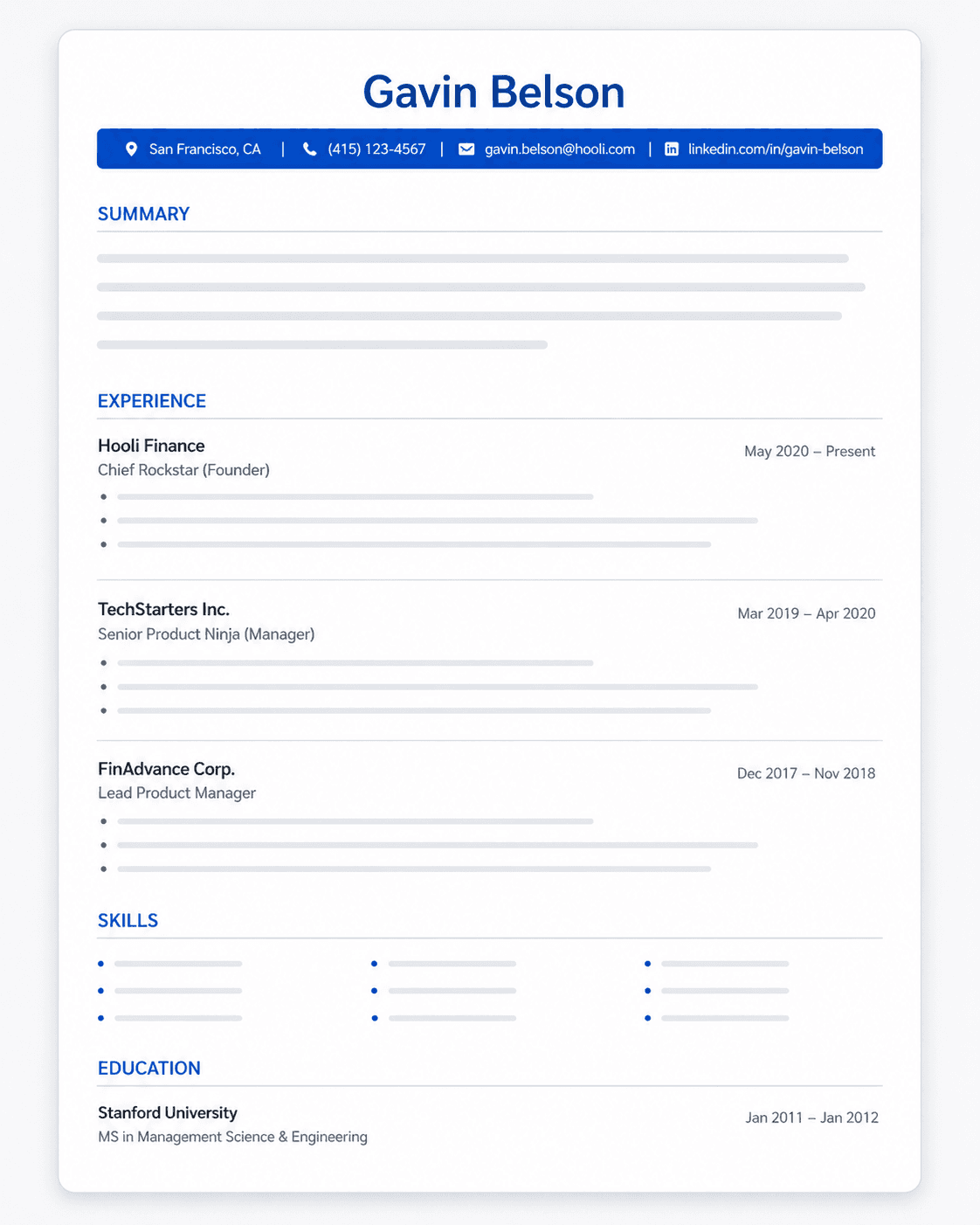
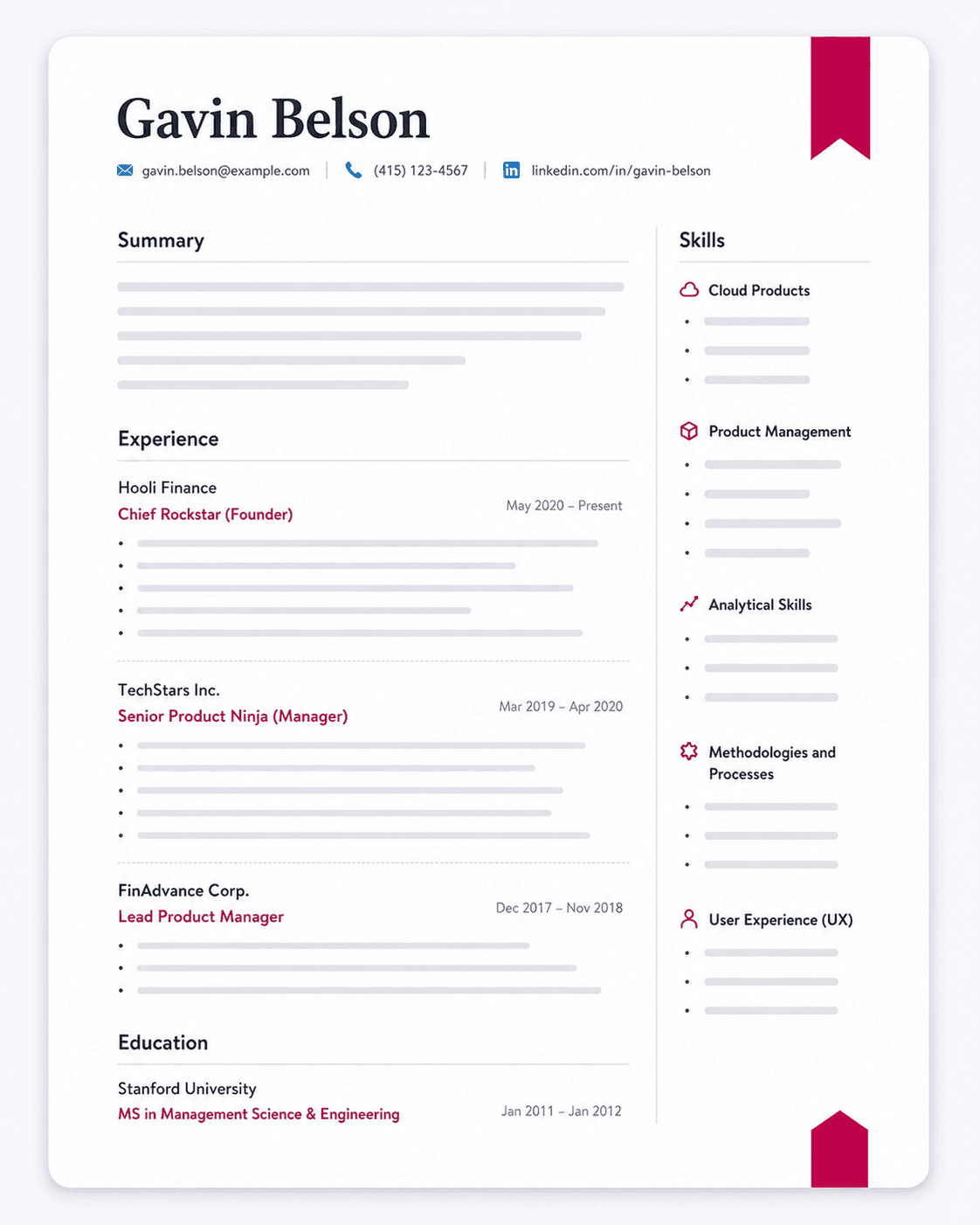
Physician Assistant Resume Example
Entry-Level Physician Assistant Resume Template
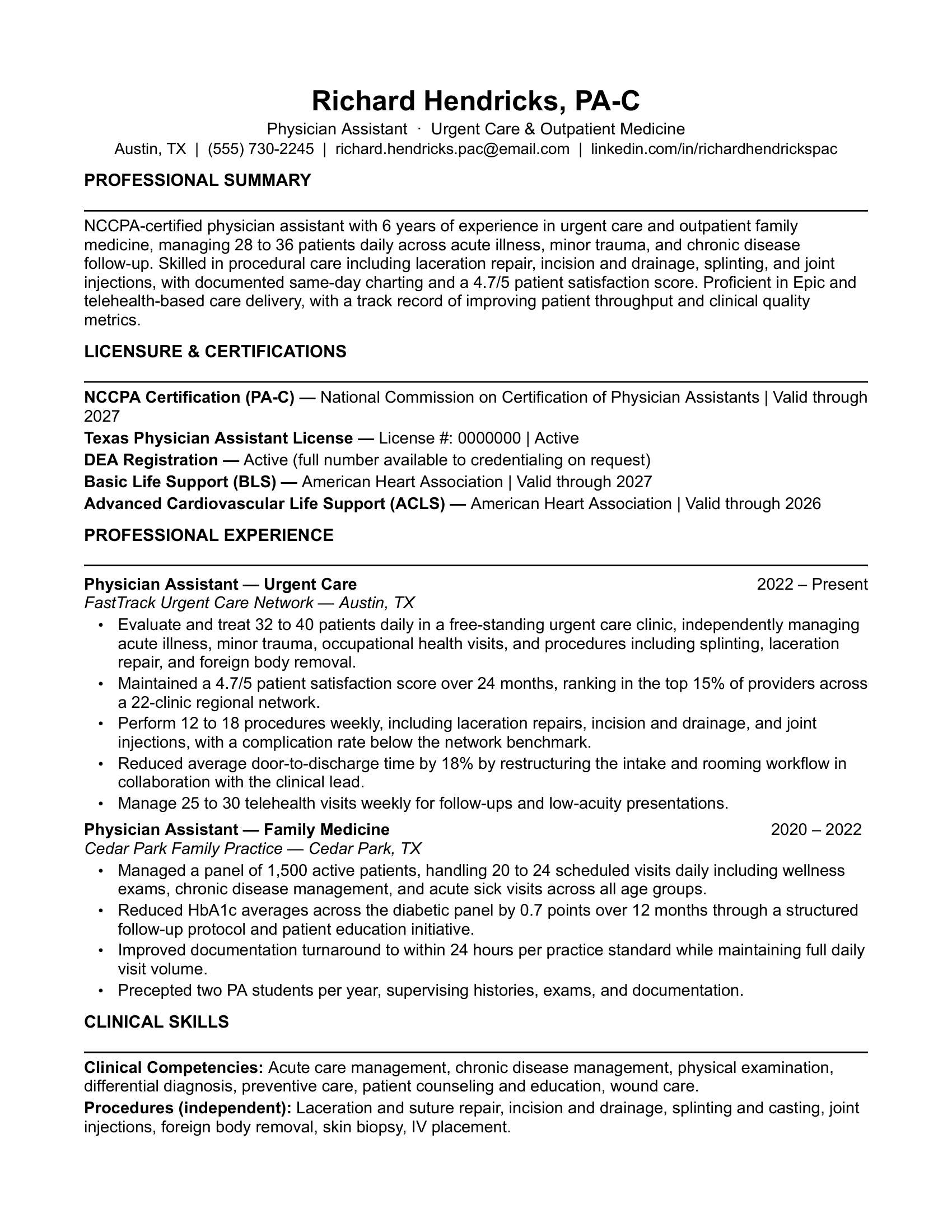
Mid-Level Physician Assistant Resume Template
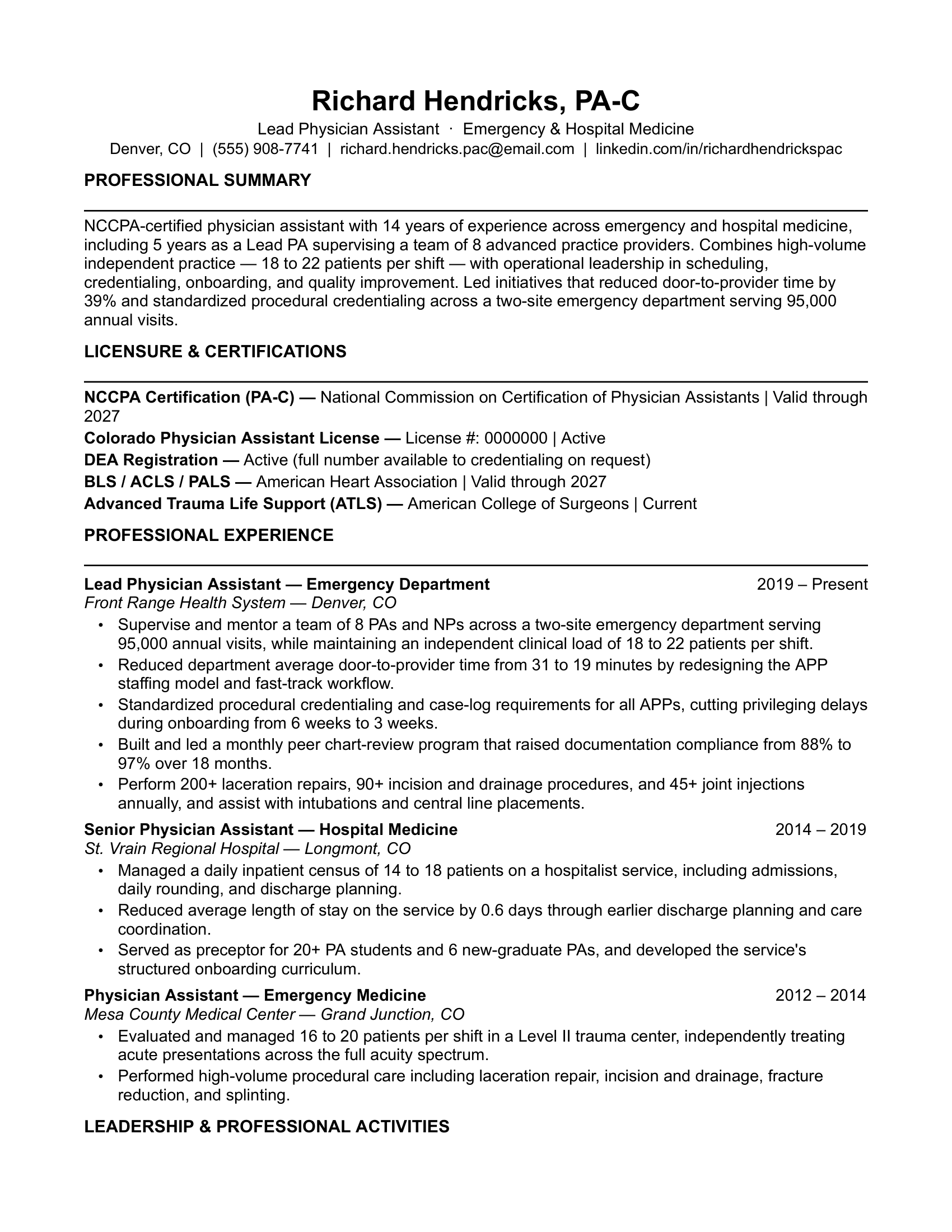
Senior-Level Physician Assistant Resume Template
Common Physician Assistant Resume Mistakes to Avoid
Listing procedures without volume or supervision context
Writing "performed lumbar punctures" without specifying the number performed, the setting, and the level of supervision tells a credentialing committee very little. PA procedure credentialing is procedure-specific and often requires case logs. Be precise about what you did, how often, and under what supervision structure.
Describing clinical duties instead of clinical performance
Bullets like "evaluated patients and developed treatment plans" describe the job function, not your performance within it. Hiring managers want to see patient volume, procedure scope, quality metrics, and patient satisfaction data. Pull those numbers from your EHR or performance reviews before writing.
Using the same resume for every PA specialty
A family medicine role and a surgical subspecialty role are looking for completely different experience profiles. Sending an unmodified resume to both reduces your relevance signal in each. Adjust your summary, your procedures list, and your most foregrounded bullets for the specific specialty and setting you are applying to.
Omitting or burying licensure and certification details
Leaving out expiration dates, license numbers, or certifying bodies creates friction in the credentialing process. Hiring coordinators at hospitals and health systems have to verify these independently if you do not provide them. A complete and current credentials section reduces that friction and signals organizational competence.
Conflating assisted procedures with independent procedures
Performing a procedure and observing or assisting with one are different clinical data points. Credentialing reviewers know this, and the distinction surfaces quickly during the privilege application process. Be accurate about your role in each procedure type.
Ignoring ATS formatting requirements
Hospital system and large group practice job postings often go through ATS before a human reviews them. Creative templates with graphics, multiple columns, or icons may look clean but frequently fail ATS parsing. Use standard fonts, clear section headers, and simple bullet points. If the job description lists specific certifications or EHR platforms, use that exact language in your resume.
Leaving out telehealth or remote patient management experience
Telehealth has become a standard care delivery channel across primary care, urgent care, behavioral health, and chronic disease management. If you have documented telehealth patient volume, list it explicitly. Hiring managers in outpatient settings are increasingly evaluating this as a separate competency.
Why It's Important to Tailor Your Resume for Different Physician Assistant Roles
Physician assistant roles vary significantly across specialties and care settings. An emergency medicine PA role at a Level I trauma center requires a different emphasis than a dermatology role in private practice or a hospitalist position at a community hospital. One weighs procedural volume and triage acuity, another weighs cosmetic procedure experience and patient throughput, and another weighs inpatient management and discharge planning.
Tailoring your resume for each of these manually is slow, and generic resumes in clinical hiring get filtered out quickly, especially when credentialing teams are screening for specific procedures, EHR systems, and licensure.
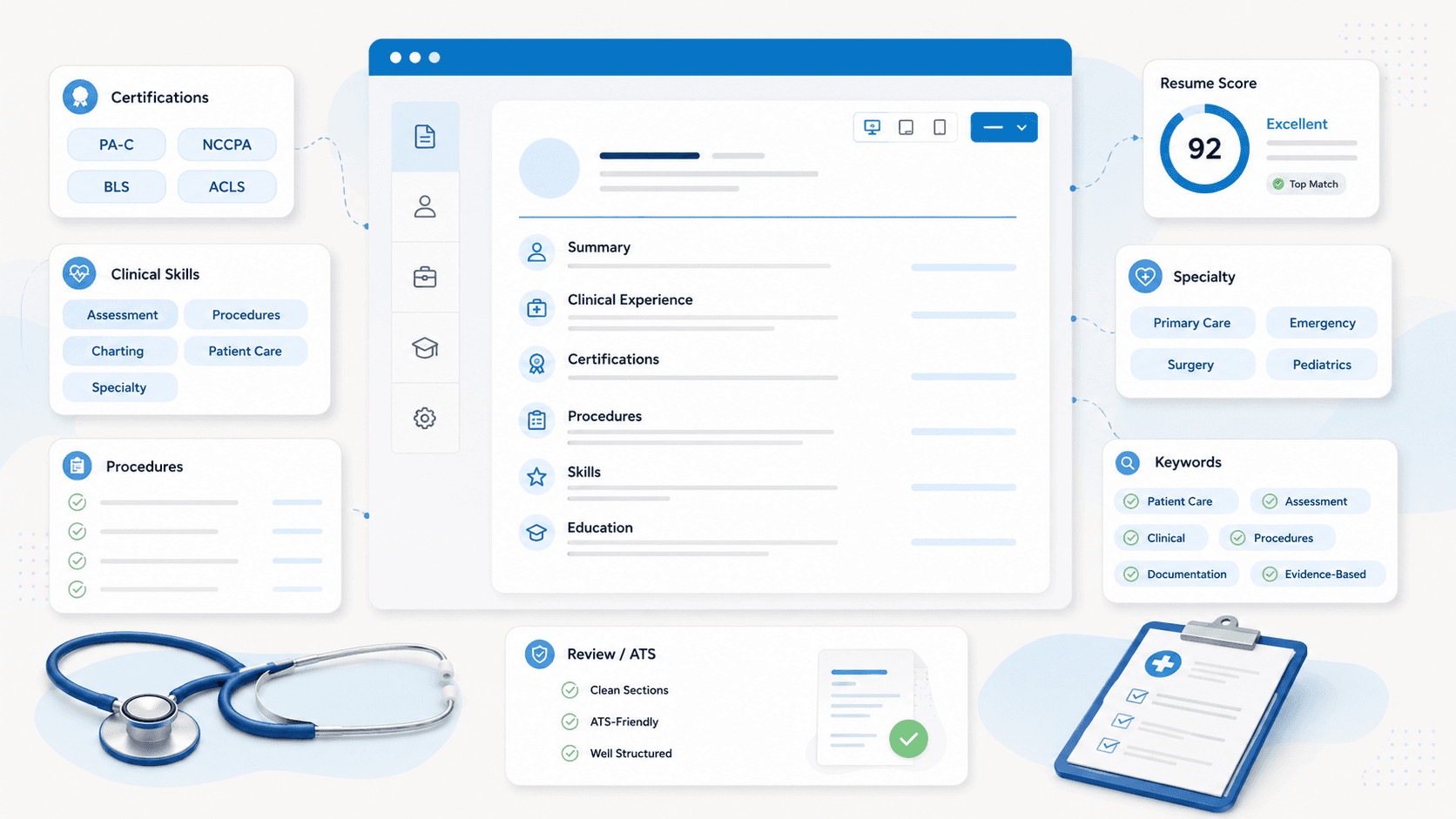
This is where an AI resume optimizer tool like Upplai can help. Here is how Upplai can simplify your search for a suitable physician assistant role:
- Real-time ATS scoring: Upplai updates your ATS score as you edit, so you can see the impact of every change instantly rather than re-uploading your resume each time.
- Transparent suggestions: Every recommendation comes with a clear reason behind it and controls. You can accept or reject it in one click without guessing about the logic.
- Automatic formatting: You get a clean, professionally designed resume without adjusting a single margin or font size after every edit.
- Structure guidance: Upplai guides you on resume writing best practices developed by recruiters and resume coaches — when to use a summary versus an objective, where to place your licensure and certifications, which clinical rotations to keep, and how to order your experience based on your specialty focus. It also flags content that can lead to potential recruiter bias.
- Preference memory: Your procedural logs, patient volume metrics, section ordering, and formatting choices carry over each time you apply somewhere new, saving you hours in your job search.
If you are worried about getting trapped in subscription fees, Upplai's pricing is straightforward. You get 200 ATS scores per month, three tailored resumes, and unlimited downloads with no credit card in the free plan. If you need additional resumes, you can pay $0.50 or $1.00 each with no subscription attached.