Every other applicant for your next daycare job holds the same CPR card and likely the same CDA status you do. That credential gets you into the applicant pool, but it doesn't tell a director which room you can actually run.
A daycare teacher resume works when it proves that instead of just claiming it: credentials stated plainly with status and dates, an age group and ratio named in every line, and bullets that carry real numbers from your actual classroom.
This guide covers where your credentials block belongs, how to write a summary and bullets a director can verify, how centers read an active, in-progress, or lapsed CDA, and the mistakes that get a qualified candidate passed over.
What Daycare Directors Look For First on Your Resume
A daycare director is filling a specific room at a specific ratio, and your resume gets read against one question first: can you legally count toward that ratio today. That means your credentials, your background check status, and the age group you've actually worked with get checked before anyone reads your summary line.
Every licensed center keeps a staff qualification file, and what you put on your resume has to live in that file with documentation behind it. A director who has to defend the center's staffing to a licensing inspector reads an inflated title or a vague credential claim as a future problem. Say exactly what you hold and where it stands.
Age group matters more here than in most jobs. Infant, toddler, and preschool rooms run under different ratios and regulations, so "childcare experience" without ages attached tells a director nothing usable. Name the ages you served every time.
The job title on the posting also signals which pay and education bar applies. Childcare workers earn a median $32,050 a year ($15.41 an hour) with a high school diploma typically enough to start, and the field is projected to shrink 3 percent from 2024 to 2034. Preschool teachers earn a median $37,120 a year ($17.85 an hour), typically need an associate degree, and the field is projected to grow 4 percent over the same span, according to the Bureau of Labor Statistics. A posting titled "preschool teacher" is asking about a different baseline than one titled "daycare teacher assistant."
A CPR card and a CDA on file are table stakes, not what gets you picked. What separates candidates is proof you can run the specific room the director needs filled.
How to Write a Daycare Teacher Resume That Gets Interviews
A director scanning your resume checks three things in order: your legal eligibility to work in the room, the age group and setting you've handled, and whether your bullets prove it with numbers.
Put Your Credentials Where a Director Scans First
Your credentials block belongs in the top third of the page, directly under your summary, not folded into your skills list. A center checks it first, since it decides whether you count toward a classroom's staff ratio at all.
List each credential on its own line with the issuing body, status, and date. "CPR/First Aid, American Red Cross, current through 03/2028" tells a director everything at a glance. "CPR certified" does not.
For anything still in progress, say so plainly: "CDA credential in progress, expected [month/year], 480 experience hours completed" rather than just "CDA." A later section covers how centers read an active, in-progress, or lapsed CDA, so keep this line simple: state where you are.
Add your state's required ECE credit hours the same way ("12 college credits in ECE, completed"), plus SIDS and safe sleep training and medication administration if you hold them. Postings name these explicitly, so name them back.
Write a Summary That Names Ages, Ratios, and Setting
Your summary has to establish three things fast: the age group you serve, the setting and license type (licensed center, Head Start, home-based program), and what you're responsible for at scale, how many children, at what ratio.
A weak summary looks like this:
"Caring and patient daycare teacher with excellent communication skills and a love for working with children."
A stronger one looks like this:
"Toddler room teacher with 2 years in a licensed center, managing a group of 8 toddlers at a 1:4 ratio. Plans and leads daily curriculum activities, sends daily progress reports through Brightwheel, and has passed every state licensing inspection during that time."
If you're moving from babysitting, a practicum, or another field, use an objective instead of a summary. Name the role you want and the real experience behind it.
Career-changer objective example:
"Early childhood education graduate seeking an infant room teacher position, bringing 300+ hours of practicum experience with children ages 6 to 18 months and a current CDA credential in progress."
Build a Skills Section Around Care Routines, Curriculum, and Compliance
Group your skills instead of listing them flat, so a director scanning quickly finds compliance, classroom ability, and daily routines.
- Certifications & Compliance: CPR/First Aid, SIDS and safe sleep training, medication administration, background check clearance, Title 22 (or your state's code)
- Classroom & Child Development: Developmental milestone tracking, curriculum planning, positive guidance, lesson planning for ages 6 weeks to 5 years
- Care Routines: Diapering, feeding and nap schedules, transition routines, supervision at licensed ratios
- Family Communication & Documentation: Daily reports via Brightwheel, parent conferences, incident documentation
List only what you can do without supervision, not routines you've only watched. Mirror the posting's wording, and when it names a state licensing code, such as Title 22 in California, repeat that exact term.
Write Experience Bullets That Carry Numbers
Every bullet follows one formula: action verb, specific task, quantifiable result or scope.
Weak: "Responsible for a group of toddlers and daily activities."
Strong: "Led daily curriculum for 10 toddlers at a 1:4 ratio, sending progress reports to 10 families through Brightwheel and completing 3 licensing inspections with zero citations."
Infant room teacher
- Cared for 8 infants at a 1:4 ratio, tracking feeding and nap schedules and sending daily Brightwheel reports.
- Maintained 14 incident-free months across 2 licensing inspections with zero citations.
Toddler room teacher
- Managed a classroom of 10 toddlers at a 1:4 ratio, planning and leading 4 curriculum units per quarter.
- Screened 12 children on developmental milestones each term, flagging concerns early to families and the director.
Preschool / pre-K lead teacher
- Directed daily activities for 16 preschoolers at a 1:8 ratio, maintaining 95% family retention over one year.
- Planned and delivered 6 curriculum units per semester, passing 4 consecutive licensing inspections.
Floater or assistant teacher
- Covered ratios across infant, toddler, and preschool rooms, serving up to 24 children daily.
- Filled in for 3 classrooms per week during shortages, holding ratio compliance with zero incidents.
Without a clean metric, quantify scope: group size, age range, or families reported to weekly. Forgotten numbers sit in your center's licensed capacity, your ratio, your roster, or your Brightwheel report count.
Turn Babysitting, Practicum, and Nursery Hours Into Real Experience
If your hours came from babysitting, a church nursery, camp, or a practicum, title the role honestly: "Family Childcare Provider," "Private Nanny," or "Practicum Student, [School Name]." An inflated title like "Lead Teacher" gets caught in the interview.
Count real hours and name the ages you cared for. "Practicum student, 300 hours with children ages 2 to 4" is experience a director can weigh. Church nursery and camp counselor work counts too, with the organization name and weekly hours.
Do not claim ratios or licensing responsibility you never held as an unpaid caregiver. Claim what you did: routines you ran, ages you served, and hours you logged, which the CDA Council can count toward its 480 experience hours later.
Active, In Progress, or Lapsed: How Centers Actually Read Your CDA
Most resume guides tell you to "list your CDA" and stop there. A director reads "active," "in progress," and "lapsed" as three different hiring signals, and postings do ask for an active Child Development Associate credential by name, sometimes requiring it outright rather than preferring it. Writing your CDA the way you would write a college degree, as a done-and-permanent fact, hides the information a screener needs first.
Earning a CDA takes 120 clock hours of professional early childhood education, with 10 hours in each of the eight required subject areas, plus 480 hours of work experience with children in the age group your CDA application names. Once you're cleared for the Verification Visit, you must schedule and complete it within six months of the Ready to Schedule notice, or the application fee is forfeited and the candidate record closes. After award, the credential is valid three years, and renewal opens only 90 days before it expires, according to the CDA Council's official steps to obtain a CDA credential.
How you write the line depends on which stage you are in. If it is active, name the issuing body and the award or expiration date. If you are still working toward it, list completed hours and an expected date rather than implying it is awarded. If it has lapsed, do not list it as current; write its actual renewal status.
The age-group mismatch deserves the same honesty. An infant/toddler CDA doesn't satisfy a preschool posting's requirement, because the 480 experience hours behind it were logged with a different age group. Name the age group your hours actually covered: "480 experience hours with infants and toddlers, ages 6 weeks to 3 years."
Head Start adds one more wrinkle worth knowing: assistant teachers there must hold a CDA or be enrolled in a program to finish within two years of hire, per 45 CFR 1302.91(e)(3), which makes "enrolled" a legitimate, listable status there.
Active: CDA Credential, Council for Professional Recognition, active through 09/2027
In progress: CDA Credential in progress, 90 of 120 training hours complete, 480 experience hours complete, expected 03/2027
Lapsed: CDA Credential, Council for Professional Recognition, awarded 2022, renewal application submitted
Daycare Teacher Resume Examples
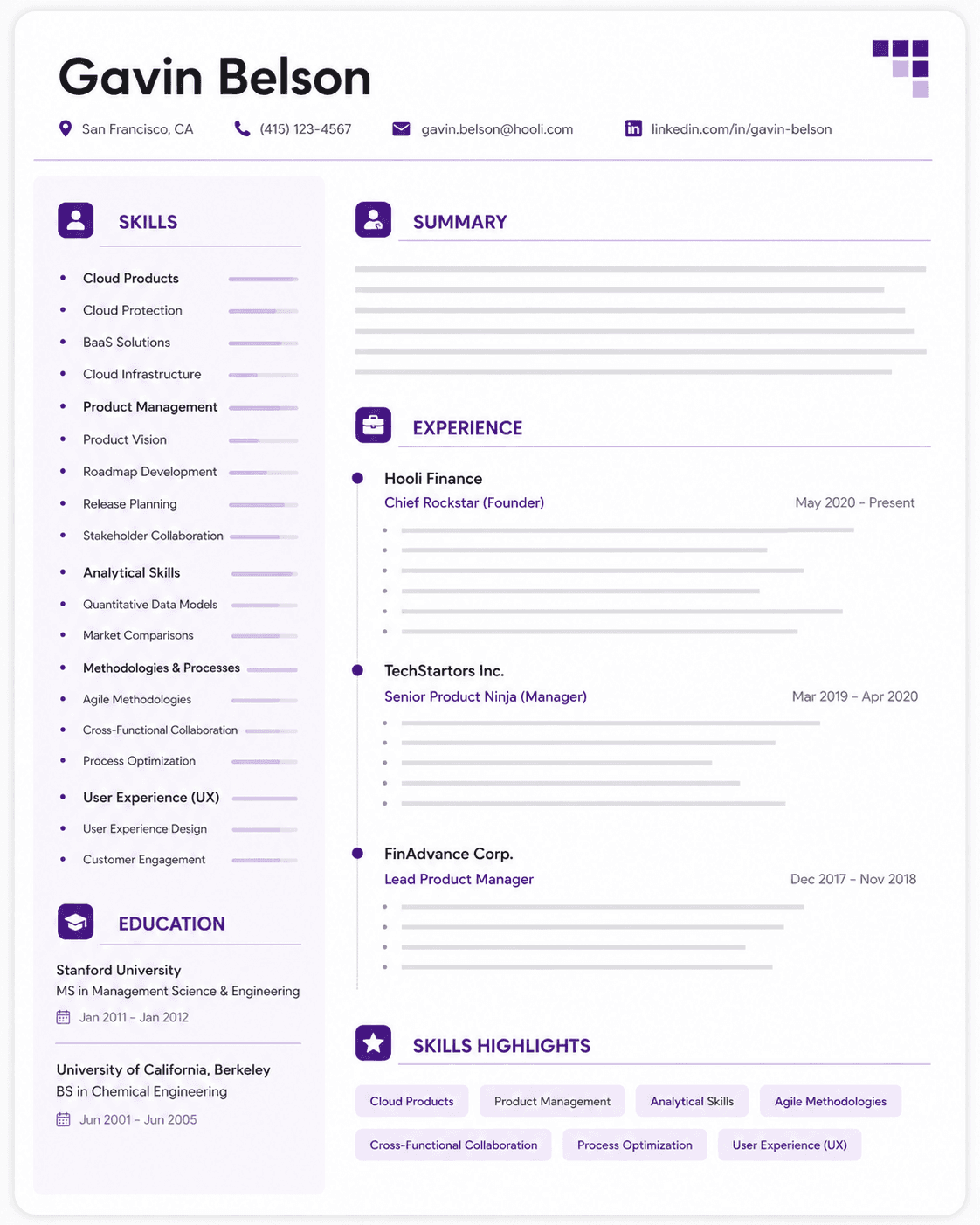
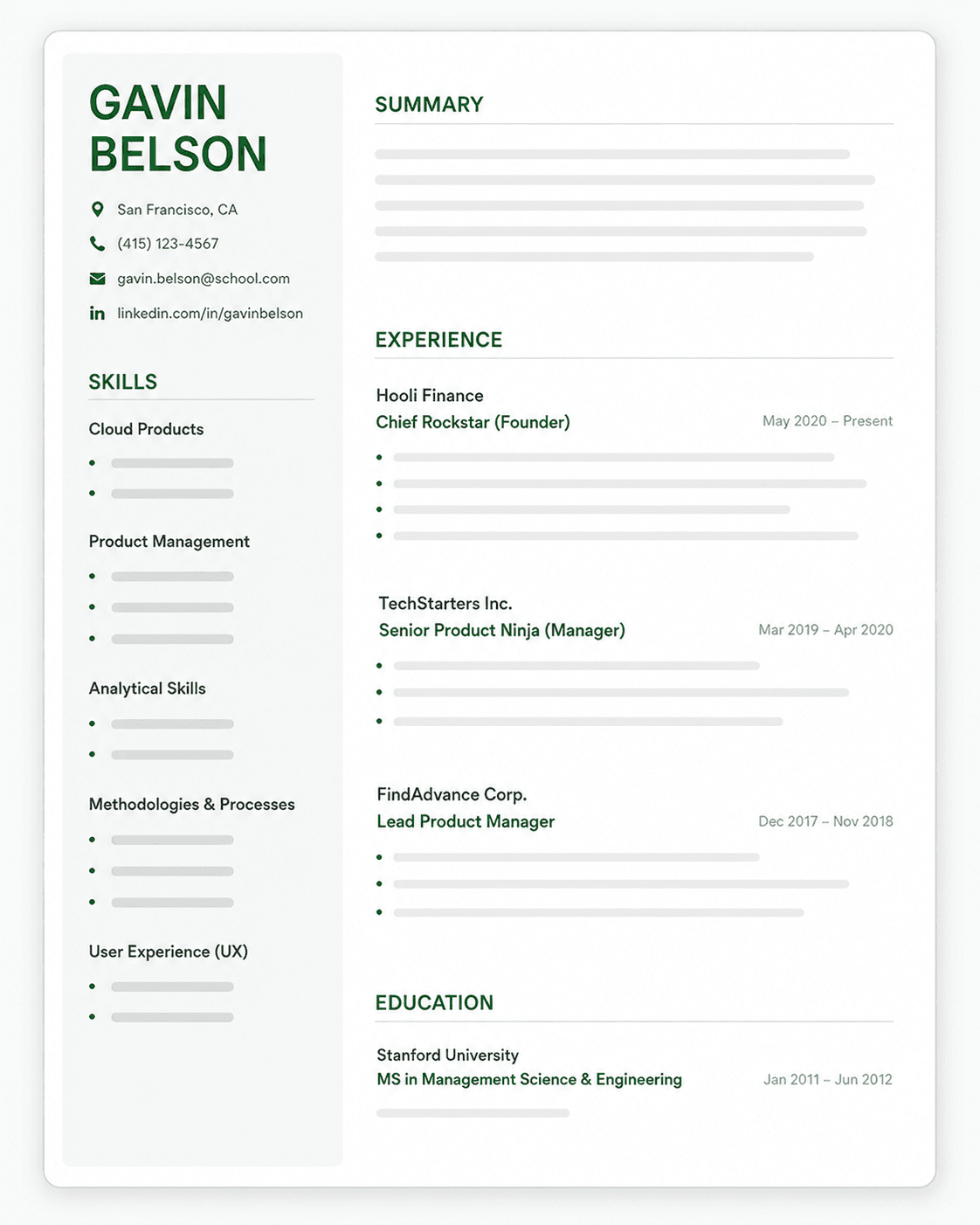
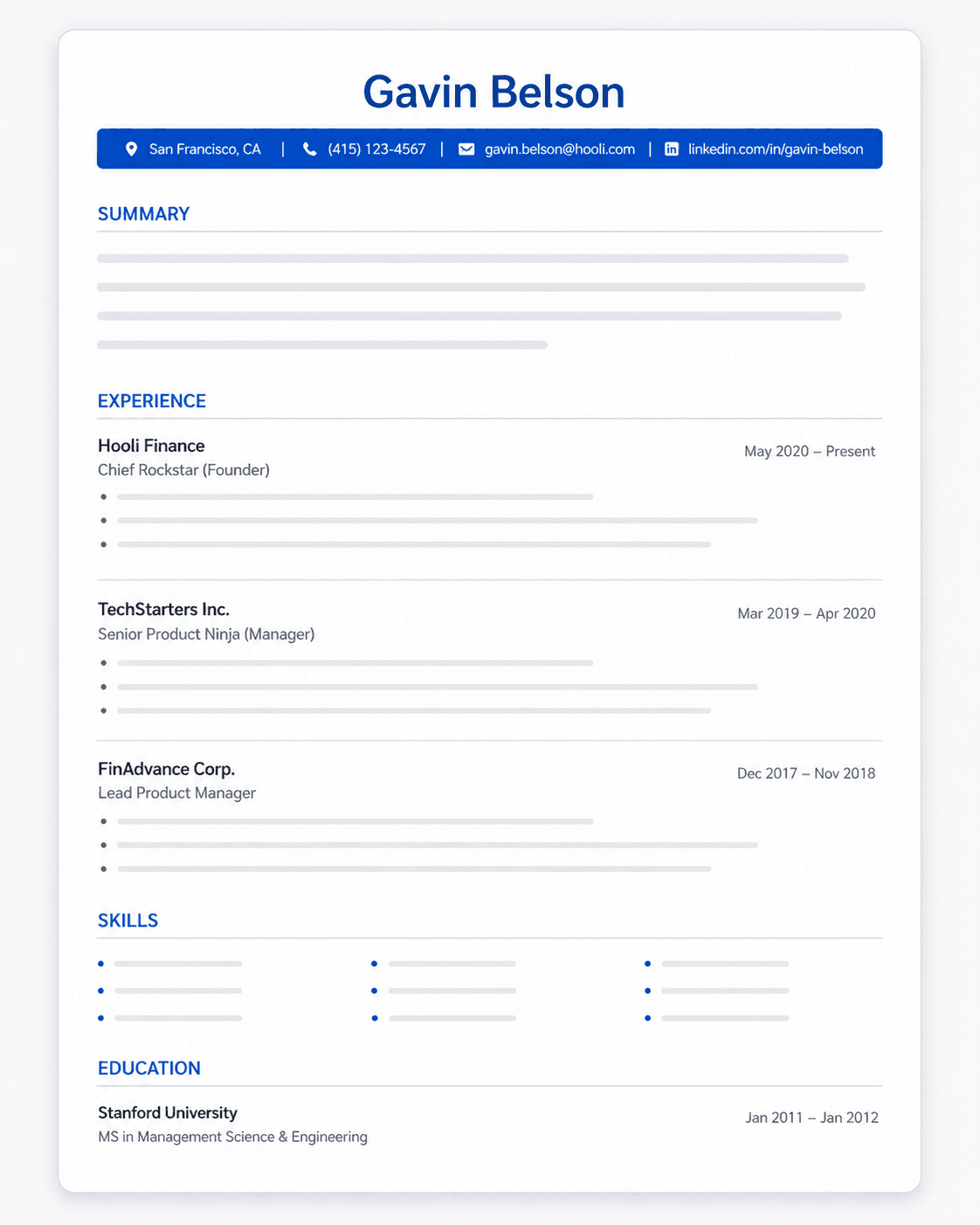
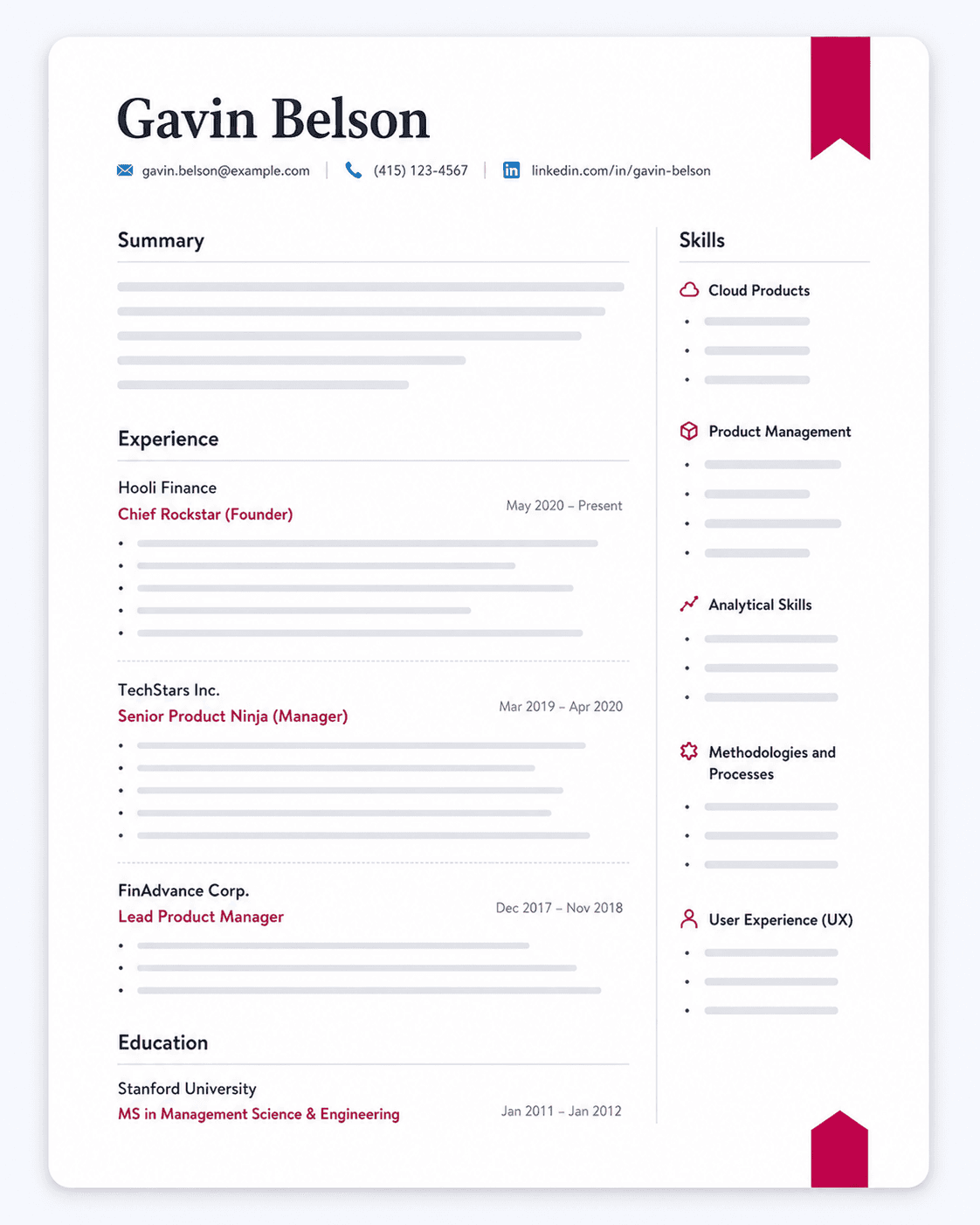
What belongs at the top of your resume changes as you move from your first classroom hours to running a room of your own. Match the version closest to where you actually stand.
Entry-Level Daycare Teacher Resume
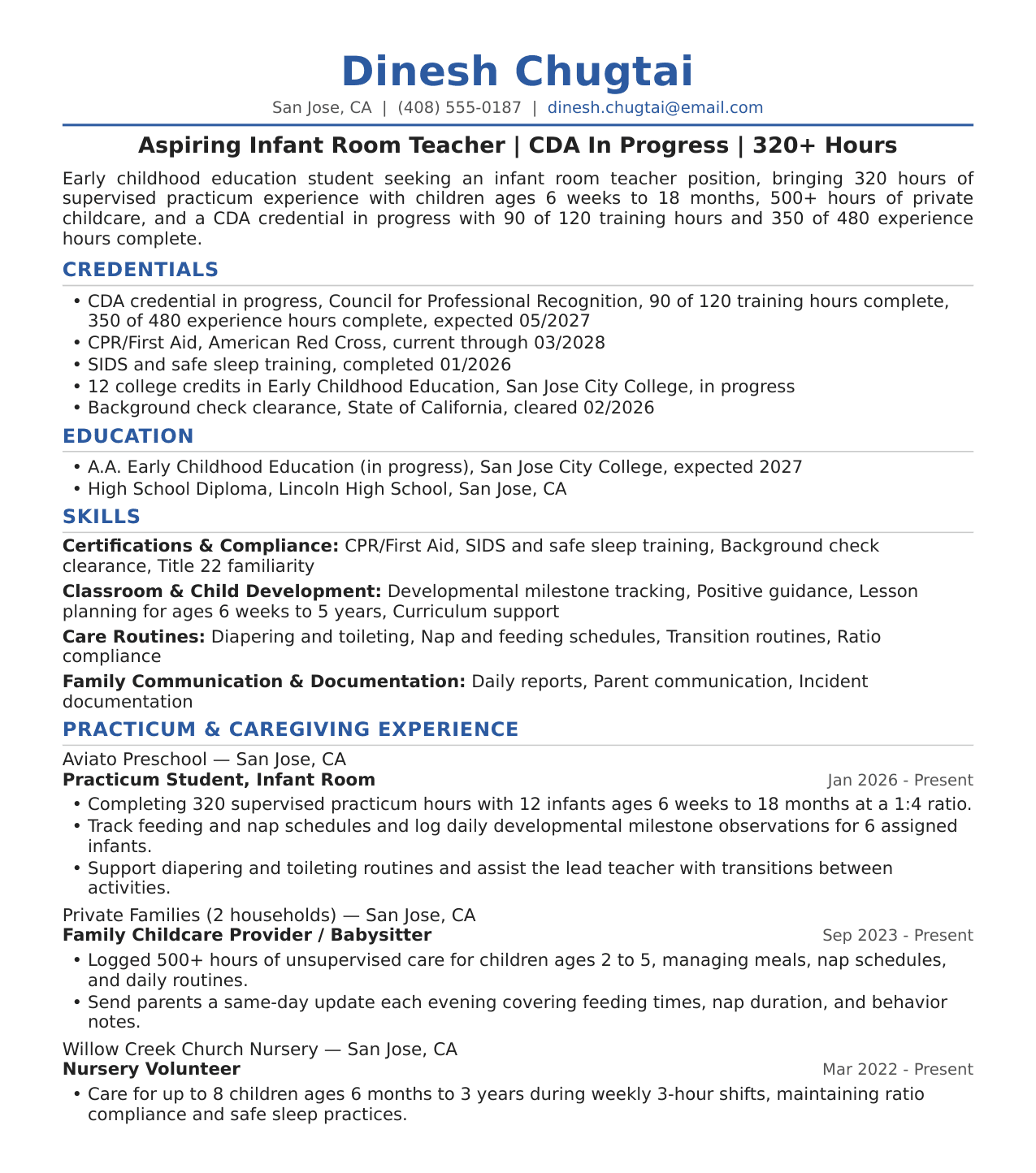
Lead with your credentials block and an objective, since you have no center job to summarize yet. State your CDA status plainly (in progress, hours completed, or not started) and name the ages you have cared for, whether through a practicum, babysitting, or a church nursery. Replace any inflated title with an honest one, and let logged hours carry the weight a work history would. This resume proves you already know the routines and ratios a room runs on, even without a paycheck behind them.
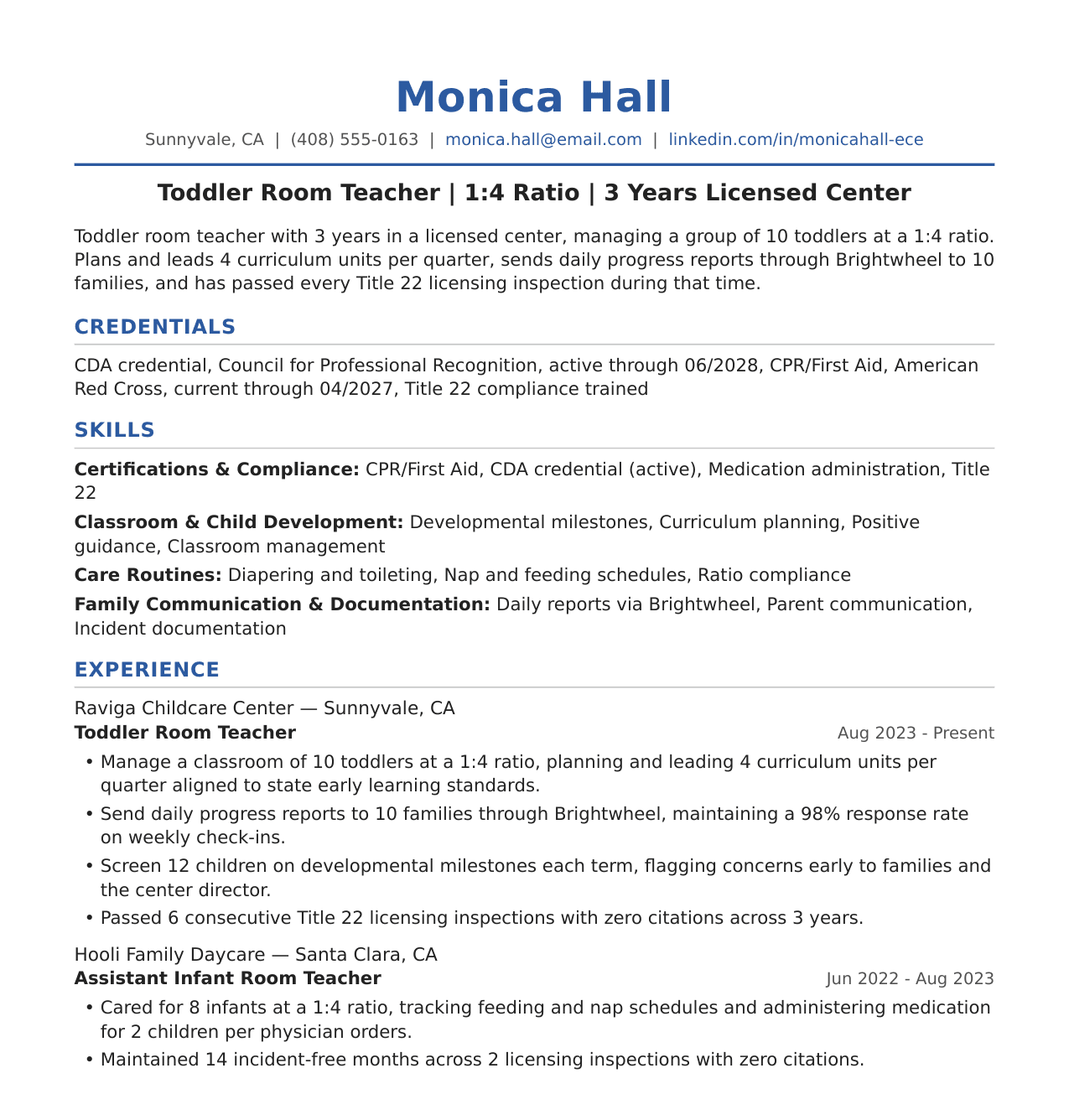
Experienced Daycare Teacher Resume
Lead with a summary naming your age group, ratio, and setting, replacing the objective now that you have a real classroom to describe. Credentials still sit near the top, but shrink to a line or two since they're established. Bullets should carry group size, curriculum units planned per term, licensing inspections passed, and how many families you report to weekly. This resume proves steady, documented performance in a licensed room, not just eligibility to work in one.
Lead Teacher Resume
Lead with classroom ownership: staff you mentor, curriculum decisions you make for the room, and any registry level or degree that qualifies you for the title. Bullets should name assistants or floaters you've trained, enrollment or family retention figures, parent conferences led, and a clean inspection record across multiple visits. This resume proves you can run a room, not just work in one, so scope and outcomes replace the task-level detail earlier versions relied on.
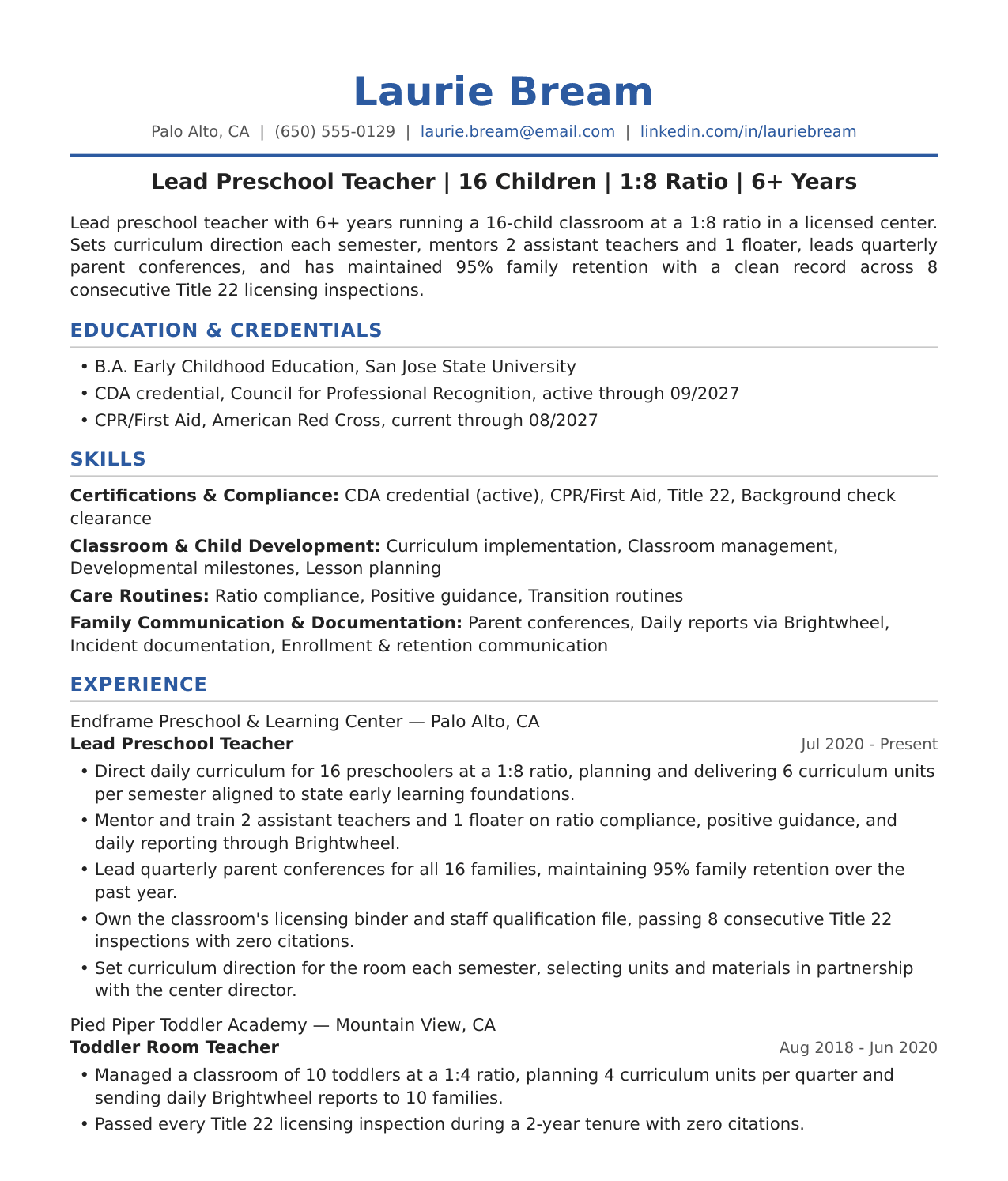
All three share the same backbone: credentials, age group, ratio, and setting, stated plainly. What shifts is scope. If you sit between two levels, say two years in with no direct reports yet, borrow the experienced version's summary structure and keep leadership claims specific rather than reaching for a title you haven't held.
Daycare Teacher Resume Keywords
Terminology carries real weight in this field because postings repeat the same compliance and age-group vocabulary, and centers screen resumes against staff qualification requirements before a director ever reads them. Learn how applicant systems parse that vocabulary in our guide to ATS resume keywords. The table below carries the vocabulary itself; your bullets carry the ratios, group sizes, and other numbers that prove you can back it up.
| Category | Keywords |
|---|---|
| Certifications and compliance | CPR and First Aid certified, CDA credential, SIDS and safe sleep training, medication administration, background check clearance, Title 22 |
| Education and experience thresholds | ECE college credits, associate's or bachelor's degree in Early Childhood Education, high school diploma or GED, 90 clock hours child development and curriculum, lead teacher experience, licensing regulations |
| Classroom and child development | Developmental milestones, lesson planning, curriculum implementation, classroom management, positive guidance, infant and toddler care |
| Care routines and family communication | Diapering and toileting, nap and feeding schedules, parent communication, daily reports, ratio compliance, Brightwheel |
Use these terms the way the posting uses them. If a listing says Title 22, write Title 22, not "state licensing code." Only claim a term you hold; an in-progress CDA reads differently than an active one. Place each term inside a credential line or a bullet where a director can verify it, rather than stacking every keyword into one block at the bottom of the page.
The Paperwork Running Behind Your Application: Background Checks and State Registries
A daycare hire depends on records you do not hold and cannot rush. Federal rule requires every licensed program to run a comprehensive background check on new staff: state and FBI fingerprint criminal history checks, a National Crime Information Center sex offender registry search plus a state sex offender registry search covering your current state and every state you lived in over the previous five years, and a state child abuse and neglect registry check, alongside reference checks and an in-person interview, per the ACF Child Care Technical Assistance Network's background screening guidance. Programs must redo the full check at least once every five years, and the initial screening has to close within 45 days of hire. A clean check from your last center doesn't reliably carry over to a new employer or a new state; expect to start the process again.
Two practical moves follow. List references who will actually pick up the phone, a former director rather than a parent, and keep your credential documents ready to hand over. Expect the check to run alongside your interview rather than after an offer lands. Candidate reports from franchise centers describe background checks starting inside the interview stage, and the interview itself can include a facility tour and time observing a classroom.
A second layer sits behind the resume entirely: state professional development registries. In Ohio, anyone working in a Step Up To Quality rated program must join the Ohio Professional Registry, which tracks experience, education, credentials, and training through a Career Pathways Model that assigns points toward a level. Education has to be verified in the Registry before a Step Up To Quality visit, and programs are advised to submit verification documents at least four months ahead. Other states run similar registries under their own names. Get your state's registry profile current before applying to a quality-rated center: your registry level, not your resume, is what counts toward staff qualifications.
Common Daycare Teacher Resume Mistakes to Avoid
Listing Duties Instead of What Changed in the Room
"Prepared meals" and "supervised children" describe a shift, not a skill. Center owners discussing resume wording note that flat duty lists read as unskilled, while "prepared nutritious breakfasts, lunches, and snacks for a group of 12 children" signals someone running a room. Attach a group size, an age range, or a routine you own to every line.
Sending the Same Resume to an Infant Room and a Pre-K Posting
One generic resume ignores that ratios, licensing rules, and daily routines differ by age group. An infant room resume should lead with feeding schedules and 1:4 ratios; a pre-K resume should lead with curriculum and 1:8 or higher ratios. A director hiring for a specific room needs to see that room's language on page one, not a catch-all summary written to fit every opening at once.
Writing "Childcare Experience" Without Naming Ages or Ratios
"Childcare experience" could mean one afternoon babysitting or two years running a licensed classroom. Directors read it as a placeholder for missing detail, It also hides operational skills candidates actually have, such as budgeting, staff scheduling, and licensing compliance. Name the ages, the ratio, and the setting every time.
Burying or Vaguely Listing Credentials
A CPR card mentioned mid-sentence in a skills list, with no issuing body or date, forces a director to guess whether it's current. The same goes for a CDA listed with no status. Credentials decide staff ratio eligibility, so they need their own block near the top, each on its own line: issuing body, status, and date.
Claiming a Title or Responsibility Your Staff File Can't Document
Listing "Lead Teacher" for unpaid babysitting, or claiming ratio or licensing responsibility you never held, surfaces the moment a director checks your qualification file or asks a follow-up question in the interview. Title the role honestly and claim the hours and ages you actually logged.
Formatting That Breaks an ATS
Tables and columns hiding your credentials block, a headshot, a graphic ratio chart, or headers set in text boxes can get skipped or scrambled when a system parses your file. Exporting a PDF when a posting asks for .doc causes the same failure. Keep the credentials block in plain text and match the file format the posting requests.
How AI Resume Builders Can Simplify Your Daycare Teacher Resume
Every center posting names its own mix of required credentials, age-group language, and state licensing codes, so a candidate applying to six centers ends up rewriting the same resume six times by hand. A single generic version, submitted everywhere, tends to get filtered before a director ever opens it.
Upplai, the transparent resume AI, tailors your existing resume to each center's posting and explains every change in plain language so you stay in control.
- Real-time ATS scoring: watch your ATS and recruiter scores update as you edit, before you submit.
- Transparent suggestions: accept or reject every change individually, each with a plain-language explanation, with nothing invented on your behalf.
- Automatic formatting: clean, ATS-friendly formatting applied across multiple templates, so a director's system reads your ratios and credentials correctly.
- Structure guidance: recommendations based on recruiter best practices, including bias flagging.
- Preference memory: your formatting, metric, and reordering choices persist across sessions, so each new center application goes faster.
The free plan gives you 200 ATS scans and resume match scores per month plus 3 tailored resumes with matching cover letters as a one-time allotment, unlimited downloads, and no credit card required. Additional resumes cost $0.50 to $1.00 each depending on pack size, with no subscription.
Ready to tailor your daycare teacher resume?
Upload your resume and a job posting to see your ATS score and tailored suggestions in minutes.