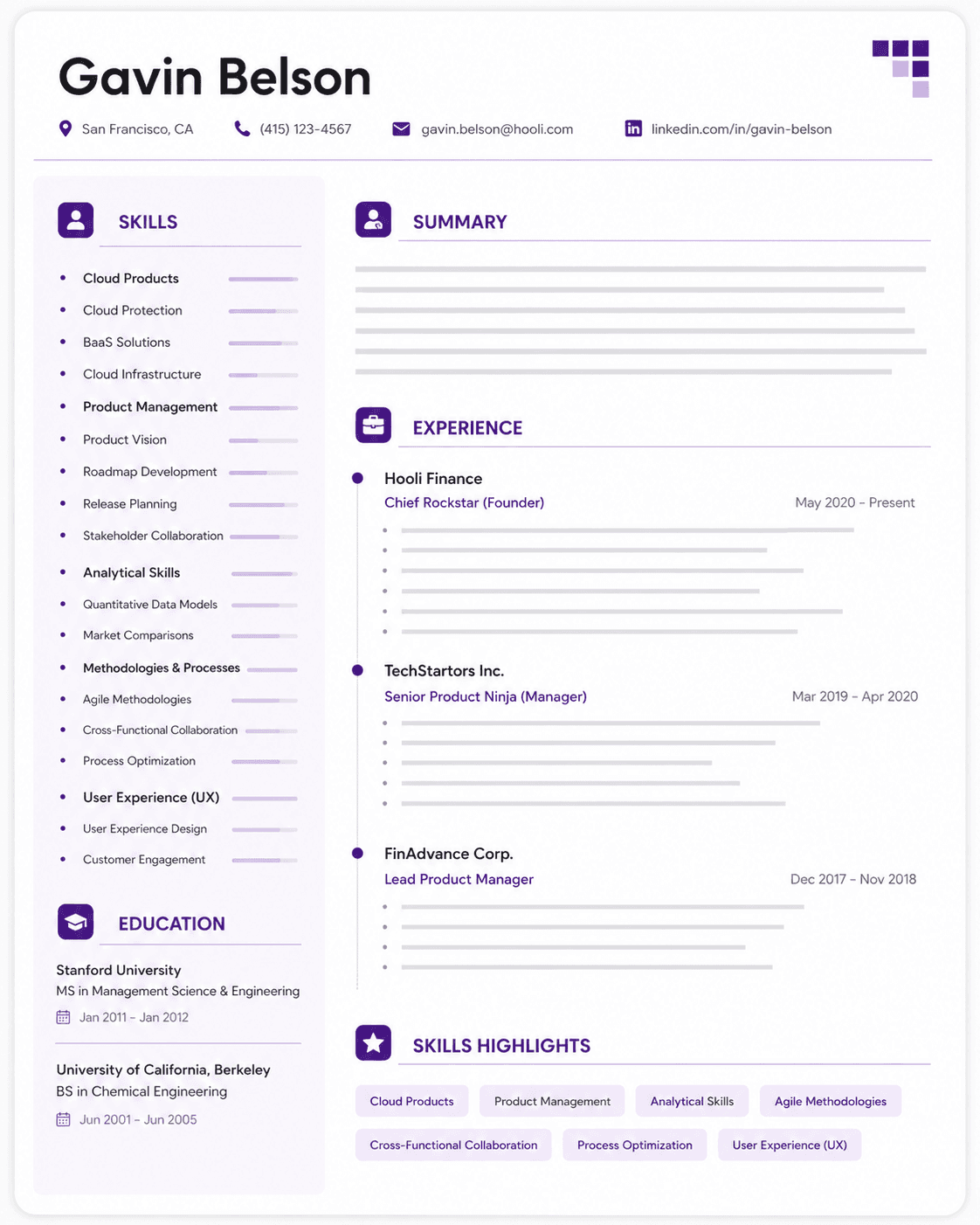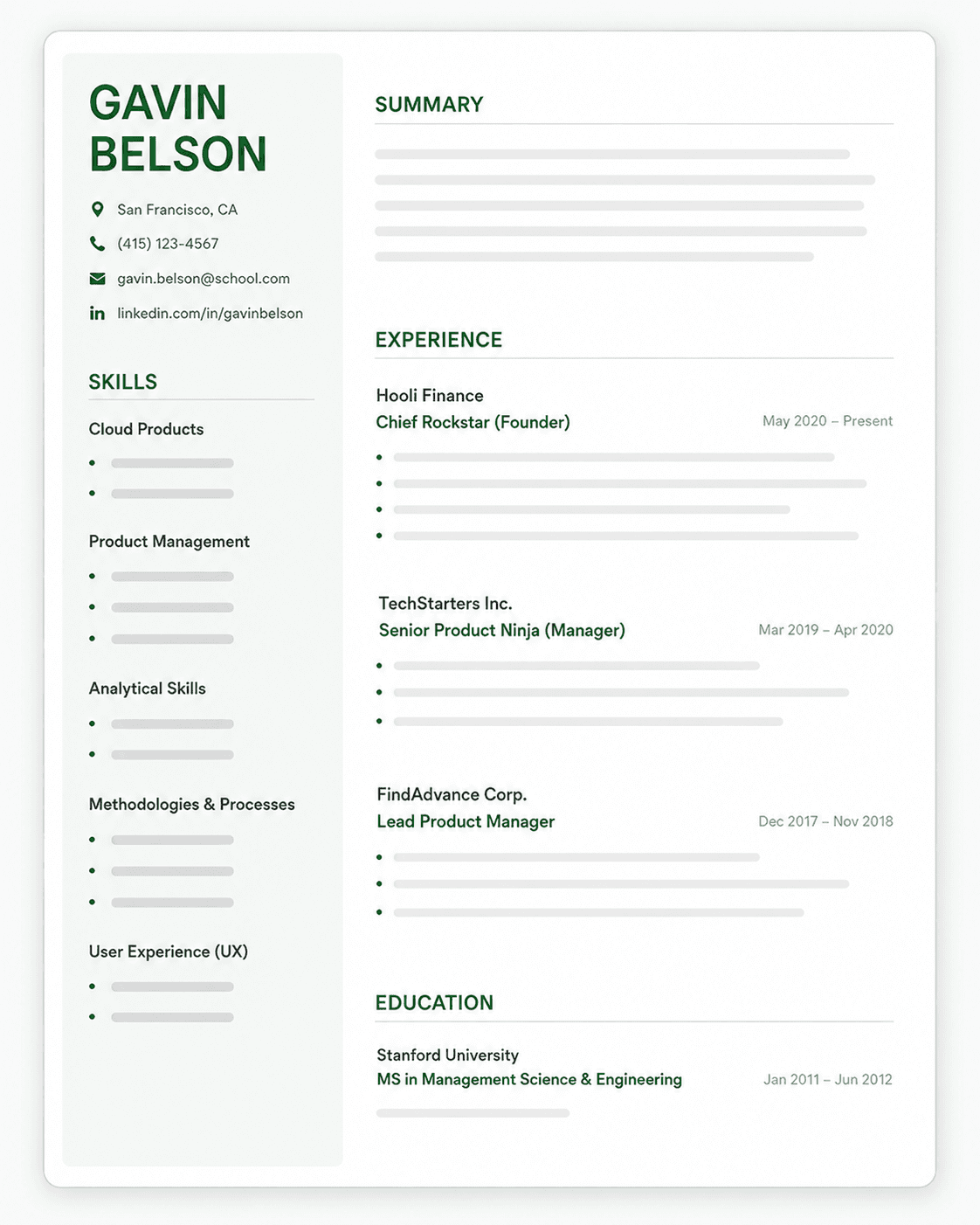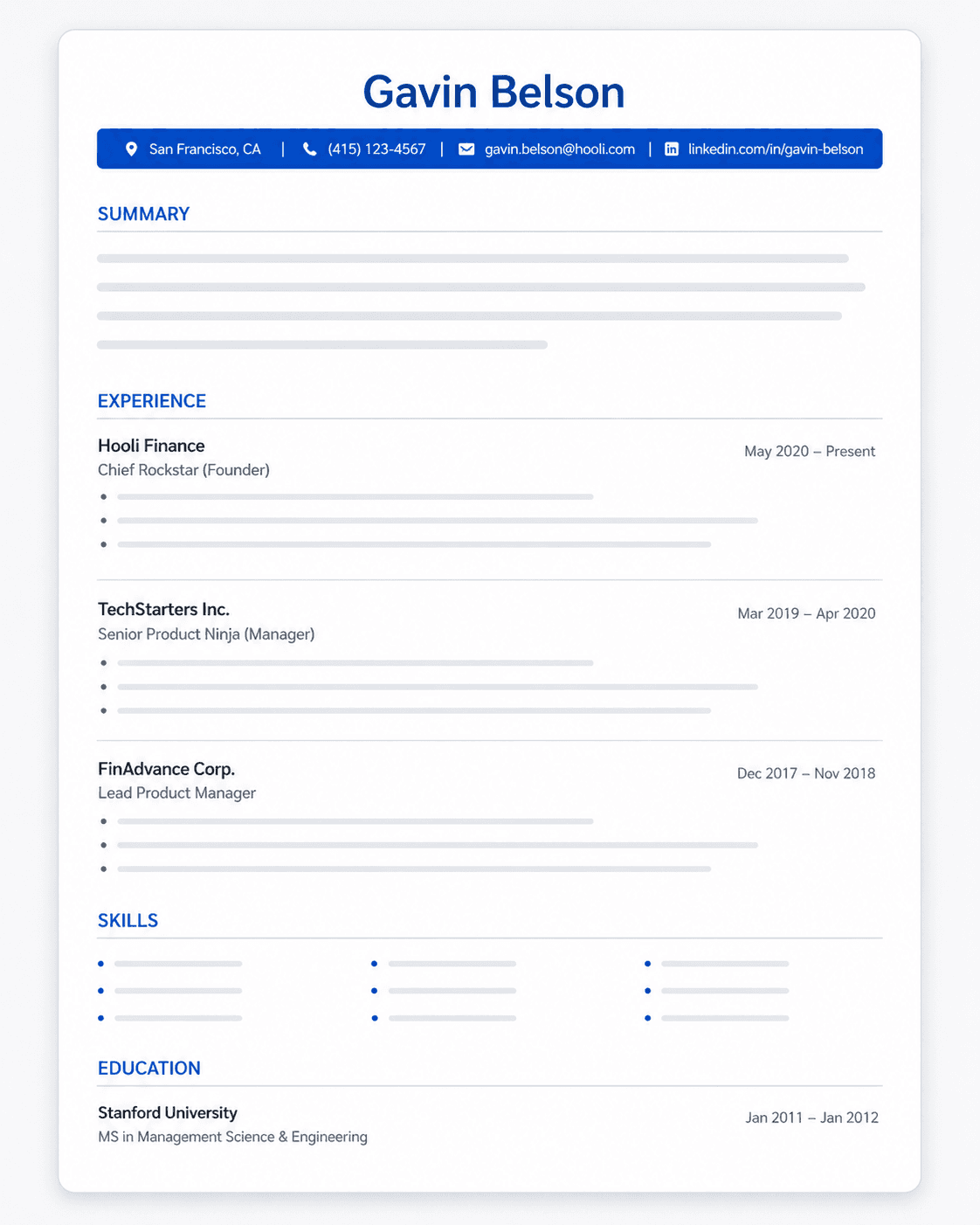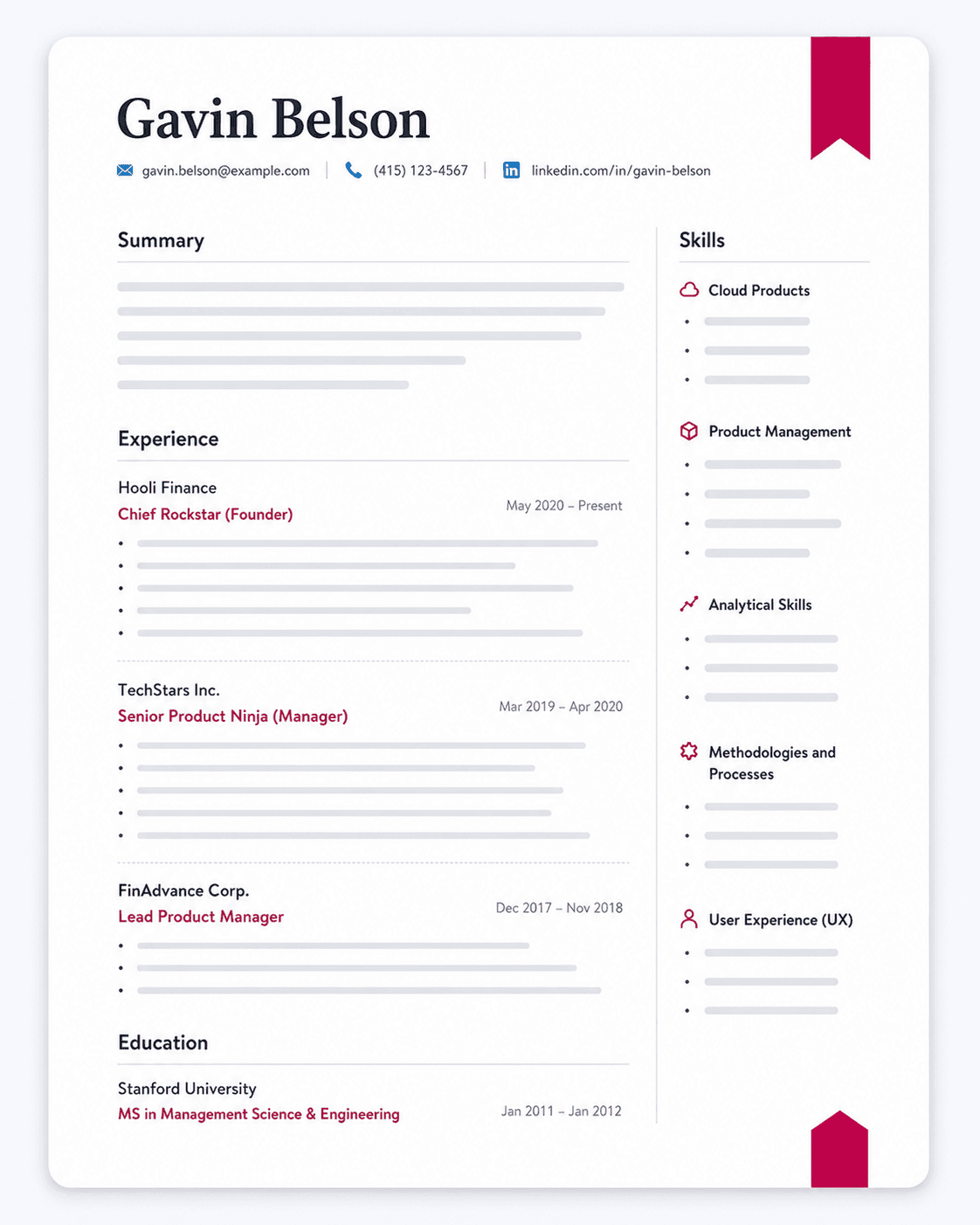
Most production assistant resumes look the same, and that's not a coincidence. The role is one of the few in the industry that requires no formal experience, so nearly everyone applying is making the same case: eager, hardworking, ready to learn. When every resume says that, none of them say anything.
Specificity is the differentiator, and it looks different depending on where you're applying. A scripted set wants crowd control and call sheet fluency. A live broadcast wants someone who can track rundown changes without missing a cue. A corporate shoot wants professionalism around non-industry talent. A production office wants scheduling and vendor coordination.
These are not interchangeable jobs, and a single generic resume rarely fits more than one.
This guide covers every section of a PA resume, including the summary and formatting. It includes real examples for set, office, corporate, and broadcast work, and a path forward if you have no paid credits yet.
How to Write a Production Assistant Resume
To write a production assistant resume, lead with the setting you're targeting (film set, live broadcast, corporate shoot, or production office), then back it with concrete tools, credits, and reliability signals rather than a generic skills list. PA work varies widely: crowd control and call sheets for a film set, guest coordination for a live control room, camera package handling for a corporate shoot, scheduling and vendor calls for a production office. One resume rarely covers all of it well.
Hiring on productions moves fast and is often gig to gig rather than steady employment. A coordinator staffing a shoot starting Monday skims resumes for proof you'll show up on time and already know the gear in use. Pedigree matters far less than evidence you're dependable under a tight schedule.
This guide covers the full resume: summary, skills, bullets, and formatting, with real examples for each setting and a path forward if you have no set experience yet.
What Makes a Production Assistant Resume Effective?
Production assistant work is famously the one job in the industry you can land with zero set experience. That's exactly why so many PA resumes read the same: a generic objective, a bulleted list of "organized," "team player," "hard worker," and not much else. If you're competing for a spot on a call sheet, sameness works against you.
Coordinators and producers filling PA slots are often staffing a shoot that starts in days, sometimes hours. They're not reading closely. They're scanning for three things.
First, reliability. Late PAs and no-shows are the fastest way a production loses a day, so anything that signals you show up and follow through (a steady work history, even outside film, or a line about supporting a multi-week event without missing a call time) carries real weight.
Second, named tools. "Proficient with scheduling software" tells a hiring manager nothing. Naming StudioBinder, SetHero, a specific camera package, or the walkie-talkie etiquette you already know tells them you can start Monday without a learning curve.
Third, composure under pressure. Productions run on tight, shifting schedules. A bullet that shows you handled a last-minute call sheet change or reset a crowded set between takes says more than any adjective could.
No experience required doesn't mean no differentiation possible. It just means the differentiation has to come from specificity, since the credential everyone else is missing can't be the thing that sets you apart.
How to Write a Production Assistant Resume That Gets Interviews
Write a Targeted Summary or Objective
Your summary has one job: prove in three sentences that you belong on this specific production. Name the setting (a scripted TV set, a live broadcast, a corporate video shoot), signal that you're reliable and available on short notice, and drop one or two concrete tools or credits that back it up. Skip the personality adjectives. A coordinator scanning fifty resumes before lunch wants facts, not enthusiasm.
A weak summary looks like this:
"Hardworking and passionate individual seeking a production assistant role to grow my skills in the entertainment industry."
A stronger one looks like this:
"Production assistant with experience supporting two 10-episode unscripted TV seasons, comfortable with call sheet distribution, StudioBinder scheduling, and 12-hour set days. Available for out-of-town shoots on short notice."
If you have no set experience yet, an objective works better than a summary. It should read like a short, honest personal statement that leads with reliability rather than ambition.
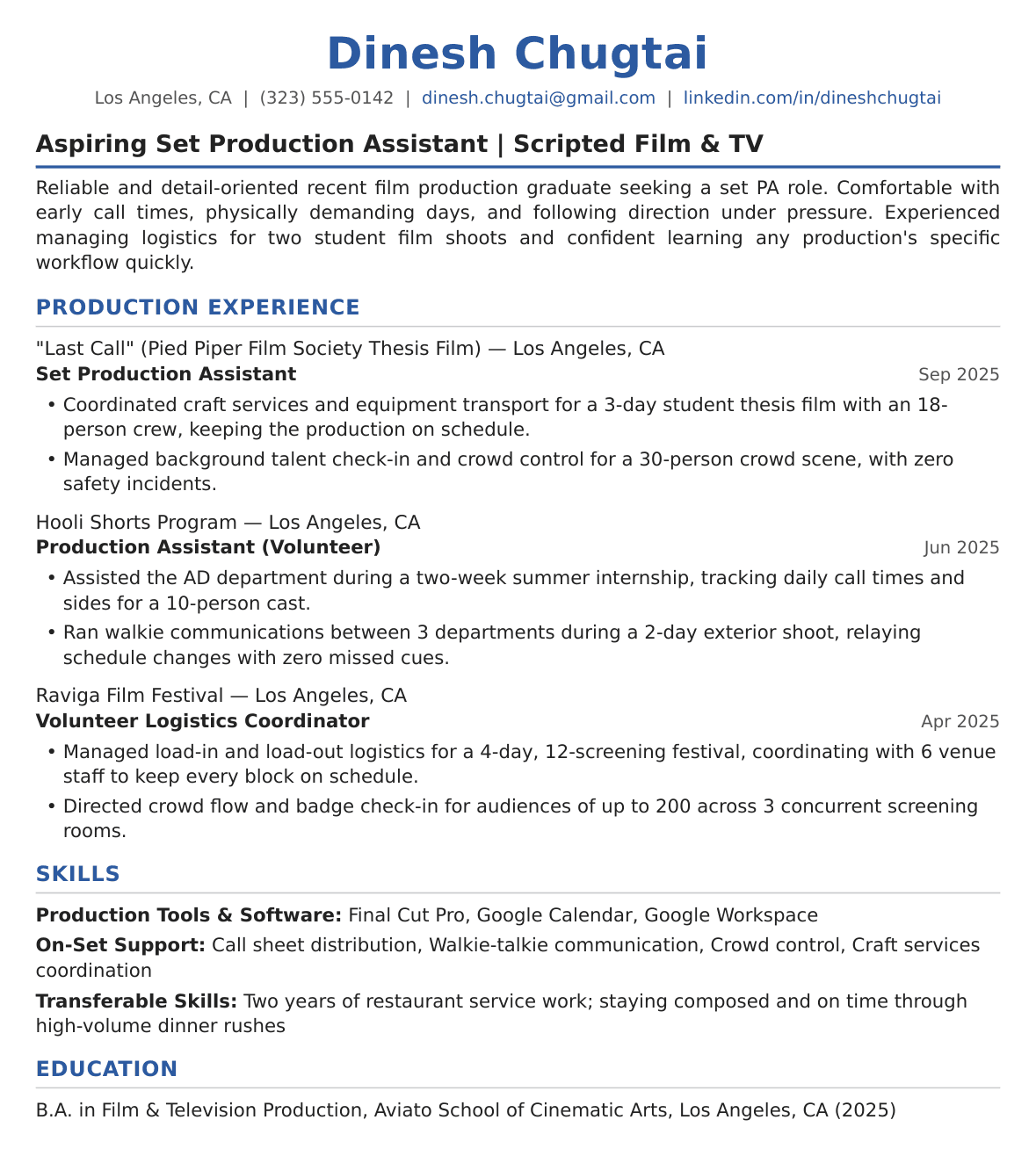
"Reliable and detail-oriented recent film production graduate seeking a set PA role. Comfortable with early call times, physically demanding days, and following direction under pressure. Experienced managing logistics for two student film shoots and confident learning any production's specific workflow quickly."
Build a Skills Section That Speaks to Hiring Managers
Only list tools you can use without help, and match the job posting's exact wording. If it says "Movie Magic Scheduling," don't write "scheduling software." If the posting names specific gear, mirror it back.
Production Tools & Software: StudioBinder, SetHero, Shot Lister, Final Cut Pro, Adobe Premiere Pro, DaVinci Resolve
On-Set / Physical Equipment: boom mics, walkie-talkies, gimbals, teleprompters, call sheet distribution, DIT cart support
Coordination & Soft Skills: scheduling and calendar management, multitasking under deadline, composure during long or unpredictable days, clear radio communication
Modern Workflow / AI Fluency: comfortable using AI-assisted scheduling and note-taking tools (e.g., auto-generated call sheet drafts, transcript summaries) to speed up routine coordination tasks
Keep the AI line honest and brief. It signals you're current, not that you've replaced judgment with a tool.
Write Achievement-Focused Experience Bullets
This is where most PA resumes lose the interview before they start. Every bullet should follow a simple formula: action verb, then the specific task or method, then a quantifiable result or scope. "Helped on set" tells a coordinator nothing. "Coordinated" plus a number tells them you can be trusted with the next one.
A weak bullet looks like this:
"Responsible for helping the production team with various tasks on set."
A stronger one looks like this:
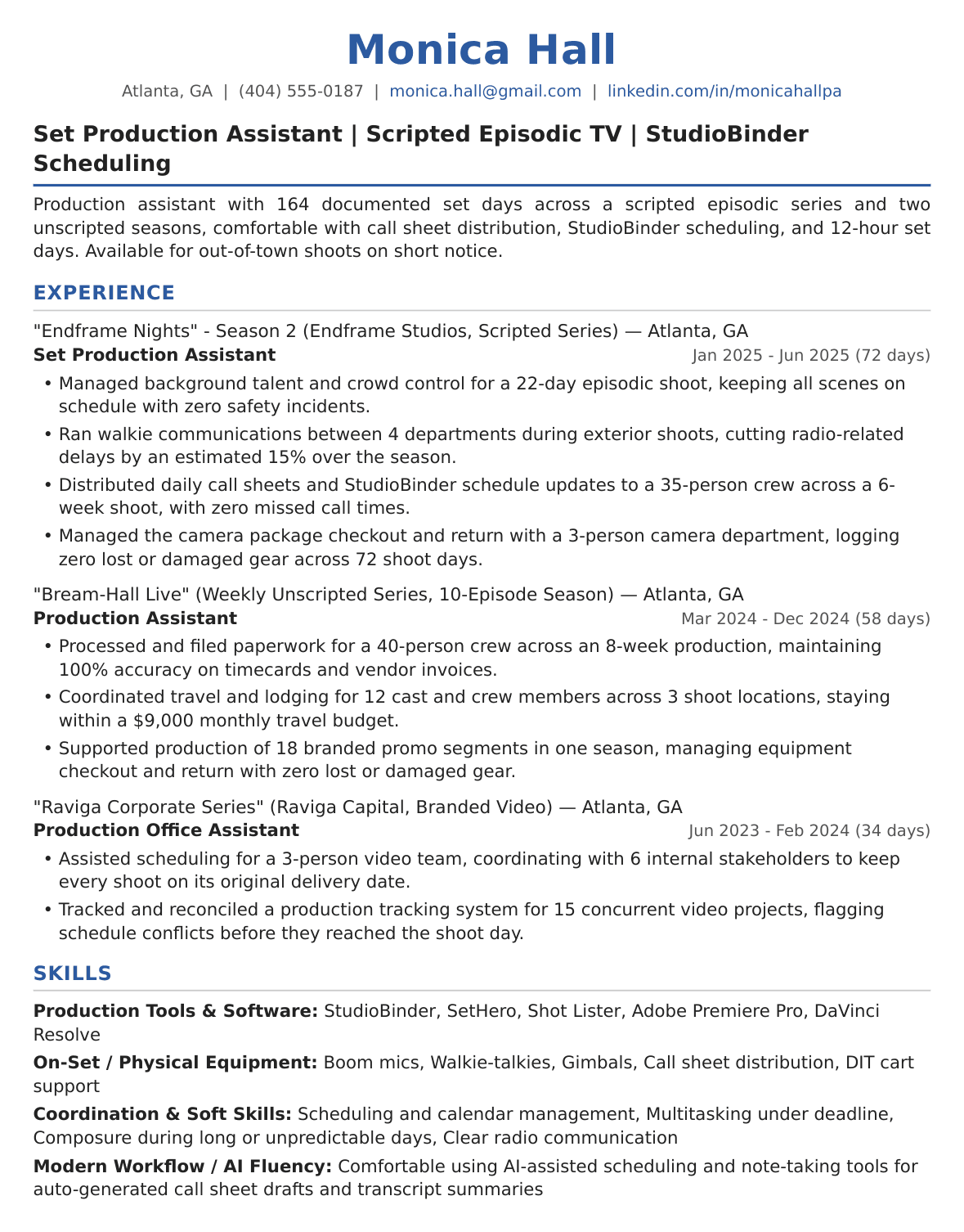
"Distributed daily call sheets and schedule updates to a 35-person crew across a 6-week shoot, with zero missed call times."
Use this library as a starting point, then swap in your own numbers.
Set / Stage PA
- Managed background talent and crowd control for a 22-day episodic shoot, keeping all scenes on schedule with zero safety incidents.
- Ran walkie communications between 4 departments during exterior shoots, cutting radio-related delays by an estimated 15% over the season.
Office / Production-Office PA
- Processed and filed paperwork for a 40-person crew across an 8-week production, maintaining 100% accuracy on timecards and vendor invoices.
- Coordinated travel and lodging for 12 cast and crew members across 3 shoot locations, staying within a $9,000 monthly travel budget.
Corporate & Video-Production PA
- Supported production of 18 branded video shoots in one year, managing equipment checkout and return with zero lost or damaged gear.
- Assisted scheduling for a 3-person video team, coordinating with 6 internal stakeholders to keep every shoot on its original delivery date.
Live / Broadcast PA
- Supported live broadcast operations for a weekly 2-hour sports segment, managing script timing cues with zero on-air delays across 20 episodes.
- Prepped and distributed rundown updates to a 15-person control room team ahead of 30+ live broadcasts.
Entry-Level PA (student film / internship)
- Coordinated craft services and equipment transport for a 3-day student thesis film with an 18-person crew, keeping the production on schedule.
- Assisted the AD department during a two-week summer internship, tracking daily call times and sides for a 10-person cast.
If your production history feels too thin to quantify, look for numbers you already have on hand. Old call sheets show crew size and shoot length. Production reports show how many setups or scenes you supported. Even a group text thread of pickup requests can tell you how many deliveries you actually handled. Most PAs undercount their own scope simply because they never went back and counted.
What to Include With No Production Experience
With no paid credits yet, your resume needs to work harder around the edges. List relevant coursework (production management, camera operation, editing), student films you crewed on even in a small capacity, and internships regardless of length. Volunteer work running logistics for a festival, conference, or community event counts. That's real scheduling and crowd-coordination experience.
Reframe unrelated jobs honestly. Two years in retail or restaurant work shows you can stay composed during a rush, handle demanding people, and show up on time. A coordinator cares about exactly those things on a chaotic set day. Name the transferable skill directly rather than assuming it's obvious.
Organize Your Work History the Right Way
List your production history in reverse-chronological order, or hybrid if your most relevant experience isn't your most recent job. Because PA work is project-based, list each entry by production title, project type (feature, series, live event, corporate shoot), and clear dates, not a single generic employer name. Keep the whole resume to one page. A coordinator hiring for next week's shoot won't read a second one.
Nobody Tells You to Count Your Days, Until It's Too Late to Count Them
Most PA resume advice stops at production title, project type, and dates. That works for a coordinator scanning fast, but one specific reader wants a different unit: the LA-based Assistant Directors Training Program, the pipeline most PAs aiming at 2nd AD eventually apply to. It grades your work history by a number nothing else on this list asks for. If you haven't tracked it from day one, you're reconstructing it from memory months later.
The LA program's FAQ states it directly: applicants must list the number of days worked for each production job on their resume, paid and unpaid, and the application portal opens only once a year. The New York DGA Assistant Directors Training Program, a separate sister program with its own application and deadline, shows how real the stakes behind that line are: trainees there log a minimum of 350 production days over a full two-year term. A day count is a distinct data point from the crew size or episode count this guide already tells you to dig out of old call sheets, and it belongs on the entry alongside them.
If you're building toward the AD or union track, add a day count to every work history entry as you write it, rather than later when a recruiter or the program asks. Old call sheets are still the right tool for jogging your memory on scope and crew size. They carry no weight as proof.
If you later pursue an IATSE roster through Contract Services, the CSATF work-experience FAQ is explicit that call sheets aren't accepted as employment verification. Many classifications instead require 30 qualifying days within a 365-day window, backed by an employer letter and pay proof.
If you're staying in corporate video, broadcast, or non-union work, none of that paperwork applies to you. The habit still pays off. Log dates worked per project as you go, so any future application never depends on your memory of a shoot from two years back.
Production Assistant Resume Examples
Your resume should shift as you gain set time. Use the tier that fits your current experience level rather than the one that looks most impressive.
Entry-Level Production Assistant Resume
Lead with the objective format and name the setting you want: scripted set, live broadcast, or corporate shoot. Replace the work history with student films, internships, and volunteer event logistics, listed like paid work with a production title, role, dates, and one responsibility such as crew size supported or equipment managed. Pair two bullets from the Entry-Level PA library with a skills block naming tools you can use unaided, like Final Cut Pro or Google Calendar, plus one transferable skill from retail or service work. This stage proves reliability under a fixed schedule, so quantify crew size or shoot length instead of naming a vague duty.
Mid-Level Production Assistant Resume
Lead with a professional summary naming your sub-role (set, office, corporate video, or broadcast) and a tool or credit that backs it up, such as StudioBinder scheduling or call sheet distribution for a 35-person crew. The work history carries this resume: list each production by title, project type, and dates, adding a day count if you are tracking toward the AD training program or an IATSE roster. Draw bullets from the matching sub-role library, name the equipment or system handled, such as a camera package or production tracking system, and swap in your own crew size or episode count.
Senior Production Assistant Resume
Lead with a summary naming the largest crew or budget you coordinated and the system you ran it through, such as Movie Magic Scheduling or multi-location vendor coordination. Demote the skills block to one categorized line near the bottom, since the work history does the persuading here. Give every entry a day or week count alongside crew size and budget, with bullets that read closer to a coordinator's than a PA's, such as "coordinated travel and lodging for 12 cast and crew members across 3 shoot locations, staying within a $9,000 monthly travel budget." Add a bullet showing you training newer PAs, since this tier proves readiness for a coordinator role.
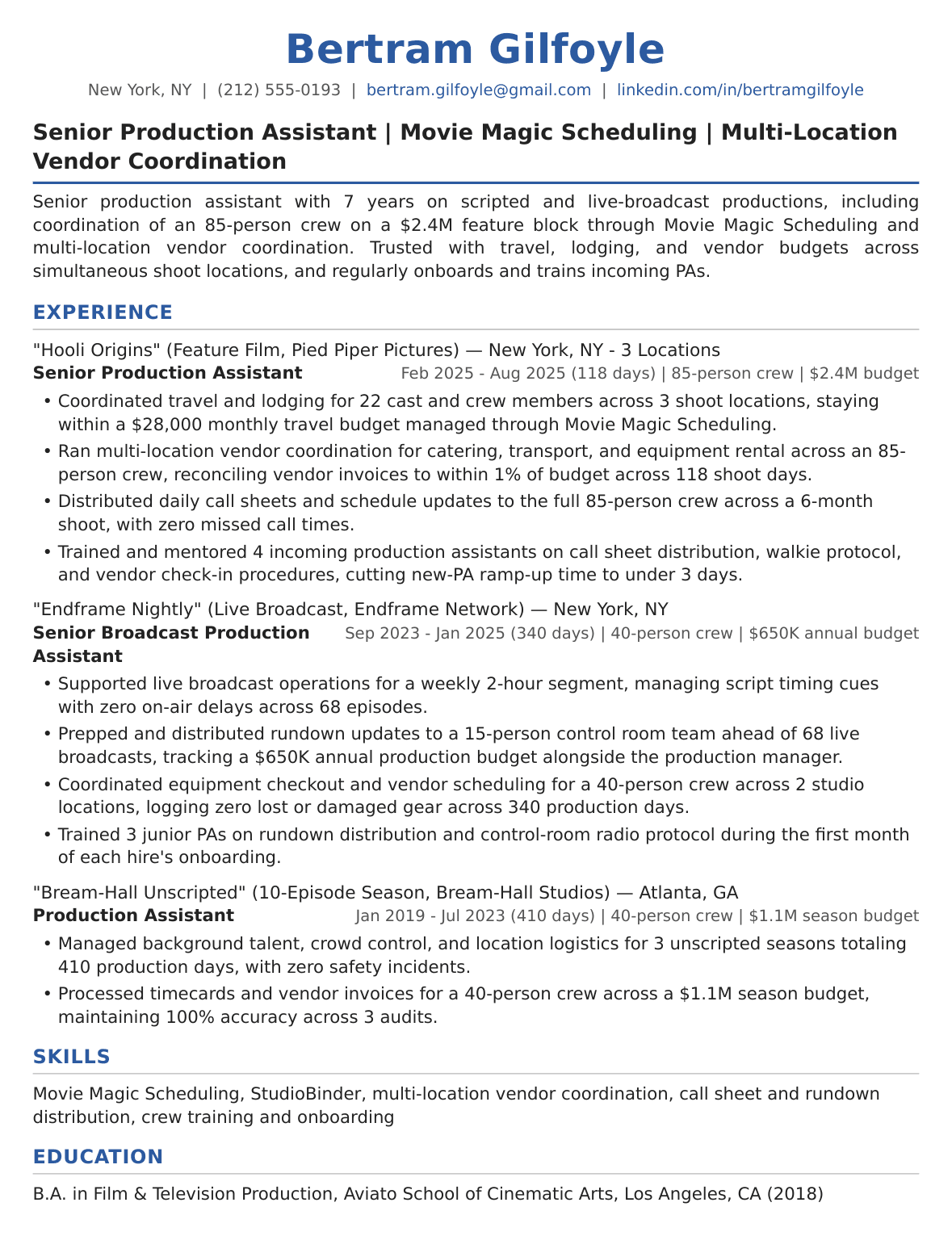
All three tiers share the same backbone: a named setting up top, real tool names, and bullets quantified with crew size, shoot length, or budget. If you sit between two levels, say a year of paid set time but no repeat bookings yet, borrow the mid-level structure and keep your day counts honest instead of inflating your scope.
Production Assistant Resume Keywords
PA hiring moves gig to gig, and a coordinator staffing a shoot starting in days skims resumes rather than reading them closely. Matching the ATS resume keywords a posting actually uses is often what gets you past that first scan. The table below covers the vocabulary worth working into your summary and skills block. Your bullets still carry the numbers.
| Category | Keywords |
|---|---|
| Set, Stage & Live-Event Support | Call sheet distribution, Walkie-talkie communication, Crowd control, Background and extras check-in, Load-in and load-out, Craft services coordination |
| Office & Production-Office Coordination | Calendar and meeting scheduling, Production tracking system, Movie Magic, Microsoft Office, Google Workspace, Vendor coordination |
| Broadcast & Corporate Video Production | Live broadcast support, Camera, audio board and graphics equipment, Newsroom software, Gear prep and equipment checkout, Social media monitoring |
| Reliability & Coordination Signals | Multitasking under deadline pressure, Reliability and punctuality, Flexible with unpredictable schedules, Works independently and as part of a team |
Some terms only belong on certain applications. Teleprompter operation and rundown distribution show up in broadcast postings rather than scripted-set ones. Artist hospitality and credential management are touring and live-event terms that read as padding on a corporate video resume. Add a term only when the posting or your actual experience supports it.
Mirror the posting's exact string too. A posting asking for a "production tracking system" won't credit a resume that says "project management software," and one naming "Movie Magic" won't match "scheduling software."
Common Production Assistant Resume Mistakes to Avoid
Describing Tasks Instead of Impact
"Ran errands" and "helped on set" tell a coordinator nothing about scale or reliability. Replace them with specifics: coordinated daily supply runs across three shooting locations, or managed background talent check-in for a 200-person crowd scene. The second version signals someone who can be trusted with logistics under pressure.
Using One Generic Resume for Every Production Type
A resume built for a scripted narrative set reads oddly for a live-broadcast or corporate-video posting. Broadcast coordinators want to see live-event pacing and quick-turnaround experience. Corporate clients want to see professionalism with non-industry talent. Match the bullets to the production type in the listing.
Listing Software Without Specificity
"Editing software" and "scheduling tools" say almost nothing to a coordinator scanning fast. Name Final Cut Pro, Premiere, or DaVinci Resolve. Name StudioBinder, SetHero, or Movie Magic Scheduling. Exact tool names confirm real hands-on experience and often match keyword searches.
Ignoring ATS Formatting Basics
Tables, embedded images, headers, footers, and multi-column layouts often confuse ATS parsers, scrambling the text or dropping it entirely. Stick to a single-column layout with standard section headings. A resume the system can read correctly beats one that looks polished but parses into garbage.
Making the Resume More Than One Page
PA hiring moves fast and often works like gig staffing. Coordinators scan many resumes in a short window. A plain one-page format is the norm on both sets and crews. A longer, heavily designed resume signals unfamiliarity with how the industry hires.
Failing to Distinguish Office-PA vs. Set-PA Duties
Office PA work covers admin support, scheduling, and vendor coordination. Set or stage PA work covers physical, on-set support like crowd control and equipment moves. A resume that blends both without a clear focus reads as unfocused. Signal which lane fits the bullets, or which one the posting is asking for.
How AI Resume Builders Can Simplify Your Production Assistant Resume
Rewriting your resume for every posting takes time production hiring rarely gives you. A generic PA resume, sent to a commercial shoot one day and a scripted series the next, tends to get filtered out or ignored, since manual tailoring runs 40-60 minutes per application. AI resume builders built specifically for this exist to close that gap.
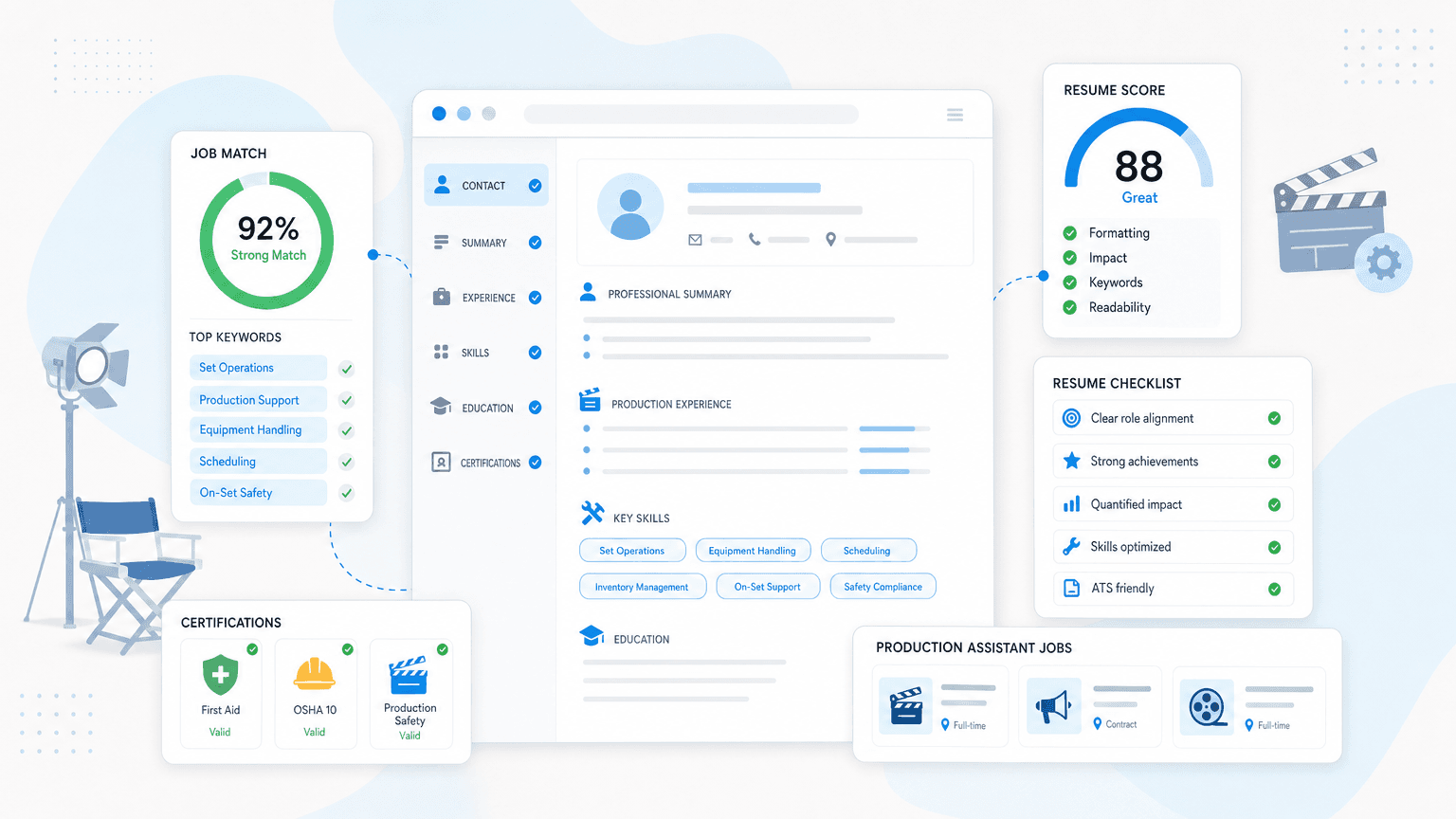
- Real-time ATS scoring: watch your ATS and recruiter score update as you edit, so you know if swapping "on-set support" for "production coordination" actually helped, no downloading and re-uploading to check.
- Transparent suggestions: every edit comes with a plain-language "why this change" explanation, and you accept or reject each one, so the resume never claims you ran a set you didn't.
- Automatic formatting: ATS-friendly templates handle layout for you, so a call sheet-style table or a fancy header doesn't get your resume parsed wrong.
- Structure guidance: content gets reordered for relevance, action verbs get stronger, achievements get quantified (crew size, episode count, budget managed), and potential bias triggers get flagged, following recruiter best practices.
- Preference memory: your formatting, reordering, and metric choices carry over across sessions, so tailoring your next posting starts from where you left off.
Pricing stays honest: the free plan includes 200 ATS scans a month plus 3 tailored resumes with matching cover letters, unlimited downloads in PDF, DOCX, and TXT, and no credit card required. Extra tailored resumes cost $0.50 to $1.00 each depending on pack size, with no subscription, ever.
Create a tailored production assistant resume
Get an ATS score, a tailored resume, and a matching cover letter for your next production job in minutes.