You already coordinate work across teams, budgets, and stakeholders who don't report to you, and figuring out how to translate that into a program manager resume that reads as program-level rather than project-level is the real challenge.
This guide shows you how to build that resume: a summary that names your workstream count and governance model, a skills section organized around coordination rather than tasks, bullets that quantify influence you don't own, and certification guidance that separates PMP from PgMP.
It also covers how the title reads differently in big tech, at Microsoft, and in defense contracting, a keyword table pulled from real postings, and examples at three career stages, so you can tailor one resume per employer type instead of sending the same file everywhere.
Program Manager vs. Project Manager vs. Product Manager: Which Resume Are You Writing?
Before you touch a single bullet, settle which of these three jobs your resume actually needs to prove. A project manager delivers one defined project against a set scope, schedule and budget. A program manager coordinates a portfolio of interdependent projects that roll up to one strategic outcome, and owns the governance, dependencies and stakeholder alignment that connect them. A product manager owns what gets built and why: the vision, the roadmap, the customer outcomes. A program manager may support several products without owning any of their direction.
That scope difference changes what your resume has to lead with. A project manager resume leads with delivery mechanics against one scope: milestones hit, budget held, deliverable shipped. A program manager resume has to lead with portfolio scale instead, workstream count, number of teams coordinated, business units aligned, and the governance model holding it together. A resume that reads like single-project execution, even a well-run one, is the most common reason experienced candidates get screened out of program-level roles.
Technical program manager (TPM) is a named variant of the same job. The skeleton stays identical: scope, governance, stakeholder alignment. What shifts is vocabulary and audience. A TPM resume speaks in engineering terms (architecture dependencies, release cadence, platform migrations) to a technical stakeholder group.
| Project Manager | Program Manager | Product Manager | |
|---|---|---|---|
| What you own | One project's scope, schedule, budget | Governance and dependencies across a portfolio of projects | Product vision, roadmap, customer outcomes |
| What the resume must prove | On-time, in-budget delivery of a defined deliverable | Coordination scale: workstreams, teams, business units aligned | Strategic direction and the customer or business results it drove |
The next section builds a resume around that program-level scope, section by section.
How to Write a Program Manager Resume That Gets Interviews
Write a Summary That Establishes Program Scope
A program manager summary has to establish three things in the first two lines: the scale of what you coordinate (how many workstreams, teams, or business units roll up to your program), the governance model you run it on (Agile, SAFe, stage-gate, or a hybrid), and the sector context that tells a recruiter which version of "program manager" you are. Skip any of the three and the summary reads like a project manager resume with a bigger title.
Most drafts default to adjective stacking instead.
A weak summary looks like this:
"Experienced program manager with strong leadership and communication skills, skilled at managing cross-functional teams and delivering projects on time."
A stronger one looks like this:
"Technical program manager with 8 years coordinating 6 interdependent workstreams across a $12M cloud migration program, aligning 4 engineering orgs and 3 external vendor teams. Runs program governance on a SAFe cadence, unblocking release dependencies that had stalled two prior quarters."
The strong version names a workstream count, a program budget, and an org count, so a recruiter can place you at a scale before reading a single bullet.
Build a Skills Section Around Governance, Not Task Lists
A program manager skills section should read as governance and coordination capability, not a list of tasks you performed inside one project. Group it by function, and pull every term from the language postings actually use.
SKILLS
- Program governance: Program governance, Stakeholder management, Cross-functional collaboration, Program strategy, Multi-site program leadership
- Financial and resource oversight: Budget and timeline ownership, Resource allocation
- Delivery methodology: Agile, Scrum, Kanban, SAFe, Sprint management, Roadmapping, RAID log, Risk mitigation, Dependency management
- Tools and systems: Jira, Confluence, Smartsheet, Microsoft Project, Asana, Monday.com
List only tools you have actually run a program through. Mirror the exact tool names from the posting, since an ATS matches "Smartsheet" as a distinct string from "spreadsheet software." If a posting names a governance cadence (SAFe, stage-gate), use that same word rather than a synonym.
Write Experience Bullets That Show Portfolio-Level Impact
Use this formula for every work experience bullet:
[Action verb] + [scope of the program] + [quantified outcome].
The scope has to name the workstream or team count, not a single deliverable, or the bullet reads as project-level work no matter how strong the verb is.
A weak bullet looks like this:
"Managed a project to update the customer onboarding process and worked with several teams to complete it."
A stronger one looks like this:
"Directed a 5-workstream customer onboarding program spanning support, engineering, and legal, cutting onboarding time from 21 to 9 days across 40,000 monthly accounts."
Below is a bullet library segmented by employer type, since the same title reads differently depending on where the program sits.
Technical Program Manager (big tech)
- Coordinated 7 interdependent workstreams across 4 engineering orgs to deliver a platform migration, cutting deployment failures by 35% over two release cycles.
- Aligned 3 external vendor teams and 5 internal engineering teams on a shared roadmap, unblocking 18 cross-team dependencies that had missed two prior sprint commitments.
Healthcare / Grant-Funded Program Manager
- Managed a multi-site clinical trial program across 6 sites and a $3.5M grant budget, keeping enrollment on schedule against a federal reporting deadline.
- Governed grant-funded program deliverables across 4 partner organizations, closing out 12 quarterly reporting cycles with zero compliance findings.
Government and Defense Program Manager
- Directed a program office coordinating 5 subcontractor teams under an active IDIQ contract, holding schedule variance under 3% across 8 fiscal quarters.
- Led risk mitigation and dependency tracking for a multi-phase modernization program requiring active TS/SCI clearance, resolving 22 open RAID log items before milestone review.
Business Transformation Program Manager
- Ran a 9-workstream operating model transformation across 3 business units, reducing manual handoffs by 42% and cutting cycle time from 14 to 6 days.
- Coordinated stakeholder alignment across 6 functional leaders during an ERP rollout, sequencing dependencies to avoid 4 previously identified go-live conflicts.
Quantify a Program You Do Not Own on the Org Chart
Most program managers coordinate budgets, timelines, and teams they do not own on the org chart. That breaks the standard resume advice to "list the team size and budget you managed," because you often influence a number you never controlled. Claiming ownership you did not have reads as inflated the moment a hiring manager asks a follow-up question.
Quantify the coordination itself rather than the authority. Useful substitute measures: interdependent workstreams, teams or functions coordinated, program budget influenced versus owned, stakeholder groups aligned, decisions unblocked, dependencies resolved, and cycle-time reduction.
Use verbs that match matrixed authority: "coordinated," "aligned," "governed," "unblocked." Two examples:
- "Coordinated a $40M program budget held across 3 department owners, aligning spend timing to avoid 2 quarters of planned overrun."
- "Governed dependency tracking across 8 teams with no direct reporting authority, unblocking 15 stalled decisions by running a weekly cross-functional review."
Neither bullet claims budget ownership or headcount the candidate did not have. Both still carry a number a hiring manager can weigh.
Position Certifications by What They Signal
PMP remains the common entry credential across program manager postings. It signals baseline project discipline. PMI also offers PgMP, a credential built specifically for program-level work, and most resume advice skips it entirely.
PgMP eligibility runs through one of three tracks. Without a bachelor's degree, you need 48 months of project management experience (or an active PMP) plus 84 months of program management experience, all within the past 15 years. With a bachelor's degree, that drops to 48 months plus 48 months. With a degree from a GAC-accredited program, it drops further to 36 months plus 36 months. Every track also requires a panel review of your program experience, not just a passing exam score, and the exam itself runs 170 questions over 240 minutes. Maintaining the credential takes 60 PDUs per 3-year cycle. Full detail lives at PMI's PgMP certification page.
Placement depends on seniority. Early-career candidates list PMP or CSM in a dedicated certifications line near education. Mid-career candidates move certifications up near the summary, since they now function as a scope signal. Senior candidates list PgMP first when they hold it, since it outranks PMP as a program-specific signal. Write every credential exactly as postings abbreviate it: PMP, PgMP, PMI-ACP, CSM, SAFe.
One Title, Three Different Jobs: Big Tech, Microsoft, and Defense Contracting
"Program manager" reads as one job title, but it maps to different work depending on who wrote the posting. A recruiter and an ATS are both tuned to their employer's local definition, so a resume written for one version reads as a mismatch the moment it lands against another.
The difference is structural, not a quirk of any one opening. Amazon files project, program and product management into a single technical career family and runs several distinct roles inside it, which is why candidates spend so much time arguing over whether a given req is a PM, a PM-T (Product Manager Technical), or a TPM. Microsoft has long treated Program Management as one of its three core engineering disciplines alongside development and test, with the PM owning customer requirements and the functional specification, closer to what the rest of the industry calls a product manager. Defense contracting adds a gate of its own: many program manager roles require an active security clearance, and clearance eligibility is sponsored and decided by the hiring agency, not something a candidate can go get on their own.
Read three or four current postings for the same title at your target employer before you tailor. The local definition shows up in the language they repeat.
Then adjust by situation. For big tech, mirror the exact title variant used in the posting and lead with technical depth and dependency language rather than business-transformation vocabulary. Where "program manager" means product manager, surface the roadmap and product-facing work you actually did, or a recruiter reading that dialect will place you as a delivery coordinator. For government and defense, put clearance status and total years of program management experience in the top third of page one, since contractor postings routinely treat both as hard filters and senior roles often ask for well over a decade in program management specifically. Never claim a clearance you don't hold or that has lapsed.
Keep your real title on the resume for verification integrity. Add a short clarifier in parentheses or in your first bullet describing the actual scope, so a recruiter reading a different dialect can place you.
Program Manager Resume Examples
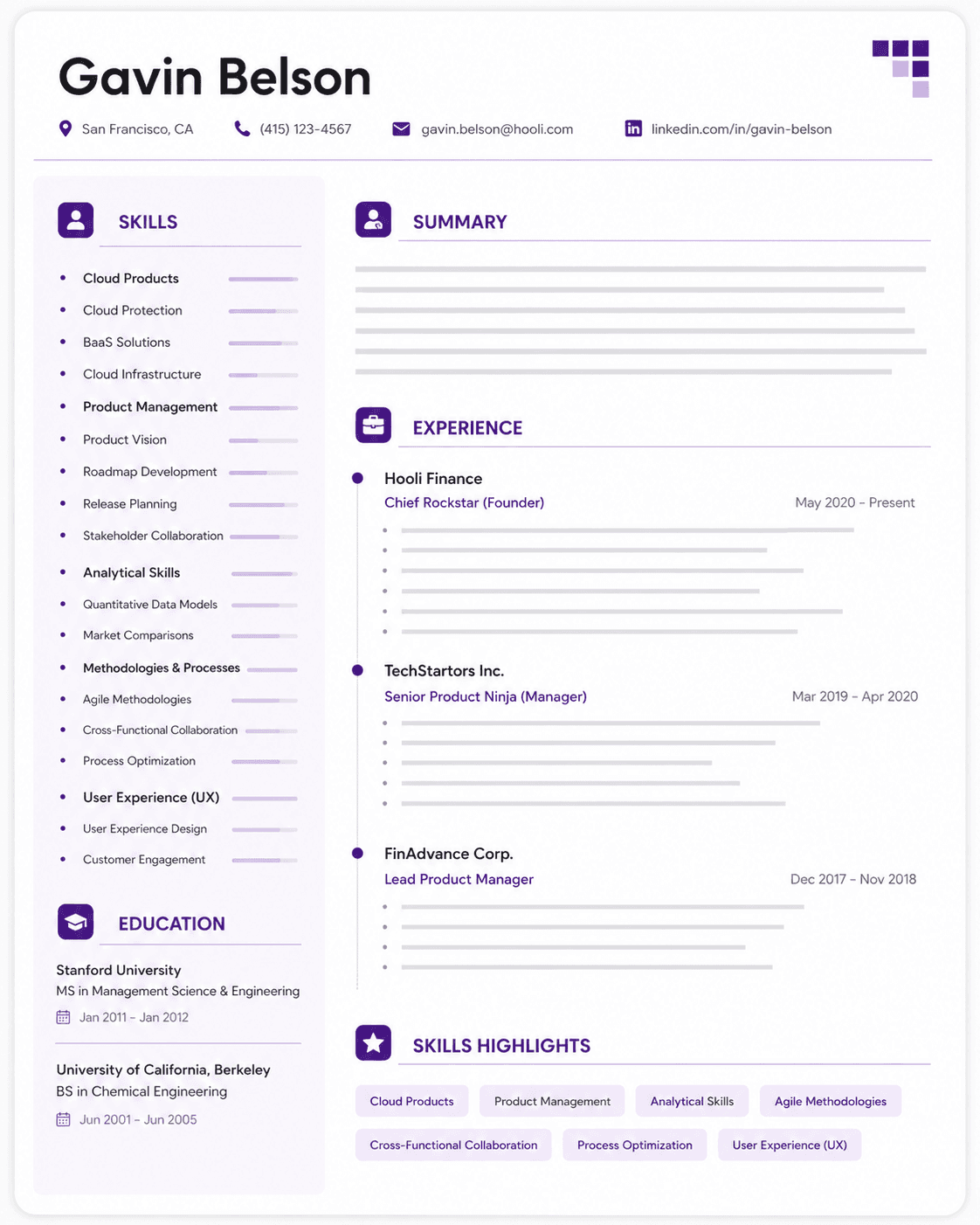
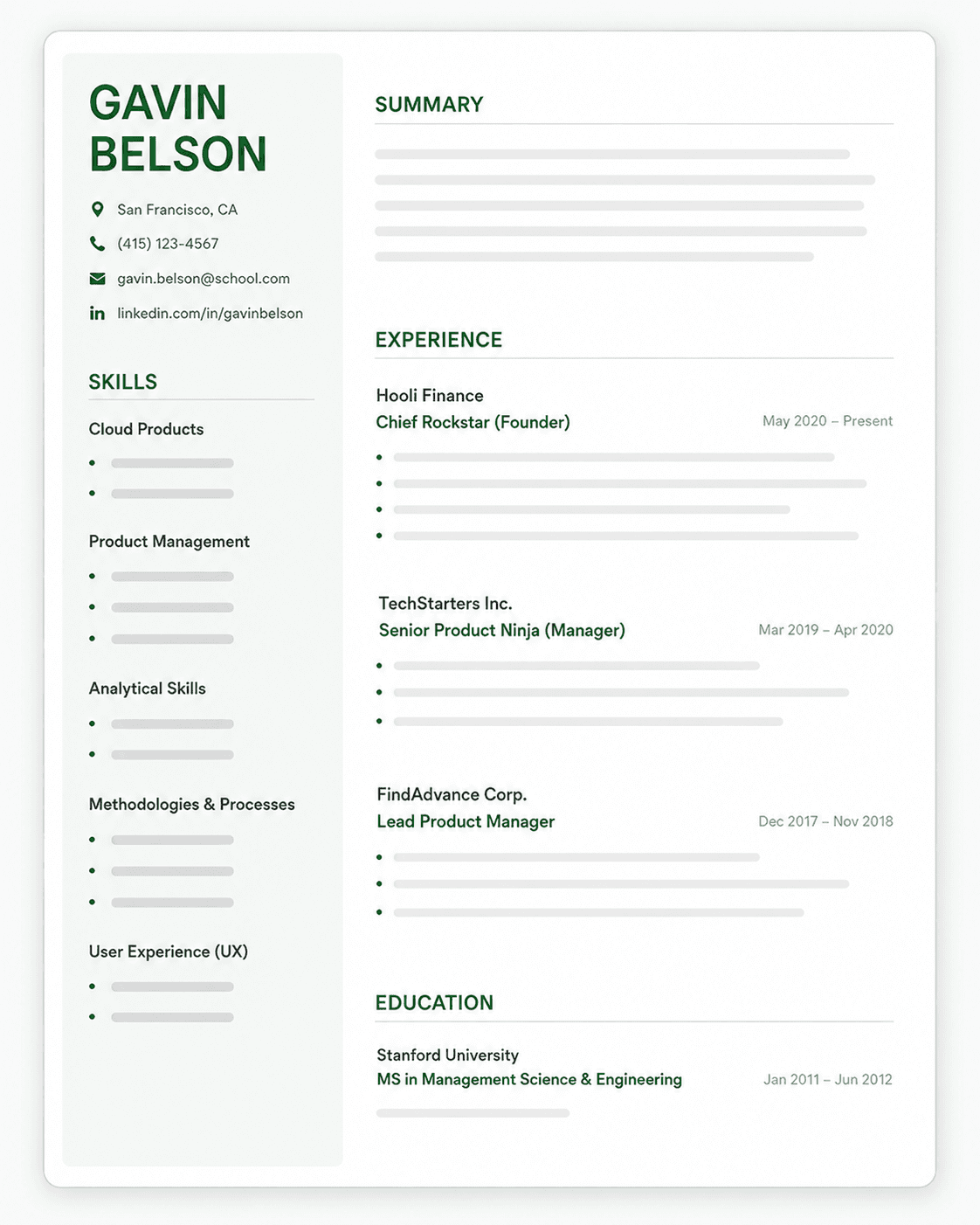
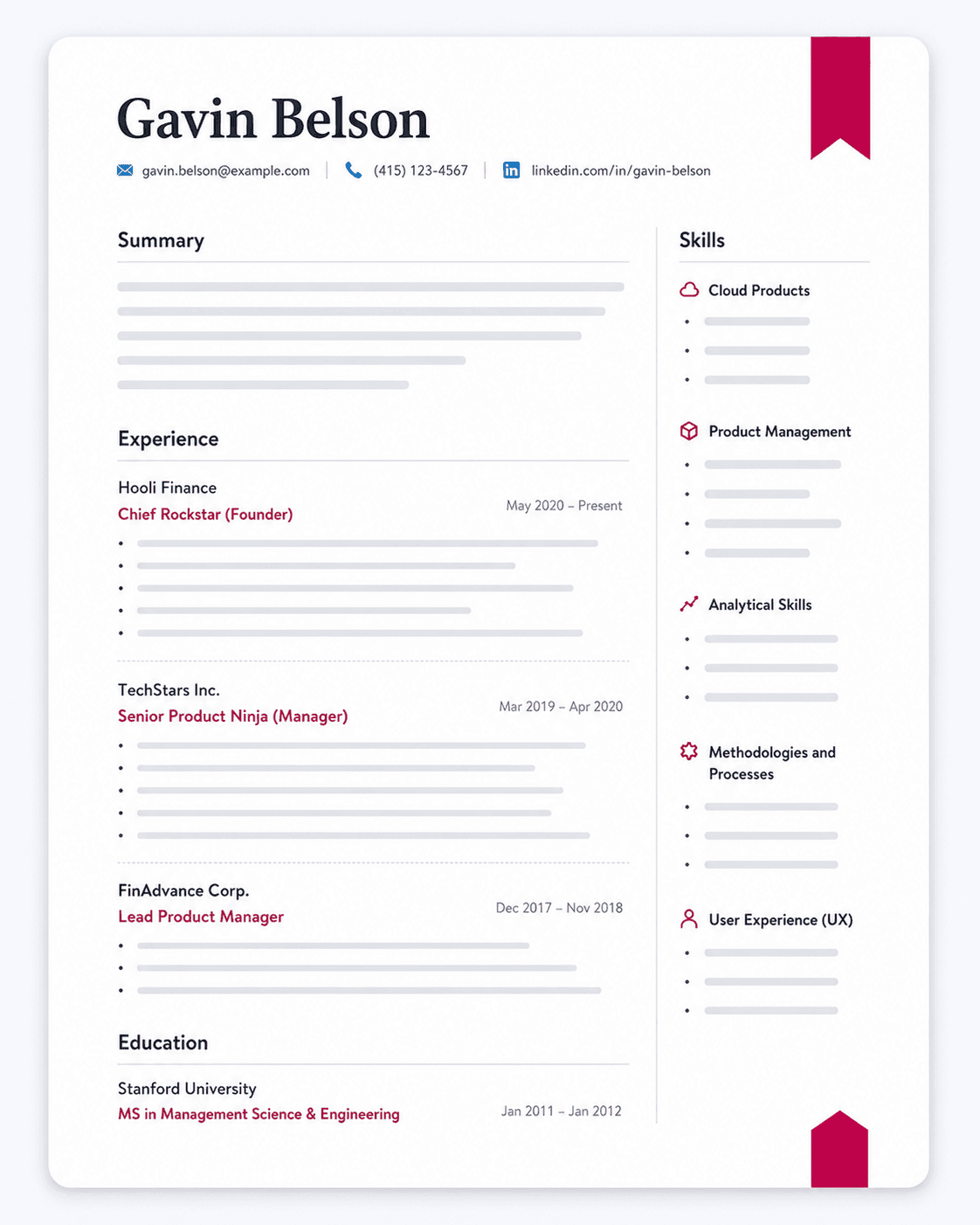
Here is what the resume looks like at three career stages.
Entry-Level Program Manager Resume
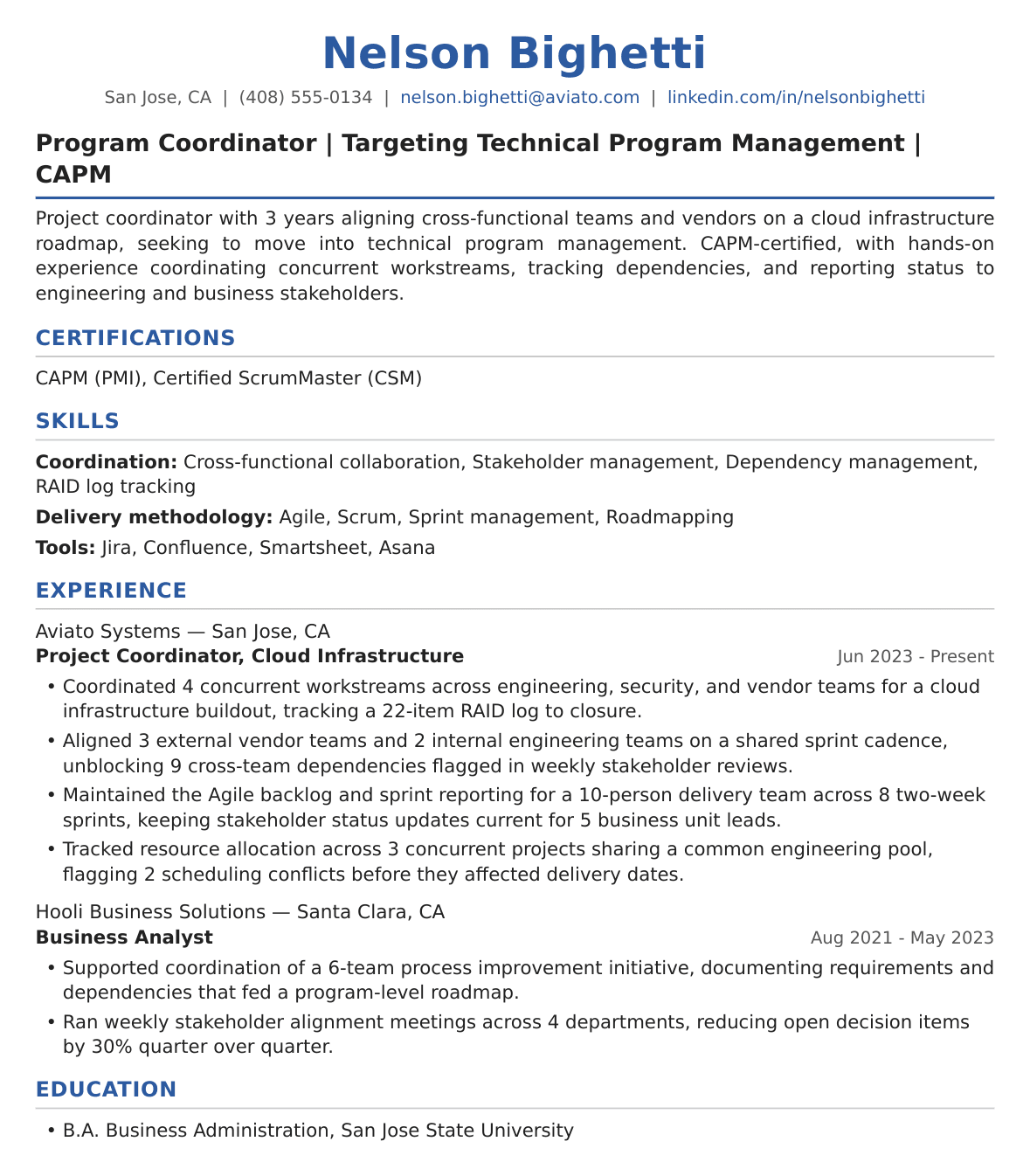
Lead with a targeted objective naming the program type you want (technical, healthcare, or government), since you do not have a program title to lean on yet. Pull your portfolio-view evidence from your current title: a project coordinator, business analyst, engineer, or operations role that already touches multiple workstreams, vendors, or stakeholder groups. Name that coordination scope explicitly (how many teams, how many concurrent projects) in place of program ownership language. Put certifications (CAPM, CSM, or PMP if held) in a labeled block near the top, since they compensate for a thin program-title history. Keep the layout simple: objective, certifications, skills, then experience reframed around cross-team coordination.
Mid-Level Program Manager Resume
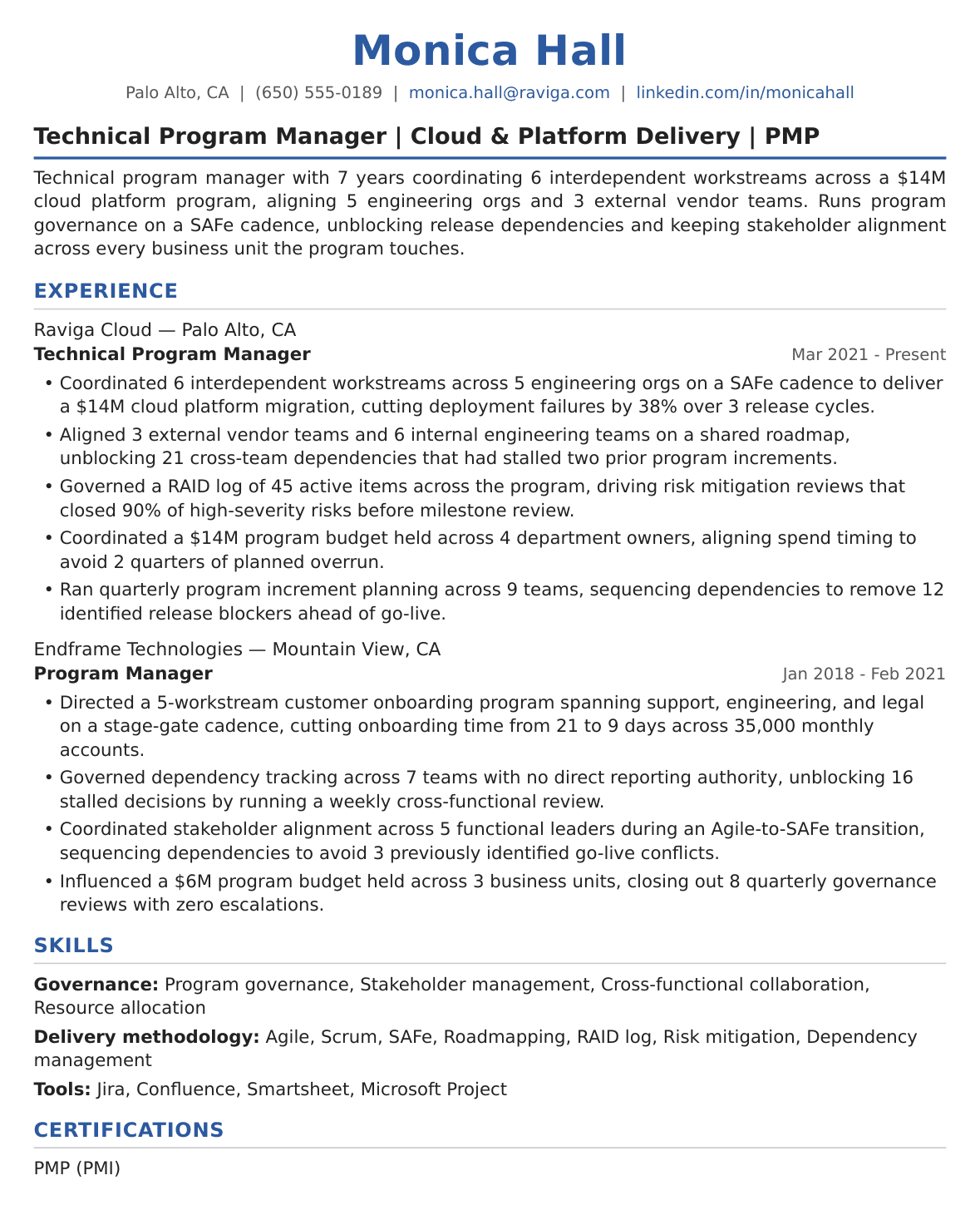
Lead with a professional summary rather than an objective, and open it with three numbers: workstream count, teams coordinated, and program budget influenced. This candidate holds the title already, so the resume has to prove portfolio scale and governance discipline. The experience section dominates the page: two roles, four to five bullets each, every bullet naming a governance cadence (Agile, SAFe, stage-gate) and a quantified outcome tied to coordination. Certifications drop to a single line near education. Skills stay categorized by governance, delivery methodology, and tools, mirroring exact posting language.
Senior Program Manager Resume
Lead with scope across multiple programs and name the governance model you designed or ran, such as a stage-gate review cadence or a cross-portfolio risk framework. This resume proves strategic outcomes and a visible progression: promotion history from program manager to senior or portfolio-level titles should read clearly in the job title line, not just the dates. List PgMP ahead of PMP if you hold it. Two pages are acceptable here, but every bullet still needs a scope number: budget influenced across programs, teams aligned, or portfolio-level risk resolved.
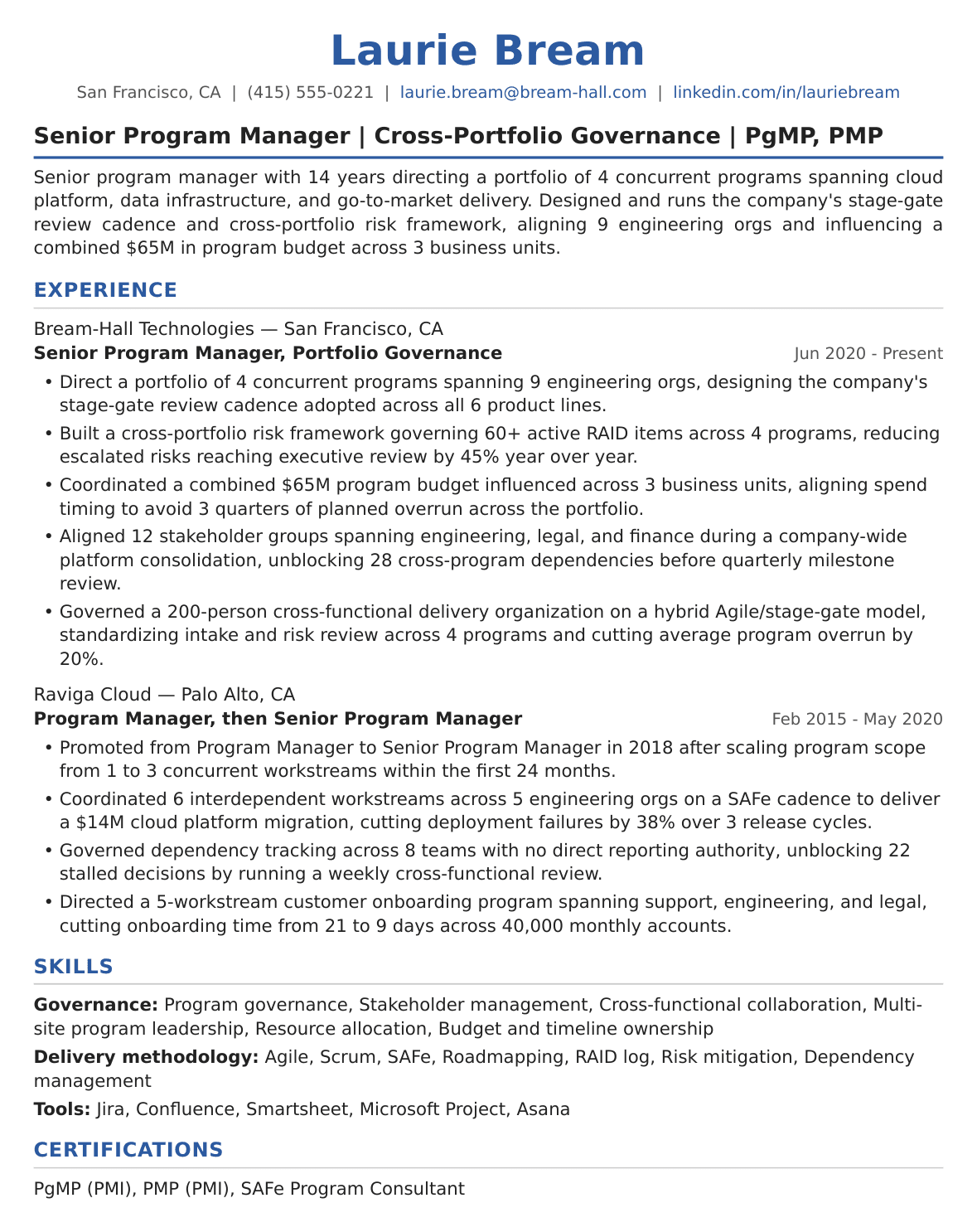
All three levels share the same backbone: coordination scope, a named governance cadence, and certifications placed to match what they signal at that stage. If you sit between two levels, for example five years of experience but no formal program title yet, borrow the mid-level summary structure and keep your workstream and team numbers honest rather than inflating your scope to match the title you want next.
Program Manager Resume Keywords
Program manager postings across big tech, healthcare, and government contracting repeat a surprisingly consistent core vocabulary, even though the sectors have almost nothing else in common. Recruiters scan for that shared vocabulary first, then look for the sector-specific terms layered on top. Getting the ATS resume keywords right matters more here than in most roles, because program manager titles vary so widely that terminology is often the only stable signal a parser has to work with. The table below covers the vocabulary. Your bullets carry the numbers.
| Category | Keywords |
|---|---|
| Program leadership & governance | Program governance, Stakeholder management, Cross-functional collaboration, Program strategy, Resource allocation, Budget and timeline ownership, Multi-site program leadership |
| Delivery methodology | Agile, Scrum, Kanban, SAFe, Sprint management, Roadmapping, RAID log, Risk mitigation, Dependency management |
| Tools & systems | Jira, Confluence, Smartsheet, Microsoft Project, Asana, Monday.com |
| Certifications | PMP, PgMP, PMI-ACP, CSM, CAPM, SAFe, Six Sigma (Green Belt / Black Belt) |
Sector-specific terms only belong on your resume if they actually apply to you. Government and defense postings look for TS/SCI with Polygraph and IDIQ. Healthcare postings look for grant-funded program management and multi-site clinical trial. Adding either one speculatively costs you credibility the moment a recruiter asks about it.
Mirror the posting's exact string rather than a synonym, since an ATS matches literal terms and not meaning. A posting that says "SAFe" will not credit you for "scaled agile," and one that says "Smartsheet" will not credit you for "project tracking software." Work the terms into your summary, your skills block, and the bullets where you genuinely used them, rather than parking all of them in one list at the bottom.
Common Program Manager Resume Mistakes to Avoid
Writing Project-Level Bullets Under a Program-Level Title
The most common screen-out for this role. A recruiter reads a "Program Manager" title, then hits a bullet naming one deliverable on one schedule, with no workstream count and no cross-org language. That mismatch reads as a title upgrade with no matching scope.
Inflating Coordination Experience Into a Program Title
Candidates relabel routine team coordination as program or TPM experience, then cannot answer a follow-up question about governance cadence or who owned a specific dependency. Keep the title you actually held. Describe the real scope of what you coordinated instead of borrowing a bigger label, since an interviewer will test the claim within the first two questions.
Claiming Budget or Headcount You Did Not Own
"Managed a $40M budget" invites exactly one interview question: who approved the spend. If the answer is a department head you coordinated with, the bullet has already cost you credibility, and every other number on the page now gets read with suspicion. Use the coordination-scope wording covered earlier instead.
Sending One Resume to Every Employer Type
The same title covers different work at Amazon, a hospital system, and a defense contractor. One generic resume built for all three reads as a mismatch to whichever employer defines the title narrowly. Reword scope and terminology per employer type rather than mailing one version everywhere.
Listing Certifications Without Status or Issuing Body
Postings abbreviate credentials a specific way: PMP, PgMP, PMI-ACP, CSM, SAFe. A line that says "certified" leaves status ambiguous. Name the issuing body and current status or expiration for each. Never list a credential you are working toward as though you hold it, since that gap surfaces the moment a recruiter verifies it.
Listing Every Tool You Have Ever Opened
An ATS matches a literal string, so a tool list padded with software you opened twice will pass the scan. It fails the interview instead, when someone asks how you ran a program through it. Name only the tools you have actually governed a program with: Jira, Confluence, Smartsheet, Microsoft Project.
Formatting That Breaks ATS Parsing
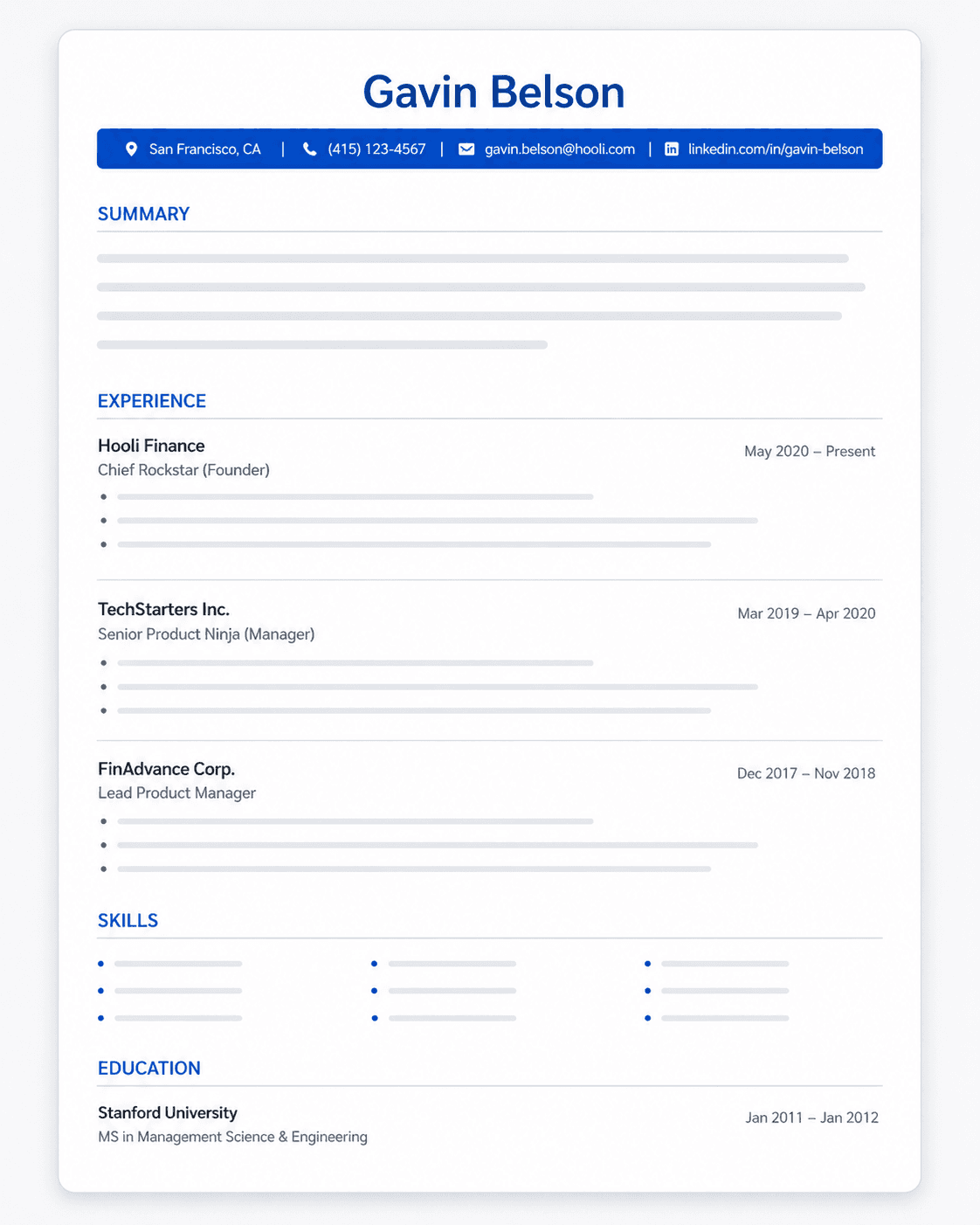
Multi-column layouts, tables in the experience section, text inside graphics or headers, and non-standard section names can scramble a parse before a human sees the program scope you wrote. Use standard section headings and a single-column layout. A resume that governs 8 workstreams on paper still reads as blank text if the ATS cannot parse it.
How AI Resume Builders Can Simplify Your Program Manager Resume
A program manager resume rarely serves one audience for long. Big tech scopes the title one way, healthcare another, government and defense a third, so the same scope has to be re-worded for each local definition. Rebuilding your summary, skills block, and top bullets by hand for every posting is slow, and a generic resume gets filtered before a recruiter opens it.
An AI resume builder built for this kind of tailoring helps in five ways:
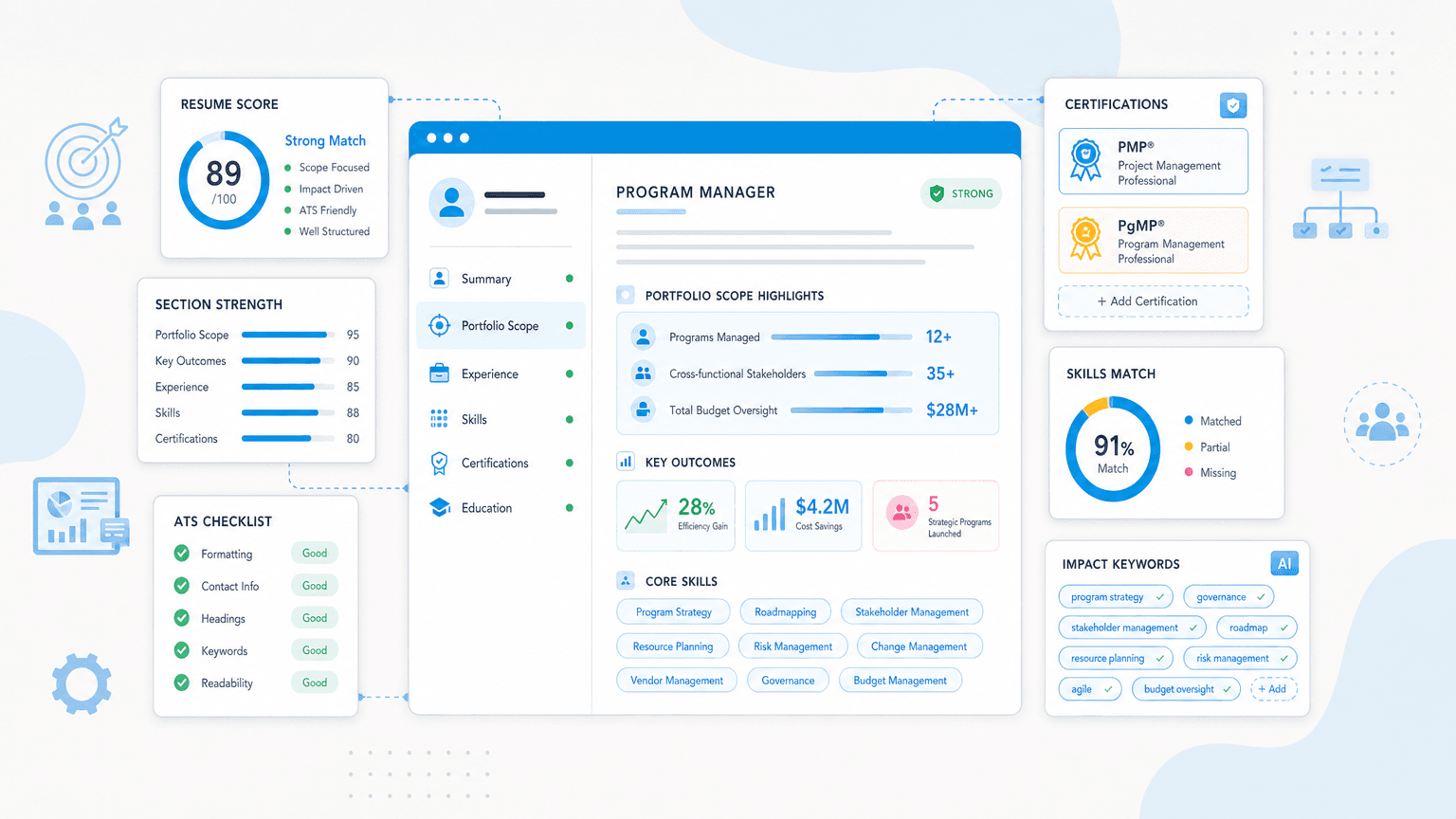
- Real-time ATS scoring: your ATS and recruiter match score updates as you edit, so you can see whether swapping "project" language for "program" language actually moved the score.
- Transparent suggestions: every AI edit comes with a plain-language explanation, and you accept or reject each one individually, so your actual scope never gets rewritten or invented.
- Automatic formatting: your resume gets cleaned into an ATS-friendly structure, so dense program timelines do not confuse a parser.
- Structure guidance: suggestions reorder content for relevance, sharpen action verbs, quantify portfolio size, and flag language that could trigger bias, based on recruiter best practices.
- Preference memory: your formatting and metric choices carry over between sessions, so tailoring a healthcare version after a big-tech one does not mean starting over.
The free plan includes 200 ATS scans every month, plus a one-time allotment of 3 tailored resumes with matching cover letters and unlimited downloads, no credit card required. Additional tailored resumes cost $0.50 to $1.00 each depending on pack size, with no subscription attached.
What separates a program manager resume from a project manager resume is scope: portfolio breadth, governance, and outcomes across workstreams rather than deliverables inside one. Tailor one version per posting rather than sending the same file to big tech, healthcare, and government roles alike.
Try it on your own resume
Run a free ATS check in under three minutes and see what's holding your resume back.